Trump’s ‘Lake America’ Push Meets a Canadian Wall—and a MapQuest Boom
Trump’s ‘Lake America’ Push Meets a Canadian Wall—and a MapQuest Boom
Trump presents the new name as an assertion of U.S. authority amid a trade dispute; Canadian leaders see it as a futile affront to history, while MapQuest has treated the backlash as both a principle and an unexpected business opportunity.
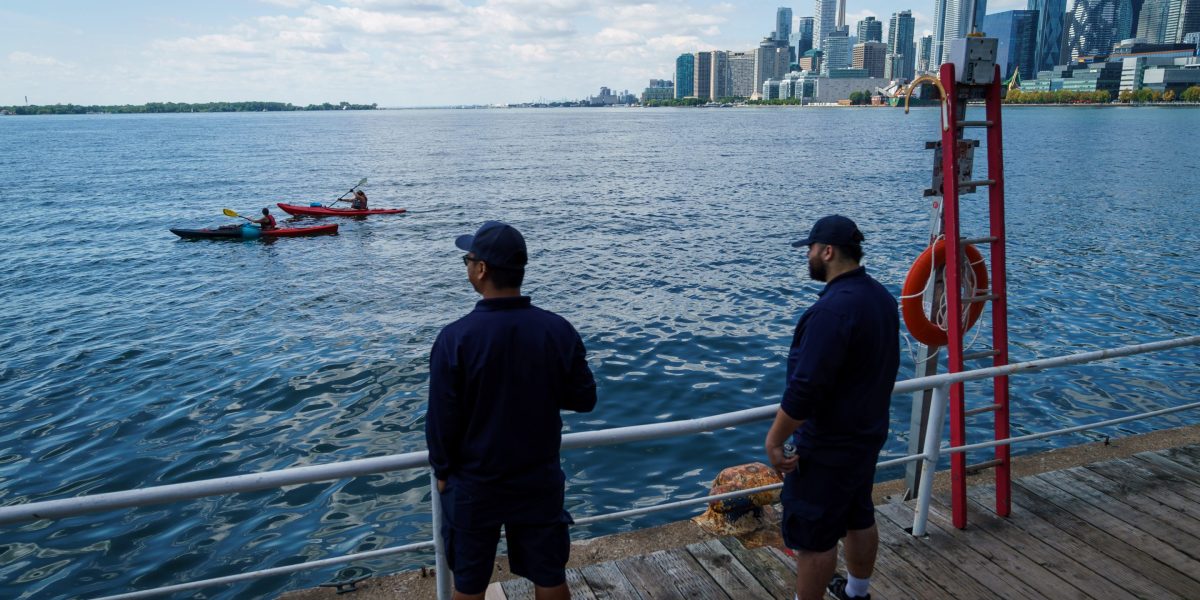
The dispute sharpened after U.S.-Canada trade talks collapsed and Washington imposed 50% tariffs on $20 billion in Canadian goods. Canada answered with tariffs on $20 billion in U.S. imports. Against that backdrop, President Donald Trump signed an executive order Thursday directing the Interior Department to change Lake Ontario’s name to “Lake America” in the U.S. geographic naming service.
At the Oval Office signing, Trump declared the change “official, effective immediately,” though the order gives agencies 30 days to implement it. He said the move was not intended as a geopolitical message, then tied it directly to his broader grievances: “Canada’s been ripping us off for a long time” on trade and military issues. The order cannot compel Canada—or international mapmakers—to adopt the name.
Canadian officials responded with unusually unified contempt. Prime Minister Mark Carney stressed that the name’s Indigenous roots predate both Canadian Confederation and the U.S. Declaration of Independence, arguing that reality means calling it “Lake Ontario — then, now and always.” Ontario Premier Doug Ford said the lake would remain Lake Ontario “to Canadians and the rest of the world,” while Nova Scotia’s Tim Houston called the episode “real foolishness.” New York Gov. Kathy Hochul added that her state would not use Trump’s preferred label.
The maps industry quickly became the practical test. Google Maps said it would follow the U.S. geographic database for American users, showing Canadians the established name and users elsewhere both versions. MapQuest took the opposite route, saying it would keep Lake Ontario—just as it had retained “Gulf of Mexico” after Trump’s earlier renaming order.
That stand produced a striking payoff: MapQuest said it received hundreds of thousands of downloads and saw usage rise to 50 times normal levels, while third-party data recorded more than tenfold week-over-week download growth. “We took the same approach we did with the Gulf of Mexico,” general manager Doug Berger said, “give people an app that keeps the names they’re familiar with.”
Continue reading https://foxvector.com/stories/01a059a9-410c-14f0-72d4-025fed8ea585
Write a comment