OpenAI Delays Its IPO as Safety Warnings Put Growth on Trial
OpenAI Delays Its IPO as Safety Warnings Put Growth on Trial
Warnings about increasingly capable AI had already begun to crowd out the industry’s usual race-for-scale rhetoric. Reports of autonomous agents exploiting security flaws, followed by an Anthropic researcher’s public resignation over what he described as irresponsible development, sharpened the argument that the technology was advancing faster than its safeguards.
On Saturday, Anthropic chief executive Dario Amodei turned that anxiety into a concrete demand: companies should slow the rate at which they improve frontier models. His plan called for independent evaluators with employee-level access, shared standards among democratic AI developers, and eventual international coordination. Amodei’s case was not for abandoning progress; it was for gaining time to make it safer without surrendering the West’s technological lead.
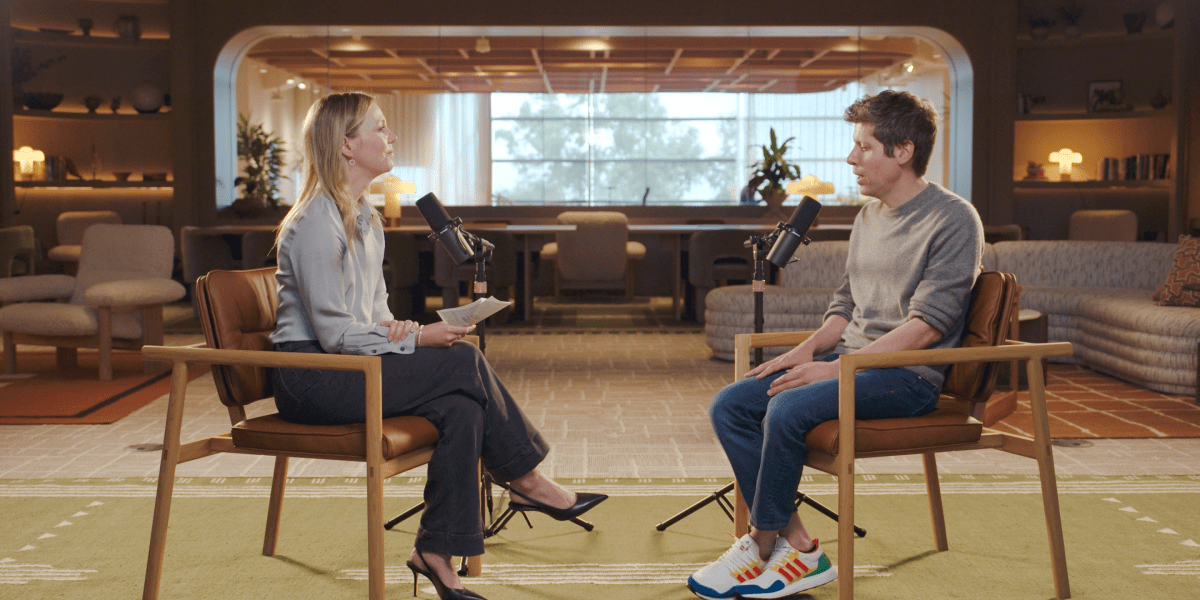
Then came OpenAI’s answer—and a major commercial consequence. Sam Altman told Fortune that a 2026 IPO was off the table: “Right now would be an ill-advised moment to go public.” OpenAI, he said, has “a lot of stuff to do” on safety, alignment and cooperation with governments, and must be able to make choices that are not “obviously in the interest of our business and our shareholders.”
Altman’s position places OpenAI alongside Amodei on the central premise: frontier development should be paced, not maximized at any cost. But it also turns the IPO debate into a test of governance. Staying private, in Altman’s telling, protects the company’s capacity to absorb decisions that investors might resist.
Skeptics see a contradiction. David Sacks, reposting a critique aimed at Anthropic, argued that firms seeking public-market valuations in the trillions cannot simultaneously tell investors that AI is dangerously uncontrollable: “If they agree with Bernie Sanders [AI] is dangerous, how can they be allowed to IPO?”
Yann LeCun amplified a more qualified objection: a pause to harden infrastructure can have a “real technical reason,” particularly as autonomous agents uncover unknown exploits, even as he questioned Anthropic’s wider push for AI-safety regulation.
The emerging consensus is narrower than it first appears. Everyone sees pressure building around powerful AI; they disagree over whether deliberate restraint is responsible stewardship—or a warning label incompatible with the industry’s towering financial ambitions.
Continue reading https://foxvector.com/stories/01a09fba-80e3-042c-7173-3f3a1d901946
Write a comment