Valve’s Steam Frame Nails Comfort but Makes VR Feel Unfinished Again
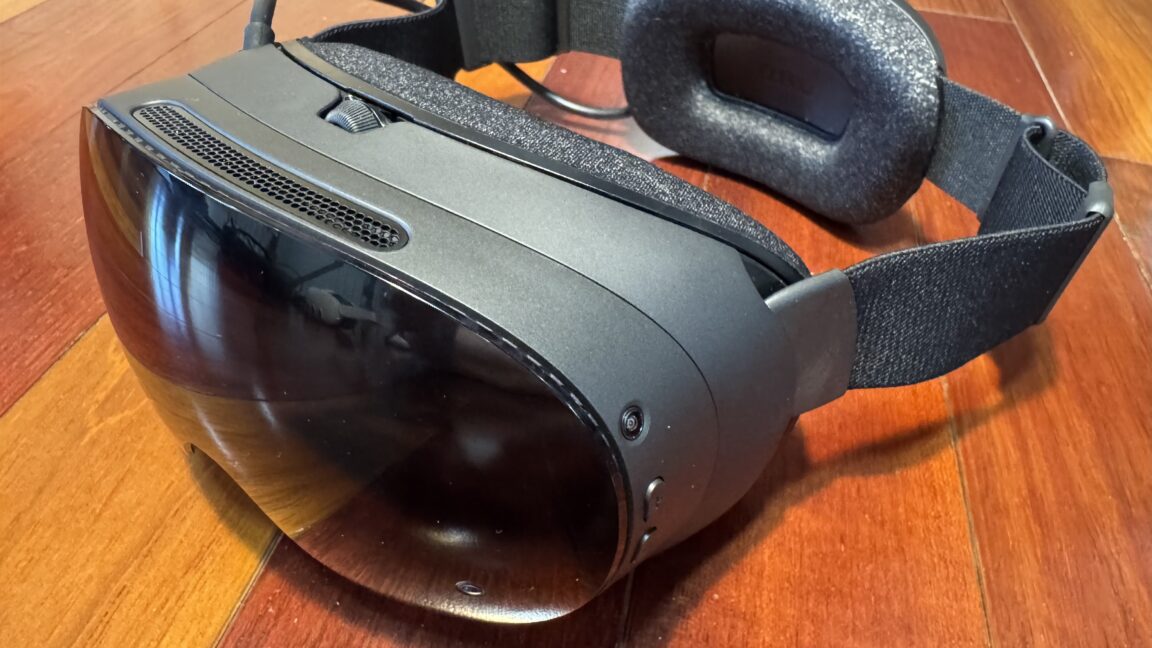
Valve’s Steam Frame Nails Comfort but Makes VR Feel Unfinished Again
Valve once helped define PC virtual reality, first through HTC’s Vive partnership and later with the Index and Half-Life: Alyx. But as Meta’s cheaper, untethered Quest headsets found the larger audience, Valve’s VR ambitions appeared to fade into the background.
Now, in 2026, Valve is returning with the $1,059 Steam Frame, a standalone headset that begins taking reservations today. Its pitch is ambitious: modern pancake lenses, 2160-by-2160 resolution per eye, a 144Hz maximum refresh rate, eye tracking, inside-out tracking and SteamOS running directly on ARM-based hardware.
The strongest early verdict is physical. At 440 grams, with roughly half its weight shifted into a rear-mounted battery, the Frame avoids the front-heavy pull that makes many headsets tiring. Ars Technica called it a “new high-water mark in comfort,” saying it could be worn through hours-long sessions without a comfort break. That is no small achievement in a category where even expensive hardware can become a face-mounted burden.
But the comfort story quickly collides with the practical one. In its graphics-focused Performance mode, the Frame barely clears 90 minutes in many VR games; the battery-saving Playtime setting extends sessions past two hours, but drops quality and refresh rate to a “barely tolerable” 72Hz. The headset’s fan adds heat and a persistent whine, while fast head movement can expose tracking judder and image ghosting.
Valve’s best answer may be to make the supposedly standalone device lean on a gaming PC. Its bundled 6GHz Wi-Fi dongle delivered encouragingly low-latency wireless streaming in testing, though setup could be unreliable.
The deeper concern is software. Native SteamVR support remains thin, with crashes, glitches and games that would not launch; even Valve’s “Great on Frame” list included a title the reviewer could not load. The Frame looks like premium hardware with a familiar Valve tension at its center: ingenious engineering, waiting for the ecosystem to catch up.
Continue reading https://foxvector.com/stories/01a0a24d-9236-1851-71bb-2ab499447f3d
Write a comment