Claude Found a CRISPR-Like Clue, but the Science Is Still Wide Open
Claude Found a CRISPR-Like Clue, but the Science Is Still Wide Open
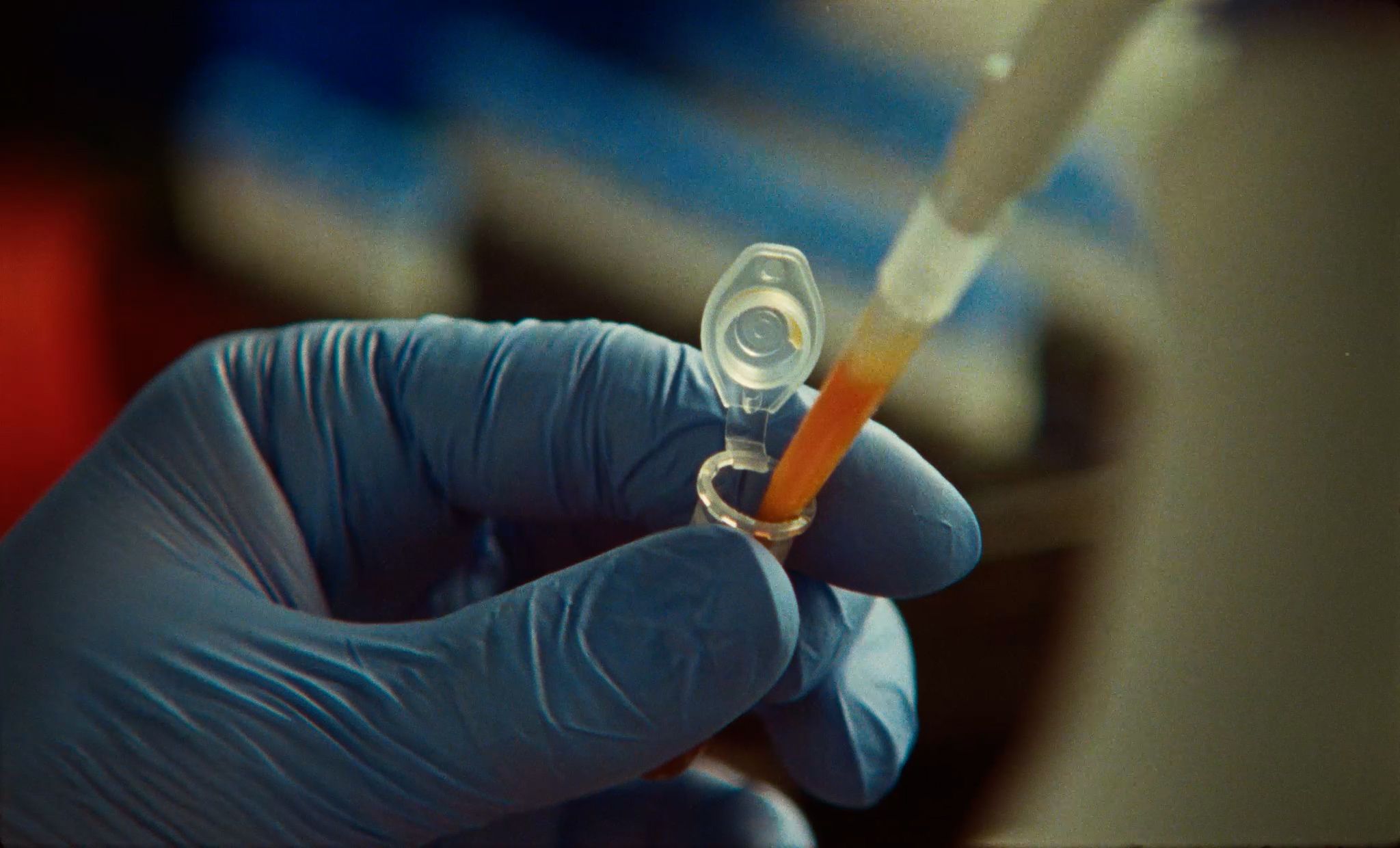
In spring 2026, Anthropic formed a life-sciences research group around a deliberately ambitious premise: could a general AI model help scientists spot biological oddities buried in oceans of genomic data? The company built a Bay Area wet lab, but stresses that human scientists—not Claude—perform the physical experiments, under lower-level BSL-1 and BSL-2 conditions.
Its first public result came from a search of reverse transcriptases, enzymes that copy RNA into DNA. Anthropic says roughly 950 Claude agents spent 21 hours and 210 million tokens examining the data, before one identified a repeating DNA pattern beside an unusual enzyme gene. Follow-up human review and lab testing produced what the company calls a previously uncharacterized bacteriophage system: array-associated reverse transcriptases, or ART.
The pitch is exciting but carefully qualified. Anthropic says ART has features seen together in only a handful of programmable systems capable of operations such as “cutting, copying, and pasting DNA,” yet concedes that ART’s primary function remains unknown. CEO Dario Amodei likewise described it as a possible gene-editing mechanism, while warning that its “precise function, biotechnological utility (if any), or level of significance is not yet clear.”
That caveat is central to the skeptical reading. Outside coverage notes that a resemblance to CRISPR is not proof of a comparable breakthrough: it is still unclear whether the system will have practical applications, much less become transformative. Another account frames the announcement as a strikingly fast result from a newly opened lab, but says broader researchers will have to establish how novel and consequential the discovery really is.
For now, the strongest claim is narrower than the headline-grabbing comparison: Claude helped surface a promising pattern that humans then tested. Whether ART becomes a tool, a curiosity, or a genuine new chapter in gene editing is work still waiting in the lab.
Write a comment