Tesla’s Semi Is Finally Rolling, but the Hard Part Starts Now
Tesla’s Semi Is Finally Rolling, but the Hard Part Starts Now
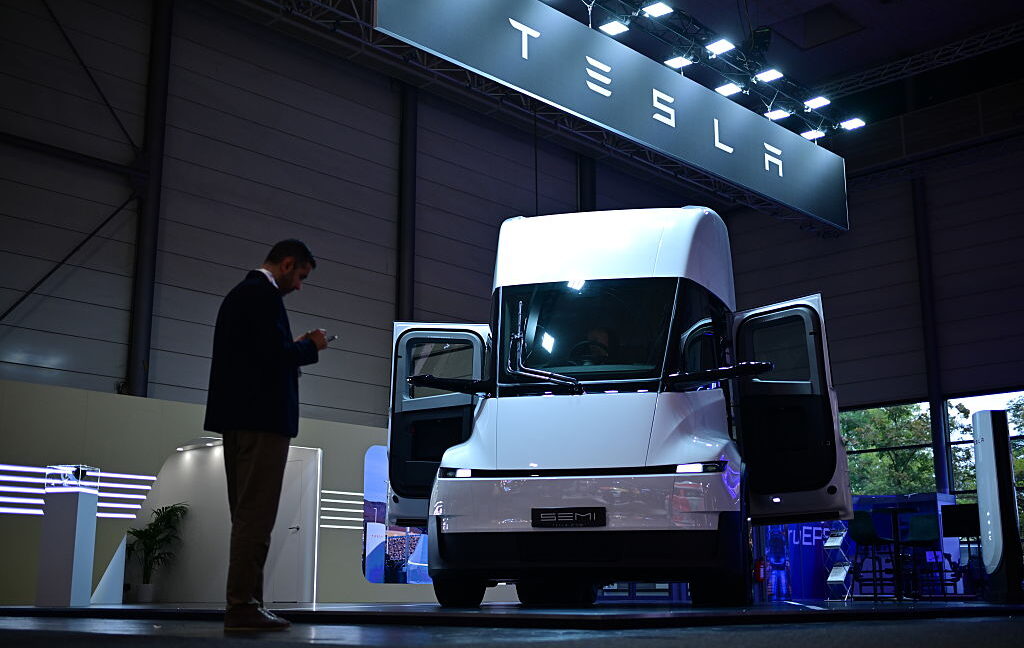
Tesla first unveiled the Semi in 2017 with promised production in 2019. That deadline slipped through the pandemic and supply-chain disruption; a small batch reached PepsiCo in 2022, but those trucks were effectively pilot-line builds. In April 2026, Tesla said volume production had begun at its dedicated Sparks, Nevada, plant, designed for 50,000 trucks a year.
Elon Musk framed the milestone as a manufacturing victory, congratulating the team for not only engineering but “bringing to production an amazing machine.” Tesla’s pitch is emphatic: a Standard Range Semi rated at 325 miles and a Long Range model rated at 500 miles with a full 82,000-pound gross combination weight. The company says improved efficiency, lighter components and 4680 battery cells will help make the truck cheaper to run than diesel.
That argument has gained urgency as diesel prices surge. Tesla executives say electricity offers a steadier operating cost, while Musk called the Semi “a revolutionary truck” for heavy loads and long distances. But the launch left key commercial questions unanswered, including firm pricing and total order numbers; the Long Range version has been reported at roughly $290,000, far above Tesla’s original 2017 projections.
Demand is no longer theoretical. A shipper coalition has selected Tesla for 2,500 trucks, while PepsiCo, DHL, ABF Freight, Einride, IMC and others are among the announced customers. Tesla says it expects more than 30 Semi charging locations, with over 200 megawatt-capable posts, by year-end. Yet only two public Megachargers were listed in the Los Angeles area at launch, underlining the infrastructure gap that could constrain long-haul use.
Tesla is betting its new factory closes that gap between promise and volume. Musk highlighted a 1.8-million-square-foot site intended to build every variant on one line. For fleets that have waited years, however, the decisive metric is simpler: trucks delivered, kept running and charged on time.
Write a comment