Meta and OpenAI Launch Customizable AI Agent Characters
Meta and OpenAI Launch Customizable AI Agent Characters
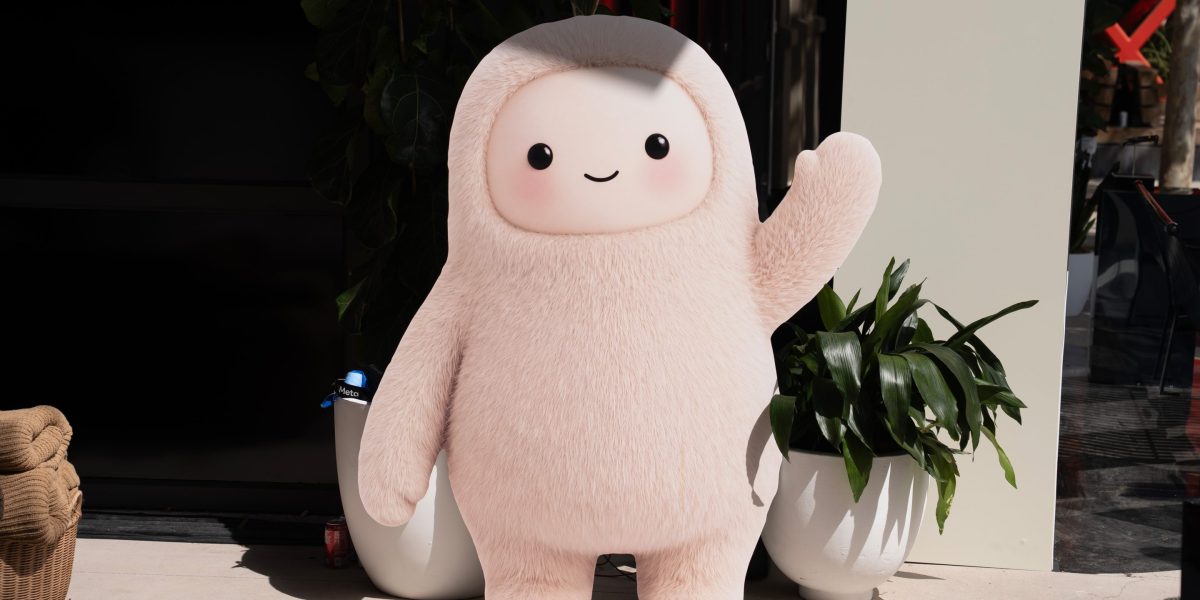
Meta and OpenAI are both rolling out customizable AI agent characters that act on behalf of users, combining cutesy visual mascots with task-executing software. Human reporting describes Meta’s offerings such as Jolly and Muse alongside OpenAI’s Dot (or Dots) platform, noting that these characters can help schedule tasks, interact with other apps, and even order food, while being presented with friendly, cartoon-like faces or avatars. Both companies are portrayed as emphasizing built‑in guardrails, user control, and the ability for users to personalize these agents, with OpenAI’s agent system in particular integrated into the desktop ChatGPT app and able to access a user’s computer and external software like Blender and GIMP. Coverage agrees that these launches represent a new wave of AI agents that blend assistant capabilities with character‑driven interfaces, and that they are being introduced in a highly visible, consumer‑facing way.
Human sources situate these launches in a broader history of anthropomorphized tech interfaces, comparing Meta’s and OpenAI’s mascots to Microsoft’s Clippy and even to how people casually refer to devices like a Roomba rather than an “autonomous robotic vacuum.” They highlight that giving AI a face and personality can make abstract technology more approachable, easier to market, and more natural to talk about, while also raising concerns about over‑trust, especially in light of prior safety and security incidents involving both companies. These reports emphasize that the agent characters sit atop powerful enterprise‑grade systems, with OpenAI’s Dot initially targeted at high‑tier paid accounts such as a $100‑per‑month Pro plan, blurring lines between consumer‑friendly branding and serious business software. There is shared context that this move reflects a wider industry trend toward embodied, persistent AI agents increasingly woven into everyday tools and workflows, even as questions linger about how guardrails, user consent, and expectations will be managed.
Areas of disagreement
Framing of intent. AI-aligned coverage generally portrays Meta’s and OpenAI’s character agents as a natural evolution of assistance technology, emphasizing innovation, convenience, and the technical leap from static chatbots to proactive agents. Human coverage stresses the marketing dimension, arguing that the cute faces are deliberately designed to humanize and soften powerful systems, potentially distracting from risks and commercial motives. Where AI sources tend to describe these agents as neutral tools that happen to be personified, Human sources treat the personification itself as a central strategic choice that shapes user perception.
Risk and trust. AI coverage often foregrounds company claims about safety guardrails, permission prompts, and constrained access when agents operate on a user’s devices or data, presenting security as a mostly solved engineering problem. Human reporting, by contrast, repeatedly invokes past security and misuse incidents at Meta and OpenAI to argue that the risks are ongoing and systemic, not fully mitigated by current safeguards. While AI narratives highlight that character interfaces can make error states clearer and interactions more intuitive, Human accounts warn that the same anthropomorphic design can lull users—especially younger ones—into overestimating reliability and privacy.
Target audience and use cases. AI sources tend to emphasize broad, almost universal applicability, suggesting these agents will be equally at home in personal, creative, and enterprise scenarios. Human outlets, however, underscore that OpenAI’s Dot is explicitly tied to high-priced tiers and deep integrations with professional tools, casting it primarily as enterprise software that only incidentally can order dinner or manage personal errands. This leads AI coverage to frame the launches as democratizing AI helpers for everyone, whereas Human coverage stresses a business-first orientation wrapped in a friendly consumer aesthetic.
Lessons from past interfaces. AI-aligned narratives are more likely to treat earlier agents like Clippy as historical curiosities or UX missteps that modern AI can transcend through better design and underlying capability. Human reporting uses Clippy and similar examples as cautionary tales, arguing that annoyance, confusion, and misplaced expectations are structural risks whenever software is given a face and personality. Where AI sources may suggest that richer agents can finally fulfill the original vision that Clippy failed to realize, Human sources worry the industry is repeating old mistakes under far higher stakes.
In summary, AI coverage tends to normalize character-based agents as a largely positive, technically driven evolution of AI assistance with manageable risks, while Human coverage tends to cast the same developments as marketing-savvy, enterprise-focused deployments whose cute façades may obscure unresolved safety, trust, and power concerns.
Write a comment