Nikon Revokes Microscopy Prize as AI Rules Catch Up With Science
Nikon Revokes Microscopy Prize as AI Rules Catch Up With Science
Nikon’s Small World in Motion contest announced its winners on September 16, putting first place in the hands of Ning Xu of Tsinghua University. His video showed microscopic cilia beating in the airways of a child with a rare respiratory disorder—a striking entry in a competition built to celebrate imaging through the microscope.
Then the scrutiny began. Researchers questioned apparent structural irregularities in the footage, saying some cell features seemed to appear and disappear in ways inconsistent with normal cellular biology. Others said they had spotted what appeared to be AI watermarks in source files.
Xu did not deny using AI, but drew a sharp line over what it did. He said it was used “to distinguish and visualize features in the reconstructed grayscale images,” while denying that it generated “the experimental movie, the cilia, or their motion.” His position is that AI-assisted visualization should not be confused with manufacturing the underlying science.
After weeks of controversy, Nikon took the opposite view on eligibility. The company said that, after reviewing the video and supporting material with its judges, it had determined the entry “did not comply with the competition rules regarding generative AI.” The rules explicitly bar AI-generated videos and allow Nikon to request original footage for verification.
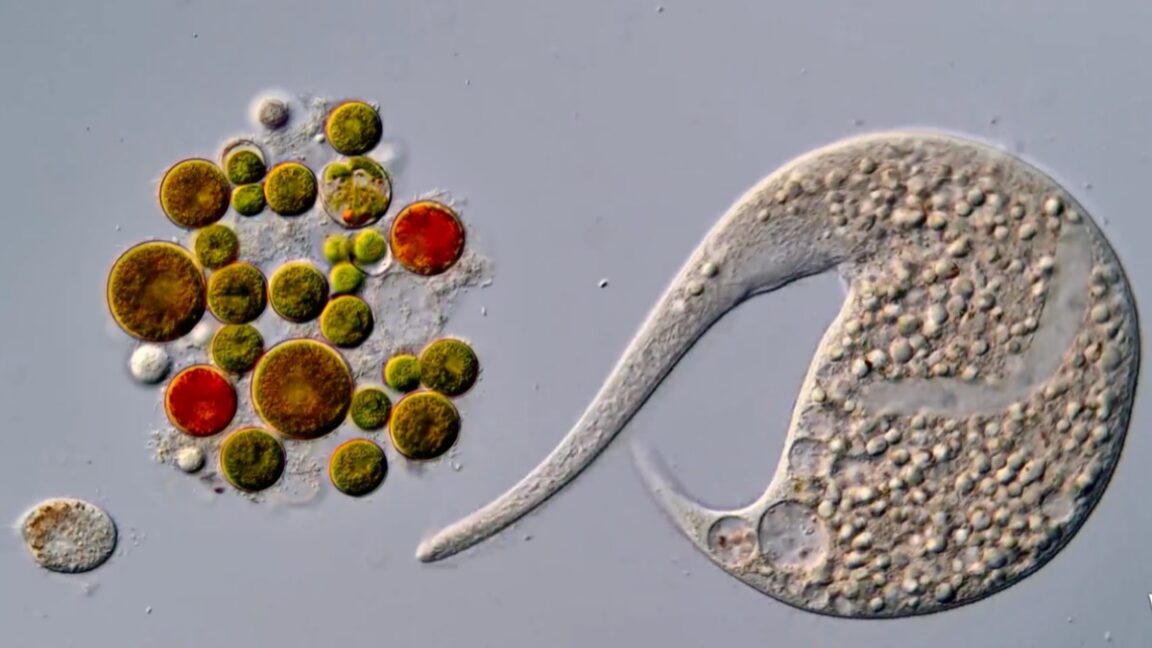
Nikon revoked Xu’s first-place award and reshuffled the rankings, elevating Vietnam’s Nguyen Nam Nhat, whose entry features a roundworm and a single-celled organism, to the top spot. The company stressed that the ruling concerned only the submission’s eligibility—not Xu’s reputation, scientific work or intent—and said the episode exposed a broader problem: image competitions must rethink their rules as AI tools move deeper into scientific workflows.
Write a comment