Rachel’s surf hit Southern California before the storm itself arrived
Rachel’s surf hit Southern California before the storm itself arrived
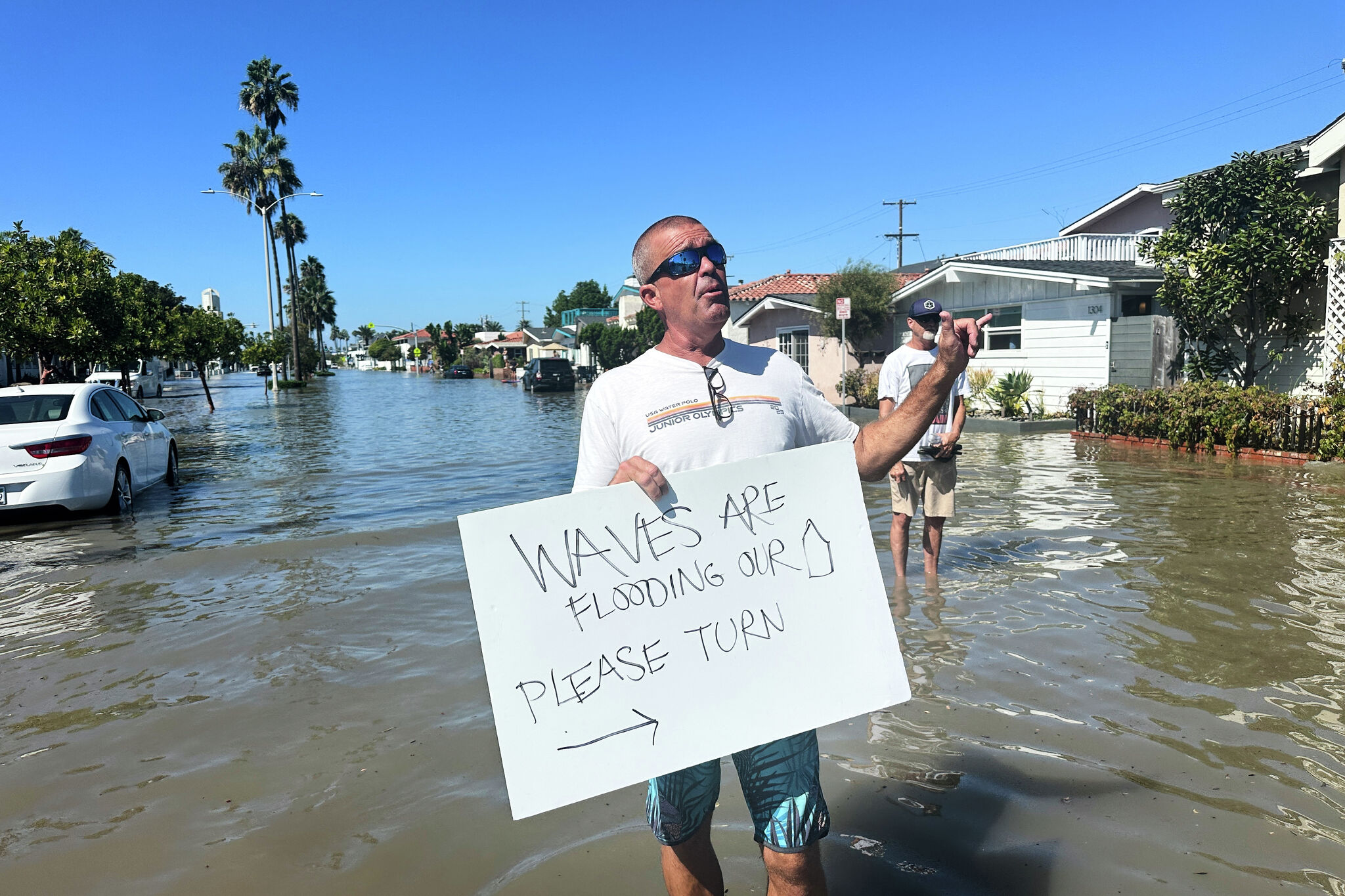
Friday’s damage came before Tropical Storm Rachel reached the region. Powerful swells and unusually high tides pushed seawater across Newport Beach’s Balboa Peninsula, turning residential streets into channels, surrounding vehicles and reaching homes several blocks inland.
Newport Beach declared a local emergency as crews pumped water and rebuilt beach barriers. Utilities Director Mark Vukojevic said flooding stretched across 15 to 20 blocks and that the tide arrived 20 inches above its predicted level — an episode he called unprecedented. The city’s response reflected a grim local reality: erosion had already narrowed the strip of sand that normally helps separate homes from the ocean.
Farther north in Long Beach, waves breached a wooden bulkhead on the Peninsula, tore apart sections of boardwalk and left beachfront structures unsafe. Early inspections found two buildings containing three homes red-tagged and another restricted, as crews placed sandbags and pumped flooded streets.
By Saturday night, the threat had broadened rather than eased. Rachel made landfall south of the U.S.-Mexico border and was reclassified as post-tropical, but meteorologists stressed that the label did not reduce the danger. The National Hurricane Center and local forecasters warned of major coastal flooding, significant urban and flash flooding, hazardous surf and a possible tornado threat in desert areas.
Long Beach Mayor Rex Richardson said the toll had risen to eight red-tagged structures and one yellow-tagged property, while some Peninsula residents were placed under mandatory evacuation orders through Tuesday. City officials began adding sand to create a buffer for seaside homes; Newport Beach contractors worked to reinforce berms before the next high tide.
Forecasters focused on Sunday as the critical test. High tide near 9:45 a.m., powerful 6-to-9-foot waves and rainfall that could total five inches in the hardest-hit areas were expected to compound the flooding risk. Weather service meteorologist Adam Roser put the warning plainly: “It is running quite high.”
Write a comment