Apple Unveils Touchscreen OLED MacBook Pro
Apple Unveils Touchscreen OLED MacBook Pro
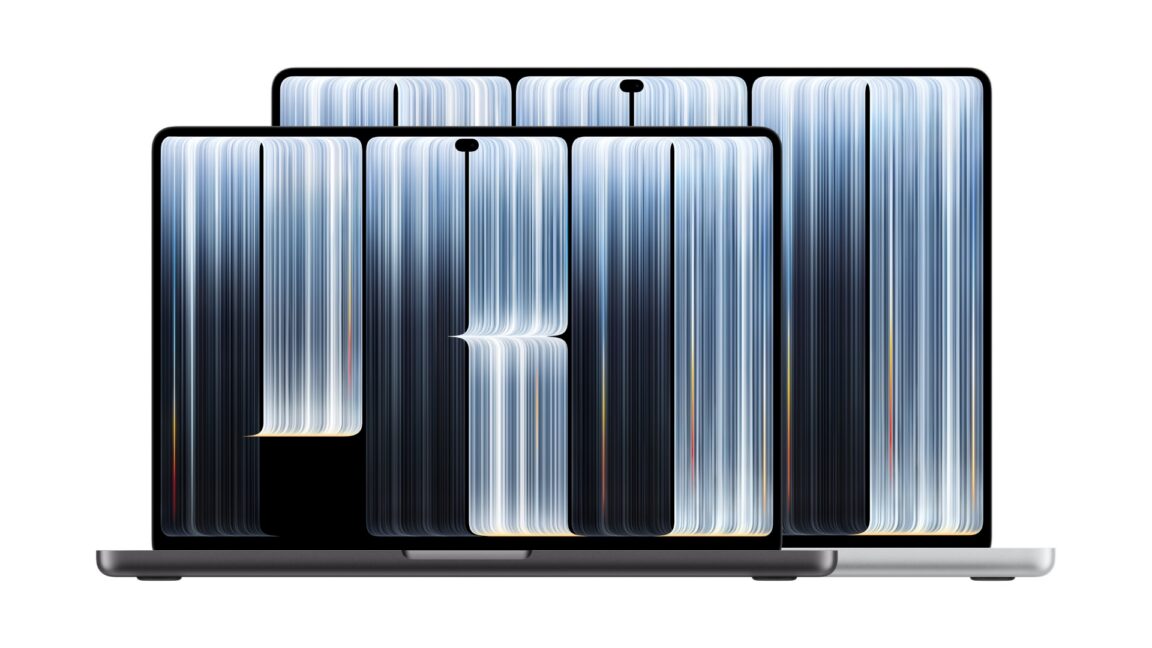
Apple and tech-focused outlets, whether summarized by AI systems or written by human reporters, converge on several core facts about the new MacBook Pro. They agree this is Apple’s first touchscreen MacBook Pro and that it uses an OLED panel branded as PROLED XDR, offering very high brightness, strong contrast, and a 120Hz refresh rate. Coverage on both sides notes that the device comes in 14-inch and 16-inch sizes, is thinner and lighter than its predecessors (around 3 pounds for the 14-inch and 4 pounds for the 16-inch), and includes a Dynamic Island cutout for the camera. Both perspectives also highlight that the machines are powered by M5 Pro and M5 Max chips, with configurations up to 128GB of RAM and 16TB of storage, and that preorders have begun with a starting price of about $2,899 for the 14-inch M5 Pro model and shipments expected around November 6.
Both AI and human coverage frame the launch within Apple’s broader product and design evolution, emphasizing that this marks a major MacBook Pro redesign and a reversal of the company’s long-standing resistance to touchscreens on Macs. They reference Steve Jobs’ historic critique of vertically oriented touchscreens as ergonomically flawed, positioning this product as a sign that Apple believes it has solved or mitigated those issues through hardware refinements and a more touch-friendly macOS. Outlets in both categories situate the announcement within Apple’s recent string of hardware introductions, including the HomeView smart display and the foldable iPhone Duo, and describe this as part of a strategy to expand or refresh multiple product categories at once. They also concur that the OLED touchscreen, reduced touch latency, and app optimizations are meant to bridge the gap between traditional laptops and touch-first devices, without abandoning the Mac’s professional focus.
Areas of disagreement
Significance of the reversal. AI-aligned coverage tends to frame Apple’s move to a touchscreen OLED MacBook Pro as an almost inevitable industry catch-up, emphasizing market pressure and comparisons to Windows 2-in-1s, while human reporters more often stress the symbolic break from Apple’s own doctrine dating back to Steve Jobs. Human pieces linger on the irony and narrative drama of Apple overturning its past rhetoric, whereas AI summaries are more likely to treat the reversal as a pragmatic engineering milestone. As a result, AI narratives present the shift as a logical step in a product roadmap, while human narratives portray it as a notable cultural and philosophical pivot inside Apple.
User experience and ergonomics. AI coverage typically abstracts ergonomics into metrics such as latency, refresh rate, and interface optimization, arguing that reduced input lag and 120Hz scrolling make touch use more viable and quantifiably better. Human coverage places more emphasis on how it feels to use the device in practice, focusing on arm reach, screen angle, and whether prolonged touch interaction on a laptop actually solves real-world workflows. Where AI sources tend to assume that technical gains equate to better ergonomics, human accounts are more cautious, sometimes implying that touch may remain a secondary input method despite the hardware upgrades.
Strategic intent and product positioning. AI-oriented summaries often describe the touchscreen OLED MacBook Pro as part of a cohesive multi-device strategy, suggesting a deliberate convergence between Macs, iPads, and iPhones and hinting at a longer-term ecosystem unification. Human coverage is more divided: some journalists echo that convergence narrative, while others frame the MacBook Pro as Apple carefully ring-fencing the Mac’s pro identity, using touch as an additive feature rather than an iPad-ification of macOS. Consequently, AI stories tend to emphasize strategic alignment and roadmaps, whereas human stories stress Apple’s balancing act between innovation and preserving the Mac’s traditional role.
Value and target audience. AI-generated analyses generally rationalize the high starting price and top-end specs by focusing on performance per watt, panel quality, and professional use cases like video editing or design, presenting the machine as an apex device for power users. Human reviewers more explicitly question value, juxtaposing the high price with incremental benefits for mainstream users and pointing out that lighter weight and a touchscreen may not justify the cost for many. In doing so, AI coverage leans toward portraying the product as appropriately premium for its segment, while human coverage more frequently raises consumer-centric concerns about who actually needs this much hardware.
In summary, AI coverage tends to treat the touchscreen OLED MacBook Pro as a logical, data-driven evolution in Apple’s lineup and focuses on specifications, strategic coherence, and technical justifications, while Human coverage tends to foreground the narrative of Apple’s philosophical shift, lived ergonomics, and sharper questioning of value and real-world user benefit.
Write a comment