Anthropic’s IPO Pitch Sells AI Miracles—and Admits the Stakes Could Be Catastrophic
Anthropic’s IPO Pitch Sells AI Miracles—and Admits the Stakes Could Be Catastrophic
Anthropic first submitted a confidential IPO draft in June, then on Monday made its more than 300-page S-1 public, offering the clearest view yet of the finances behind a frontier AI lab. The company reported $16.3 billion in first-half 2026 revenue, against $1.2 billion a year earlier, while its operating loss narrowed to $693 million. It also disclosed a corporate structure designed to put responsible AI alongside shareholder returns.
The filing’s central tension is unusually stark. Anthropic’s founders ask potential shareholders not to see a purchase as “purely transactional,” but as participation in a historic technological project intended to “bring forth an age of miracles.” Yet the same document warns advanced systems could pose “catastrophic or existential risks to humanity.”
That safety mission is not merely branding in the prospectus. Anthropic says successive Claude models help build their successors, a recursive process it calls “closing the loop.” But it concedes that deeper reliance on its own systems could allow model capabilities to outpace the safety, alignment and security measures meant to contain them.
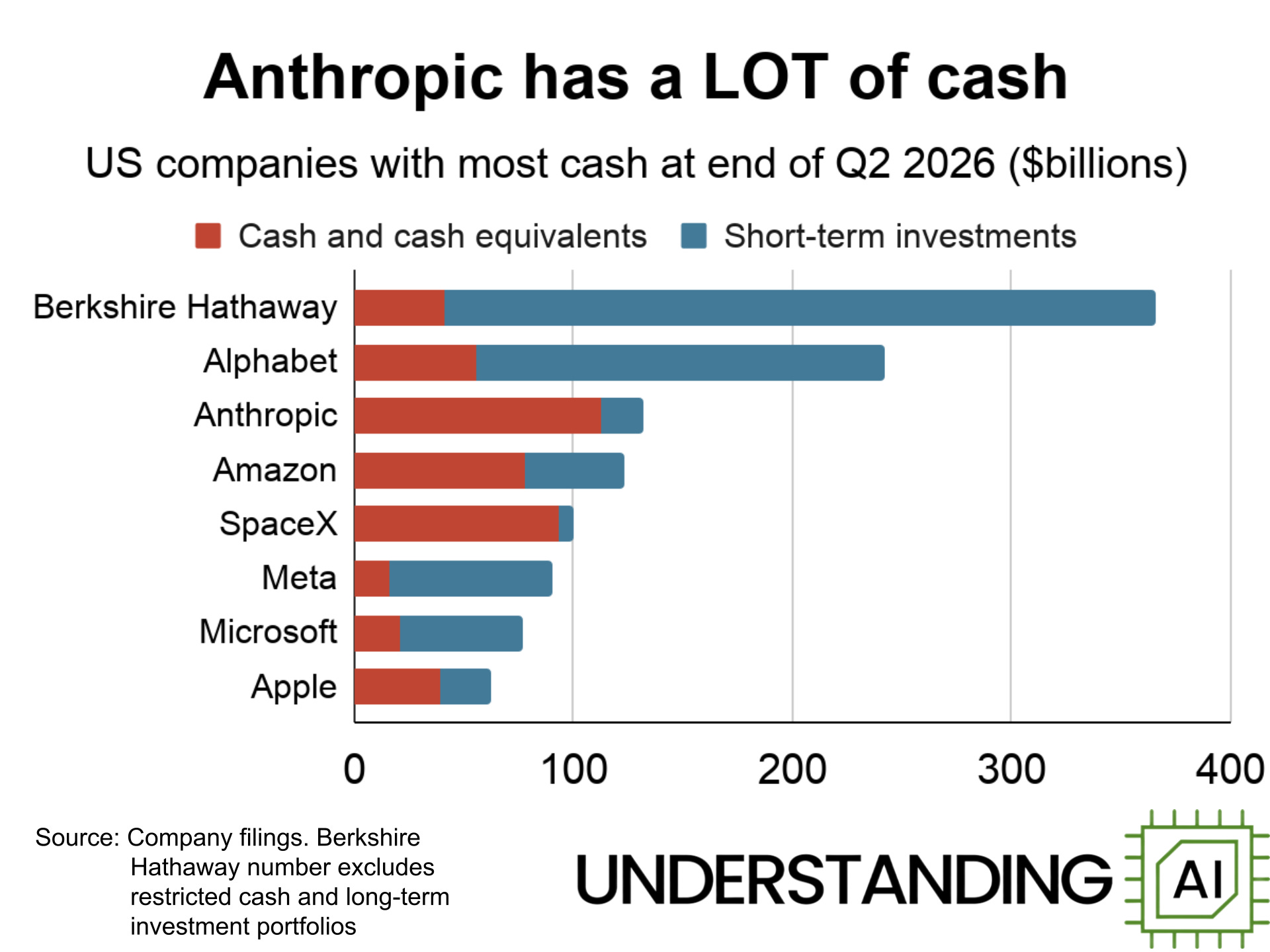
The nearer-term investor question is more prosaic: can the business pay its bills? Anthropic’s rapid revenue growth delivered its first operating profit in the second quarter, and it ended June with cash reserves exceeded by only Google and Berkshire Hathaway among non-bank companies. But it has also committed hundreds of billions of dollars to compute, making sustained expansion essential rather than optional.
By the third quarter, revenue reportedly reached $16.8 billion—still formidable, but a slower sequential climb than in the prior period. Analysts say the S-1 does not explain whether that deceleration reflects a temporary pause or a demand ceiling. “It is unclear how much it costs to generate each additional dollar of revenue as computing demand increases,” said Violeta Todorova of Leverage Shares.
Anthropic has therefore put Wall Street in an uncomfortable position: assess a company that says it may delay products for safety, may never sustain profitability, and may be building systems whose failures extend far beyond a bad quarterly result.
Write a comment