Ring’s security drone promises peace of mind—but brings fresh surveillance fears
Ring’s security drone promises peace of mind—but brings fresh surveillance fears
Amazon’s earlier attempt at a flying home camera never truly got off the ground. Ring announced the Always Home Cam in 2020, but the company struggled to fit the sensors and computing power needed for autonomous indoor flight into a practical device.
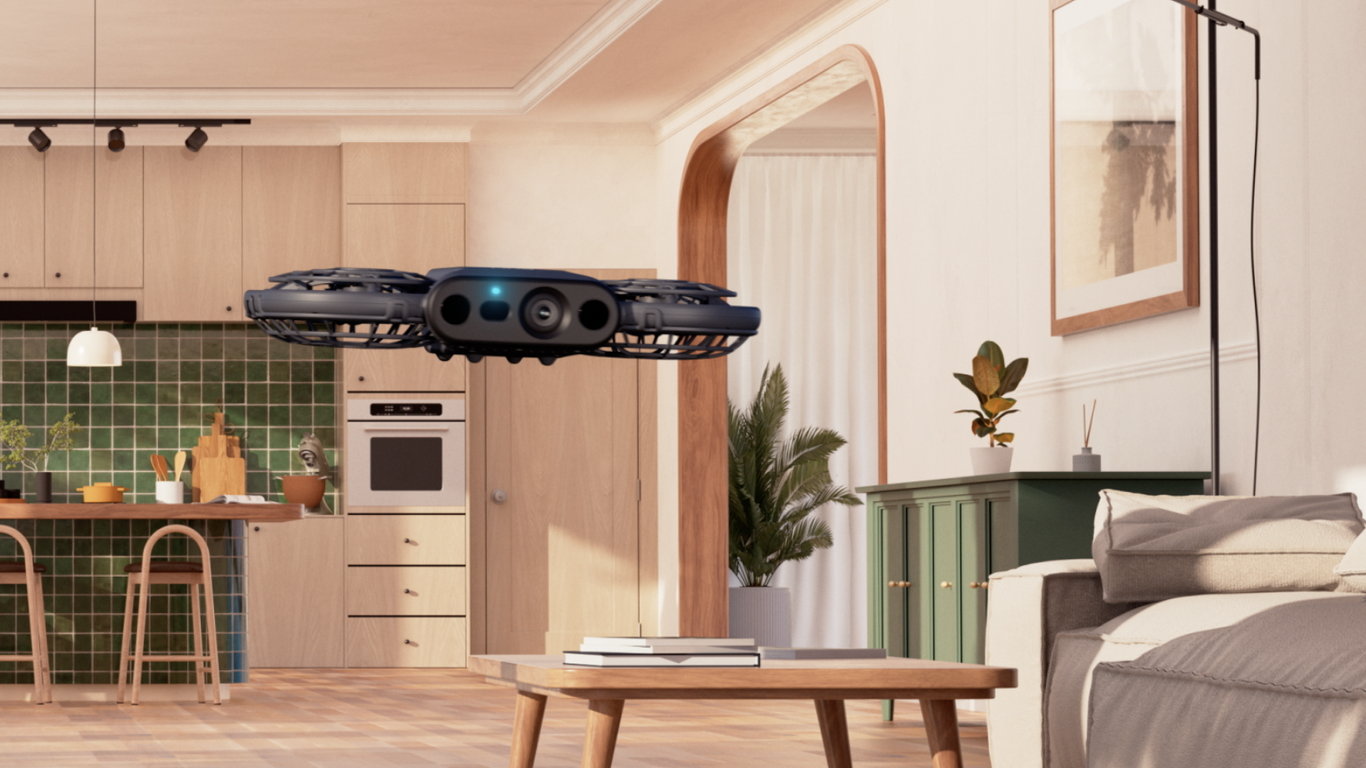
Now Ring is trying again with a new robotics division. The company says its AI Pilot system combines cameras, sensors, vision models and cloud processing to map homes or businesses, navigate obstacles and follow scheduled or alert-triggered patrol routes. The pitch is straightforward: a camera that moves toward trouble rather than merely recording it from a wall.
The first product to ship is the $999.99 Ring Rover Cam, a wheeled, 4K business-security robot due in December 2026. It can patrol a single floor, raise a periscope camera over obstacles and provide two-way audio. The $249.99 indoor Ring Drone Cam is slated for January 27, 2027, pending FCC certification; it flies preprogrammed routes, records in 2K and can respond to motion, alarms or other Ring alerts.
Ring founder Jamie Siminoff describes the system as more than automated hardware: “Truly, it’s like an AI agent that’s controlling the robot.” Ring says the drone records only while airborne, has a shuttered dock camera, and uses its TAKE encryption system, which rotates keys and deletes Ring’s copies after 24 hours.
Yet the practical limits are conspicuous. The drone has only five to eight minutes of flight time, needs Wi-Fi to operate and has not publicly demonstrated how it handles pets or unexpected obstacles. Its promise to replace multiple fixed cameras remains unproven.
The larger objection is familiar. Ring’s fixed cameras have already drawn scrutiny over employee access, account security and police-facing surveillance tools. Critics argue that a cloud-reliant device capable of mapping rooms and moving through them extends those risks deeper into private spaces—even as Ring insists it offers “privacy and security without compromise.”
Write a comment