Viewing Baby Boys as Future Predators Was a Bad Idea
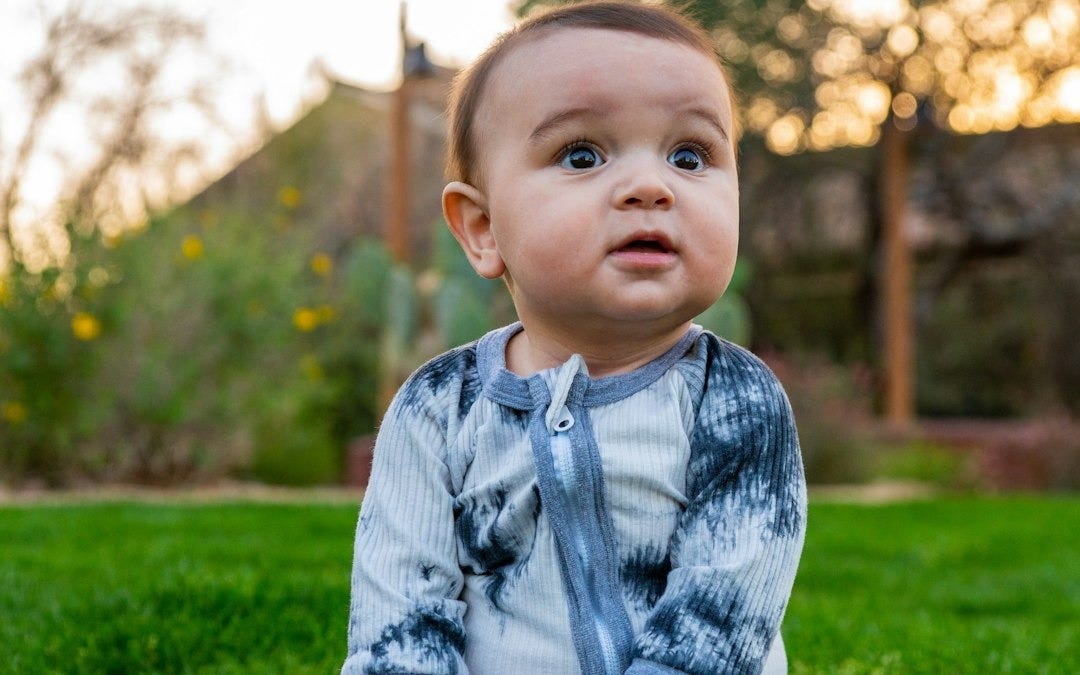
Source: Viewing Baby Boys as Future Predators Was a Bad Idea Publisher: Cartoons Hate Her | Author: Cartoons Hate Her Published: January 2, 2026 | Archived: March 21, 2026
Everyone in this world of terminally online sickos is aware that a “vibe shift” has happened, somewhere around 2023-2024. Almost anything that would be popular to say today would have been weird/cringe ten years ago, and the reverse applies.
The vibe shift in question is a reaction to “peak woke” in 2017-2020, where the media narrative (even if it didn’t align with how most people really felt) was to default to a paradigm that revolved around oppressed people (who can do no wrong) versus oppressors (who are always wrong). This structure failed when confronted by a scenario where one person was both powerful and powerless, such as the fraught arguments about women (some of whom were white) who felt uncomfortable being harassed and screamed at on the street or public transit by “unhoused” male vagrants, who somehow came out the victims in the scenario. The women who were told it was perfectly normal to feel “unsafe” in the presence of a Republican coworker were instead instructed to “just avoid eye contact” when faced with a man screaming threats at them on the subway.
The problem with an oppressor-oppressed framework is that people are stripped of their humanity and moral obligations, and every interaction becomes a contest of who has the least power, regardless of what has actually occurred. And a lot of people—even liberals—hated it! Like all pendulum-swings, the vibe shift away from peak woke probably went too far, because there are times when I think people could stand to maybe be a tiny bit more woke. Not 2019 woke, but like…something in between “bodies and spaces” and the mainstreaming of the R-slur.
Not to belabor the Jameela Jamil essay defending her choice to be childfree, but this article you’re reading now is yet another piece inspired by it—or at least inspired by the subsequent discussion around it. One thing that stood out to me about JJ’s article was how many pre-vibe-shift comments were made (arguably, openly disliking kids at all is a pre-vibe-shift thing too.) Granted, she was writing humor, so I didn’t take it very seriously, nor did it offend me as a parent, but one pre-vibe-shift statement came up in my comments and my subscriber chat: I thought it was weird that her first concern about potentially having a baby boy would be that he might be a sexual predator someday. And yet, as a friend of mine reminded me after I published my article, this was a somewhat popular thing to say just ten years ago in certain circles. I used to hear it all the time. Maybe not as literally as “If I have a son, he might be a sex criminal” (although sometimes people did say this) but this sentiment presented in many less jarring ways. The narrative was: men suck, and even if the “man” in question is your unborn son, your goal should be to steer him away from the otherwise default track of becoming a violent misogynist. Because people—even your children—are oppressors and victims before they are individuals.
I don’t think problems among today’s boys stem entirely from this line of thinking—but it didn’t help. And it certainly didn’t create “less misogynist” men.
One of the biggest signs of the vibe shift (especially in my genderslop corner of the Internet) is the way people talk about men. You probably already know what I’m talking about, but in the 2010s in most online spaces it was acceptable to speak about men in a default-negative way, and to push back against that default negativity or distrust would be to “deny women’s lived experiences” or “tone police.” You could say men were trash or threaten to kill all men (usually while happily still dating men—often cis, straight white men too!) and everyone else was supposed to tolerate this because you were “venting against an oppressor,” not engaging in obviously antisocial behavior. If you found “kill all men” distasteful, you were supposed to take refuge in the fact that the woman in question wasn’t actually going to kill a man, let alone all men. If you were a man, being silently offended or bothered by this behavior meant you were, in fact, part of the problem. But not so fast—staying unbothered because this content didn’t apply to you (because you were a good man) was also bad. As I wrote for GQ, denying being a “toxic male” was considered a top sign that you were extra toxic. There was only one proposed solution, I suppose: groveling apology, without “making it all about you” or “talking over women.” To this day, I have never seen a man correctly walk this line without being accused of “wanting a cookie.”
And if you were a woman, like me? Good luck. I remember once pushing back against the “kill all men” stuff to a chorus of women taunting me for “going to bat for all the poor oppressed men in the world,” followed by some statements that today might be denoted by the violin emoji.
While some folks probably never encountered these people, it’s not hard to imagine why most men (or even women) who saw this kind of stuff got sick of it. At the time, I remember thinking, even if you genuinely think this is a correct belief system, do you REALLY think you’re winning over hearts and minds by being as annoying as fucking possible?
Arguably, this is another area where the pendulum swung too much. In my corners of the Internet, people are excessively offended by any criticism of men, even when the criticism is limited to the bad behavior of a small subset of men. I recently saw a woman defend men by saying “what we’re not gonna do is police masculinity” as if certain displays of masculinity aren’t quite literally policed because they’re illegal. Take my work, for example, given that it’s some of the best stuff on the Internet, nay, media of all time. Almost everything I publish on Substack is very “normal” in 2025, and in fact, one of my biggest criticisms is that my takes aren’t that hot, and I’m just saying what 99% of normal people believe, or that I’m just “Matt Yglesias if he was a MILF with a great ass.” But the second most common criticism I get is that I am a shitlib feminist who hates men, because I don’t think they should objectify minors and I acknowledge the obvious truth that men are more likely to seriously injure or kill their intimate partners than the reverse. Certain men today basically take on the attitude of certain women in the 2010s, where any mild degree of criticism—even criticism toward obviously bad things, like the sexualization of underage girls—is seen as “patholagizing natural masculinity” or whatever, meanwhile they will cheer the downfall of the global economy if it will put a few dorky TikTok dancing office ladies out of work.
But before the vibe shift, almost everything I’ve said on here got me obliterated for being misogynist or secretly a man in various online spaces: that having sex with strangers while both of you are deeply intoxicated is probably not a great idea (I was called a “victim blamer” even though this revelation came from my own experience with sexual assault), that wanting to physically appeal to the opposite sex is a normal part of life (I was called “insecure” and told I “needed therapy” for my pathological desire to “pander to the male gaze”) that straight women and straight men predictably find certain traits attractive (I was called “secretly an incel”) and that hating men probably won’t help you in your relationships with them (I was called a “pick me”). In fact, almost all the stuff I write about men—which is now criticized as largely too misandrist—would have gotten me banned from countless forums in the 2010s for being misogynist. This is partly why I started out anonymous—mostly I just wanted the privacy, but also, I knew there was a decent chance I could get in trouble at work for my now “milquetoast” views on sexuality. You might say I’m being paranoid, but I’m old enough to remember “Donglegate,” when two men in tech made middle-school-tier sexual jokes together about a “dongle” within a random woman’s earshot at a conference. This woman wasn’t their coworker and didn’t know them at all, but still managed to get one of them fired from his job. Most emblematic of the time—the fired man gave a self flagellating interview where he stood by the woman’s decision to report him.
Now, back to the baby boys. I noticed in the late 2010s, when I was pregnant with my son, that my mom groups and Reddit due date group were filled with posts about “gender disappointment,” where the mother in question was disappointed to find out the gender of her baby. This is nothing new. In many cultures around the world, there is a strong preference for male babies, to the point of mass infanticide, abortion, or abandonment of female infants (the horrific Chinese orphanages of the ‘90s were almost entirely full of girls.) But these women were middle class or upper middle class, educated American women, so they had very different priorities and motivations. They were disappointed to be having boys.
Some of this disappointment is the run-of-the-mill stuff that you get over once you have the baby, the same things that you often see with fathers of daughters who initially pined for a little boy with whom they could play baseball, but who now gladly play Polly Pocket (or, much to their delight, have daughters who like baseball). These women were sad about not being able to buy dolls and pretty dresses (I admit—never having a daughter was a fear of mine because I really wanted to experience the American Girl Dolls all over again, although I considered I could still just have a tomboy daughter anyway.) Some of these women were worried their son would bond more heavily with their husbands over typically masculine interests, and they’d be left out. Others were worried they would never get to experience certain mother-daughter milestones like buying training bras and wedding dress shopping. Many comments reassured them that these fears would dissipate as soon as they met their beautiful baby boys. Many of them later updated and said, “Wow, I was really hormonal and crazy—my son is awesome!”
But I noticed many other posts that revolved around something I never would have considered, which despite being weirder than “what if I can never buy cute skirts” was actually not immediately dismissed as something that would go away after meeting the baby: if I have a boy, what if he’s a misogynistic sex criminal?
In fact, it was less of a “what if” and rather an inevitable. Your son will be a violent misogynist unless you do something to prevent it.
Look, I’m not going to be that “toxic boy mom” who thinks that my son could never do anything wrong. But this thought quite literally never crossed my mind, let alone when he was a fetus. Sure, if I notice him displaying violent or misogynistic behavior, it would be a red alarm, and I sure as hell am not going to impart any misogynistic views, but to have “I must stop this tiny baby from becoming Bill Cosby” as the default, absent any evidence that your child has violent tendencies, feels absolutely insane. For a while, moms in the liberal educated online space were acting like they were living their own version of “Would you kill Baby Hitler?” except maybe it was “Could you steer Baby Harvey Weinstein in a different direction?” I remember seeing a TikTok video where a woman with a toddler son gave a tutorial on “how NOT to raise a boy to be an awful FUCKING person,” as if “not an awful fucking person” was the best any parent of a boy could hope for. Other moms bragged about teaching their sons how to be in touch with their emotions (good!) so they wouldn’t someday abuse women (weird to have front and center in your mind about a three-year-old, sorry.) A Huffington Post article called Raising Boys, Not Predators gave parents ideas for how to raise non-toxic males. The ideas were actually fine, and the article even ended with a reminder that boys are not “innately” predatory, but still seemed to underscore that becoming a predator was the default, even if it wasn’t an innate biological trait. Even a father wrote an article where he confessed he was worried about his son becoming a misogynist from the moment he discovered the child’s gender via ultrasound. I heard similar sentiments from pregnant coworkers and acquaintances. If someone was pregnant with a boy, they might make an offhanded, half-joking comment about how much work it would take to prevent awfulness. In keeping with the oppressor/oppressed framework of the time, boys were born oppressors and therefore the only worry was about how to prevent them from causing harm, before any concerns about their own wellbeing or happiness.
You might say that these fears were justified, given how widespread a problem misogyny is. But here’s how I see it: imagine you have a girl and a boy. With your boy, your primary objective is to prevent him from harming girls. For your girl, your primary objective is to keep her from being harmed. Wouldn’t you expect that your children may eventually pick up on the way you feel? Wouldn’t this color the way you treat them, the way you listen to them and what you say to them when they go to you for advice? Do you think, once they’ve figured out your objective, that they’d feel good about it?
I’m not sure that all these parents really felt this way. I’m sure some were true believers, who really believed that a 14-month-old boy giggling to the latest hypnotic Hey Bear Sensory video was a future flasher, but during a time when people openly joked about aborting male fetuses, there was a certain degree of one-upmanship about how you could weave your distrust of men into every possible thought and statement, to great applause and approval. In particular, it was popular to appeal to the male gaze in every possible way, perhaps even make a career off it, but then appeal to women by pretending to “hate men.” I noticed a lot of this with Emily Ratajkowski, who recently bragged about banishing straight men from her life. She previously wrote an essay where she mentioned her friend’s gender disappointment, and added, “I’m scared of having a son too, although not in the same way. I’ve known far too many white men who move through the world unaware of their privilege.” Cringe today, slam dunk when she wrote it.
And…did these tactics and talking points help? If you talk to aggrieved young men today, many of them will cite this from-birth distrust, if not from their parents than from education institutions and media, as part of why they believe society is stacked against them. This belief pushes them further and further down the YouTube rabbit hole, toward the exact types of horrible men their parents wanted to prevent them from becoming. I’m not saying that modern-day misogyny can be 100% boiled down to the excesses of “how not to raise your son to be an awful FUCKING person,” but I can tell you this: young boys eventually understood what was being said about them. They eventually understood that their parents—perhaps even their fathers!—held negative views of them based on nothing they did, and only their gender. Too young to understand context, they heard people saying we had “heard enough from white men” and that white men shouldn’t be writing books or stories, given that it was no longer “their turn.” What was “tongue in cheek venting” to an adult woman was probably extremely disturbing for middle school age boys, who were meant to see adults as protectors and nurturers who treated everyone equally. And even if these comments weren’t meant for them, this was an era where kids had unrestricted access to the Internet (more on that later) and ran into lots of stuff they shouldn’t have seen.
Anyway, while I’m the first to admit sexual violence is an extremely gendered phenomenon, you should probably only worry about your son becoming a sexual predator if you have a reason to worry about it. Even without any specific prevention techniques, the vast majority of men from stable households (ie: not subjected to abuse, crime or drugs themselves) will not grow up to commit any crimes, sexual or otherwise. It feels reasonable to just teach all your kids, regardless of gender, that it’s good to treat others with courtesy and respect, and not instill any rigid or regressive ideas about gender roles. Babies should never be seen as potential predators.
Take, for example, the horrendous epidemic of cyberbullying leading to teen suicide and self-harm among young girls, even girls who aren’t yet teenagers. A lot of the time, girls bully other girls (although I’m sure some of these girls were bullied by boys.) I had to switch schools after a targeted bullying campaign that lasted multiple years, perpetrated almost entirely by girls. Many adult women are still scarred by bullying they experienced among girl cliques in middle or high school. When I think about my daughter (who is all of two years old) I don’t think, “What if she cyberbullies a girl into suicide when she’s sixteen?” If anything I worry more about her being the target of such an attack, because as a parent, while it’s important to raise your children to be good people, I feel like the default position should be one of protection and being on our children’s side—not one of initial distrust and mitigation of all the horrendous things they might—nay, will, in absence of our vigilant measures—one day do.
Just as I’ve experienced severe bullying from girls, I’ve also experienced sexual assault from a boy (well, young man) so I don’t think I’m a super biased judge. At the risk of, again, sounding milquetoast and uncontroversial, I think that teaching children the importance of treating people with respect can be done without defaulting to “structures of power,” or treating girls and boys differently on the basis that one is a future victim and one is a future predator. I’ve given both of my kids freedom to explore any interests and hobbies that they want. I’ve explained to both of them how important is not to harm other people, physically and emotionally. I’ve explained to them that they don’t have to accept hugs and kisses if they don’t want those things, and that their bodies belong to themselves. I have yet to see any evidence that boys and girls benefit from an identity as a opressor or victim, stamped onto them from day one (or in many cases, before they’re born.) There’s also the whole “don’t give them unrestricted access to the Internet so they can discover Andrew Tate at 1 AM in their bedroom” thing.
I will reassess if I see any evidence of them parroting misogynistic talking points, and this may very well be something I confront as they hit puberty, but so far I’ve found this fairly simple to counteract, even though according to all the hand-wringing articles, misogyny starts “in infancy.” One day, my son told me that a girl at school made fun of him for using a heart sticker because “hearts are for girls.” I said, “Girls didn’t invent shapes. Boys can like hearts if they want.” My son laughed at the idea of girls “inventing shapes.” I summoned my husband and said, “Hey, you love hearts, right? Because boys can love hearts?” (Thankfully, he immediately knew what I was going, and did not respond with, “What the fuck are you talking about?”) “I love hearts!” he responded. I turned to my son and said, “Nothing is only for girls or boys. Boys and girls can like all the same things.” This was good enough for my son—he has continued to use his beloved heart stickers. At one point he asked me if it was okay to enjoy the color pink. I reminded him that his cousin, a popular 16-year-old boy who excels at sports, has loved pink his whole life.
In many ways, this current crop of teens and young adults are a bit cooked because, even if their parents tried their best, they were given way too much personal algorithmic screen time before anyone knew exactly how bad it was. They were likely stuck at home during a pandemic, probably going down horrific rabbit holes on TikTok and YouTube during subpar virtual schooling, totally unsupervised while their parents were attempting to work remotely without childcare. I can’t really blame these desperate parents for shitting the bed during a really hard time (and I have something else in defense of pandemic parents of school-age kids that I want to write) but whenever I see young people today saying and doing really deranged things, I’m more likely to blame an absurd amount of unrestricted social media than I am to blame “societal structures of power and oppression,” except in the way that those structures may eventually trickle down to 4chan. A big part of “raising boys not to be predators” is literally just keeping them off social media.
There is also the fact that instilling “you are potentially dangerous” into young boys (even if you don’t say it like that—kids aren’t stupid) can backfire in another direction: it can make them incredibly anxious and afraid of interacting with girls. The misogynist groyper young men of the Internet tend not to be CHH readers, so I can’t poll them, but I have heard from many young men who harbor shame and embarrassment about their own sexuality—and their sexuality is just a basic attraction to women, nothing weird or taboo. They’re afraid to flirt with women, approach women, or talk to women. They’re incredibly afraid to initiate sex with a woman. Any sexual encounter that requires them to put themselves out there, in their words, feels “predatory.” This is directly at odds with the fact that most straight women find assertiveness and confidence to be turn-ons. Many of these young men can trace back their neurosis to specific things they heard or saw in their childhood which labeled all heterosexual male urges as dangerous. Obviously, it’s good for young men to be respectful, but one need not have debilitating anxiety and guilt to be respectful.
Before I had kids, I watched a documentary called A Dangerous Son, which followed young boys who clearly had severe mental illness (some of whom were violent) and their issues seemed unrelated to anything their parents did or didn’t do. I will admit, when I saw that documentary, I did worry for a bit about what I would do if I had a son like that. Now that I’m a parent, I’m constantly seeing stories about reckless teens—not predators, but stilly kids who don’t know any better—dying because of some stupid dare, such as a “growing trend” for teenagers to inject themselves with dead butterflies. Great. Now I have to worry about butterflies. I’d drive myself crazy (and I do, I suppose) if I spent all my time imagining all the horrible things my kids could one day to, to themselves or others. I just feel like our default state should be assuming our children are good people (and teaching them to treat others with respect, regardless of gender) until we have reason to believe otherwise. As any problematic topics arise—from bigotry to peer pressure to drugs, we should counter them. We should instill good messages before they see anything bad. But there’s no need to overcomplicate things by putting a “potential predator” label on a child.
I’m glad the vibe shift has moved away from this. I worry it’s gone too far, and I can only hope the pendulum eventually winds up somewhere…remotely sane. But if I’m going to keep doing my milquetoast normie thing in 2026, I will offer the humble proposal that we encourage our kids to be good people, counteract sexism or bad behavior when it comes up, and view them by default as inherently innocent and good from birth, with their own wellbeing front of mind (because nobody will ever love your kids or care about them as much as you do). Hopefully not too radical! But who am I kidding—you’re a subscriber to CHH. You didn’t come here to be radicalized.
Write a comment