The Dangers of Fiscal Dominance

Donald Trump wants to destroy the independence of the Federal Reserve and assume personal control of monetary policy~.~ It’s clearly an obsession with him and his efforts just keep getting more extreme.
First he spent several months haranguing Jerome Powell, the Fed chairman. Next he announced that he was firing Lisa Cook, a member of the Fed’s Board of Governors, on the basis of extremely thin accusations involving mortgages she took out before she joined the Board. When Cook filed suit, claiming — almost surely correctly — that he had no legal right to fire her, his Justice Department upped the ante, saying that it was considering criminal charges. And need I add that three other members of Trump’s cabinet appear to have made the same mortgage arrangement as Lisa Cook, as well as the parents of Bill Pulte, Trump’s hired assassin in this matter**.**
Unless the Supreme Court is more in Trump’s back-pocket than is already evident, I don’t Trump will prevail in firing Cook. But his over-arching goal, clearly, is to personally intimidate Fed officials — “get in our way,” the White House is saying, “and we will ruin your life.”
Meanwhile, Trump has nominated Stephen Miran, chair of his Council of Economic Advisers, to fill a vacancy on the Board. Incredibly, Miran says that he will not resign his current appointment. Rather, he intends to just take a leave of absence. Having an employee of the executive branch serve as a member of the Board would be completely unprecedented. An act like that is effectively a textbook case of the elimination of Fed independence.
And trashing the Fed’s independence is clearly a top agenda item of Trump’s accomplices: Scott Bessent, the Treasury secretary, has just published a remarkably sleazy article smearing the Fed. More on that in a future post.
There is no real dispute over what Trump is doing. Trump has announced that not only should the Fed lower the Fed funds rate, the short-term interest rate that the Fed controls, but that it should be lowered by 300 basis points. That would be dropping the current rate from 4.5 to 1.5. That’s an enormous drop – one which has never been done except in the teeth of a deep recession.
Why is Trump demanding this? In answering that question, one should never rule out the role of sheer ignorance. Trump may imagine that lower short-term interest rates will lift him in the polls, while ignoring the high likelihood that such a steep fall in short-term interest rates will raise expected inflation and, as a result, long-term rates will go up, not down. And sometimes he seems to think of interest rate reductions as a sort of trophy, like an award you get for supposedly winning a golf tournament.
But there is another reason that might explain why Trump wants to end the Fed’s independence — and this reason makes economists very, very nervous. For it’s likely that Trump is seeking to establish “fiscal dominance” of monetary policy — a policy regime in which the Fed’s actions are dictated, not by an effort to achieve low inflation and full employment, but by the desire to avoid hard choices on taxes and spending.
So I’m going to devote today’s primer to fiscal dominance: What it means and how it has played out in the past. Beyond the paywall I’ll talk about four ways a central bank that has lost its independence can enable fiscal irresponsibility:
1. Seigniorage: Using the printing press to cover budget deficits
2. Financial repression: Using low rates to reduce budget deficits
3. Goosing the economy: not exactly fiscal dominance, but political dominance
4. Expropriation through inflation: Inflating away government debt
Seigniorage
Once upon a time, when money still consisted of gold and silver coins, monarchs charged a fee for minting precious metals into those coins. These fees were known as seigniorage.
In the modern world physical currency consists overwhelmingly of paper notes. However, only governments are allowed to issue these notes, so printing money remains a source of government revenue. And we still call that revenue seigniorage.
How big a deal is seigniorage? The value of U.S. currency in circulation is remarkably large: $2.4 trillion, or $7000 for every man, woman and child in America. This may seem bizarre: Who carries around that much cash? However, the number becomes less mysterious when you bear in mind that about 80% of the value of U.S. currency in circulation consists of $100 bills, most of them held overseas, most probably for dubious if not illegal purposes.
Whatever the sources of demand for dollar currency, issuing that currency continues to generate seigniorage. America printed around $1 trillion in currency over the past decade, or $100 billion a year, which isn’t a trivial sum. On the other hand, it’s only about 5 percent of the federal budget deficit. The U.S. government in 2025 doesn’t rely on printing money to cover its expenses. That is, it doesn’t print money in order to pay Social Security benefits, fund the US military, run government offices, or any of the trillions in expenses it incurs.
However, other governments have indeed relied heavily on the printing press to cover fiscal gaps. Typically these are weak governments that can’t collect enough in taxes and can’t borrow because they lack credibility. When this happens the result is an extreme form of fiscal dominance: the central bank’s monetary policy no longer attempts to manage the economy and becomes just a way for the government to pay its bills.
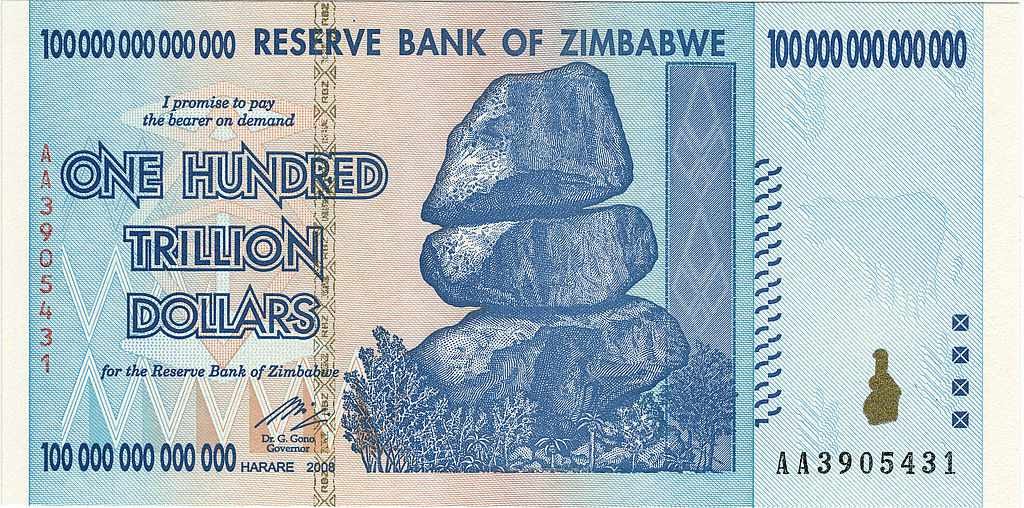
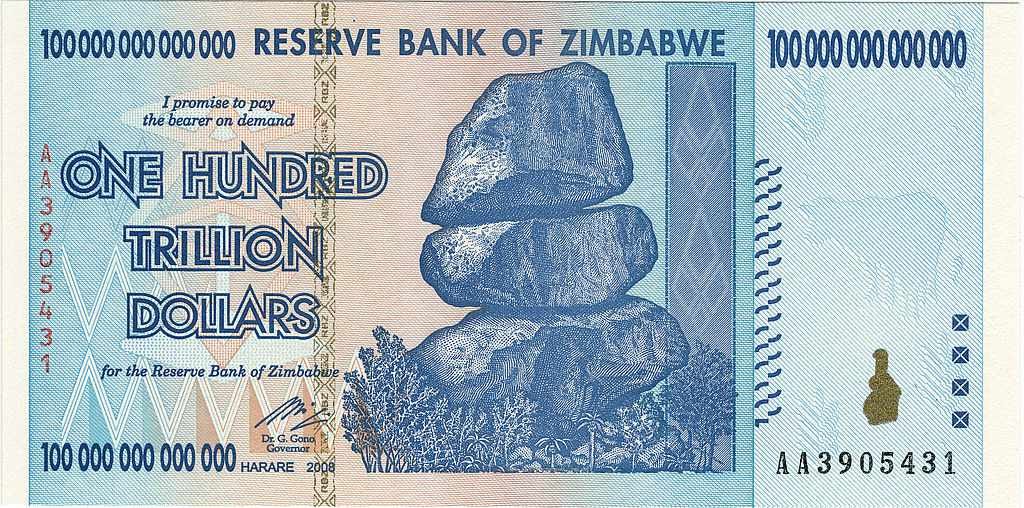
Sooner or later, the result is high inflation, sometimes hyperinflation — conventionally defined as an inflation rate of more than 50 percent per month.
Such cases have been relatively rare in recent decades, but they still happen. It’s part of the Venezuela story. Zimbabwe from 2007 to 2009 is, I believe, the most recent example of full hyperinflation. Several nations emerging from the fall of the Soviet empire also experienced hyperinflations in the early 1990s.
If you want a U.S. example, the Confederacy relied mainly on the printing press to pay for its rebellion. By the war’s end, prices in the South had risen around 9000 percent.
Just to be clear, even the Trump administration’s harshest critics don’t expect monetary catastrophe on that scale — although with these people you should never say never. But the history of the abuse of seigniorage provides a useful illustration of the dangers of fiscal dominance.
The more important concern for the United States is not that the Trump administration will try to force the Fed to cover the budget deficit, but rather that Trump imagines that he can force the Fed to reduce the deficit by making Federal borrowing cheaper. So let’s turn next to the issue of financial repression.
Financial repression
The U.S. government is deeply in debt. True, you should disregard anyone who throws around big, scary numbers — \(36 trillion!!! — without context. The U.S. economy is very large and so are almost all numbers associated with it. But federal debt is more than 100 percent of GDP, similar to its level at the end of World War II. And debt is continuing to rise, both in dollar terms and as a share of GDP, because the government is running large budget deficits, spending more than it is taking in via taxes. Given the size of the debt, federal interest payments are a major component of spending. And these payments have risen rapidly over the past few years: s_!JKy-!,w_1456,c_limit,f_auto,q_auto:good,fl_progressive:steep/https%3A%2F%2Fsubstack-post-media.s3.amazonaws.com%2Fpublic%2Fimages%2Fcf872a72-d7ec-45e7-b55d-e1731562d825_800x450.png)
The US government incurred a significant amount of debt from policies to address the Covid shock. But the main driver behind sharply rising interest payments isn’t the level of debt; rather, it’s the increase in interest rates that began in 2022 as the Fed raised the Fed funds rate to get inflation under control. The Fed has since cut the Fed funds rate a bit, but it and other short-term interest rates are still much higher than they were a few years ago. So there is a logic to Trump wanting the Fed to push rates lower as a way to reduce the budget deficit.
Trying to hold down the budget deficit by keeping interest rates low is referred to as financial repression. Thanks to Trump’s practice of tweeting out his opinions on everything from economic policy to who belongs in the Baseball Hall of Fame, we don’t have to speculate about whether financial repression is one of his motives for attacking the Fed. He’s said it straight out:
, which probably won’t happen here. But Turkey’s experience nonetheless remains relevant. Many people have noted that the Turkey story illustrates the danger of letting an autocrat run monetary policy. I’ve seen fewer people point out that Turkey also shows that this kind of political interference is self-defeating, failing on its own terms, except in the very short run. As inflation ran amok, even Erdogan was eventually forced to allow interest rates to rise, eventually reaching levels far higher than they would have gone if he had allowed the central bank to act responsibility from the beginning: s_!NXXf!,w_1456,c_limit,f_auto,q_auto:good,fl_progressive:steep/https%3A%2F%2Fsubstack-post-media.s3.amazonaws.com%2Fpublic%2Fimages%2F5bc96d8a-7c6b-4747-b427-6831667f87b7_800x450.png](https://substackcdn.com/image/fetch/\(s_!4m6O!,w_1456,c_limit,f_auto,q_auto:good,fl_progressive:steep/https%3A%2F%2Fsubstack-post-media.s3.amazonaws.com%2Fpublic%2Fimages%2F8a28b7f6-7143-4041-86a4-6104b10bcf8a_1302x810.png)
OK, so why *shouldn’t* the Fed help out the federal budget by keeping rates low? Bear in mind that the Fed’s job — its legal mandate — is to seek low unemployment and low inflation. To do this, it tries to set the Fed funds rate neither too high nor too low. Estimating this “Goldilocks interest rate” — r-star in Fed jargon — is tricky. But there’s no reason at all to believe that it’s consistent with Trump’s desire to make his budget numbers look better.
In practice, letting politicians set interest rates in pursuit of short-term political advantage almost always leads to high inflation. The current poster child for this reality is Turkey, whose President Erdogan took away the central bank’s independence in 2018, then insisted on cutting rates despite rising inflation. Inflation proceeded to skyrocket, hitting 80 percent before Erdogan relented and allowed rates to rise.
The parallels aren’t perfect: Erdogan has at times defended his low-interest-rate policy by invoking [Islamic law](https://sites.lsa.umich.edu/mje/2022/05/17/the-breakdown-of-erdoganomics/), which probably won’t happen here. But Turkey’s experience nonetheless remains relevant.
Many people have noted that the Turkey story illustrates the danger of letting an autocrat run monetary policy. I’ve seen fewer people point out that Turkey also shows that this kind of political interference is self-defeating, failing on its own terms, except in the very short run. As inflation ran amok, even Erdogan was eventually forced to allow interest rates to rise, eventually reaching levels far higher than they would have gone if he had allowed the central bank to act responsibility from the beginning:
s_!NXXf!,w_1456,c_limit,f_auto,q_auto:good,fl_progressive:steep/https%3A%2F%2Fsubstack-post-media.s3.amazonaws.com%2Fpublic%2Fimages%2F5bc96d8a-7c6b-4747-b427-6831667f87b7_800x450.png)
So interest payments eventually became a larger, not smaller burden on Turkey’s budget.
One aside: In addition to pressuring the Fed, the Trump administration has become a fervent advocate for stablecoins, crypto assets supposedly backed by U.S. debt. Many observers have warned that wide use of stablecoins will pose a threat to financial stability. The main reason Trump officials are ignoring these warnings is cash — the huge amounts the crypto industry is spending on political contributions and de facto bribes to Trump’s family. But Bessent has also touted the claim that stablecoins will generate demand for U.S. Treasuries — a form of fiscal dominance in which the desire to finance budget deficits overrides concerns about instigating a financial crisis.
But back to monetary irresponsibility.
Goosing the economy
If you look back at Trump’s screed against the Fed, you’ll notice that his first item isn’t reducing federal interest payments — it’s bringing down mortgage rates. This isn’t exactly fiscal dominance, but it’s a close cousin — demanding that the Fed serve a political goal rather than pursue its mandate of full employment and price stability.
Trump’s focus on mortgage rates also helps us understand why taking over Fed policy will almost certainly backfire. Trump’s demands make it clear that he doesn’t understand the following: the Fed doesn’t set mortgage rates. It literally only controls the Federal funds rate, which is the rate at which banks lend money to each other overnight. The Fed funds rate strongly influences other short-term interest rates, like the interest rate on 3-month Treasury bills. But long-term interest rates, like mortgage rates, mainly reflect expectations about the future – especially about future inflation.
So even if Trump were able to force the Fed to make drastic cuts in short-term rates, there’s a very good change that the prospect of higher inflation – as a result of the monetary goosing of the economy – will send mortgage rates higher. At the same time, Trump’s tariffs are increasing the price of construction materials, while deportations are reducing the supply of construction workers.
So it’s actually unlikely that Trump’s pressure on the Fed will make housing more affordable.
As with housing, so with the economy as a whole. (Actually, monetary policy usually works mostly through housing.) Trump may want the Fed to goose the economy, but if it tries, it may do more to push up inflation than to create jobs and promote real growth.
Inflating away debt
There’s a large economics literature on the problem of fiscal dominance. One piece of that literature focuses on an issue that isn’t currently on anyone’s radar but may well arise at some point: the incentive to inflate away the stock of government debt.
In scholarly economics journals this topic is found under the title of the “fiscal theory of the price level.” A highly indebted government that, for whatever reason, can neither increase taxes nor cut spending can render itself solvent through inflation. That’s because inflation reduces the real value of its debt. A simple way to understand this is to think about the lucky folks who snagged mortgages at 2% back in 2019. Now, in 2025, their wages have probably risen at least in line with consumer prices, which have risen more than 25 percent in the intervening years. So the real cost of the mortgage to them has fallen. Correspondingly, to the issuers of those mortgages, the real asset values of those mortgages have fallen. France in the 1920s effectively inflated away much of its government debt from World War I.
Could this, or something equivalent, happen here? As I said, never say never with this administration. Stephen Miran, the same economist who wants to become a Fed Governor while keeping his job in the Trump administration, has called for forced conversion of foreign holdings of U.S. debt into “century bonds” that pay no interest for 100 years. That would be a debt default by another name. Inflating away the federal debt would be a milder, less immediately disruptive equivalent.
OK, I don’t think we’re there yet. If Trump achieves his mission of destroying Fed independence, I believe that the most likely scenario is that he will force the Fed to drastically cut short-term interest rates in order to make the budget deficit look smaller. But that will backfire by igniting inflation. Then Trump will — aside from blaming other people — try something else. It’s too soon to say what, but it will be bad.
The truth is that an independent Fed has served America very well, in large part because it has prevented fiscal dominance. And it’s possible that the Fed as we know it will survive Trump’s onslaught. But right now things don’t look good.
Write a comment