I Regret Having Children vs. "I love being your mom"
Source: I Regret Having Children vs. “I love being your mom” Publisher: How To Subvert Subversion with Yuri Bezmenov | Author: Yuri Bezmenov Published: March 19, 2026 | Archived: March 21, 2026
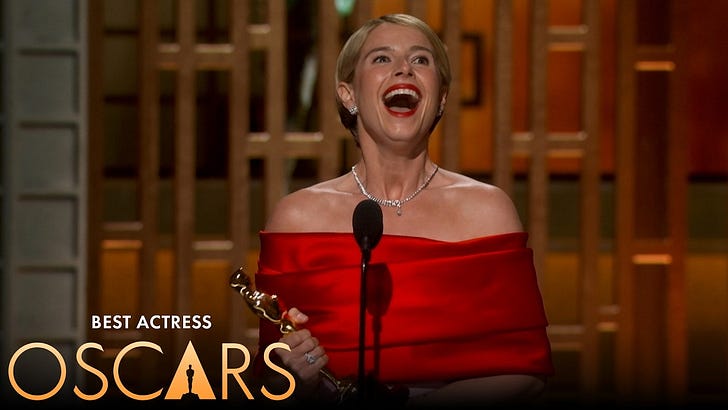
Which way, western woman? This month, multiple MSM outlets featured articles about moms who regret having children. In stark contrast, Jessie Buckley delivered the most pro-natal speech the Oscars has seen in many years.
Mom, dad, thank you for teaching us to dream and never to be defined by expectation but to carve from your own passion. You. Fred, I love you man. I love you. You’re the most incredible dad, you’re my best friend, and I want to have 20,000 more babies with you. I do!
And Isla, my little girl who is 8 months who has absolutely no idea what’s going on and is probably dreaming of milk, but this is kind of a big deal. And I love you and I love being your mom and I can’t wait to discover life beside you. Chloe and Maggie, to get to know this incandescent woman and journey to understand the capacity of a mother’s love is the greatest collision of my life.
It’s Mother’s Day in the UK today. So I would like to dedicate this to the beautiful chaos of a mother’s heart. We all come from a lineage of women who continue to create against all odds. Thank you for recognizing me in this role. This is the greatest honor, I can’t even believe it.
New York Magazine, The Telegraph, and BBC all published similar pieces about mothers who regret having children. This is an obvious, sinister anti-natal demoralization campaign. Time for some spicy commentary on the AWFL copy pasta.
New York Magazine: I Regret Having Children

s_!_A51!,w_1456,c_limit,f_auto,q_auto:good,fl_progressive:steep/https%3A%2F%2Fsubstack-post-media.s3.amazonaws.com%2Fpublic%2Fimages%2F1f9fced4-f209-49f2-9005-ba15c6cc921a_1260x436.png)
Sooner or later, everyone has to decide whether to give up lazy weekends, disposable income, and overall peace of mind to have a baby instead. For many of those on the fence, one anxiety looms large: What if I make the wrong choice? Parent regret is more common than you might think — the r/regretfulparents sub-Reddit alone gets around 70,000 weekly visitors who anonymously commiserate — though stigma makes it hard to admit in real life. Below, three moms of young children talk about why they wish they could go back to their old lives.
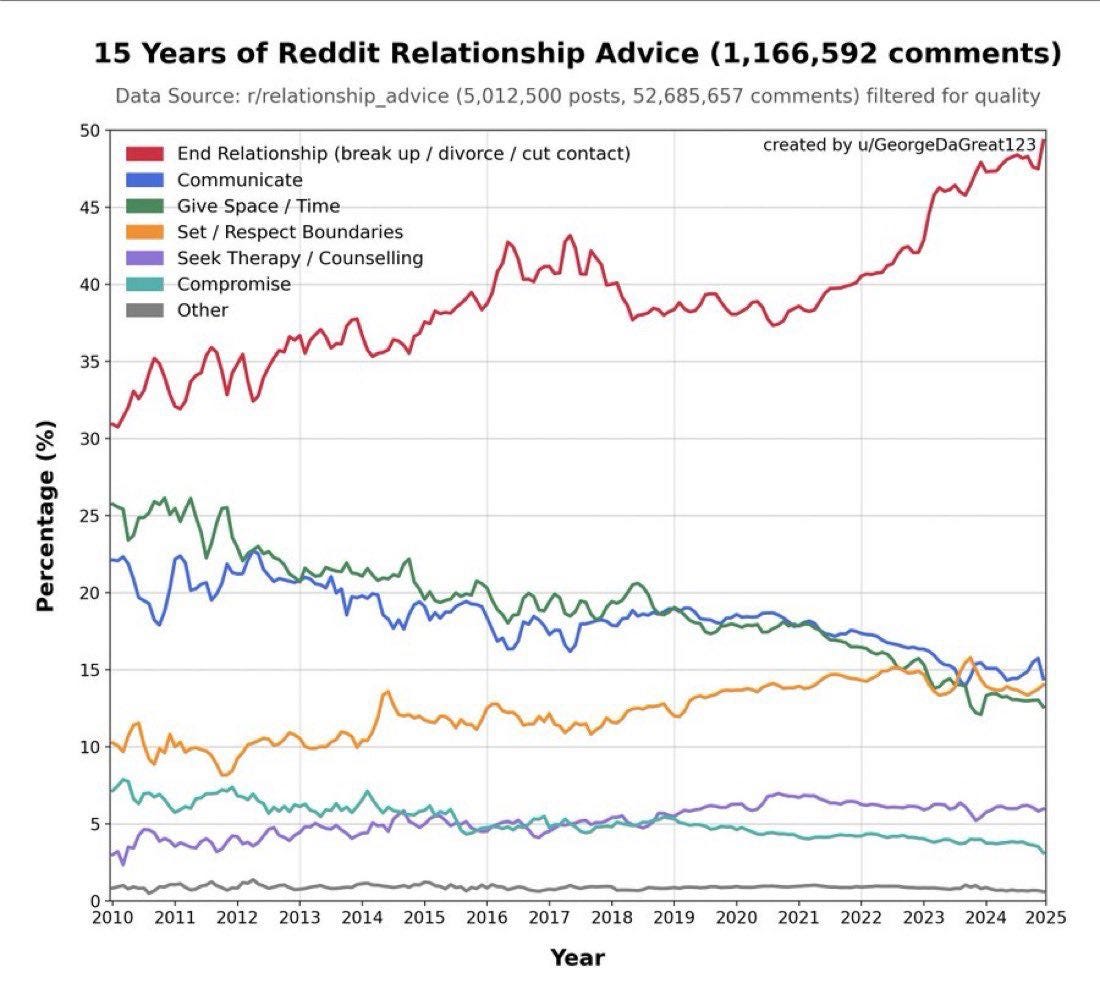
Reddit is a national security threat. It is owned by the same billionaire family that runs Conde Nast, The New Yorker, Vogue, Vanity Fair, and many other limousine liberal rags. MSM has chosen to amplify a fringe forum to bring toxic ideas into the mainstream, carrying on Paul Ehrlich’s anti-human legacy. Yet they will never publish articles about mothers who love their large families. The author’s framing is subversive. You can still have lazy weekends, disposable income, and peace of mind with babies - they are not mutually exclusive. Pray for the children of these moms.
— a 34-year-old Rhode Island mother of a 6-year-old and a 3-year-old**
When my husband and I were dating, his deal-breaker was having kids. I didn’t feel the same way, but I didn’t see life without children as an option. It always felt like the next stage of life for us. I remember telling my husband, “I’m worried; I love our life now and I’m not sure what it’s going to look like with a child.” He told me, “It’s going to be better.” I was the executive of a nonprofit, which was a stressful but fulfilling job. I was worried about my career, but I thought, There are working moms everywhere. People do this. Then I had my first baby.
Her first year of life, she was colicky and cried all the time — you couldn’t put her down. We had a babysitter quit and tell us, “I can’t do this anymore.” I also had postpartum depression…. At work, I couldn’t put in 70-hour weeks during busy times anymore, or attend trainings while breastfeeding, so I fell behind. We also had a second child once our first was a little older and easier to care for; I wanted her to have a sibling. Eventually, I left my job for a more manageable role in communications. I like working from home, and it’s not as demanding, but I miss my old job and the feeling of solving big problems like *How are we going to raise \(75,000?* As a parent, you’re solving tiny ones: *Do you want the crackers in the red or blue bowl?* Imagine thinking that fundraising for a nonprofit and attending DEI trainings is a fulfilling job. She cares more about helping her NGO waste donor money than giving her kids snacks. A bizarre combination of selfishness and suicidal empathy. Would be fascinating to hear the husband’s perspective on this. s_!TmSM!,w_1456,c_limit,f_auto,q_auto:good,fl_progressive:steep/https%3A%2F%2Fsubstack-post-media.s3.amazonaws.com%2Fpublic%2Fimages%2F710539f5-9934-49eb-a341-f3c22e5bdc99_716x550.jpeg)
Before motherhood, I was a perfectionist and an overachiever. Afterward, I struggled to regulate my emotions and my kids’. When my younger daughter struggles to get dressed, I try to distract her or make compromises, but in the end, she’s screaming, and I don’t know how to make it stop, so I just shut down. We don’t have lots of child-care options — we do part-time day care and don’t have a lot of family able to help us; otherwise we use PTO and juggle our work schedules to have all the coverage we need — and it feels like the rest of my life is put on hold for motherhood. I have good moments as a mom, but I get hung up on thoughts like, What I really wanted to do today was painting, or reading, or doing these chores alone. Last year, I was worried my oldest was exhibiting ADHD symptoms. My husband asked me if I’d looked up those symptoms in adult women, and I checked all the boxes. A psychiatrist ended up diagnosing me, and I started treatment. My medication helps quiet the overwhelm of being pulled in a million directions while parenting.
Even still, it’s like I never recover. I live for bedtime; those two or three hours at night I squeeze all my living into. We’ll watch movies or play video games and every now and then I’ll try to work on an art project, but by the time I’ve set everything up I’m exhausted and it’s time for bed. Having a kid turns you into a morning person the way being chased by a bear turns you into a runner. My husband enjoys parenting. He’s an optimistic, happy-go-lucky person who always knows what to do and how to de-escalate problems. I’ve tried to talk with him about how difficult things are, and he understands but is also aggressively positive about it: “Our kids are so wonderful and great.” But we recently spent all our savings buying a more expensive house because we lived in a terrible school district, and it got us talking. I was able to say to my husband, “Our life probably would have been better if we didn’t have kids.”
Terrible school district is liberal code word for too much diversity that they voted for. Perhaps she can try to lower the neuroticism of controlling her kids and explore living closer to family to help take the burden off. Playing with them beats any medication, painting, and video games. Modern dads and conservatives seem to have much less regret than moms and liberals.

***— a 30-year-old European mother of a 3-year-old***
> My husband had a month and a half of paternity leave, but the only helpful thing he did during that time was change her diapers, though he did it with a reluctant expression on his face; I had the feeling he never believed how much pain I was in. My mom helped, but she didn’t like being disturbed at night and even during the day was afraid of holding the baby or changing her. I hallucinated from lack of sleep. It felt like I’d been tricked into this. Everyone who wanted me to have a child — my husband, my family — knew they weren’t going to lose much, while my freedom and identity went down the toilet.
>
> When I went back to work, I was paralyzed by anxiety. Driving down the expressway those first few weeks of work, I’d worry, *What if something happens to my daughter?* She had my mom, but what if she needed me specifically? I’ve always suffered from depression and anxiety, but in college and those early parts of marriage, I was so liberated I forgot what they felt like. But now, in motherhood, it’s chronic. I’ve never been this anxiety-ridden in my entire life.
I feel bad for this woman. She is torn between modernity’s programming to go back to work and her instinct of wanting to be with her daughter. There is no substitute for a mother’s love, whether it’s another family member or hired help.
> I finally took my teaching exam and was offered a tenured opportunity at a state school far away. But I had to turn it down; it was a three-hour commute each way, and moving didn’t make sense for us. My daughter was already enrolled in a local preschool, and it would have been hard to get her enrolled elsewhere. It was a low point for me. I kept thinking, *If I didn’t have a family to think about, I could have taken that offer.* I envied my husband, who’s a carpenter and doesn’t have to worry about his career, while mine changed. Right now, I’m just substituting until I can get a real teaching job. I recently started studying for a master’s degree that will give me more opportunities at schools nearby…
>
> If I could go back, I would redo everything. My fantasy is an alternate universe where I graduated, went straight to a doctorate program, and lived alone. I would go for walks whenever I wanted and go swimming at the end of the week**.** It would be an isolated life but a peaceful one. I’ve told my husband about these feelings, but he doesn’t get where I’m coming from. I would feel guilty asking him to do more child care because he works long hours, my mom is here, and I’m in school. I feel like I don’t have a good enough reason to ask for more help. When I talk to my mother about it, she looks at my daughter and makes comments like, “Look at how beautiful she is. How can you not like this girl? What’s the problem — you want to go on a walk?”
Why would you prioritize teaching other people’s kids over raising your own? Perhaps she can explore homeschooling. Her fantasy is sad and lonely. You can go for walks with your kids and swim with them too, which is much more fun than going by yourself. Her husband and mother are trying their best to reason with a demoralized person.
**The Telegraph: ‘I’m fed up of being a slave’ - The women who regret becoming mothers**
s_!gx3V!,w_1456,c_limit,f_auto,q_auto:good,fl_progressive:steep/https%3A%2F%2Fsubstack-post-media.s3.amazonaws.com%2Fpublic%2Fimages%2Fd4089786-2499-44ef-88d7-c45636360c6b_1562x1324.png)

> Regretting motherhood was once one of life’s biggest taboos – despite the fact that it’s a common experience. While it’s impossible to know precisely how many women feel this way because so few speak openly about it, recent polls by YouGov and Gallup, respectively, found that between 8 per cent and 17 per cent of respondents wished they hadn’t become parents.
8-17% is not common; YouGov and Gallup are also not reliable polls.
> On social media, Kelley Daring, an influencer, has become something of a spokeswoman for regretful mothers, amassing 250,000 followers by reading out anonymous confessions from regretful parents – some of whom wish their children didn’t exist.
>
> As one beleaguered mum recently wrote to Daring: “I’m a 38-year-old woman in a loving, long-term marriage… having children (now aged 10 and eight) is the biggest regret of my life and the worst thing I’ve ever done. The workload of parenthood is crushing, and nothing prepared me for how much it would take from me… All I can do now is endure. I’m counting down the years until they move out and I can reclaim myself.”
What self is she looking to reclaim? Going out for avocado toast and bottomless mimosa brunch? If you see your kids as burdensome workloads, you’re going to have a bad time and think it’s the worst thing you’ve done.
> Giving voice to what formerly remained a private sentiment has clearly struck a chord with Daring’s audience. Her videos have been liked 7.4 million times, and each video receives thousands of comments, often from other regretful parents. Mumsnet is also peppered with posts by mums ashamed to be feeling this way. “I’m a single parent of four kids. I hate it,” writes one user. “Even though I have help from my family, I dread the thought of them returning… I’m just so fed up of being a slave, not being free, having no identity.”
>
> The Facebook group, “I Regret Having Children”, has over 96,000 members – the Reddit forum “r/regretfulparents” attracts 63,000 visitors weekly – including Dawn. While she says she hasn’t yet posted anything on the message boards, she finds comfort in reading other people’s struggles and knowing she’s not alone in ruing her decision to become a parent.
Kelly is demoralizing parents for clout while not having any kids of her own. Freud and Darwin would have a field day.
s_!NRM_!,w_1456,c_limit,f_auto,q_auto:good,fl_progressive:steep/https%3A%2F%2Fsubstack-post-media.s3.amazonaws.com%2Fpublic%2Fimages%2Fc126f86a-99d9-43f3-8b1a-29d2081b1ac1_1408x1068.png)
Suzy Reading, a chartered psychologist, says it could be both. “These forums can be validating, but they can fuel discontent,” she says. “I don’t know many parents who have not thought, ‘Oh my God, what have I done?’ during those first few months, but regret is a very strong term. “Many people also feel grief because life changes forever, and there’s so much to come to terms with – the enormous loss of autonomy and personal freedom, not just for a few months or years, but for a long time.”
Intensive parenting is characterised by “consistent involvement, emotional and verbal responsiveness, and age-appropriate stimulations… uniquely tailored to each child”, and has risen in popularity since the early 2010s. It requires caregivers, often mothers, to invest large amounts of time, emotional capital and financial support in their children to “optimise” their development. The overarching theme of the approach is that parents shape their child’s destiny – and high levels of parental involvement can make (or, low levels, break) a child.
The helicopter parents are crashing out. This intensive optimization style is suffocating families. It’s all so tiresome.
According to a 2023 survey by Pew Research in the US, 70 per cent of parents believe that parenting is more difficult now than it was 20 years ago. However, the same research also found that each generation of parents perceives their experience of parenting as more difficult than the generation before. One reason why young mums and dads seem to be finding their experience of parenthood so hard, they say, is because of a lack of support from the “boomer” generation of grandparents. As one mother writes on Reddit: “Many of these grandparents had a lot of help, but refuse to acknowledge they had a support system that just isn’t there today.”
Meanwhile, as support networks have shrunk and the cost of living has become increasingly ruinous, the financial penalty levied against mothers has remained considerable. According to figures from the Office of National Statistics (ONS) released in 2025, mothers face a “substantial and long-lasting reduction” in pay after having children, losing an average of £65,618 by the time their first child turns five. Dubbed the “motherhood penalty”, it found that on average, there is an additional £26,317 loss after the birth of a second child, and then a further £32,456 after the birth of a third child.
The motherhood penalty puts a price on the priceless. Families have become smaller and more isolated, which makes support much more difficult. Boomers could afford to raise more kids because the job and housing markets weren’t flooded with foreigners.
Widespread acknowledgement of these tough realities, alongside the groundswell of negative discourse online, is clearly giving many millennials and Gen Z women pause for thought when it comes to deciding whether to have their own child. Birth rates across the developed world are experiencing a significant, long-term decline. In 2024, birth rates fell for the third consecutive time in England and Wales, with the ONS calculating the total fertility rate of 1.41 children per woman being the lowest since records began almost 100 years ago.
“When we sit down to eat dinner, often at 9pm, and reflect on the thought of \[parenting\] day after day with no respite, it feels endless,” says Dawn. “Had I known family life would be like this, I think I would have stopped at one child or potentially not had any. I feel exhausted, stressed, broke and run ragged. I hate feeling regret because I love my boys with all my heart, but I mourn parts of my old life. I’m just hoping as the years go by, it gets easier.”
Doubt any Muslim mums feel this way. Dawn and many British mums pay exorbitant taxes so that migrants can raise many kids for free. MSM will never acknowledge this issue, so native fertility rates will continue to fall.
BBC: ‘Like a trap you can’t escape’ - The women who regret being mothers

s_!-fOT!,w_1456,c_limit,f_auto,q_auto:good,fl_progressive:steep/https%3A%2F%2Fsubstack-post-media.s3.amazonaws.com%2Fpublic%2Fimages%2F76d12d58-c602-469c-8027-f43f1c97432d_1240x604.png)
Carmen loves her 10 year-old son, but if she could turn back the clock she says she would never have become a mum. “Motherhood has taken my health, my time, my money, my strength, and my body,” she says. “The price is too high, and the cost is forever.” The teacher, in her 40s, is part of a hidden community of women who regret becoming mothers.
This regret is rarely voiced out loud. The women who contacted me would only talk about how they feel on the condition of anonymity, for fear of harsh judgement and because their families don’t know. Carmen tentatively put her regret into words on a general parenting forum a few years ago and says while some people were empathetic, others reacted as if she was “a monster”.
Parenthood is not a cost. It is a joy and an investment in the future. Did the author talk to the same mom featured in the NYMag article?
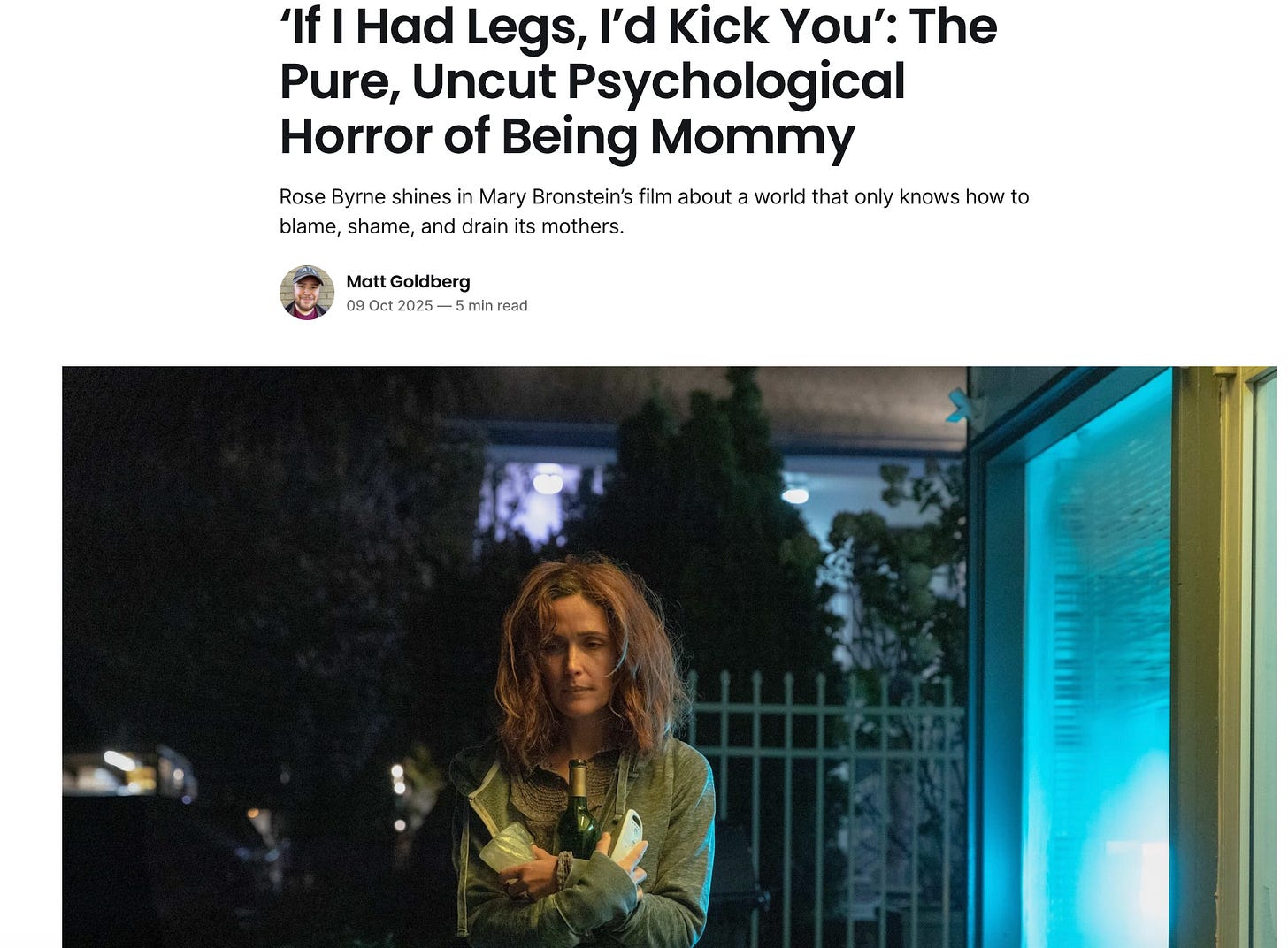
The extreme pressure and sacrifice that motherhood can involve is put under the spotlight in the film If I Had Legs I’d Kick You, which is up for an Oscar tomorrow night. Actress Rose Byrne gives a visceral portrayal of a burnt out mother who feels alone in her struggle to meet the needs of her daughter and hold up the scaffolding of family life.
Carmen can identify with the themes of the film. “Motherhood is an endless job that you do even when you don’t want to, because a little person depends on you,” she says. “It feels like a trap you can’t escape.” She is unflinchingly frank about how “devastating” she finds being a mother…
Shocker - Hollywood is normalizing another subversive social trend.
Psychotherapist Anna Mathur says “often when women feel safe enough to talk about maternal regret what comes up isn’t a lack of love, but a sense of isolation, exhaustion, or lost identity.”… To connect maternal regret with unloving and neglectful parenting is a careless assumption, according to Israeli sociologist Orna Donath, author of Regretting Motherhood: A Study. Donath interviewed 23 mothers, each of whom emphasised the difference between their feelings of regretting motherhood and how they felt towards their children. Several felt cheated by motherhood because the reality did not live up to the idealised version society had sold them.
“I regret having had children and becoming a mother, but I love the children that I’ve got… I wouldn’t want them not to be here, I just don’t want to be a mother,” says one participant in the study, a mother of two teenagers. What little data there is suggests that’s not an uncommon feeling. A 2023 study conducted in Poland estimated 5–14% of parents regret their decision to have children and would opt to be childfree if they had their time again.
Staggering cognitive dissonance. If you don’t want to be a mother, then your kids would not exist. You can’t have your cake and eat it too.
The I Regret Having Children Facebook group was created in 2007 and its content comes directly from parents - largely women - who have privately messaged their stories, to then be posted anonymously. The group’s moderator, Gianina, 44, a laboratory scientist from the US, says, “the aim has never been to shame parents or promote a particular lifestyle”.
“It’s more about documenting a cultural phenomenon that doesn’t often have space in mainstream conversations,” she says. “The community is large and active because many people are quietly grappling with feelings they were told they weren’t supposed to have.” Gianina was on the fence about having children and reading stories on the forum influenced her decision not to have them, she says.
Another childless women moderating a forum for motherhood regrets. Misery loves company. Shame and stigma keep societies from falling apart.
Younger adults are approaching the question of having children very differently from older generations, according to Margaret O’Connor, a counsellor and psychotherapist from Ireland, who specialises in helping people decide whether to become parents. “There is much more realisation that it’s a choice,” O’Connor says. “It’s not an automatic thing you have to do. “I have people coming to me in their 20s and 30s who know they want to have children, but are still kind of worried about the challenges, and would like some support to navigate it.”…
O’Connor says it’s completely normal for parents to experience regret, given how enormous and demanding the role is. She suggests seeing a therapist to try to get to the root of that regret, and talk “in a safe space where you won’t be judged”. Maternal regret isn’t always reversible “in a neat or total sense,” says Mathur. “For some women, those feelings \[of regret\] soften or change significantly with support, rest, time, and a shift in circumstances.” “But for others, elements of that feeling may remain regardless, and it’s important we allow space for that honesty without the shame.”
This is turning into an ad for the therapy industrial complex. Many careers and dollars are made turning what was perfectly normal and healthy a generation ago into something that requires professional help. MSM is the enemy of humanity for promoting this trash.



Write a comment