Progressives Must Apologize (Before It’s Too Late)
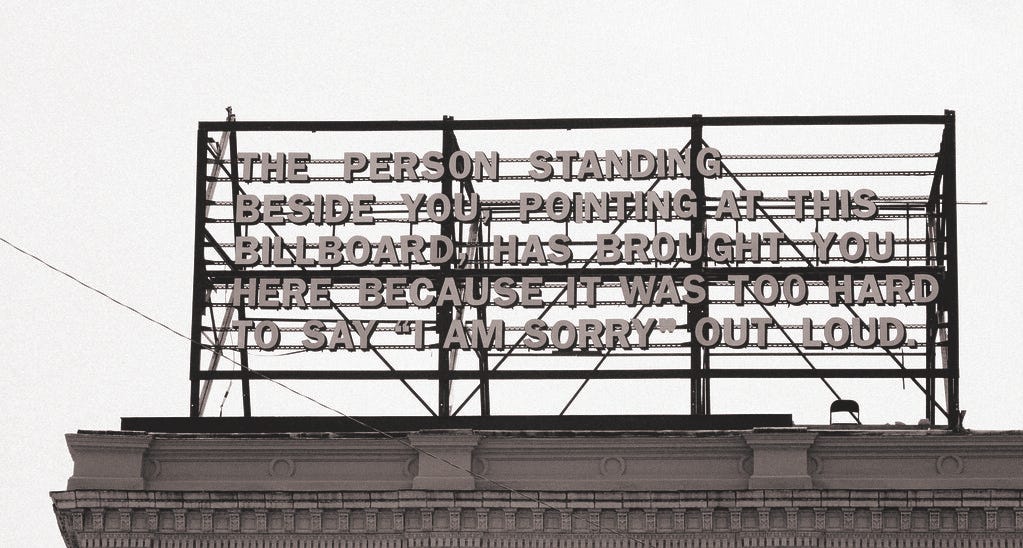
Rationalized bigotry and identitarianism. Political violence and terrorist apologia. Mass migration madness. Cancel culture. Overreaches around BLM, COVID, trans issues, and so much more. The 21st century progressive movement’s mistakes turned outright malfeasance make it one of the most totalizing failures of activism, public policy, global governance, and general wellbeing. It is a global phenomenon, with far reaching and overwhelmingly negative implications.
Keir Starmer’s approval rating sits at 18 percent. His government—barely a year old—polls at 19 percent. A far right party that didn’t exist two years ago, Nigel Farage’s Reform, has surged to 31 percent support, nearly matching Labour and the Conservatives combined. This pattern repeats across the Western world. Trump’s return in America. Wilders in the Netherlands. Le Pen’s surging support in France. Germany’s AfD. The far right isn’t ascendant despite progressive politics & policies. It’s ascendant because of progressivism.
The only hope for this movement, which has been the vanguard of leftism for most of my adult life, is to moderate and make massive mea culpas. I am not optimistic on either front however. The only thing worse than its terrible track record is the constant gaslighting about it.
Consider the paradigm case: Ezra Klein, progressive America’s most “sophisticated” voice, interviewing Ta-Nehisi Coates in the aftermath of both Trump’s re-election and Charlie Kirk’s assassination. Klein tries to stake out a modified, even supposedly moderate, progressive position. He admits Democrats “lost terribly” on trans and race issues, that their actions endangered trans people through political overreach. But then comes the tell: he still insists that majority American opinion on these questions is “fundamentally and morally wrong.”
This is the same Ezra Klein who spent over a year soft-pedaling the idea that Sam Harris and other heterodox liberal intellectuals were racists for disagreeing with people like Coates, plus Ibram X Kendi and Robin DiAngelo, on race issues. That there should be no quarter given to the moderate middle on several policy areas. He has since memory-holed his own activities in the most pernicious progressivism of the last decade and tried to frame himself as a sort of pseud-pragmatist. Pivot to the center. Talk to people on all sides. Listen, learn, engage.
But when topics like trans, immigration, and so on actually come up, he still thinks most Americans are “fundamentally and morally wrong.” Which means the pivot is bullshit. No wonder he never apologized. He isn’t sorry and his mind is as closed as ever.
The same dynamic plays out everywhere progressives claim to have moderated. On crime. On education. On speech. They adjust their language just enough to avoid total campaigning disasters and PR implosions, but they never question the core conviction that animates everything they do: We are the moral vanguard, and opposition to our program stems from bigotry, ignorance, or malice.
Until progressives actually abandon this worldview—until they apologize for their excesses, reform their institutions, and rebuild relationships with the moderate majority—the reactionary tide will continue rising. The far right will keep winning. And progressives will have no one to blame but themselves.
The time for reckoning is now. Before it’s too late.
Here’s what people like Harris, and also Andrew Sullivan, understand that most progressive critics miss: The problem isn’t just that progressives got specific policies wrong. It’s that they’ve constructed an entire worldview in which very basic things most human beings take for granted are deemed “fundamentally and morally wrong.”
That foreigners are not citizens, and citizens’ interests come first. That children are not adults capable of consenting to irreversible medical procedures. That rapid demographic transformation of neighborhoods affects quality of life. That borders serve legitimate functions. That merit matters. That parents have primary authority over their children’s education and upbringing. And that the wrongness of racism & sexism leave no space for social justice carveouts; racism against Asians, Europeans, and Jews is still racism, sexism against men (misandry) is still sexism, and so forth.
These aren’t fringe positions held by extremists. They’re baseline assumptions held by overwhelming majorities across every Western, liberal democracy. And progressives have spent fifteen years treating people who hold these views as moral monsters. They are a political movement that has played footsie with far left extremism for ages, and which believes radical, revolutionary social change is not only permissible but necessary, even against the wishes of the voting public.
When Nancy Pelosi declared that a border wall as an “an immorality” and an “old way of thinking,” she revealed this mindset perfectly. Not simply bad policy or too expensive. But morally wrong and archaic. Meaning anyone who supports it is terrible person by default. Anyone who’s willing to discuss it with an open mind is suspect.
This is why progressive “moderation” always rings hollow. They’ll adjust tactics when forced to by electoral catastrophe, but they won’t question the underlying conviction of moral superiority. Starmer will talk tough on immigration while calling restrictionists racist. Klein will acknowledge Democrats lost on trans issues while insisting majority opinion on the policies is morally wrong. Harris will run as a “moderate” by simply refusing to answer tough questions on her policy particulars and mouthing generalities whenever possible.
The British voter who told Starmer she had to prove she wasn’t racist before she could complain about rising crime in her neighborhood—that’s the tell. That’s what progressive moral supremacy creates: an environment where ordinary people must ritually abase themselves and signal virtue before they’re permitted to voice concerns about their own lives.
And progressives wonder why they’re losing.
There’s a reason progressives can’t actually moderate, even when they claim that they want to. It’s embedded in the worldview itself. In the critical theory framework that undergirds modern progressivism, all opposition is rooted in “white supremacy,” “patriarchy,” or other forms of structural oppression. This means opponents cannot be reasoned with—because reason itself is a tool of oppression. They can only be opposed, canceled, or demonized.
When Ta-Nehisi Coates says “conversation between \[them\] and me is probably not possible,” regarding people who disagree on transgender or racial policy, he’s not just being intransigent, he’s being honest. He’s being consistent with critical theory epistemology. If your position stems from structural bigotry rather than legitimate disagreement, what’s there to discuss? You don’t debate with bigots; you defeat them. (“By any means necessary,” said Malcolm X.)
This is why Coates can claim that Charlie Kirk’s public life was defined by “hate”—despite Kirk engaging opponents, debating them publicly, and building a massive following through persuasion rather than coercion or violence. To progressives steeped in critical theory, none of that matters. Kirk opposed progressive positions, therefore he was motivated by hate. And, by extension, his life was forfeit. (Although Klein rejected that extreme at least, and Coates mouthed platitudes about disliking murder generally.)
One doesn’t have to agree with Kirk’s views, or even his approach to right-wing activism, to recognise his assassination, a deliberately political assassination by a far left individual with strong ties to the trans movement, was beyond unacceptable. That the harassment and murder of anyone for their views, even an actual racist (which Kirk wasn’t), is unacceptable. That the type of people progressivism holds up as evil are, all too often assaulted or murdered (because any amount, beyond none, of such politically motivated crimes is too high).
This framework is politically suicidal. Democracy requires the possibility of persuasion. It assumes that people with different views might be convinced through argument, evidence, and appeals to shared values. Critical theory denies this possibility. It treats political opponents as irredeemable carriers of systemic oppression who must be defeated, not persuaded.
So when progressives lose—when Trump wins, when Reform surges, when voters reject them—they can’t respond with introspection or genuine course correction. Their framework doesn’t allow for “maybe we got it wrong” or “maybe they have a point.” It only allows for “the bigots won” and “we didn’t fight hard enough.”
This is the deep structure underneath all the rhetorical repositioning. Progressives will adjust their language because they understand electoral annihilation is bad. But they cannot question the core premise: that they are on the side of justice fighting forces of oppression, and opposition to them stems from moral failure.
Starmer and Klein can say nicer things about concerned voters. They can acknowledge political losses. But until they abandon the conviction that immigration restrictionists, gender critical feminists, COVID skeptics, and parents who oppose radical trans ideology in schools are fundamentally immoral—they’re just playacting moderation.
And voters know it.
Twenty-first century progressivism emerged from the confluence of several movements: the remnants of Occupy Wall Street’s anti-inequality activism, the rise of Black Lives Matter following Ferguson, the explosion of social media as an organizing tool, and the academic crystallization of identity-focused social justice frameworks. By the mid-2010s, this new progressivism had achieved cultural dominance in universities, major media institutions, corporate HR departments, and increasingly in Democratic Party politics.
The term “woke”—originally African American Vernacular English meaning awareness of racial injustice—was adopted by this movement as a badge of honor. What began as a call to “stay woke” to systemic racism—real or imagined—evolved into a comprehensive worldview that reduced virtually all social phenomena to power dynamics between oppressors and oppressed. This binary thinking, borrowed from critical theory and applied with evangelical fervor, became the lens through which progressives interpreted everything from literature to science, from economics to interpersonal relationships.
The movement achieved remarkable institutional capture. By 2020, major corporations were hiring Chief Diversity Officers, publishing houses were implementing sensitivity readers, universities were establishing bias response teams, and social media platforms were deploying content moderation policies heavily influenced by progressive activism. For a brief moment, it seemed progressivism had won the culture war decisively.
But victories built on institutional capture rather than popular persuasion are inherently fragile. And the methods used to achieve that dominance—methods progressives must now confront—have proven catastrophically counterproductive.
The phenomenon now known as “cancel culture” or “callout culture” emerged from Black Twitter in the mid-2010s as a tool ostensibly for, they thought, “holding” powerful figures “accountable.” The logic was simple: if traditional institutions wouldn’t punish bad behavior, collective social pressure could. What began as accountability rapidly metastasized into something far darker.
By the late 2010s, cancel culture had evolved into a form of digital mob justice characterized by disproportionate punishments, ideological purity testing, and an atmosphere of pervasive fear. A 2022 Intercept investigation revealed that progressive organizations themselves were being torn apart by internal callout culture, with staff spending more time policing each other’s language than pursuing their stated missions. One executive director compared it to receiving “a hollow prize”—finally achieving leadership of progressive institutions only to find them consumed by infighting.
The pattern became predictable: someone would say or do something deemed offensive by progressive standards…social media would erupt in outrage, and employers would face pressure to fire the offender. Sometimes publications would scrub their archives; and the target? They would be rendered persona non grata, a social pariah, and frequently borderline unemployable in their field. Sometimes the offense was genuine bigotry that deserved condemnation, but often it was a clumsy statement, an old joke, or simply disagreement with progressive orthodoxy.
The chilling effect on discourse was profound. Professors self-censored in classrooms. Writers avoided certain topics. Researchers feared publishing findings that contradicted progressive narratives. A study found that 62% of Americans believed “the political climate these days prevents them from saying things they believe.” Progressives had created an environment where honest debate was treated as violence and disagreement as bigotry.
This tendency is exactly why figures like Starmer, Klein, et al see the need to playact at moderation. Several others have noticed the problem. Barack Obama himself—hardly a conservative—warned in 2019 that “this idea of purity and you’re never compromised and you’re always politically woke … \[we\] should get over that quickly. The world is messy.”
The damage to free discourse, to intellectual inquiry, to the marketplace of ideas that undergirds liberal democracy, cannot be overstated. Progressives must apologize for treating disagreement as a moral emergency and for wielding social ostracism as a political weapon.
The progressive response to COVID-19 represents one of the ten greatest public policy failures of the century, with consequences that will reverberate for generations.
When the pandemic struck, progressive-governed states and localities implemented some of the most stringent lockdown measures in the Western world. California, New York, Michigan, and others pursued extended business closures, school shutdowns, and restrictions on movement that Democratic states maintained 2.5 times longer than Republican states.
The human cost has been catastrophic. A comprehensive Johns Hopkins meta-analysis of over 19,000 studies found that lockdowns reduced COVID mortality by only 0.2% while imposing “enormous economic and social costs.” Sweden, which pursued voluntary compliance rather than mandatory lockdowns, experienced lower total mortality than most comparable countries with strict measures.
Collateral damage was staggering, and fallout still lingers. Unprecedented increases in childhood poverty, disrupted education equivalent to months of lost learning, surging mental health crises particularly among young people, hundreds of thousands of closed small businesses, $5 trillion in deficit spending fueling inflation, and delayed medical care causing excess deaths from non-COVID causes.
Perhaps most damningly, when vaccines became available, there was no difference in cumulative COVID mortality between states that pursued stringent containment policies and those that were more lax. The sacrifices were excessive, an overabundance of caution to mitigate something we could have handled better in different ways. Some now feel, quite understandably, like it was all for nothing.
But the policy failures pale beside the authoritarian impulse progressives displayed. Dissenting scientists—including those from Stanford, Oxford, and Harvard—were smeared as “fringe” and “dangerous” for questioning lockdown efficacy. Social media platforms, pressured by progressive activists, censored discussion of the lab leak hypothesis (a counter to the dominant view that COVID emerged in the wild), talk of natural immunity through osmosis, and cost-benefit analyses of restrictions.
Minnesota Governor Tim Walz established a hotline for citizens to report neighbors for social distancing violations. California Governor Gavin Newsom, who even recently admitted his COVID policies were wrong, still exemplifies the problem: profound misjudgment followed by tepid acknowledgment without full accountability.
This was was technocratic overreach fueled by fear and institutional isomorphism—governments copying each other’s panic responses rather than making evidence-based decisions. And when the costs became undeniable, progressives pivoted to declaring that discussing those costs was itself dangerous “lockdown revisionism.”
Progressives must apologize for treating emergency powers as a blank check, for suppressing legitimate scientific debate, and for the generational harm inflicted on children who lost years of education and socialization to policies that didn’t work.
Nothing has more starkly revealed progressive moral bankruptcy than the response to the October 7, 2023 Hamas massacre.
Within hours of the deadliest attack on Jews since the Holocaust—an orgy of rape, torture, murder, and kidnapping that killed over 1,200 people and harmed thousands more—segments of the progressive left were…celebrating. The Chicago chapter of Black Lives Matter posted an image of a Hamas paraglider. Democratic Socialists of America rallied in support of Palestinian “resistance.” Harvard student organizations issued statements blaming Israel for its own massacre.
The reaction stunned even moderate progressives themselves. Sam Altman, CEO of OpenAI, wrote: “for a long time i said that antisemitism, particularly on the american left, was not as bad as people claimed. i’d like to just state that i was totally wrong.” CNN’s Jake Tapper described the aftermath as “a real eye-opening period in terms of antisemitism on the left.” New York Governor Kathy Hochul spoke of a “category five hurricane of left-wing antisemitism.”
The pattern was unmistakable: progressivism’s oppressor/oppressed binary had trained a generation to see Jews—successful, often “white”-presenting—as oppressors whose suffering didn’t count. When Hamas terrorists raped and murdered Israeli women, the feminists of #TimesUp, #BelieveWomen, and the #MeToo movement stayed silent. When progressive university professors failed to condemn celebrations of the massacre, they revealed that their commitment to “social justice” was conditional on the identity of the victims.
A year later, antisemitic incidents in America had reached record highs. Jews are being assaulted, murdered in the streets, persecuted just for existing. All in countries as diverse and socially advanced as the United States, Australia, and large swathes of Europe. Jewish people were harassed, isolated, and disinvited from events for being “Zionists.” The term Zionist itself has been weaponized as one of abuse, with gutter trash ideas like the “ZOG” (Zionist Occupied Government) conspiracy theory long favored by white supremacists now being deployed by anti-Israel progressives.
The American Jewish Committee found that 77% of American Jews felt less safe after October 7, with 90% believing antisemitism had increased. More tellingly, American Jews increasingly identified the extreme political left—not just the far right—as a serious antisemitic threat. It’s no surprise, given that progressives do not, as Charles Fain Lehman has noted, have the ideological foundations to actually disagreement with extremists about the core values they share.
How did progressivism—a movement that claimed to fight all forms of oppression—become a vehicle for antisemitism? Through the same reductionist thinking that characterizes all progressive excess: viewing every conflict through the lens of power, treating complexity as complicity, and demanding ideological conformity over moral clarity. Through the conviction that anyone who disagrees with progressive orthodoxy is motivated by “hate.”
A moderate progressive may say they abhor antisemism and political violence—even mass murder—against Jews, but they can’t say it’s ontologically wrong or unjustified. They agree with the far right and the far left on the false, alternative history of Israel as a “Great Satan” in the Middle East. They support theocratic ideologues who seek to overthrow the legitimate Israeli government and give the land over to the “Palestinian” cohort, no matter how teneuous their actual land claims or how repressive their beliefs.
Progressives must apologize to Jews for creating an intellectual and moral environment where celebrating the mass murder of Jewish civilians became acceptable in progressive spaces, and where opposition to that celebration gets you called a hater yourself.
Few issues better demonstrate progressive detachment from reality than transgender policy—and few reveal more starkly the gap between progressive rhetoric and progressive belief.
Let’s be clear about what Americans actually think. Large majorities support allowing trans adults to transition to the gender they want. Large majorities support banning discrimination against trans people. These are not controversial positions. They represent basic decency.
But Americans also believe, by even larger majorities, that: genetic human sex is real and determined by biology, not subjective feelings; children should not undergo irreversible medical transitions, especially without parental consent; male sex athletes should not compete in women’s sports; women deserve single-sex spaces for privacy and safety.
According to Ezra Klein, these majority positions are “fundamentally and morally wrong.” Not mistaken. Not worthy of debate. Fundamentally and morally wrong.
This is the progressive tell. Klein acknowledges that Democrats have “lost that argument terribly” and that this loss “has put people in real danger.” But he can’t help revealing that he still believes the majority of Americans hold immoral views. The rhetorical pivot is tactical, not substantive. Ta-Nehisi Coates went further, claiming that anyone who doesn’t fully embrace progressive trans orthodoxy is “dehumanizing” people. This from a man who wrote that 9/11 first responders “were not human to me.” When progressives accuse you of dehumanization, it’s just projection.
The policy disasters have been profound. Children—many of them gay or autistic—were rushed onto irreversible medical pathways based on ideological conviction rather than evidence. Women were told that objecting to male-bodied people in their changing rooms made them bigots. Female athletes were forced to compete against biological males or be called hateful. Rape crisis centers that wanted to maintain female-only spaces were defunded. Women who’d been sexually assaulted were told their trauma about male-bodied people in intimate spaces was itself a form of violence.
And when European countries—Britain, Sweden, Finland, Norway—systematically reviewed the evidence and concluded that “gender-affirming care” for children was insufficiently supported, American progressives doubled down. When Keir Starmer’s government banned puberty blockers for kids, following an extensive medical review, American progressives called it transphobic.
The costs have been enormous: detransitioners who underwent irreversible changes as children; women’s sports undermined; single-sex spaces eliminated; gay kids medicalized instead of allowed to grow into their sexuality; and most politically consequential, a massive backlash that has empowered genuine transphobes.
Here’s what progressives refuse to understand: you can support trans adults living freely and authentically while also believing that biological sex matters, that children deserve protection, and that women’s rights are real. These are not contradictory positions. They’re what most people—including most liberals—actually believe.
But progressives have made it impossible to hold both positions simultaneously. You either embrace every element of trans maximalism—including the most extreme claims about biology, children, and women’s spaces—or you’re a bigot motivated by “hate.” There’s no middle ground, no room for nuance, no acknowledgment that reasonable people can disagree about complex policy trade-offs.
The political consequences have been devastating. Trans issues became a wedge that drove moderate voters away from Democrats. Trump ran ads featuring Kamala Harris’s support for taxpayer-funded transition surgeries for illegal immigrants and prisoners—progressive positions so extreme that even progressives now admit they were politically toxic. But they still can’t admit those positions were substantively wrong.
Progressives must apologize for sacrificing children’s health to ideological purity, for eliminating women’s spaces and sports, for calling majority opinion immoral, and for making reasonable discussion of transgender policy impossible.
I’ve already written about DEI (Diversity, Equity, and Inclusion) before. How ensuring equal opportunity** regardless of race, gender, or background represents basic egalitarian common sense. But the DEI industry that progressives built transformed into a patronage system that infantilized minorities, discriminated against other groups, and undermined meritocracy.
By the 2020s, DEI had become a multi-billion dollar ecosystem of administrators, consultants, and training programs. Universities created massive bureaucracies dedicated to DEI, often with more administrators than faculty in some departments. Corporations mandated unconscious bias training despite no evidence it reduced bias. Hiring and promotion decisions were made with explicit racial preferences defended as “equity.”
The contradictions were glaring. Progressives who claimed to oppose essentialism reduced people to their demographic categories. They claimed to empower minorities while treating them as fragile victims requiring constant protection. They denounced discrimination while implementing explicit racial discrimination in admissions and hiring.
Most perversely, DEI’s benefits accrued primarily to affluent, educated minorities who needed help least, while working-class minorities—and working-class people of all races—were left behind. As a Tablet Magazine analysis noted, progressivism has always been an elite movement with “class condescension and a paternalistic attitude to the laboring classes” at its core.
The Supreme Court’s 2023 decision striking down racial preferences in college admissions revealed progressivism’s overreach. Even moderate Americans—who supported equal opportunity and opposed discrimination—rejected the idea, once blithely and stupidly pushed by Kendi amongst others, that fighting discrimination required more discrimination.
It’s all so perverse. And it’s why progressives must apologize for reducing equality to a spoils system, for treating minorities as political clients rather than individuals, and for poisoning the well of genuine anti-discrimination efforts.
On immigration and migration, progressives have created a disaster while simultaneously denying the disaster exists—then calling anyone who notices it a bigot.
In Britain, excessive migration has led to such conflict that the UK voted to leave the European Union, a disastrous far right ploy that backfired spectacularly. And even after Brexit, Boris Johnson’s ostensibly conservative Tories presided over a massive wave of non-native (not even European) immigration in an ultimate betrayal of the very voters who thought Brexit would reduce immigration. The result: the Conservative Party, once a huge powerhouse of moderate right-wing leadership, now polls at a historic low of 15%.
Starmer acknowledges the problem rhetorically. He talks about how mass immigration has “undermined a sense of common culture.” But when Reform UK proposes actually reversing course—ending non-essential immigration, requiring visa renewals under higher standards, removing hundreds of thousands who arrived during the Boris wave—Starmer calls it “racist” and “immoral.”
This is the tell. Progressives will finally admit, under electoral duress, that maybe they got immigration a bit wrong. But they cannot stop believing that mass immigration remains a moral signifier, a virtue, an elevating repudiation of “whiteness.” They feel they have to adjust because Trump is dangerous and the country is full of racists, but they still believe their critics on immigration are “on the wrong side of history” and almost all bigots.
Throughout the rest of Europe, progressive elites championed mass migration even as working-class communities bore the costs of rapid demographic change, rising crime, and cultural dislocation. This dynamic—elite moral preening combined with working-class abandonment—has driven the rise of right-wing parties from Sweden to Italy.
In America, the pattern is identical. Progressive rhetoric about borders being “concentration camps” and ICE being comparable to Nazis made sober immigration policy discussion impossible. Progressive cities declared themselves “sanctuaries” while lacking resources to handle migrant influxes, then complain when Republican governors send more migrants their way. When moderate voters express concern about border chaos, they are told those concerns are simply “racist.”
The human cost of this incoherence is staggering: migrants dying in dangerous crossings; human trafficking networks enriched; communities overwhelmed; public services strained; and political backlash empowering genuine xenophobes who progressives claim to oppose. To say nothing of the risks. Be it dangerous extremist theocratic terrorists or sexually/monetarily predatory men setting upon vulnerable communities. This is the fruit of pretending mass migration has no costs.
Progressives must apologize for treating immigration as a morality play rather than a policy challenge requiring trade-offs, and for abandoning working-class concerns as beneath consideration while calling basic immigration enforcement “immoral.”
The rise of the far right across the Western world is not mysterious. It’s a direct response to progressive excess.
When progressives used institutional power to enforce ideological conformity, they didn’t eliminate opposition—they drove it underground where it fermented into resentment. When they dismissed working-class concerns as bigotry, those voters found champions elsewhere. When they created an atmosphere where basic truths couldn’t be spoken, they made conspiracy theories seem more plausible than official narratives.
Political scientists have documented the pattern: areas with the strictest COVID lockdowns saw the largest rightward swings. Countries with the least controlled migration saw the biggest surges for right-wing parties. Populations subjected to the most aggressive DEI initiatives showed the strongest backlash.
A 2025 study of electoral shifts across 28 EU countries found that perceived policy overreach and poor pandemic management dropped political trust by 10-15 percentage points, fueling anti-establishment sentiment. Populist and radical-right parties that dipped during the initial “rally around the flag” period of COVID have since rebounded dramatically. Geert Wilders in the Netherlands, Giorgia Meloni in Italy, and Donald Trump in America all explicitly campaigned against progressive excess—and won.
This is the bitter irony: progressives, who claim to fight authoritarianism, have empowered authoritarians through their own authoritarian impulses. They have become what they claim to oppose. And they’ve emboldened a reactionary right far worse than any traditional conservative from the late 20th century.
For progressivism to survive, or at least have hopes of not being resigned to living in infamy like Marxism and other extremist ideologies, it must reform. For progressives who hope to move forward as anything other than a historic cautionary tale, they must do three things:
Not hedged apologies. Not “mistakes were made” passive voice evasions. Specific acknowledgments of specific harms:
-
To everyone whose careers were destroyed by disproportionate cancel campaigns.
-
To children and businesses whose education and livelihoods were was sacrificed to lockdowns that didn’t need to be so long or draconian.
-
To Jews who were abandoned and endangered by progressive antisemitism.
-
To women and children harmed by trans extremism.
-
To working-class people of all ethnicities and cultures whose concerns around crime or migration were dismissed as bigotry.
-
To everyone who felt they couldn’t speak freely in institutions progressives controlled.
-
To moderate voters called “immoral” for holding majority positions.
Apologies matter.** They demonstrate moral seriousness. They rebuild trust. They signal that lessons have been learned. And the fact that people so often don’t like making them, hate to take that ego hit? That’s all the reason they’re mandatory here.
Institutional capture without popular support is tyranny. Progressives must:
-
Dismantle the DEI bureaucracy and return to actual equal opportunity (MEI could work)
-
Restore free speech and viewpoint diversity in universities, businesses, and elsewhere
-
Embrace intellectual humility and epistemic pluralism
-
Rebuild trust in expertise by being honest about data, and admitting uncertainties
-
Return to persuasion over coercion as the primary tool of social change
The goal should be to win hearts and minds, not to enforce compliance.
The far right poses genuine dangers. White nationalism, anti-democratic movements, theocracy—these are real threats requiring real opposition. But progressives cannot effectively fight these dangers while embodying the authoritarianism they claim to oppose.
Defeating the far right requires a broad coalition that includes moderates, liberals, and even conservatives who share commitments to democratic norms, free speech, and pluralism. Such coalitions are impossible when progressives treat everyone but them as supposed “racists” and even “fascists”.
Progressives must recognize that their former allies—moderate lefties, civil libertarians, traditional liberals, various members of the economic left (who often oppose identity politics)—have legitimate grievances. Rebuilding those alliances requires humility, compromise, and a willingness to prioritize shared values over ideological purity.
Fifteen years of progressive excess has produced a predictable backlash. The far right is ascendant. Democratic norms are under threat. And progressives—who claimed to be defenders of justice, equality, and democracy—bear substantial responsibility for this crisis.
But here’s the thing: progressives still don’t really get it.
They understand they’re losing. They grasp that something went wrong. So they’re making tactical adjustments. Starmer talks tougher on immigration. Klein acknowledges Democrats lost on trans issues. The rhetoric shifts, the optics adjust, the consultants work their magic.
And voters see right through it.
Why? Because the fundamental conviction remains intact: We are moral, they are immoral. We represent progress, they represent hate. We are on the right side of history.
This conviction makes actual coalition-building impossible. You can’t work with people you think are immoral. You can’t persuade people you think are bigots. You can’t compromise with people you think represent evil.
And so progressives lose. And lose. And lose.
What would actual change look like? Not rhetorical repositioning. Not tactical moderation. Not consultant-driven messaging adjustments. It means genuinely abandoning the conviction that progressives alone have access to moral truth and everyone who disagrees is motivated by evil.
I have something I call the Repentance Ritual (I may write more about this at a later date). It is saying you’re sorry and meaning it. Not as appeasement, not as a maneuver, not to curry favor. And not even just because the victims (and progressivism absolutely has victims) deserve it. One must do the Repentance Ritual because it changes their soul. The death of their ego, the wound to their self-image, the inability to hold themselves out as righteous and infallible. It is a healing process, for victim and victimizer. And in this case it means abandoning the conviction that progressives alone have access to moral truth and everyone who disagrees is motivated by evil.
Will they do it? Based on the evidence at the moment, my current prediction is: “no.” The moral supremacy is too intoxicating. The institutional capture is too complete. The social rewards for performing wokeness are too powerful.
Progressives will have built the very end state they claim to fear—through their own arrogance, their own moral certainty, and their own refusal to treat their fellow citizens as anything other than moral degenerates in need of education. The time for reckoning is now. Apologize genuinely. Reform fundamentally. Before it’s too late.
Your choice, progressives. For our future and your souls.
For readers requesting sources on the claims made in this piece.
Starmer/Labour Approval Ratings: YouGov UK Political Tracker; Ipsos UK Political Monitor (regularly updated data available at yougov.co.uk and ipsos.com)
Reform UK Support: UK polling aggregators including YouGov, Savanta, Redfield & Wilton Strategies
Conservative Party Polling: Britain Elects; UK Polling Report; individual pollster tracking
Johns Hopkins Lockdown Meta-Analysis: Herby, J., Jonung, L., & Hanke, S. H. (2022). “A Literature Review and Meta-Analysis of the Effects of Lockdowns on COVID-19 Mortality.” Studies in Applied Economics, SAE./No.200/January 2022. Johns Hopkins Institute for Applied Economics. Available here (pdf, may auto-download)
State Lockdown Duration Comparisons: WalletHub (2021) “States with the Fewest Coronavirus Restrictions”; Ballotpedia COVID-19 policy database; state executive order timelines
Sweden’s COVID Approach: Ludvigsson, J. F. (2020). “The first eight months of Sweden’s COVID-19 strategy and the key actions and actors that were involved.” Acta Paediatrica, 109(12), 2459-2471; Our World in Data COVID mortality statistics
Minnesota Reporting Hotline: Minnesota Department of Health announcements (Spring 2020); Star Tribune, KARE 11 coverage
Gavin Newsom COVID Acknowledgment: Various 2024-2025 interviews; Sacramento Bee, Los Angeles Times reporting
Learning Loss: Betthäuser, B. A., Bach-Mortensen, A. M., & Engzell, P. (2023). “A systematic review and meta-analysis of the evidence on learning during the COVID-19 pandemic.” Nature Human Behaviour, 7(3), 375-385
Economic Costs: Congressional Budget Office deficit reports (2020-2021); Bureau of Labor Statistics; McKinsey & Company (2021) “COVID-19 and education: The lingering effects of unfinished learning”
Attack Casualty Figures: Israeli Ministry of Foreign Affairs; Associated Press; Reuters; Human Rights Watch documentation
Chicago BLM Paraglider Post: Social media archives (October 2023); Chicago Tribune, Forward, Jerusalem Post coverage
American Jewish Committee Data: AJC (2024). “State of Antisemitism in America” annual report. Available at ajc.org
Self-Censorship (62% figure): Cato Institute (2020). “Poll: 62% of Americans Say They Have Political Views They’re Afraid to Share.” Available here
Transgender Policy Opinions: Pew Research Center surveys; Gallup polling on sports, bathrooms, medical transitions
UK - Cass Review (2024):
-
Cass, H. (2024). Independent Review of Gender Identity Services for Children and Young People: Final Report. NHS England. Published April 10, 2024. Available here
-
NHS England (2024). “Children and Young People’s Gender Services: Implementing the Cass Review Recommendations.” Available here
-
Key finding: Systematic reviews found “poor” or “low quality” evidence for puberty blockers and hormones
Sweden:
-
Sweden’s National Board of Health and Welfare (Socialstyrelsen) (2022). Care of Children and Adolescents with Gender Dysphoria. Updated February 2022.
-
Key conclusion: “At group level, the National Board of Health and Welfare currently assesses that the risks of puberty blockers and gender-affirming treatment are likely to outweigh the expected benefits of these treatments.”
-
SEGM analysis: Sweden’s 2022 Guidelines
Finland:
-
Kaltiala, R. (Chief psychiatrist, Tampere University). Multiple publications and interviews on Finland’s approach
-
Tablet Magazine (2023). “Finland Takes Another Look at Youth Gender Medicine.” Available here
Summary Source:
-
U.S. News (2023). “Why European Countries Are Rethinking Gender-Affirming Care for Minors.” July 12, 2023. Available here
-
City Journal (2023). Levine, J. “Yes, Europe Is Restricting Gender-Affirming Care.” March 25, 2023. Available here
-
U.S. Department of Health and Human Services (2025) — Declaration on Pediatric Sex-Rejecting Procedures PDF available
-
European Academy of Paediatrics (2024) — Published in PMC: Available here
Intercept Investigation: Fang, L. (2022). “Meltdown: A Free-for-All on Race and Gender Is Consuming Progressive Organizations.” The Intercept, June 13, 2022. Available here
Barack Obama 2019 Quote: Obama Foundation Summit, October 29, 2019; full video and transcript; Guardian, CNN, Washington Post coverage
Nancy Pelosi Border Wall Quote: Press conference January 2019; Congressional Record; C-SPAN archive
Coates, Ta-Nehisi (2015). Between the World and Me. New York: Spiegel & Grau.** pp. 85-87 (approximate page numbers for the 9/11 passage)
PDF Access:
- Yale University hosts a PDF: https://iberian-connections.yale.edu/wp-content/uploads/2020/09/Between-the-World-and-Me-by-Ta-Nehisi-Coates.pdf
Wallace-Wells, Benjamin (2015). “The Hard Truths of Ta-Nehisi Coates.” Politico Magazine, July 12, 2015.** https://www.politico.com/magazine/story/2015/07/the-toxic-world-view-of-ta-nehisi-coates-120512/
Additional Coverage with Full Quote Context:
-
Fox News (2017). “Ta-Nehisi Coates, who called 9/11 responders ‘menaces of nature,’ to speak at West Point.” March 7, 2017. https://www.foxnews.com/us/ta-nehisi-coates-who-called-9-11-responders-menaces-of-nature-to-speak-at-west-point
-
John Kass News (2025). “The Moral Myopia of Ta Nehisi Coates” by Dr. Cory Franklin, February 14, 2025. https://johnkassnews.com/the-moral-myopia-of-ta-nehisi-coates/
Quotation (excerpt): The quote appears on pages approximately 85-87 of the book. The complete passage reads:
“I could see no difference between the officer who killed Prince Jones and the police who died, or the firefighters who died. They were not human to me. Black, white, or whatever, they were menaces of nature; they were the fire, the comet, the storm, which could — with no justification — shatter my body.”
2023 Affirmative Action Ruling: Students for Fair Admissions, Inc. v. President and Fellows of Harvard College, 600 U.S. __\ _(2023); Students for Fair Admissions Inc. v. University of North Carolina, 600 U.S. ___ (2023). Supreme Court opinions
Far-Right Electoral Gains: European Parliament election results (2024); Pew Research Center European studies; national election data for Netherlands (2023), Italy (2022), France (ongoing polling), Germany (federal and state results)
DEI Industry: McKinsey corporate DEI reports; Higher Education Research Institute administrator growth data
UK Immigration Statistics: Office for National Statistics; Brexit referendum data (2016); post-Brexit immigration figures
This article synthesizes data from polling organizations, academic research, government sources, and journalism. Polling is inherently temporal—numbers shift. Facts in evidence from observable reality may not require, and therefore not receive, extensive soircing or citation. All claims made are verifiable. Readers are encouraged to consult original sources, verify methodologies, cross-reference news events across multiple outlets, and read full academic studies rather than summaries.
Some claims reflect developing situations where figures may have changed since publication. This bibliography was compiled January 2025.
Thanks for reading the Edokwin Editorial! Please restack this piece and share it with your friends on other platforms. Helps way more than you could possibly know!
Write a comment