The Rise of the Highfivesexuals
Source: The Rise of the Highfivesexuals Publisher: Cartoons Hate Her | Author: Cartoons Hate Her Published: January 21, 2026 | Archived: March 21, 2026
If you’re still on Twitter (and if so, this is your sign to drink a glass of water and check in with yourself) you’re probably aware of a series of videos floating around, displaying a group of edgy right-wing influencers throwing up Nazi salutes, including the Tate brothers. Several of these men are people of color, some of them are sexually ambiguous, a couple are Muslim, and three of them are formerly incarcerated—to their credit, a far more diverse crew than you’d see at a leftist CHAZ demonstration in 2020. Just to put things into perspective, when a meth addict famous for hammering himself in the face to improve his maxilla projection is the least embarrassing person in your crew, something is probably not quite right.

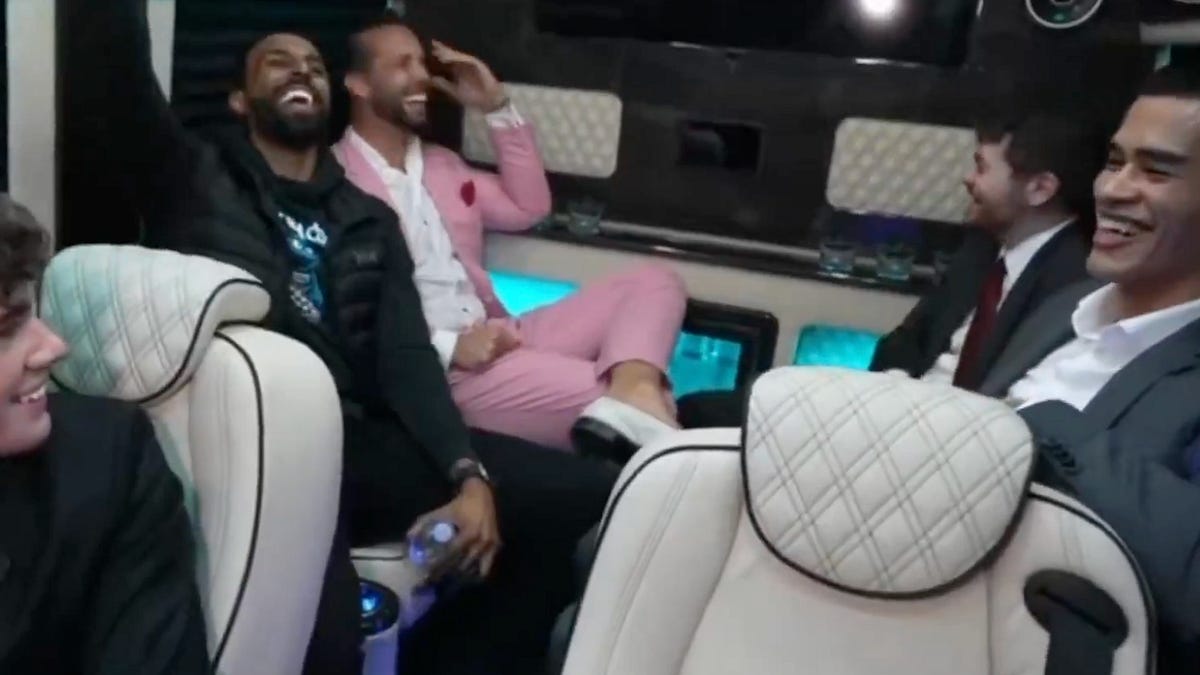
Of course, people cringed. Not that I ever thought any of these people were *cool*, but seeing them together in a limo, giving Temu 2009 club-rat hustle bro core, making Hitler roll in his grave with their bizarre edgelord We Are the World version of the Third Reich just really sends the message home. And across Twitter, people had the same “wow, this is embarrassing” reaction, including people who are unambiguously right-wing.
But beyond cringe, a lot of Twitter users postulated was that this group of men “seemed gay.” It was an easy dig. The evidence of “gayness” was mostly influencer Justin Waller [telling](https://x.com/tinkaboutdis/status/2013086023610180086) Clavicular to stop taking girls out on dates and instead focus that time and energy into “business,” and then later [admonishing](https://x.com/RichardHanania/status/2013005255110205862) a young woman sitting on Clavicular’s lap for being a “7 sitting on a 10’s lap” while getting verbal high-fives from the Tate brothers, who further glazed Clavicular’s good looks to humiliate the young woman. The highlights from the night don’t include any of the men making any progress with women, but purposefully insulting and/or arguing with women to [impress each other](https://x.com/stoneyixl/status/2013341115429109916). But I disagree that any of this was *gay*—it was highfivesexual.
s_!SfuY!,w_1456,c_limit,f_auto,q_auto:good,fl_progressive:steep/https%3A%2F%2Fsubstack-post-media.s3.amazonaws.com%2Fpublic%2Fimages%2Faef9a20e-1c0d-47b7-ba5c-668771b8c0ba_358x266.png)
Highfivesexuality is a temporary sexual orientation that you see pretty often with young teenagers or preteens, especially boys, and they usually grow out of it by the time puberty finishes. The idea of highfivesexuality is that boys’ attraction to girls exists only insofar as they can use it to seek approval (and high fives, verbal or physical) from their same-sex friends. Put simply: to a highfivesexual, it is more appealing to make fun of girls than to make out with them. To some extent, this also manifests with young teen girls, where rating boys, gossiping about boys, and mocking boys with their female friends is more appealing than actually dating boys. These kids aren’t gay; they’re twelve. The only problem is that Justin Waller is thirty-six.
I would be remiss not to point out that like any videotaped content, we shouldn’t discount the idea that all of this is performance art. I wrote about that phenomenon before, where people take “candid” videos, influencer confessionals, or street interviews far too seriously without examining the fact that someone deliberately chose to film it for a reason. But regardless of whether these men are actually highfivesexual, they are at the very least deliberately producing content to promote the insidious highfivesexual agenda.
Look, it’s Adam and Eve. Maybe Adam and Steve. But not Adam humiliating Eve to impress Steve, Brayden, and Rhett.
Justin Waller and the Tate brothers are not the first to engage in highfivesexuality. A great Substack article from a year ago rang the alarm about the current manosphere not even liking women that much, especially in contrast to the pickup artists and red pillers of the 2000s, who were focused on actually having sex with women. Today, for many young people, not having sex with women is somehow more impressive, because having sex with women implies you are somehow capitulating to their agenda. Even sexually dominating women is seen as “cucked” because there’s a chance the woman might enjoy it. If you are a highfivesexual, the most straight, masculine, based thing you can do is ignore women entirely and never run the risk of sexually arousing one.
Of course, this is convenient in an era where social anxiety and loneliness are at an all-time high, and where it’s harder for young people to meet at all, even if they genuinely want connection. If you reframe your loneliness as “it’s gay to date women anyway,” then it’s far less embarrassing and requires nothing of you. These are the same boys who attempted to trigger MSNBC moms online, chanting, “Her body my choice,” while actually making no attempt to actually touch girls at all. And while most people would deride you for saying something like that in public, many of these young people never talk in public. They talk online, where you can say whatever crazy shit you want to a seemingly large group of people applauding you for your views, no matter how maladjusted they are.
But like I said before, I give young teenagers and preteens a pass on highfivesexuality. I believe this is a normal developmental phase between childhood and adulthood, where sex is still a bit gross and daunting, but you’re coping with all these new feelings of attraction. When I was younger, this phase manifested among my peers as deliberate crushes on completely unavailable men—celebrities and openly gay guys, for the most part. I started going through highfivesexuality a bit early (age 8 or 9) when I developed an all-consuming crush on Leonardo DiCaprio (in hindsight, I was wrong to think we were star-crossed lovers due to our age gap. I just needed to wait a few years.) The boys did it too—we had a very attractive female substitute teacher who frequently worked at our school, and I distinctly remember sixth grade boys bragging about her “staring at their junk.” It was incredibly convenient for them that she wasn’t actually interested, and they all knew it. Joking about imagined sex with a substitute teacher was far less terrifying than asking a girl their own age to dance.
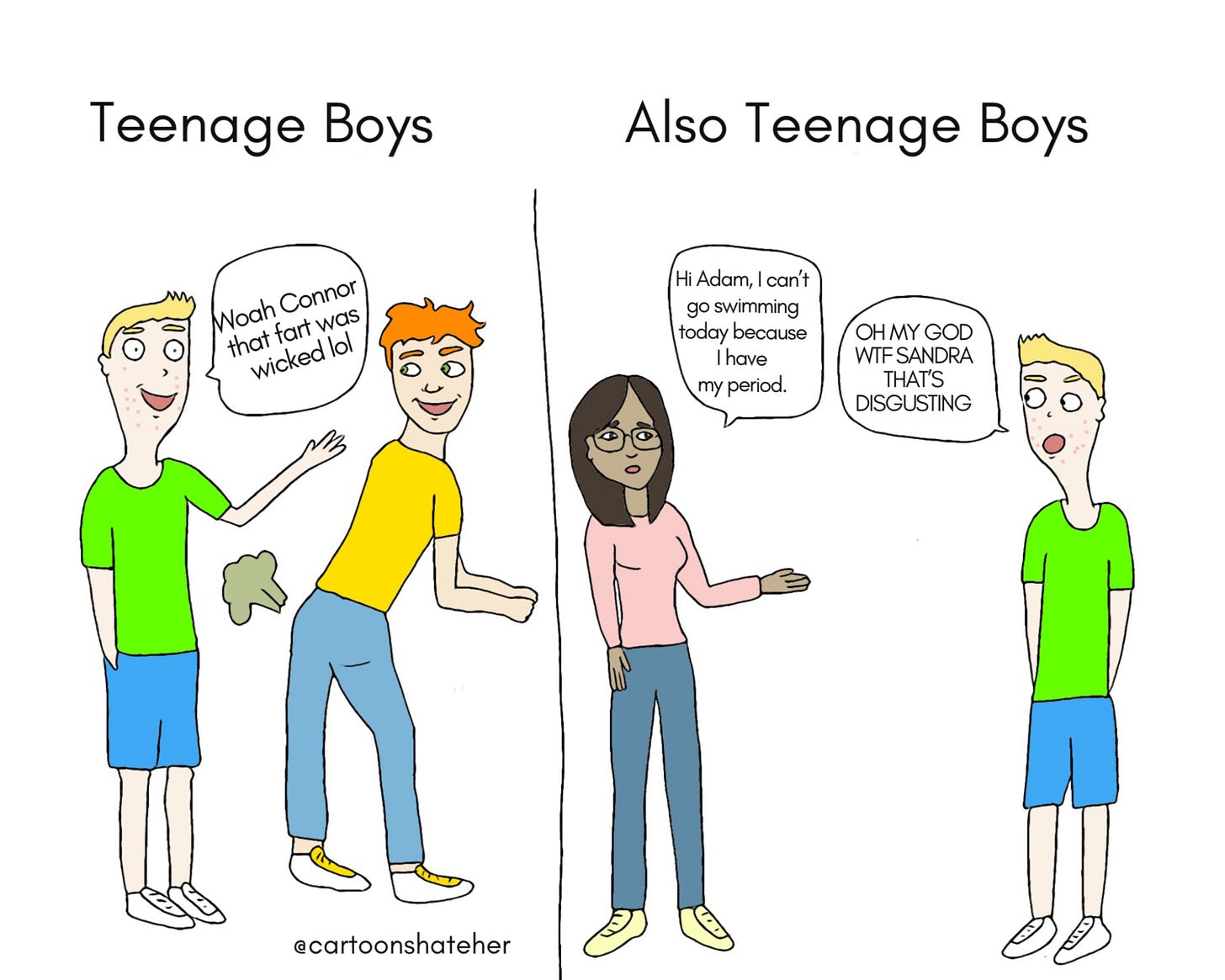
When my teen peers stared dating, highfivesexuality clashed with budding heterosexuality. I was an early bloomer, and boys I dated in middle school often found our relationships a bit embarrassing—not because I was ugly, or because they wanted to date other girls, but because their male friends would laugh at them for having a girlfriend at all. I distinctly remember guys worrying that having a girlfriend was “gay,” and begging me not to tell their friends we were dating. Boys taunted each other for calling their girlfriends, going on dates, or really interacting with girls at all. And again: middle school. This was normal.
I continued to experience my own version of highfivesexuality even as I was actively dating boys. Until my late teens, I wasn’t even entirely sure I was straight. I wasn’t physically aroused by boys, and the fact that no boy had ever made me “horny” sent me into a spiral where I worried I might actually be gay. The problem was, I wasn’t attracted to girls either. I had this sort of free-floating sexuality that didn’t seem related to other people at all, all while finding the concept of sex kind of gross. But I really wanted the romance of a relationship, especially given that I struggled to make platonic friends and I found boys easier to attract romantically than girls were to attract platonically. I fooled around with boys I was dating, but ultimately found a lot of it really unappealing. And yet, I still did it—not because it turned me on, but because it was a way for me to signal status with other girls. When I look at my eighth grade diary, I wrote explicitly about having gone to second base, or even third base, before my friends. I kept a running tab of who was closest to losing their virginities. I was using sex (well, in my case, not really sex, maybe fingering) as a way to bond with other girls, not the boys I was dating. It wasn’t gay. To call it “gay” is painfully shortsighted. I was highfivesexual. And eventually, I grew out of it.
For boys, highfivesexuality also sometimes persisted well into puberty. When I was seventeen, my boyfriend and I were hanging out with a mutual male friend, who began making edgelord jokes about my recent divorced mother “getting fucked hard by every guy in town.” Now, obviously, any self-respecting adult man with a girlfriend would defend her and say this joke went too far, but we were teenagers. In my boyfriend’s case, palling around with his dorky friend was more important than however I was feeling. The two of them pranced around the room, pantomiming my mom taking it from behind, until I stormed out. We broke up shortly after, and he confessed that the relationship had been stressful for him because it took up too much of his time that would otherwise be spent playing Frisbee with his male friends. I have no doubt that even this man grew into a normal adult.
By the time college came around, almost nobody was highfivesexual. If a college-aged boy had made fun of another boy for going on dates with girls or having sex with girls, he would have been the butt of the joke. The highfivesexuality phase was over.
But while the right-wing manosphere men in the viral Twitter video are all adults—some of them old enough for prostate exams—they are not making content for adults. They are making content for edgy thirteen-year-old boys, trying to shock their liberal moms who who subscribe to Jessica Valenti. Back when I was a teenager, we had plenty of adult men making edgy content for teenage boys, but it still promoted the ultimate ideal of heterosexuality—being a player, being a “pimp,” being a womanizer, but still being unambiguously into women. Maybe they were chauvinists, maybe they “disrespected” women, but they had sex with women and enjoyed it. They enjoyed the “game” of picking up women and charming women. Perhaps they only thought women were good for sex, but shit, at least they enjoyed having sex.
But things have changed—several things.
First of all, the attention economy relies on producing inflammatory, edgelord content even if it helps nobody. Back in the 2000s, your seduction e-book only did well if lots of people could vouch for its effectiveness. Say what you will about the red pill and pickup artist writers of my teen years, but they were popular in part because plenty of men reported their methods working. Maybe they employed their methods in a less bombastic way, but they used these tools to project confidence and charisma. Today, nobody has to give a “review” of Sneako for him to be famous. They just have to enjoy watching him, even if they’re watching him to make fun of him. A lot of popular “podcasts” are mostly consumed via thirty-second rage bait clips on Twitter of people getting “owned,” not via actual episodes. Some podcasts only exist in that format. If you are an influencer, your objective is to get the most attention possible, not to say anything interesting, worthwhile or helpful. You don’t even have to be funny or charming. You just have to piss people off. It’s kind of like this kid I knew in fourth grade named Michael who reliably got sent to the principal’s office on a weekly basis for standing on his desk and throwing books at everyone. Nobody liked him; nobody wanted to be his friend; none of the kids even found him funny. But he reliably sucked up far more school resources and attention than the popular kids or the funny kids. Being a modern-day influencer is basically just being Michael.
Second off, the loneliness epidemic is affecting everyone, but pandemic-era children were probably one of the most egregiously affected groups. There are still people to this day who defend what was done to these kids, without stopping to acknowledge with humility that in a best case scenario, well-meaning tradeoffs were made with spurious evidence. These were kids who missed out on major milestones, some of whom went over a year without seeing friends, and if they dared to complain about missing birthday parties, dances or proms, they’d be scolded by adults with three masks in their profile pictures because “boo hoo, you didn’t get to go to the prom, meanwhile people DIED.” But now that everyone seems more aware of how important in-person interaction really is for kids (not to mention how bad unfettered, constant algorithmic screen time is) we have to contend with the fact that there is half a generation of young people who are, for lack of a better term, giga-cooked. We joke about gooners and goon caves, but a lot of today’s gooners are young men who were teenagers during COVID and who essentially developed a humiliation kink around their addiction to pornography that is not only separate from, but antithetical to having sex with women.
For these young people, reveling in their fear of girls and their fear of social interaction by rebranding it as “alpha” to avoid women entirely is extremely comforting and validating. Within this paradigm, it’s not embarrassing to be a virgin. It’s not even embarrassing to be friendless, because most IRL people are “NPCs” anyway. They can feel assured that their loneliness comes from a place of superior coolness, not debilitating anxiety and isolation. I think that when people speak about the “male loneliness epidemic,” they aren’t necessarily saying that only men are lonely—but a generation of young men have been taught to venerate loneliness in a particularly maladaptive way.
It was particularly jarring to see Piers Morgan try to humiliate Nick Fuentes by getting him to admit to “never having been laid,” as if this isn’t the whole reason he’s popular. Millennials and Gen X viewers thought this was an amazing own, failing to realize that Nick Fuentes’ followers are not only aware that he’s a virgin, but would probably abandon him if he admitted to sleeping with a woman.
In the absence of these external factors, most teenagers grow out of highfivesexuality because puberty makes them more interested in having sex than afraid of embarrassment. This tipping point happens at a different age for everyone. By the time I was in college, my interest in sex had everything to do with genuine attraction and arousal and nothing to do with showing up my female friends. Similarly, I noticed that my male peers genuinely wanted to date and sleep with girls. Luckily, sex isn’t exactly a hard sell, or at least it wasn’t back then. There weren’t that many other things to do. Yes, it’s embarrassing to be vulnerable or to be rejected, but without anyone validating highfivesexuality, we were forced to grow out of it.
This article has focused mostly on how men perform highfivesexuality, but the impulse is also there with today’s young women, albeit in a way that doesn’t come off quite as offensively (young women LARPing as Nazis are usually doing it for male attention, not as an edgy sign of rejecting it.) But I’ve noticed that if you are a female content creator, there is tremendous value in performing “comedy” that exists mostly in the form of screenshotting bad dating app conversations, or deliberately sabotaging these conversations with sassy put-downs so you can post them to the Internet. I don’t believe these women are deliberately rejecting men they’d otherwise want to date—they probably have other conversations with men that go normally, and they don’t post them. But the most attention comes from posting ridiculous screenshots, usually designed to humiliate a man who is showing interest in them (sometimes, the man is clearly being obnoxious, but many times he’s just being boring or awkward.) Female content creators will also up the ante with increasingly ridiculous requirements for relationships (see: princess treatment) based on “knowing their worth,” which would send most reasonable men running for the hills. And this content does very well with teenage girls who aren’t even on dating apps, because again, it’s a form of highfivesexuality.
I have even noticed a trend of teenage girls (and slightly older) “swearing off” dating boys in a way that’s meant to look political but just might be rooted in social anxiety and arrested development (more highfivesexuality.) When the 4B sex strike movement “took off” (air quotes doing major work there) in the US after the 2024 election, I postulated that a lot of this wasn’t going to stick, and 4B was a convenient repository for existing loneliness and social anxiety. I was told that I was invalidating a completely serious movement for young women who were rightfully terrified of all their male peers because some of them may have voted for Trump. I was told that it made sense to avoid all men because “they’re listening to the Tate brothers” as if it would be impossible to find a man who isn’t a groyper. Perhaps a lot of these young women are still not having sex, but I maintain it was never about 4B and it was never about Trump. There are very few sexually mature heterosexual women who are happy to completely swear off men, for the same reason you don’t find too many straight adult men who truly want nothing to do with women. If everything is functioning in the typical way, your healthy desire to have sex will eventually snap you out of your anxiety and resentment. Put another way: if being horny enough will eventually push a straight person to engage in same-sex relationships in prison, it shouldn’t take much to get a straight person to overcome their anxiety and have sex with their desired gender outside of prison. My concern is that increasingly, things are not functioning in that typical way.
As long as inflammatory content—the type of stuff that makes people feel gleefully angry, and feel good about the worst parts of themselves—is rewarded, highfivesexuality will persist beyond the stage where it’s supposed to end.
Write a comment