😡 LDS Church Attorney Tells Mormon Seminary Teacher: Don’t Report Child Abuse
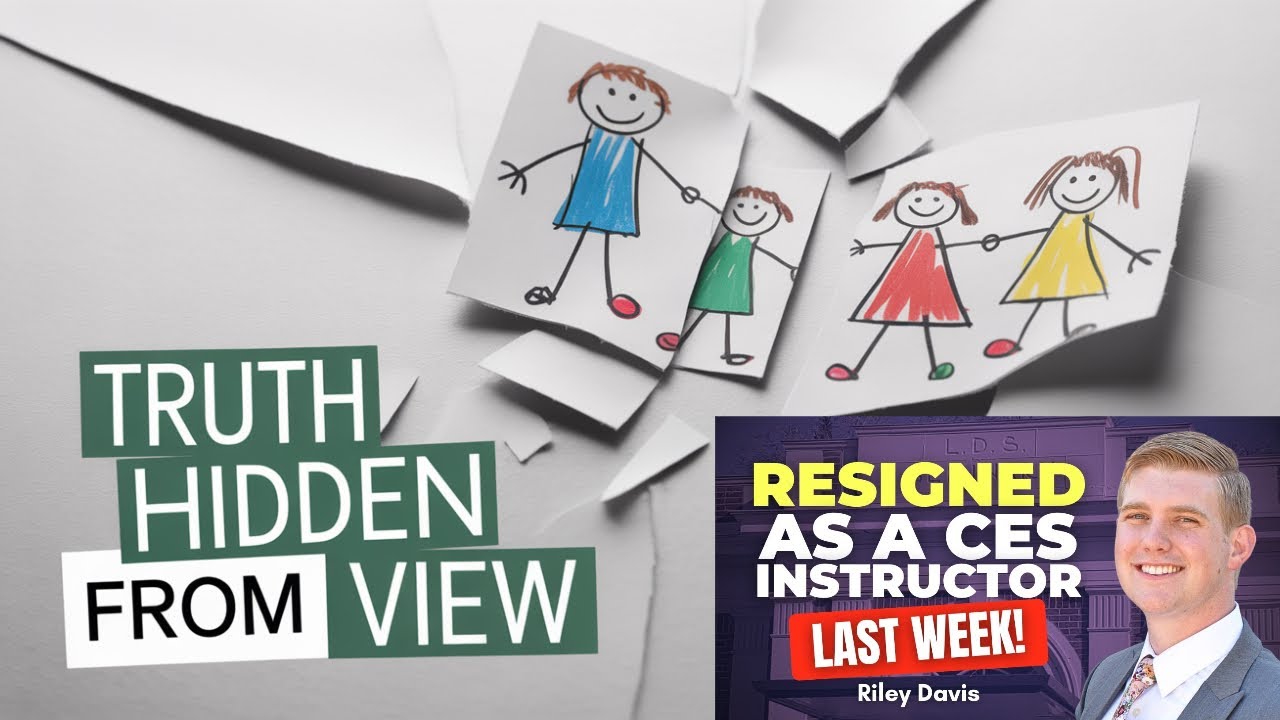
Source: 😡 LDS Church Attorney Tells Mormon Seminary Teacher: Don’t Report Child Abuse Channel: MormonNewsRoundup Published: February 4, 2026 | Archived: April 4, 2026
Channel: MormonNewsRoundup
Duration: PT7M9S
📄 Description
In a disturbing Mormon Stories episode, former seminary teacher Riley Davis recalls calling the LDS Church abuse hotline after a student disclosed signs of a…
Description
In a disturbing Mormon Stories episode, former seminary teacher Riley Davis recalls calling the LDS Church abuse hotline after a student disclosed signs of a…
Transcript
I honestly can’t believe what I just watched. A Church of Jesus Christ of Latter-day Saints attorney told a seminary teacher to break the law and not report suspected CSA. Yes. In a recent episode of Mormon Stories, Riley Davis talks about his experience as a full-time LDS seminary teacher in Utah. During a high school class, a girl shared with the entire class some challenges that she was facing, situations that clearly sounded like abuse and neglect. Concerned, Riley did what any responsible LDS seminary teacher would do and called the Church of Jesus Christ of Latter-day Saints abuse helpline. Shockingly, the attorney on the other end told him not to report it. And why? Because, according to the attorney, it didn’t sound like the Department of Child and Family Services would have enough evidence to act. Essentially, Riley was being told to ignore suspected abuse and break the law by keeping things confidential. Now, Riley, realizing this advice was illegal, consulted the public school counselor at his school, who reminded him that he was a mandatory reporter, which makes him legally obligated to report suspected abuse. Now, following the law, Riley reported the situation, doing the right thing despite the church’s attorney’s instruction. Okay, Corore, ceue up that clip. The most effective seminary teachers are the ones that can make students open up and be most vulnerable in class, which can be really problematic. you end up discussing a lot of things in a seminary class. And I remember, I don’t know what it was, but we were sharing hard things that Christ has helped us overcome. And a girl raised her hand and started sharing a situation with her parents that sent up all the red flags, like not okay. Something like this needs to be reported. And so, like usual, as everyone’s leaving the classroom, I’m outside. I pull her aside outside and I’m like, “Hey, um, question. Thank you for sharing that. Right. Have you told anyone else about this? And she said, “Well, I told my aunt.” Uh cuz what it sounded like was really intense neglect and abuse, right? I just let her know, “Hey, I care about you. Thank you for sharing that. I’m glad your aunt knows. I am required by law to report anything like this.” And the girl actually seemed pretty supportive. She was like, “I get it. You You can report this.” Wait, are LDS seminary teachers in Utah, do they conceptualize themselves as being mandatory reporters? Um, that would surprise me. No, I don’t think they do on large scale. I did because that’s what I I was a public educator before. And they are school teachers. Absolutely. And actually, adults in Utah, adults period are mandatory reporters. And so it’s not the Mormon church telling you that was a seminary teacher. That was not you were a mandatory reporter. Oh, in fact, in fact, I later went into my office and did what I was trained to do, which is to call the church helpline. So, um, she she actually seems pretty supportive. So, I just kicked into my educator role. Hey, I’ve got to report this. Thank you so much, and we’re here for you. And she seemed pretty supportive. Like, yeah, you’re fine. Thank you for caring about me and calling it in. The thing is, instead of calling DCFS, as all church leaders and employees are programmed to do, I immediately open my phone and it’s my first time having to call the abuse hotline cuz we’re taught immediately if anyone says anything like that to call Curtain MCONI, right? We’re not told that it’s Curtain McConi. It’s just the abuse helpline. But I call them and I report it and the lawyer on the other side of the line is like, “Well, thank you so much for calling. doesn’t seem like we’ll have like I don’t think DCFS would have a good enough case like to actually open an investigation on this. So, don’t call it in. And I kind of paused. I was like, “So, wait, like I don’t have to call it in.” He’s like, “Oh, no. Don’t call it in.” I’m like, “Okay.” And I hang up and I’m just like dumbfounded. I’m like, “What do I do?” Because literally from the get-go, from the time she raised her hand, I knew that I had to call this like the educator pre-seminary teacher in me is like, I’ve got to call this in. It’s my responsibility. And then I get told by the helpline, don’t. So then I’m frantically searching online, okay, who’s a mandatory reporter in Utah? And I find out, yes, I absolutely am. Anything the church wants with priest penitent privilege, this is not some penitent person confessing to me. this is a victim coming to me and so any argument for oh you don’t have to doesn’t apply here and I’m like I’m a flipping mandatory reporter and they’re telling me not to report. Thanks for watching that. This is a textbook evidence of the LDS church’s absolute immorality. Asking or advising someone to ignore abuse is not just wrong, it’s potentially criminal. When victims share their pain with an adult, they must be protected, not silenced. Now, Tim Cosenoff, a lawyer who built his career suing the Mormon church about its abuse scandals, was recently asked this very question on Mormonism Live. I mean, why doesn’t the church just take the path that minimizes bad PR and causes the least amount of trouble by reporting abuse to law enforcement? And Tim’s answer to this is chilling. The church has a systematic culture of refusing to be told what to do. At its heart, the church is a theocracy. So, the laws of men, they don’t really apply. And from what I’ve seen in my own experience, the church prioritizes protecting abusers, and it blames the victims. I’ve seen it happen repeatedly. Women report rape and are punished or dysfellowshipped, while priesthood holding rapists face no serious consequences. We’ve seen child rape covered up, domestic abuse ignored, and countless victims silenced. The church is not there to protect its members. It’s there to cover its own backside, collect your money, and laugh all the way to the bank. Now, Riley’s story here is not an isolated incident. It’s part of a pattern of systemic abuse and cover up that the church refuses to meaningfully address. And until it does, no victim is truly safe. And anyone in the church hierarchy who puts reputation over human life, they’re complicit. See, at the end of the day, this isn’t just about one attorney giving a bad piece of advice. It’s about a pattern of systemic wrought that prioritizes institutional protection over human safety. When the church tells its employees to ignore mandatory reporting laws, it’s not just bending the rules. It’s perpetrating cycles of abuse and betrayal. No amount of legal maneuvering, er spin, or polished general conference talks and erase the fact that real people, often children, are being sacrificed on the altar of reputation and control. Until the church chooses transparency and accountability over secrecy and self-preservation, every member should ask themselves, “Whose side is my church really on?” Dysays his news roundup is becoming a significant problem. More and more are tuning in. They’re starting to question. We need a strategy to counter this. And quickly, I am inevitable. Brothers, the Mormon news roundup is becoming a significant problem. DVES’s influence grows daily.
- Reference: https://www.youtube.com/watch?v=eiEgLRanISw
Write a comment