The Unexpected Consequences of "Quiet Quitting" Twitter
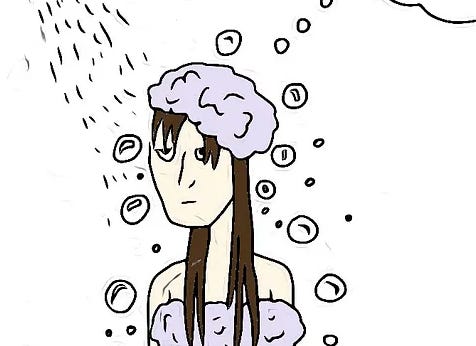
Source: The Unexpected Consequences of “Quiet Quitting” Twitter Publisher: Cartoons Hate Her | Author: Cartoons Hate Her Published: March 31, 2026 | Archived: March 31, 2026
After coming to terms with the fact that my Twitter addiction was bad for my mental health, I more or less “quiet quit” Twitter a few months ago. Initially, this meant a couple months of mostly only accessing Twitter on my laptop to post my articles, and then not really checking it otherwise.
But first off, why did I get so addicted in the first place?
I can thank Twitter (or as some might say, X, but I refuse to say that because it feels wrong) in large part for the success of this Substack. Many of my earliest successful posts were based entirely on Twitter discourse. Sometimes, this reliance on Twitter for topics was a detriment—at least once in every comments section, someone asks, “Is this a real thing that’s happening or just imaginary entities on Twitter?”

Anyway, I mostly found Twitter really fun! I have over 50,000 followers (TBD how many of them are real people) and reliably had a viral tweet every month, maybe even every week. I’m sure if I opened Twitter right now, something would make me laugh. And we used to have *great* apolitical Main Characters that were so fun to watch. Exhibit A:
s_!MR0d!,w_1456,c_limit,f_auto,q_auto:good,fl_progressive:steep/https%3A%2F%2Fsubstack-post-media.s3.amazonaws.com%2Fpublic%2Fimages%2F8955efba-74be-4e0f-a459-5e7c4ad69110_999x1200.webp)
Exhibit B:

Who could remember the day Trump got covid? The SLAP? The “fingering in the Turning Point USA conference lobby?” I could go on. Anyway…
When my Twitter account got hacked about a year ago (I wrote about that [here](https://www.cartoonshateher.com/p/im-off-twitter-because-i-was-hacked)) I considered getting off Twitter and gave the socially acceptable reason that I felt bad patronizing a website with Nazis on it, plus my customer service experience vis-a-vis my hacking was terrible, ameliorated only by the fact that I know someone who used to work there. But ultimately, as embarrassing as it is to say, the Nazis weren’t enough to get me off the site. First of all, they exist everywhere, but also, the *worst* people of Twitter kept me coming back, because for better or worse, the worst people of Twitter repeatedly say unintentionally hilarious things because they’re stupid.
For a while, my Twitter feed basically looked like this:
- This is the way \*photo of Rhodesia\*
- The flu is actually just low progesterone and you can cure it by guzzling bison testicles.
- We found a pedophile online and stripped him naked in our bath tub full of nacho cheese 😂😂😂 watch here 😂😂😂
- Anon, get a girl pregnant when you’re 19 and broke. Have 15 babies. Work four jobs and never see any of them. Die in a ditch somewhere. This is the way.
- *Elon Musk:* me when the libtards are mad: 🤣🤣🤣
- Seed oils are actually lindy. Your grandpa used seed oils. It’s not the seed oils making you fat and gay, it’s the Red 40. Stop chugging the GoyPigment
- Pussy from an Asian girl in a Himmler costume > > > >
- Tragically, this devoted and beloved father of three was inflated to death in the balloon factory. WATCH THE VIDEO HERE \*video of a guy being inflated to death begins autoplaying\*
And I…kept coming back for more. A lot more.
See, ultimately what I found so addicting about Twitter was not only the ridiculous content (which inspired jokes) but the fact that every time I logged in, no matter how little time had passed since my last login, I’d have 20+ notifications of people engaging with me. Keep in mind I did not enjoy *all* of these engagements. Some were nice, some were rude, and some were uncomfortably parasocial or just gave me the creeps. I didn’t know I could change my notification settings, so I was straight up rawdogging the most insane people on Twitter screaming at me (I guess on the bright side, I got so much of it that I couldn’t read every comment.)
I was, as a Twitter power user might say, swarmed with goymessages. And while I joke about Twitter being full of nasty haters, 95% of my interactions were positive, so it didn’t feel like that big of a problem. But of course, that 5% was interspersed with a few…not many, but enough…*extremely rude goy-nasties*. And while you might think such behavior would be enough to drive me from the site, I think the occasional rude comments—and the thrill of responding to them—are actually what felt so addicting about it.
I’m reading Jonathan Haidt’s *The Anxious Generation* right now, and in it he describes animal studies which enticed an animal to perform an action for a reward, citing that the animal became most addicted to that action if the reward wasn’t guaranteed. This is the same logic applied to lots of video games, slot machines, whatever. Twitter basically became my ADHD/OCD/attention whore slot machine on easy mode. Reliably, I could log in and see a bunch of compliments, and then maybe a couple times a day, someone would be telling me they hope my husband divorces me. I was also the subject of controversy from anti-race-mixing Twitter for being married to a Black man, being married to an Indian man, and/or being East Asian or Wasian myself (not that it matters, but we are, in fact, two white people—perhaps depending on how you define “white” since we are half Jewish, but either way, neither of us would be able to identify as a POC without being laughed out of Bluesky.)
s_!bpk0!,w_1456,c_limit,f_auto,q_auto:good,fl_progressive:steep/https%3A%2F%2Fsubstack-post-media.s3.amazonaws.com%2Fpublic%2Fimages%2F25fd63bc-8f3a-424b-bfbf-e7482639db9e_2048x1566.png)
I get yelled at on Twitter all the time, as any Big Account would, and over time I built some resiliency, which eventually developed into a subconscious craving for drama.
The first time I was piled on, I got really upset, actually burst into tears, called my brother and asked him if I should delete the entire CHH presence. I wasn’t even secretly enjoying it—I wanted to dig a hole, crawl into it, and never come out. I messaged all the Big Account Women I knew to get advice on how to handle such egregious harassment and accusations that I had been receiving (to their credit, they were all extremely sweet.) Want to guess what these horrible accusations were?
That I was a Monsanto sockpuppet. Yes, that’s right. Monsanto. The “GMO” boogeyman of 2005.
I had tweeted a joke about the people who insist they lost weight while traveling in Europe because the food “doesn’t have chemicals.” I was inspired by a thread I saw where a bunch of Americans were simping for European food, convinced that Europeans don’t make food “for profit” like evil Americans do. They also insinuated that Europe wasn’t capitalist, and that American Big Food has an agenda to “load up as many chemicals as possible without people noticing,” almost like some game of Chemical Jenga. Anyway, I thought this was incredibly stupid so I made a joke about it. It wasn’t a terribly mean joke, nor was it NSFW or cancellable. And largely, people thought it was funny. I think it was something like, “Did you know that all American food is legally classified as nuclear waste but all European food is made by one tiny man named Guiseppe in his backyard garden?” (I deleted it for reasons that will soon become apparent, but I believe this was the basic idea.)
My joke reached a few “America bad” people who were convinced that actually, American food was dangerous on a molecular level, and that even the freshest vegetables and fruits from America have “secret chemicals that make you fat.” They refused to admit that America’s heavy reliance on sugary jumbo-sized drinks and lack of physical activity could have anything to do with our obesity problem and accused me of “victim blaming,” insisting that they ate 200 calories a day in America, gained weight, and then went to Italy and guzzled carbonara for two weeks straight and came back looking like Bella Hadid. No, idiot, it’s not the daily jumbo milkshake-coffee, it’s the secret lard-ass spinach. I even got into a heated argument with one guy, specifically about San Marzano tomatoes after I made the spurious claim that American produce wasn’t “molecularly different.” (I meant that it didn’t secretly make you fat, but I chose the wrong words.) This triggered some apparent gardening expert who started lecturing me about the differences between soil conditions in different countries (complete with diagrams) and things just spun off the rails.
Honestly, the “harassment” wasn’t even that bad, and the people calling me a Monsanto sockpuppet weren’t “important people” or anyone about whom I needed to worry. Nobody threatened me or really said anything that personal or mean-spirited. It was absolutely ridiculous that I got upset enough to cry over it. But the rapid-fire degree of nasty comments just made me really upset, and I felt incapable of just logging off and walking away.
But time after time, I got into these skirmishes until they just didn’t matter as much to me. Eventually, I began leaning into it and mocking myself, even when the insults were extremely personal, such as this response to a man who decided it was his job to appraise my appearance (NOT up to snuff, in his opinion!)

This tendency to irreverently engage with haters (which in and of itself was an addictive form of attention-seeking on my part) culminated in me getting roasted after posting what I thought to be a cute outfit photo, for having a “[weird beige undershirt](https://www.cartoonshateher.com/p/i-asked-my-haters-to-critique-my)” (aka: postpartum belly skin that looked bad at one angle after being pressed against a skirt waistband.) The roast was actually about the bad outfit (and I actually welcomed the outfit roast) so the loose skin comment came up *in defense* of me, like, “Don’t be mean to her, she’s clearly lost two hundred pounds!”
s_!nENp!,w_1456,c_limit,f_auto,q_auto:good,fl_progressive:steep/https%3A%2F%2Fsubstack-post-media.s3.amazonaws.com%2Fpublic%2Fimages%2Fe40233c9-8b19-4a5b-8e0f-77d0927c94eb_470x536.png) I maintain this wasn’t even that bad
I maintain this wasn’t even that bad
By then, I had much thicker skin (and, one might say, extra skin!) compared to the Monsanto incident, so I was only mildly offended. I wrote an article about it mostly because I found it funny. Despite being hailed as “brave” for showing what a “real body looks like” (kill me now) I really never thought about this flaw until Twitter made fun of me for it. I had finally become fairly impervious to Twitter assholes, which is really quite something when you consider that in first grade, I won an award for going a “whole day” without crying.
Of course, most of the weird comments I got during my time as a Twitter power user weren’t related to my appearance, and I eventually avoided the appearance comments by posting significantly fewer outfit photos. But back when I had notifications turned on, if I ever wrote about anything related to sex or relationships, I could reliably expect to log in and see a bunch of men to hurl insults at me that frankly weren’t warranted over what I was writing—and often, they weren’t even about what I was writing, but about imaginary articles that these men assumed I had written, based on the apparitions living in their minds. I am still maligned as “hating men” for writing, frankly, uncontroversial things like the fact that most high-earning men marry women with college degrees, or that there’s no need to “destigmatize” the sexualization of minors.
I got some of it from women, too, who might read an excerpt from an article where I criticized a particular brand of feminism for being off-putting, or emphasized certain things that went against a particularly dogmatic feminist narrative. To them, this is enough to earn me the title of “MAGA tradwife” despite the fact that all my actual political beliefs fall into the category of “boring Democrat” and I consider myself a feminist. And then there are the people who called me “racist” for saying violent people terrorizing random subway riders should be institutionalized, despite the fact that I never mentioned race, only mental illness and violence. (Makes you wonder why their minds made the connection.)
Now, I know you’re probably like, “Who the fuck cares?” and yeah, stupidly, I eventually let it get to me a bit after years of unrelenting notifications, which prompted my decision to quiet quit Twitter. And, I will add, most people would eventually experience some degree of distress from hearing an endless stream of hate in their direction, multiple times a day for years. It put me into a really horrible mindset where ridiculing or deriding people became my default too. I would have real-life conversations and instinctively think, “Oh, this person would be so owned by my invisible friends on my phone right now.” It got to a point where I’d scroll, see a cute selfie from a woman, and my first assumption was either that someone had killed her and was politicizing her death, or that someone was making fun of her. It would never occur to me that someone would just be posting a nice photo of themselves. That’s what Twitter did to my brain. But I can’t really blame Twitter as a boogeyman here, because it was my own stupid fault for being so addicted to dopamine and attention that I couldn’t just walk away.
Nasty comments directed at me aside, another broader issue with Twitter was that my feed (including stuff I posted) was all angry. Literally everything was just expressing anger at other people. Some of this was righteous anger, but it was still anger. There’s something extremely delicious about being mad at people when you’re confident you’re in the right. It’s a great feeling. I think we all love it, because otherwise we’d block everyone we find annoying. Every day, all I saw was “Can you believe this fucking dumb shit person” and then I’d click into that person’s tweet and it’s them calling another person a “70 IQ moron.” It’s just ridicule and anger all the way down. Even when politics wasn’t part of it, everyone was just mad at each other.

While so much exposure to this type of content was absolutely terrible for my brain, I developed some immunity to it. The stuff from 2023 that made me cry did not come anywhere close to making me cry in 2025. I understand some of you are far tougher than I am an nothing online would *ever* make you cry, but what can I say? I’m kind of a pussy who still cries at the Mother’s Day episode of *Rugrats*! Anyway, spending so much time on Twitter eventually made me *less* of a pussy—emotionally tougher, but also angrier, nastier, more on-edge, and more maladapted. Being off Twitter (or mostly off Twitter) meant I was calmer and better able to handle idle moments and boredom…but unfortunately, I had lost all my emotional callouses that I had built through constant exposure to the deranged weirdos of Twitter.
There was another downside to quiet quitting Twitter. See, while Twitter has always been fun for me, at this point in my life it’s more of a marketing strategy. A great deal of my subscribers come from Twitter. Bluesky genuinely terrifies me and hasn’t done anything for my growth, so posting there is pointless. But Twitter—despite how annoying and disturbing it can be—is actually really good for my Substack’s growth. And ultimately, if I only showed up on Twitter to post my articles, I was throttled by the algorithm presumably due to lack of activity, plus I had less awareness of the Current Thing, which made it harder for me to stay on topic. This was what happened to my Substack annual revenue during a Twitter break. It wasn’t a massive plummet, and I was still doing pretty well, but it generally plateaued. I also lost multiple paid subscribers who specifically indicated they were leaving because I had canceled *Many Such Takes*, my weekly roundup of Twitter drama—which really shocked me, given that *MST* was free and never made any money!
s_!Yvud!,w_1456,c_limit,f_auto,q_auto:good,fl_progressive:steep/https%3A%2F%2Fsubstack-post-media.s3.amazonaws.com%2Fpublic%2Fimages%2Fb8378a86-b8a3-443f-b578-81bcc9c5c502_960x434.png)
This was the main reason I became a little more active on Twitter—not as active as I was before, but more active than during peak “quiet quitting” era. Nothing personal, just business.
I kept some restrictions in place—only on my laptop (never on my phone), notifications turned off except for mutuals, and very rarely checking DMs. But I definitely did more intentional scrolling, trying to find funny content for Many Such Takes and inspiration for article ideas. And as far as business went, it worked! My revenue and growth went back up!

This could just be that I randomly happened to write better articles over these past two weeks. That’s entirely possible. I wrote about the [variety](https://www.cartoonshateher.com/p/porn-is-not-a-revealed-preference) of men’s sexual preferences, which was a pretty hot topic especially since it pulled from survey [data](https://www.cartoonshateher.com/p/she-told-women-how-to-get-sexier). I also wrote about [Lindy West](https://www.cartoonshateher.com/p/lindy-west-was-cucked-by-her-own), which was hard to do wrong, plus I capitalized on Louis Theroux’ manosphere [documentary](https://www.cartoonshateher.com/p/louis-theroux-statusmogged-the-manosphere)—again, another topical and timely thing. I don’t want to jinx myself because it’s possible I had an uncharacteristically good two weeks! But during these two weeks, I saw my articles get significantly more Twitter traffic, because I’m convinced that if you almost never post, the content you do post doesn’t get circulated as often.
As for Twitter helping me stay plugged into the culture, it’s not even that I write every day about “shit happening on Twitter,” but rather that I can get a feel for what people on Twitter are discussing, and then figure out which one of my backlog articles is most in keeping with that theme. Then, if I am not all-but-absent on Twitter, the algorithm isn’t so cruel to me when I post my articles each day. As far as business goes, this strategy works pretty well!
But emotionally? I struggle. I have become a more sensitive, thin-skinned person since detoxing from Twitter. I went from not really caring about having my body flaws picked apart, to letting it ruin my day if someone calls me “untalented.” While unpleasant, this is probably indicative of a healthier emotional state. No reasonable person enjoys regularly being told they’re a vapid idiot, horrible person, or terrible at their passion, and there’s no need to normalize that as “just part of being online.” But reality is reality and I can’t make the Internet a nicer place. If I want to make this strategy work for me, I have to be able to handle the nasties, simply because making people less mean isn’t an option. I still find it [bizarre](https://www.cartoonshateher.com/p/how-mean-can-you-be-to-online-strangers) that anyone would insult an individual over a non-extreme opinion they hold, but I think I’m probably the weirder one for taking issue with that behavior—other people seem to think it’s all fair game because the Internet is for being a dick and I am basically a minor public figure. So right now, my only option to balance my career and mental health is to block very liberally. Yes, even if someone is *just* calling me a shitty writer and not making abusive remarks. Disagreements will not earn anyone a block if they feel like they’re in good faith and not from someone who just hates everything I do. But if I’m only using Twitter for business purposes, there is no real need to interact with anyone who is bad for business. At the risk of going Full Reddit, I don’t owe anyone anything!
I will continue to optimize and adjust how I interact with Twitter to hit the sweet spot so it’s neither bad for my career or my mental health—but as I’m learning, it’s a relatively delicate balance and not terribly easy. On the bright side, since returning to somewhat-regular Twitter posting, I’ve had bangers like this one:
s_!QEis!,w_1456,c_limit,f_auto,q_auto:good,fl_progressive:steep/https%3A%2F%2Fsubstack-post-media.s3.amazonaws.com%2Fpublic%2Fimages%2F73f5f2c8-f6bb-4348-b14c-ee31fe55a110_636x148.png)
Write a comment