The bloody ghost behind Ukraine’s fight with Poland
Before Poland became Ukraine’s key ally, Poles and Ukrainians fought a brutal war for Lviv, leaving a wound that has never fully healed Read Full Article at RT.com
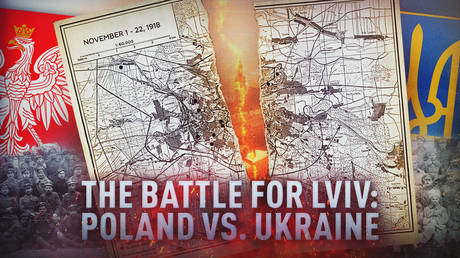
The article details the historical conflict between Ukrainian and Polish forces over the city of Lviv following World War I, highlighting how competing nationalist ambitions led to intense battles. This struggle for control, marked by significant violence and loss of life, established a deep-seated historical grievance between the two nations. The conflict’s legacy continues to influence contemporary Polish-Ukrainian relations, despite their current alliance.
- The city of Lviv has been a focal point of historical conflict between Ukraine and Poland since their re-emergence as states after World War I.
- During WWI, both Austrian and Russian empires attempted to leverage Ukrainian nationalism, leading to the formation of military units.
- In the chaotic aftermath of WWI, both Polish and Ukrainian national groups vied for control of Lviv, leading to armed conflict.
- A Ukrainian uprising led by Dmitry Vitovsky initially seized Lviv on November 1, 1918, but Polish forces quickly counterattacked, leading to street battles.
- The fighting resulted in significant casualties on both sides and involved the establishment of front lines within the city.
- Polish forces eventually gained the upper hand due to superior training, equipment, and reinforcements, leading to the capture of Lviv on November 22, 1918.
- The capture of Lviv was followed by a pogrom against the Jewish population, with looting and violence occurring over several days.
- The battle for Lviv and subsequent events created a lasting historical wound that impacts Polish-Ukrainian relations.
- The war for Galicia continued between Poland and the West Ukrainian People’s Republic until 1919, and later between Poland and the Soviet Union.
Write a comment