Brand Guidelines for a Dubai Business: What a Bilingual Brand Book Should Contain and How Your Team Actually Uses It
- Why Brand Guidelines Matter More in the UAE Than Almost Anywhere Else
- Start With the Right Foundation: A Logo Designed in Two Scripts
- What a Practical Brand Book Should Include
- How to Make Guidelines Your Team Will Actually Use
- Brand Guidelines for Print, Packaging and Exhibitions
- Brand Guidelines for Digital: Website, Social and WhatsApp
- What You Should Receive at the End of a Branding Project
- Timelines, Trademarks and Budget
- Frequently Asked Questions
- Bottom Line
Most small and mid-sized businesses in Dubai have a logo. Far fewer have brand guidelines, and fewer still have guidelines that anyone opens after the launch week. The result is familiar: a printer picks a slightly different blue, a new marketing hire stretches the logo to fit an Instagram story, the Arabic name on the shop sign is set in whatever font the sign maker had installed, and two years later the company looks like four different businesses depending on where you meet it.
This guide explains what a practical brand book for a UAE business should include, why the Arabic side deserves the same care as the English side, how to make the guidelines usable by people who are not designers, and what files and rights you should expect when an agency hands the work over. It is written for founders, marketing managers and operations leads who want their brand to look like one company everywhere, without hiring a full-time designer to police it.
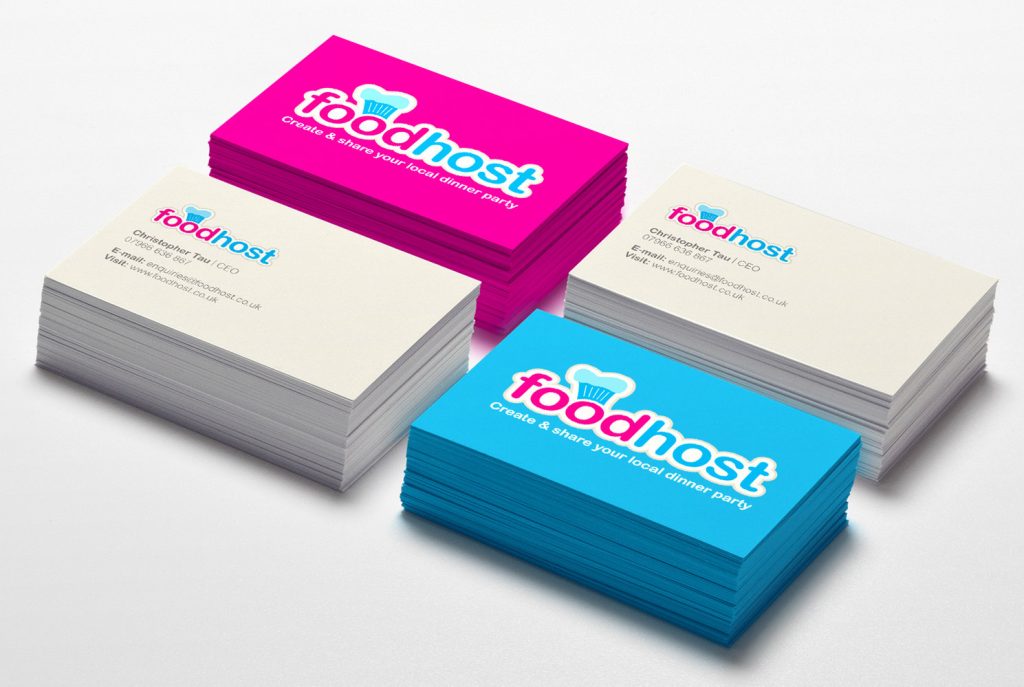
Logo and stationery work for foodhost, from the Oxedge branding portfolio.
Why Brand Guidelines Matter More in the UAE Than Almost Anywhere Else
In many markets, a brand lives mostly in one language and one script. In the UAE, a typical business needs to look right in English and in Arabic, on a website, on WhatsApp, on Instagram, on a trade licence, on a shop sign, on a delivery box and on an exhibition stand at a Dubai trade show. Every one of those surfaces is usually produced by a different person or supplier.
Without written rules, each supplier makes reasonable guesses, and reasonable guesses add up to inconsistency. Guidelines replace guesses with decisions that were made once, by people who understood the brand, and that everyone else can follow.
There is also a commercial reason. Arabic content is still rare online: W3Techs data quoted on the Oxedge branding page shows that only about 0.6% of websites are written in Arabic, so a clear, well-designed Arabic presence stands out. An Oxedge study of UAE business websites found that only 13.9% of the sites that loaded offered a working Arabic version. If your Arabic identity is as polished as your English one, you are already ahead of most competitors.
Start With the Right Foundation: A Logo Designed in Two Scripts
Guidelines can only document what exists. If the Arabic version of your logo was added later as a quick translation, no amount of rules will make it match. The most common problem, as the Oxedge logo design and brand identity team puts it, is a heavy Latin logo sitting next to a thin system font, or Arabic letters that do not match the mark.
The better approach is to design both scripts at the same time, balancing weight, height and spacing so the brand looks like one company in both languages. An English logo cannot simply be translated: Arabic letters need their own drawing to match the weight and feel of the Latin logo.
Two practical points come up in almost every UAE project:
- Your Arabic trade name is usually a transliteration. The Arabic name on your licence is often a phonetic rendering of the English name, and it needs the same design attention as the English wordmark.
- Shop signs often need Arabic placed before English. Your logo suite should include a lockup that works when Arabic leads, not only one where Arabic is tucked underneath.
If you are rethinking the name itself, read the Oxedge guide to rebranding a UAE business, which covers the Arabic name question and the licences and permits that need updating.
What a Practical Brand Book Should Include
A brand book does not need to be 80 pages. It needs to answer the questions your team and suppliers actually ask. Here is a structure that works for most UAE businesses.
1. The Logo Suite
Document every version of the logo and when to use each one:
- Main logo for the website header, documents and most print.
- Stacked logo for square spaces such as social profile images and packaging panels.
- Icon or symbol for app icons, small placements and watermarks.
- Favicon for browser tabs.
- English and Arabic versions of each, plus a bilingual lockup if you use one.
For each version, show the clear space around it (the empty area nobody should crowd), the minimum size at which it stays legible, and approved colour variants: full colour, single colour, white on dark and black on light.
2. What Not to Do
This is the page people actually read. Show the logo stretched, recoloured, placed on a busy photo, given a drop shadow, rotated, and with the Arabic and English parts rearranged. A single page of crossed-out examples prevents more mistakes than ten pages of explanation.
3. The Colour System
List each brand colour with its values for screen and print: HEX and RGB for digital, CMYK for most print, and a Pantone reference where spot colour matters, such as packaging or signage. State which colour is primary, which are secondary and which are for accents only. Include a rule for text contrast so that buttons and small text stay readable.
4. Typography in Both Scripts
Name the Latin typeface and the Arabic typeface, and explain how they pair. Specify weights for headings, body text and captions in each script. Note what to use when the brand fonts are not available, for example in an email or a quick slide deck, so that people do not fall back to whatever is installed.
Pairing matters because Arabic and Latin letters have different proportions. A good pairing keeps headings visually equal in both languages, which is the whole point of a bilingual identity.
5. Layout Rules for Right-to-Left
Arabic reads right to left, so layouts mirror. But mirroring has exceptions: numerals, phone numbers, prices, product codes and some icons do not flip. Your guidelines should show a sample page or post in both directions so designers and developers see exactly what changes and what stays. Oxedge has written about these problems in detail in Arabic-first UX: twelve things that break when you just translate.
6. Imagery and Graphic Elements
Describe the photography style (people or products, natural or studio light, warm or cool), any illustration style, and graphic devices such as patterns, shapes or frames. Include a few approved examples and a few that are off-brand.
7. Tone of Voice
Write three or four short principles for how the brand speaks, with examples in English and Arabic. Tone in Arabic is not a word-for-word translation of tone in English; formality, greetings and sentence length differ. Ideally a native Arabic writer reviews this section.
8. Templates for Everyday Pieces
The most useful part of any brand book is the set of templates people use every week: business cards, letterheads, invoice and presentation templates, email signatures, social post templates and WhatsApp profile assets. If the templates are good, most staff never need to read the rest.
How to Make Guidelines Your Team Will Actually Use
Many brand books fail not because they are wrong but because nobody can find them or understand them. A few habits make a big difference.
Keep a Short Version
Alongside the full document, create a one- or two-page summary: logo do’s and don’ts, the colour codes, the font names and a link to the asset folder. Pin it in your team chat and send it to every new supplier.
Put the Files Where People Look
Store the logo files, fonts, templates and guidelines in one shared folder with clear names, for example “Logo – Arabic – White – SVG”. Nobody should have to search an old email chain to find the right logo.
Name an Owner
One person, even part-time, should approve new artwork before it goes to print or goes live. This takes minutes per week and prevents expensive reprints.
Test the Rules on Real Pieces
Guidelines written in the abstract often break in practice. Before you finalise them, try them on a website screen, a shop sign, a social post and a box. This is also how Oxedge works on identity projects: the identity is designed and tested on real pieces so the client sees it in use before approving it.
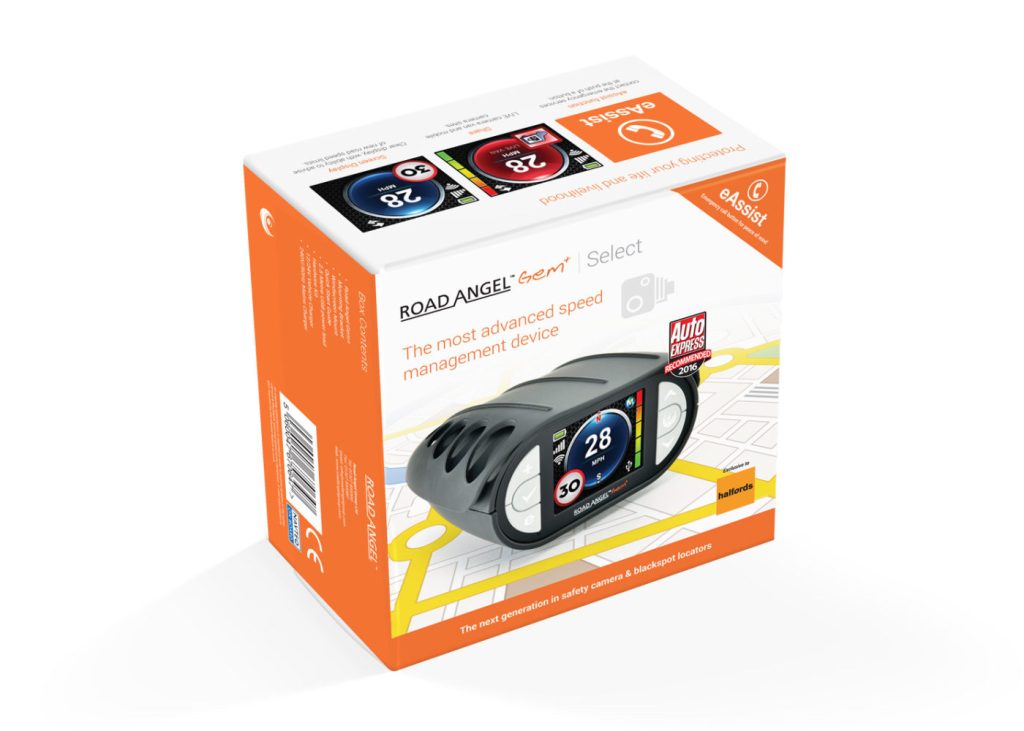
Packaging graphics for the Road Angel Gem+ device, part of the Oxedge print and packaging portfolio at oxedge.com.
Brand Guidelines for Print, Packaging and Exhibitions
Print is where inconsistency becomes expensive, because mistakes are physical and have to be reprinted. Add a print section that covers:
- Colour for print: CMYK and spot colour values, plus a note that screen colours will not match print exactly.
- Paper and finishes: preferred stock and finishes for business cards and brochures, if you have a standard.
- Packaging rules: where the logo sits on each panel, how Arabic and English product information are arranged, and minimum sizes for small labels.
- Vehicle and shop graphics: logo placement on vans and signage, including Arabic-first lockups where required.
- Exhibition stands: large-format rules, such as how the logo scales and which messages are allowed at headline size.
Exhibition graphics are a good test of a brand system. A stand has to be readable from across a hall, carry the logo at enormous size and still feel like the same company as your business card. Oxedge’s identity and exhibition work for companies such as Rajapack and Medserena shows how a consistent system carries from small print to large stands.
Brand Guidelines for Digital: Website, Social and WhatsApp
Your website is usually the most visited version of your brand, so the digital section deserves detail:
- Website: header logo versions for English and Arabic pages, button styles, link colours, spacing and how the language switch looks.
- Social media kit: profile image, cover images and post templates for Instagram and LinkedIn, sized correctly for each platform.
- WhatsApp: profile photo, business description and catalogue imagery. In the UAE, WhatsApp is often the first place a customer speaks to your business, so it should look as finished as your website.
If you are launching a new brand, it often makes sense to design and build the website at the same time so the identity and the site launch together. Oxedge designs and builds bilingual websites alongside branding projects; see web design in Dubai for how those projects work.
What You Should Receive at the End of a Branding Project
When an agency hands over a brand identity, the deliverables should be listed in the quote before you sign, not discovered afterwards. For a typical UAE identity project, expect:
- Master vector files of every logo version, in both scripts.
- PNG and SVG versions ready for web and everyday use.
- Print-ready PDFs for stationery and other print pieces.
- The brand guidelines as a document your team and suppliers can follow.
- A social media kit for Instagram, LinkedIn and WhatsApp.
- Written transfer of rights, so the design legally belongs to your business.
That last point is easy to overlook. If you do not hold the rights and the master files, you depend on the original designer for every future change. Oxedge, for example, hands over the master vector files, print-ready PDFs, the guidelines and a written transfer of rights at the end of every identity project.
Timelines, Trademarks and Budget
Realistic planning prevents rushed decisions. According to the Oxedge branding page, a logo refresh usually takes 6 to 10 weeks and a full rebrand 10 to 16 weeks, including testing on real pieces and writing the guidelines. Writing guidelines is part of that timeline, not an afterthought.
If you are changing the name, start the trademark filing as soon as the name is chosen. UAE government fees are AED 6,500 per class. A trademark agent or lawyer handles the filing, and your design agency provides the final artwork.
On budget, honest agencies quote after a brief rather than publishing one price, because a logo for a new café and a rebrand for a group of clinics are different jobs. Oxedge quotes every identity after a 30-minute brief, lists every deliverable, round of changes and timeline in the quote, and runs payments in milestones of 40%, 40% and 20%. Prices exclude 5% VAT.

Further reading: Rebranding a UAE business: process, timeline, cost and the Arabic name question.
Frequently Asked Questions
Do small businesses really need brand guidelines?
Yes, even a short version. As soon as more than one person or supplier creates material for your business, written rules save time and prevent costly reprints. A two-page summary with logo rules, colour codes, fonts and a link to the files is a good start.
Do I need an Arabic logo for my Dubai business?
Most UAE businesses benefit from one, and shop signs and licences often need the Arabic name. The Arabic and English logos should be designed together so they match.
Can my English logo just be translated into Arabic?
Not well. Arabic letters need their own drawing to match the weight and feel of the Latin logo, so both versions should be designed as a pair.
How long does a branding project with guidelines take?
A logo refresh usually takes 6 to 10 weeks and a full rebrand 10 to 16 weeks, including testing on real pieces and the guidelines.
Which files should I receive?
Master vector files, PNG and SVG versions, print-ready PDFs, the brand guidelines and a social media kit, with written transfer of rights.
Should I register a trademark?
Usually yes, once the name is chosen. UAE government fees are AED 6,500 per class, and a trademark agent or lawyer handles the filing.
Bottom Line
Brand guidelines are what turn a logo into a brand. For a UAE business, that means a logo suite designed in both scripts, a colour and type system that works in English and Arabic, layout rules for right-to-left, everyday templates, and a short version your team will actually read. Get the master files and the rights in writing, name one person to approve artwork, and test everything on real pieces before you sign off.
If you want a bilingual brand identity with guidelines your team can use from day one, see the Oxedge logo design and brand identity page (https://oxedge.com/logo-design-branding-dubai/) or explore Oxedge’s wider services at https://oxedge.com.
Oxedge Solutions
Office # 208, Bu Shaqer Building, Al Garhoud, Dubai - 127902
Phone / WhatsApp: +971 50 815 3521
Email: info@oxedge.com
Hours: Monday to Saturday, 9am to 5pm (Sunday closed)
Website: https://oxedge.com
Write a comment