The Logo Suite Checklist for Dubai Businesses: Every Version and File You Need in English and Arabic
- Why one logo file is never enough
- The four core logo versions
- The Arabic side of the suite
- Colour versions of each logo
- File formats, explained in plain language
- Colour codes for screen and print
- Where each version goes: a practical map
- Brand guidelines: the instructions that hold the suite together
- Ownership: make sure the files are actually yours
- Refresh or rebuild?
- A one-page checklist to send your designer
- Frequently asked questions
- Next step
Most Dubai businesses receive “the logo” as one PNG on a white background, and then spend the next two years improvising. The WhatsApp profile photo crops off half the name, the shop sign maker asks for a vector file nobody has, the Arabic version is retyped in a default font by the printer, and the favicon is a blurry square. None of this is a design problem. It is a delivery problem: the logo was handed over as a picture, not as a working system.
This guide is a practical checklist of every logo version and file type a UAE business actually needs, in English and Arabic, and where each one is used. Use it when you brief a designer, when you check what you were given, or when you are deciding whether your current identity needs a refresh rather than a full rebrand.
Why one logo file is never enough
A logo has to work in places that have nothing in common. A shop sign on Sheikh Zayed Road is read from a moving car. A favicon is 16 to 32 pixels wide. An Instagram profile picture is cut into a circle. An embroidered polo shirt cannot reproduce gradients or thin hairlines. A trade licence document, an invoice header and a vehicle wrap all have different proportions and different technical limits.
One horizontal logo cannot be legible in all of those places. That is why professional identities are delivered as a logo suite: a small family of versions that share the same DNA but are built for different shapes and sizes. On the OXEDGE logo design and branding page, the standard suite is described as “main, stacked, icon and favicon” in both English and Arabic, which is a good minimum for any UAE company.
The four core logo versions
1. The main (primary) logo
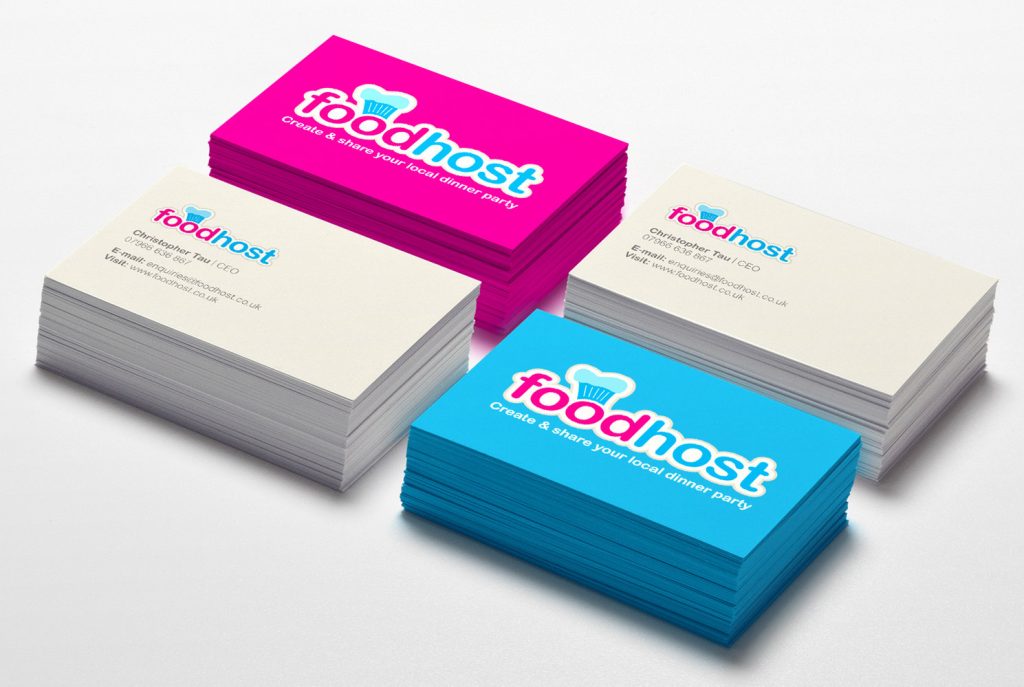
This is the full horizontal lockup: symbol plus name, side by side. It is the version used on the website header, letterheads, presentations, email signatures and most wide formats. When people say “our logo”, this is usually the one they mean.
Check that it has generous clear space defined around it (often measured in multiples of a letter height in the logo itself) and a minimum size below which it should not be used.
2. The stacked logo
The symbol sits above the name, producing a more square shape. Stacked versions are used where width is limited: social media cover areas, packaging fronts, roll-up banners, merchandise, exhibition stand columns and square ad placements. Without a stacked version, people shrink the horizontal logo until the name becomes unreadable.
3. The icon (symbol or monogram)
The icon is the mark on its own, without the name. It is used for social media profile pictures, app icons, watermarks on photos and video, embossing, and small brand marks on product. If your logo is a wordmark with no symbol, the icon is usually a monogram built from the initial letter or letters, designed to match the wordmark.
A good test: put the icon inside a circle the size of a WhatsApp Business profile photo. If it is not recognisable there, it is not finished.
4. The favicon
The favicon is the tiny icon in the browser tab, in bookmarks and in some search results. At 16 to 48 pixels, detail disappears, so the favicon is often a simplified version of the icon with thicker strokes and fewer elements. It should be supplied in the sizes your web developer needs (an ICO or PNG set, plus an SVG where supported).
The Arabic side of the suite
For a UAE business, the suite above is only half the job. Each version usually needs an Arabic counterpart, and that is where most identities quietly break.
The common mistakes are easy to spot once you look for them: a heavy, confident Latin logo placed next to Arabic set in a thin system font; Arabic letters that are visibly smaller or larger than the English; or a trade name transliterated by whoever happened to make the sign. As the OXEDGE branding page puts it, most UAE brands start in English and add Arabic later, “and it shows.”
A complete bilingual suite normally includes:
- An Arabic-only main logo, for Arabic pages, Arabic social posts and documents that are Arabic-first.
- A bilingual lockup, with Arabic and English together, for signage, vehicles and printed materials. Shop signs in the UAE frequently need Arabic placed before (above or to the right of) English, so ask for a lockup that already follows that arrangement instead of rearranging it at the printer.
- Stacked and icon versions that work for both scripts, or clear rules on which icon is used in an Arabic context.
- Matched typography: a Latin typeface and an Arabic typeface chosen as a pair, with balanced weight, height and spacing, so both scripts read as one company.
The Arabic trade name on your licence is usually a transliteration of the English name, and changing it later is a paperwork exercise as much as a design one. The OXEDGE guide to rebranding a UAE business covers the Arabic name question and the licences and permits that need updating if you change it.
Colour versions of each logo
Each of the versions above should exist in several colour treatments:
- Full colour on a light background: the default.
- Reversed (knockout): the logo in white or a light tint, for dark backgrounds and photography.
- Single colour black: for faxes, stamps, newspaper ads, laser etching and any one-colour print job.
- Single colour white: for dark product, glass, vehicle windows and embroidery on dark fabric.
If your logo uses gradients, also ask for a flat version without them. Embroidery, screen printing, vinyl cutting and many signage methods cannot reproduce gradients, and a supplier will otherwise simplify it themselves.
File formats, explained in plain language
Designers deliver several formats because each output needs a different one. Here is what each is for.
| Format | What it is | Where you use it |
|---|---|---|
| AI / EPS | Editable vector master files | Sent to printers, sign makers and designers. Keep these safe. |
| SVG | Vector for screens | Websites, web apps, favicons where supported. Sharp at any size. |
| PDF (vector) | Print-ready, opens anywhere | Printers who don’t use Illustrator; brochures and stationery proofs. |
| PNG (transparent) | Pixel image with no background | Presentations, social posts, documents, email signatures. |
| JPG | Pixel image with background | Quick previews only; avoid for logos where possible. |
| ICO / PNG set | Small icon sizes | Browser favicon and app icons. |
Two rules save most problems. First, vector files are the masters: anything printed large, cut, embroidered or etched should start from a vector file. Second, pixel files should come in several sizes, so nobody upscales a small PNG and gets a blurry result.
Colour codes for screen and print
A logo file is not enough on its own; your team and suppliers also need the colour values. A complete delivery lists each brand colour in:
- HEX and RGB for websites, apps and social media.
- CMYK for standard print (brochures, business cards).
- Pantone (spot colour) where exact matching matters, such as packaging, signage and merchandise.
- Sometimes RAL or paint references for interiors and fit-outs.
Screens and paper show colour differently, so the CMYK and Pantone values are chosen to look as close as possible to the screen colour, not just converted automatically. The OXEDGE identity work describes this as “a colour system for screen and print”, which is exactly the right expectation.
Where each version goes: a practical map
Use this as a quick reference when someone asks “which logo should I send?”
- Website header: main logo, SVG; Arabic main logo on Arabic pages.
- Browser tab: favicon set.
- Instagram, LinkedIn, WhatsApp profile: icon, PNG, tested inside a circle.
- Social post templates: main or stacked, transparent PNG, light and reversed.
- Email signature: main logo PNG at a modest size (large images get blocked or clipped).
- Business cards and letterheads: vector PDF, main or bilingual lockup.
- Invoices and quotation templates: main logo; check that it prints clearly in black and white.
- Shop sign and vehicle graphics: bilingual lockup, vector, single colour versions available for cut vinyl.
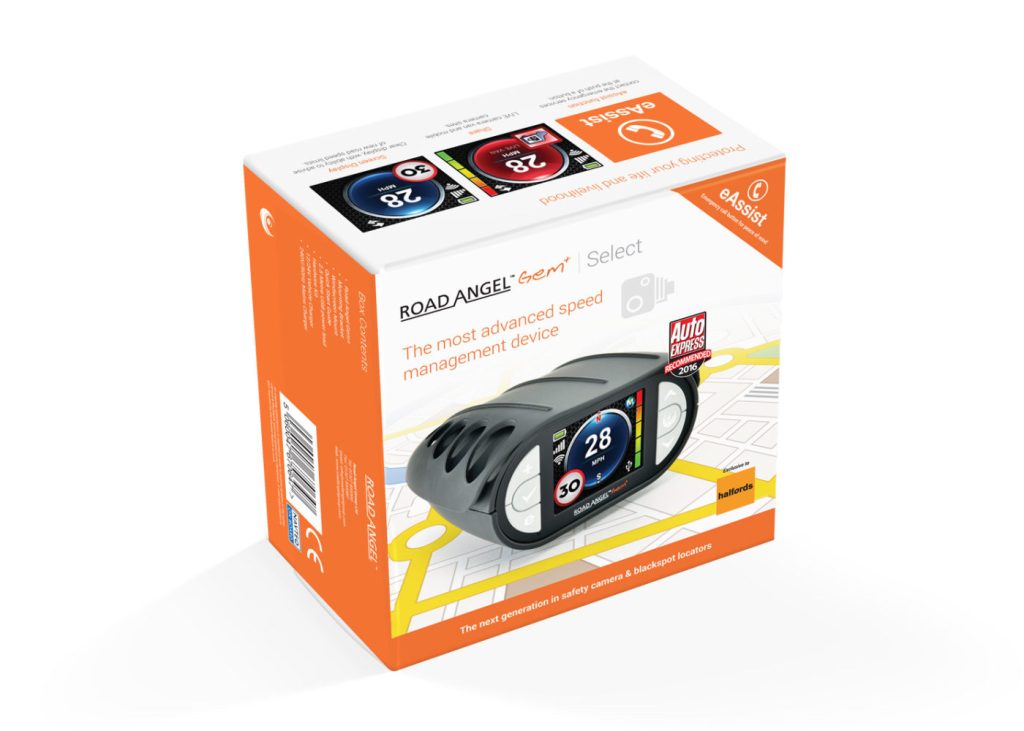
- Packaging: stacked or icon, vector, Pantone references.
- Exhibition stands: main and stacked, vector, very large sizes.
- Uniforms and merchandise: single colour versions, no gradients, simplified for embroidery.
If your current files leave gaps in this list, that is a sign you were given a logo, not an identity.
Brand guidelines: the instructions that hold the suite together
The final piece is a short brand guidelines document. It does not need to be a 100-page book. For most small and medium UAE businesses, a clear guide covers:
- Which logo version to use where, with minimum sizes and clear space.
- What not to do: stretching, recolouring, adding effects, placing the logo on busy photos.
- The colour palette with all codes.
- The Latin and Arabic typefaces and how they pair for headings and body text.
- Examples on real pieces: a social post, a business card, a sign.
Guidelines matter most when other people produce your materials: printers, freelancers, a new marketing hire, or the agency building your website. If your website is going bilingual, guidance on Arabic typography and layout is especially useful; the OXEDGE article on bilingual Arabic-English websites explains the structure and SEO side of that work.
Ownership: make sure the files are actually yours
Before you sign off a logo project, confirm three things in writing:
- You receive the master vector files, not only PNGs and JPGs.
- Copyright and usage rights transfer to your company, in writing. A logo you do not own is a risk if you later want to register it as a trademark or switch agencies.
- Fonts are licensed correctly. Some typefaces need a commercial licence for use in a logo or on a website; your designer should tell you which fonts are used and what licences you need.
OXEDGE, for example, states on its branding page that clients receive the master vector files, print-ready PDFs, the guidelines and a written transfer of rights at the end of a project. Whoever you work with, ask for the same in the quote.
If you plan to register the logo or a new name as a trademark, start early. The OXEDGE branding page notes that UAE government trademark fees are AED 6,500 per class and recommends starting the filing as soon as a new name is chosen.
Refresh or rebuild?
If you already have a logo but the suite is incomplete, you may not need a new identity at all. Often the right move is a refresh: redraw the existing mark cleanly as vectors, build the missing stacked, icon and favicon versions, design a matching Arabic version, define the colours properly and write simple guidelines. OXEDGE estimates a logo refresh usually takes 6 to 10 weeks and a full rebrand 10 to 16 weeks.
Budget depends on scope, which is why most studios quote after a short brief. For realistic ranges and what each budget level typically includes, see the OXEDGE guide to logo design price in Dubai.
A one-page checklist to send your designer
Copy this into your brief or use it to audit what you already have:
- [ ] Main logo, English
- [ ] Main logo, Arabic
- [ ] Bilingual lockup (Arabic and English), including a sign-ready arrangement
- [ ] Stacked logo (English, Arabic or bilingual as needed)
- [ ] Icon or monogram
- [ ] Favicon set
- [ ] Full colour, reversed, black and white versions of each
- [ ] Flat version if the logo uses gradients
- [ ] Vector masters (AI/EPS), SVG, vector PDF
- [ ] Transparent PNGs in several sizes
- [ ] Colour codes: HEX, RGB, CMYK, Pantone
- [ ] Paired Latin and Arabic typefaces, with licence notes
- [ ] Short brand guidelines with real examples
- [ ] Written transfer of rights
Frequently asked questions
What is a logo suite?
A logo suite is a set of related logo versions designed for different shapes and sizes, usually a main horizontal logo, a stacked version, an icon and a favicon. For UAE businesses it should also include Arabic and bilingual versions.
Which logo file should I send to a printer or sign maker?
Send a vector file: AI, EPS or a vector PDF. Vector files can be scaled to any size without losing quality. Avoid sending JPGs or small PNGs for print.
Do I need an Arabic version of my logo in the UAE?
For many businesses, yes. Shop signs often need Arabic, and Arabic-speaking customers expect it on Arabic pages and social posts. The Arabic version should be designed with the English, not typed later in a default font.
What is the difference between a logo refresh and a rebrand?
A refresh keeps your recognisable mark but redraws, completes and systemises it. A rebrand changes the identity more fundamentally and can involve a new name. A refresh is usually faster and cheaper.
Who owns the logo after the project?
Only you, if the contract says so. Ask for a written transfer of rights and the master vector files at the end of the project.
How small should a logo still work?
Your icon should be recognisable as a social profile picture, and your favicon in a browser tab at around 16 to 32 pixels. Your guidelines should set a minimum size for the main logo too.
Next step
If your logo currently lives as one PNG on someone’s laptop, start by auditing it against the checklist above. To have the English and Arabic versions designed together as one system, see the logo and brand identity service from OXEDGE (Arabic page: https://oxedge.com/ar/logo-design-branding-dubai/), or contact the team on +971 50 815 3521 or info@oxedge.com, Monday to Saturday, 9am to 5pm.
Source page: https://oxedge.com/logo-design-branding-dubai/
Write a comment