Gobbledygook
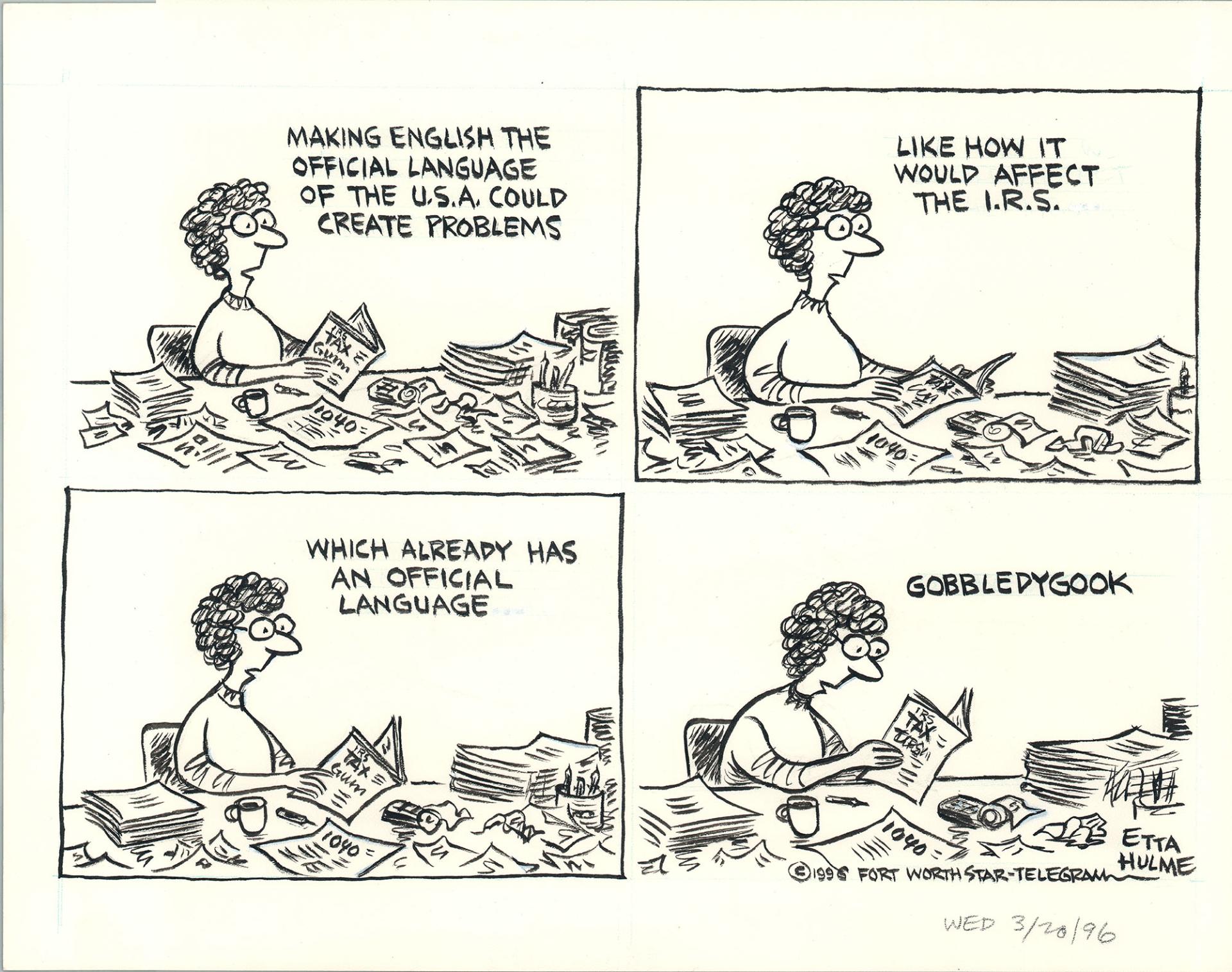
Examples of obscure, pompous, technical or bureaucratic language are often referred as gobbledygook. Gobbledygook is often characterized by the use of long, complex words and sentences that are intended to impress the listener, while adding nothing concrete or useful to the subject matter.
The word first appeared in a 1944 memo written by Rep. Maury Maverick, while he was chairman of the U.S. Smaller War Plants Committee. The subject of the memo was clear and straight to the point: Lengthy Memoranda and Gobbledygook Language. Be short and use Plain English.
Aside from the political arena, the most egregious examples of gobbledygook is to be found in the corporate world.
Take McDonald’s Mission Statement:
Our strategy is underpinned by our focus on running great restaurants, empowering our people and getting faster, more innovative and more efficient at solving problems for our customers and people.
Or this NHS advertisement:
“Applications are invited to become a Blue Sky Practitioner reporting to the Blue Sky Lead in the New NHS Modernisation Agency. The workstreams will work to a generic cycle based on a hypothesis driven, creative problem-solving process to create improvement products … You will undertake horizon scanning and futures research … creating curve leverage systems for rapid diffusion …”
Let’s have a bit of fun with gobbledygook now. Can you guess the title of this Christmas song that has been re-written in gobbledygook?
An Anthropomorphic Representation of the Human Form Constructed of Two to Three Orbs of Compacted Frozen Precipitation, Often with Facial Features of Mineral and/orVegetable Matter with a Moniker Referring to Freezing or Very Cold Temperatures
(extract from Christmas Song Titles in Gobbledygook)
What is your favourite example of gobbledygook? Leave your comment below.
Write a comment