A guide to one wish fairy tale for kids
- How the story reaches children
- The route through the village
- What arrives at each stop
- Receiving the final wish
- How to present the tale in different regions
How the story reaches children
One Wish works well as a one wish fairy tale for kids because its route is easy to follow and its message grows from a concrete choice. Timothy arrives at his grandmother’s village, explores the brook and garden, meets a magical butterfly, and returns home with a new understanding of friendship.
The story does not require a complicated fantasy world. Its main “transit hubs” are familiar places: the grandmother’s house, the path beside the brook, the fishing spot, and the route home at sunset. A child can track Timothy’s movement from one place to another, which makes the plot easier to retell after reading.
The route through the village
The opening destination is the grandmother’s village. Timothy enjoys pancakes with sour cream, apples from the garden, and swimming near the brook, but he feels lonely because no other children live nearby. This detail gives the adventure a clear starting point: the boy is surrounded by pleasant things, yet he still lacks someone to share them with.
His first route leads along the brook while he searches for butterflies. The ordinary white and yellow butterflies do not hold his attention, but the dark orange Peacock Eye catches him by surprise. Its large dark circles resemble a peacock’s tail, giving the magical encounter a visual detail children can remember.
When the butterfly speaks, it offers one wish that Timothy may change until sunset. The time limit creates a natural delivery schedule for the plot. Each new choice appears before the final destination, so children can predict that the approaching evening will force Timothy to decide.
What arrives at each stop
At the first stop, Timothy receives bright orange roller skates with black wheels. They look appealing, but the uneven path makes skating uncomfortable. The physical setting tests the wish immediately: an attractive object may be poorly suited to the place where it is used.
At the brook, the skates change into a sandalwood fishing rod. Timothy catches a crucian carp, then discovers that he has nowhere to keep it. A bucket filled with water appears, but the fishing rod disappears because the single wish can hold only one current form.
These transformations give the story a practical rhythm. Every arrival solves one problem while creating another. Children can follow the chain without abstract explanations: skates lead to a rough path, a rod leads to a fish, and a fish leads to the need for a bucket.
Receiving the final wish
The final destination is the path home, with the sun beginning to set. Timothy could keep an object, but he remembers that he has no friend to hear about his unusual day. He releases the carp, sets down the bucket, and wishes for a friend.
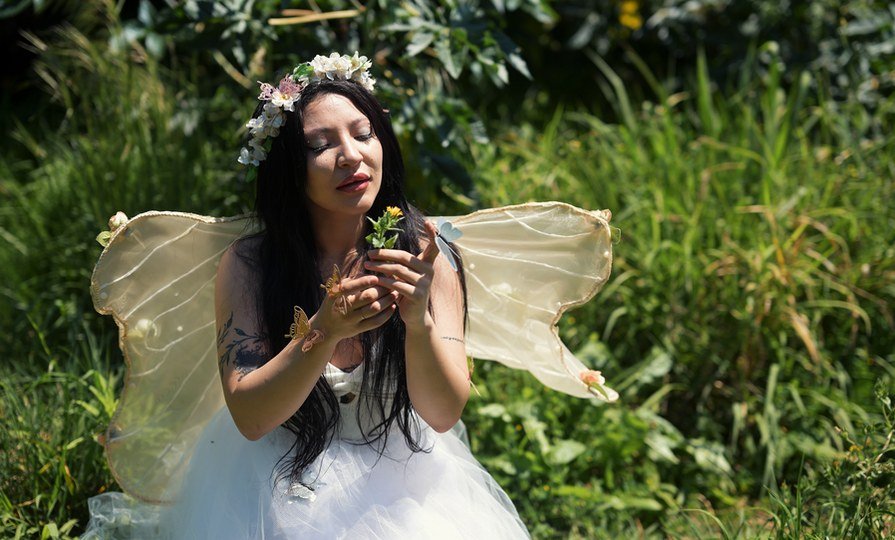
The bucket becomes a girl with dark orange hair and big dark eyes. She reveals that she is the Peacock Eye butterfly and had taken the form of each earlier object. Her appearance completes the route: Timothy receives companionship at the moment he understands what matters most to him.
For a child reading this one wish fairy tale for kids, the ending offers a clear emotional destination. Toys and treats can be enjoyable, but they do not replace someone with whom a child can share experiences. The grandmother’s apple pies then become part of a shared evening rather than a private pleasure.
How to present the tale in different regions
The story travels well in a classroom, library, or family reading session because its locations are simple and adaptable. A reader can pause at the village, brook, fishing place, and homeward path, asking children what Timothy might choose at each stop.
A useful reading copy is available as one wish fairy tale for kids. After reading, invite children to name one wish they would keep until sunset and explain what would happen when they reached the final stop.
Keep the question open rather than directing children toward a single answer. Their responses can show whether they focus on objects, adventures, family, or friendship, just as Timothy’s changing wishes reveal his priorities.
Will your child map Timothy’s journey from the grandmother’s house to the brook and then choose a final wish of their own?
- Reference: https://modern-fairy-tales.com/one-wish
Write a comment