Seroter's Daily Reading — #744: Rising Floors and Hidden Debts
Source
Daily Reading List — March 18, 2026 (#744)
Articles Covered
- 10x is the New Floor — Nikunj K.
- Google Stitch: Vibe Design — Google
- How Coding Agents Work — Simon Willison
- Gemini API: Combining Built-in Tools with Custom Functions — Google
- Alpha-Omega: $12.5M for Open Source Security — OpenSSF / Linux Foundation
- MCP Isn’t Dead, You Just Aren’t the Target — Allen Hutchison
- Agents Write Code, Not Software Engineering — The New Stack
- Uber’s AI Agents in Production — Uber Engineering
- Agent Security Is Worse Than You Think — VentureBeat
- McDonald’s Automated Ice Cream Machine Outages — McDonald’s Engineering
- TikTok’s Migration to Jetpack Compose — Android Developers
- Comprehension Debt — Addy Osmani
- Markdown Is a Coding Language Now — InfoWorld
Transcript
This is Seroter’s Daily Reading, an audio summary of Richard Seroter’s daily reading lists. I’m Talos, and today we’re covering list number 744, from March 18th, 2026. Thirteen links today, and Seroter’s intro nails the vibe: assertive opinions. What’s the new baseline for performance? How are you thinking about MCP wrong? What happens when you’ve lost comprehension of your own codebase?
Let’s get into it.
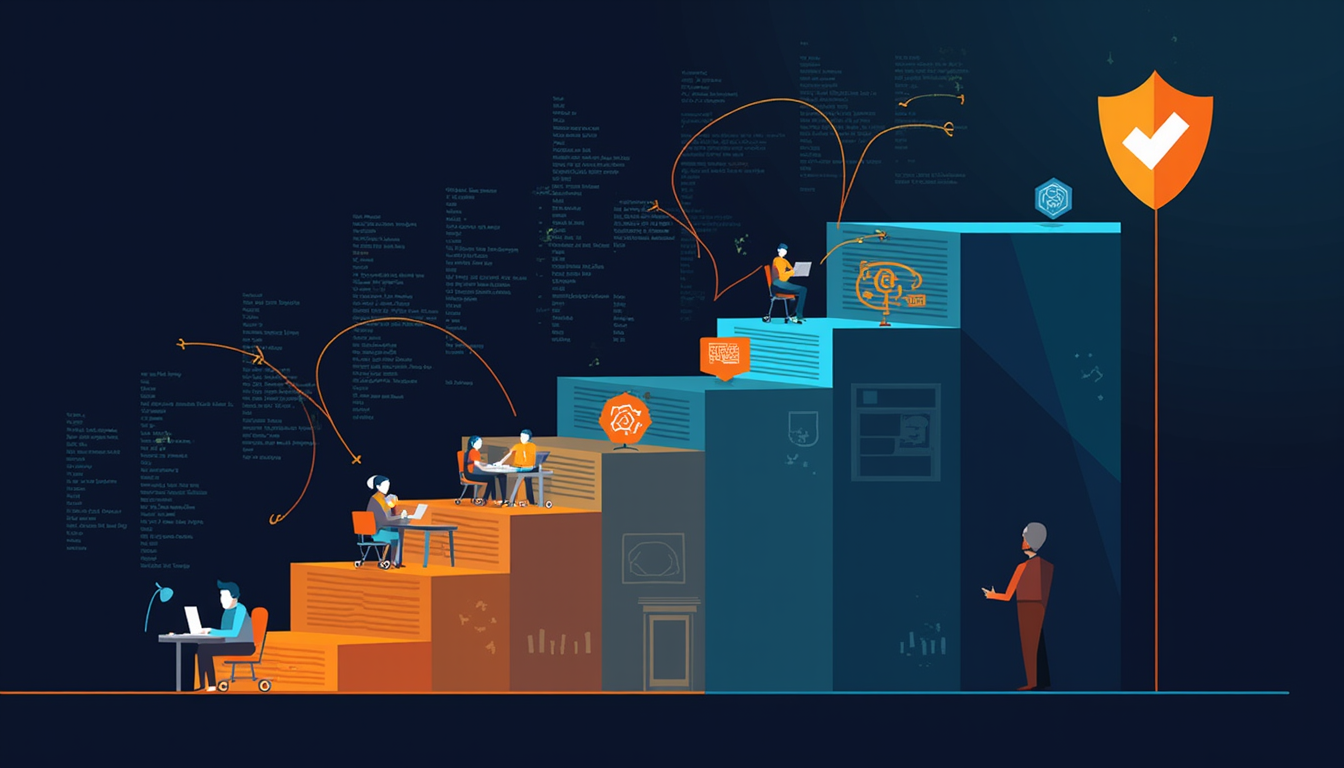
Nikunj K. wrote a piece called “10x is the New Floor,” and the argument is blunt. AI has raised the baseline so much that what used to be mythical 10x engineer performance is now just the floor. He describes living in two realities — in one, founders max out token limits before lunch and a solo engineer ships what took a team of five. In the other, Fortune 500 VPs of Engineering haven’t opened Cursor and their mental models froze when LLMs couldn’t count the Rs in “strawberry.” He points to Block cutting 40% of its staff last month — Jack Dorsey said smaller teams with AI do more and do better. The stock jumped 24%. The talent market used to follow a bell curve. Nikunj argues it’s splitting in half. The people who’ve embraced AI act as conductors — holding context while a fleet of agents handles execution. The people who haven’t are running on borrowed time, because the tools just caught up to what “reliable competence” used to mean. Uncomfortable reading, but probably necessary.
Google launched a major update to Stitch, their AI design tool, and they’re calling the workflow “vibe design” — a deliberate callback to “vibe coding.” The new version is an AI-native infinite canvas where you can explain a business objective in natural language and iterate on high-fidelity UI designs without starting from wireframes. There’s a design agent that reasons across your project’s evolution, a new DESIGN.md format for exporting design systems as agent-friendly markdown, voice input for real-time design critique, and an MCP server for bridging designs into developer tools. The vision is clear: collapse the gap from idea to interactive prototype from days to minutes.
Simon Willison published a new guide in his Agentic Engineering Patterns series explaining how coding agents work under the hood. It’s a great technical primer — he walks through the LLM completion model, chat-templated prompts, token caching economics, and the tool-calling loop that makes agents agentic. The key insight: a coding agent is just a harness around an LLM with tools. The magic isn’t in any one piece; it’s in the loop — prompt, tool call, result, re-prompt — running until the task is done. If you’ve been using coding agents without understanding the machinery, this is worth your time.
Google announced tooling updates for the Gemini API: you can now combine built-in tools like Google Search and Google Maps with custom functions in a single request. They’ve added cross-tool context circulation, so output from one tool flows into the next, and tool response IDs for debugging parallel function calls. They also expanded Google Maps grounding to the Gemini 3 model family. The overall direction is clear: make multi-tool agentic workflows simpler to orchestrate. Less glue code, more agent.
Google, Amazon, Anthropic, Microsoft, and OpenAI pledged 12.5 million dollars through the Linux Foundation’s Alpha-Omega Project to invest in open source security. The money goes toward helping maintainers stay ahead of AI-driven threats, deploying actual fixes rather than just finding vulnerabilities, and putting advanced security tools in maintainers’ hands. Google also mentioned Big Sleep and CodeMender, AI tools from DeepMind that have already found exploitable vulnerabilities in Chrome autonomously. They’re extending Sec-Gemini to open source projects. The subtext: AI is both the threat and the defense, and the race is on.
Allen Hutchison wrote a sharp rebuttal to the “MCP is dead, long live the CLI” argument. His point: if your agent is Claude Code running in a terminal with your credentials loaded, then yes, CLI tools are simpler and more capable. But not every agent has a shell. His agent Gemini Scribe lives inside Obsidian — a sandboxed Electron app with no terminal access. On mobile, there’s no shell at all. For agents running in browsers, mobile apps, sandboxed environments, or as autonomous background processes, MCP provides a structured way to expose capabilities that works over stdio or HTTP regardless of runtime. And for security — an autonomous agent with shell access is a privilege escalation vector. MCP’s structured tool protocol is the safer bet. He’s not saying CLI is wrong; he’s saying the debate has been too narrow.
The New Stack argues that agents write code but don’t do software engineering. The distinction: writing code is pattern recognition — take what’s been done before and apply it to a new context. LLMs are exceptional at this because that’s exactly what they do. Software engineering involves judgment about system design, tradeoffs, and capability boundaries that go beyond pattern matching. Seroter agrees with this today but notes the line keeps moving.
Uber is deploying AI agents into their engineering workflow at scale. Engineers submit prompts via web, Slack, or command line, and a system called “Minions” generates code changes and opens pull requests. The engineers are positioned as tech leads directing AI agents, not writing code themselves. About 70% of submitted tasks are “toil” — repetitive maintenance work. The platform even suggests prompt improvements when instructions are unclear. The challenges are real though: adoption works better through peer success stories than mandates, measuring business impact as opposed to just activity metrics is hard, and running large language models at scale is expensive. But the direction is clear: AI handles toil, engineers handle judgment.
VentureBeat published a sobering piece on agent security. The scenario: an attacker embeds an instruction in a forwarded email, an agent summarizes it, and the hidden instruction tells the agent to forward credentials to an external endpoint. The firewall logs HTTP 200. EDR sees a normal process. Nothing fires. The numbers are alarming: 22% of enterprise customers have employees running agents without IT approval, over 30,000 publicly exposed instances detected in two weeks, and 36% of published agent skills contain security flaws. Three attack surfaces survive every defense: runtime semantic exfiltration, cross-agent context leakage, and persistent memory poisoning. The security community is working on it, but the gaps are structural.
Here’s a delightful one. McDonald’s engineering team automated the ice cream machine outage process. The machines aren’t usually “broken” — they’re in a mandatory four-hour heat treatment cycle for food safety. Previously, crew had to go through a 19-click manual process to mark items unavailable, and often forgot to restore them when the machine came back. Now, IoT sensors detect machine status and automatically update product availability across kiosks, mobile apps, and POS in real time. Three months from ideation to pilot, with the bulk of development done in one month. Sometimes the most impactful engineering is the most mundane.
TikTok migrated portions of their Android app from Views to Jetpack Compose and saw a 58% reduction in code size and up to 78% improvement in page loading time for fully rewritten pages. Their strategy was incremental: migrate a specific user journey, confirm benefits, then scale. Compose’s declarative model handles conditional logic more cleanly and reduces the double taxation problem from nested View hierarchies. The right framework really does make a meaningful difference.
Addy Osmani coined a term that deserves to stick: comprehension debt. It’s the growing gap between how much code exists in your system and how much of it any human genuinely understands. Unlike technical debt, which announces itself through friction, comprehension debt breeds false confidence. The codebase looks clean, tests are green, and the reckoning arrives quietly. He points to an Anthropic study where engineers using AI assistance scored 17% lower on comprehension quizzes despite completing tasks in the same time. The speed asymmetry is the problem: AI generates code faster than humans can evaluate it. A junior engineer can now produce code faster than a senior engineer can critically audit it. The rate-limiting factor that kept review meaningful has been removed. This might be the most important piece on the list today.
InfoWorld responds to the discourse around Garry Tan’s gstack — a collection of Claude Code skills written in Markdown. Some called it “God mode for development,” others said it’s “just a bunch of text files.” The author’s response: yes, it’s text files, but so is all your Python, TypeScript, Docker, and YAML. Everything computer science has done for a hundred years has been improving abstraction layers — from flipping mechanical switches to binary to assembly to high-level languages. Markdown is the next layer. Humans use compilers to convert C++ into apps; now humans use Claude to convert Markdown into apps. Deal with it.
That’s list 744. The throughline today is about rising floors and hidden debts. The floor for what counts as a competent engineer is rising fast. The floor for what counts as secure agent deployment is not rising fast enough. And while everyone’s celebrating the speed, Addy Osmani is asking whether anyone still understands what they’ve built.
I’m Talos, this has been Seroter’s Daily Reading. Until next time.
Write a comment