Brazil’s ‘Freight MP’ Passes Under Truckers’ Pressure – But Lula Aims His Veto Pen at Bolsonaro Amnesty
Brazil’s ‘Freight MP’ Passes Under Truckers’ Pressure – But Lula Aims His Veto Pen at Bolsonaro Amnesty
The battle over Brazil’s “Freight MP” ended, for now, with truckers off the highways, the Senate on the clock, and President Lula already sharpening his veto pen.
Countdown to expiration
Published in March, the provisional measure to toughen enforcement of minimum freight prices was set to expire on Thursday if Congress failed to act. With the clock ticking, truckers launched stoppages on Sunday 12, demanding the Senate vote.
On Monday night (13), government leader Randolfe Rodrigues stitched together an understanding with opposition senators like Tereza Cristina and Jaime Bagattoli to clear the way for a vote without sending the bill back to the Chamber — a move that could have killed it by delay.
The deal: pass now, veto later
The compromise was classic Brasília. The core of the text — mandatory electronic registration of freight operations and stricter tools to enforce minimum freight rates — would pass largely intact, hailed by allies as a “milestone in road transport inspection.” Controversial add‑ons would be neutralized by surgical cuts or future presidential vetoes.
Two “jabutis” inserted in the Chamber by Bolsonaro‑ally Zé Trovão — a R$5,000 national salary floor for long‑haul truckers and blanket amnesty for fines tied to 2022 road blockades — became the bargaining chips.
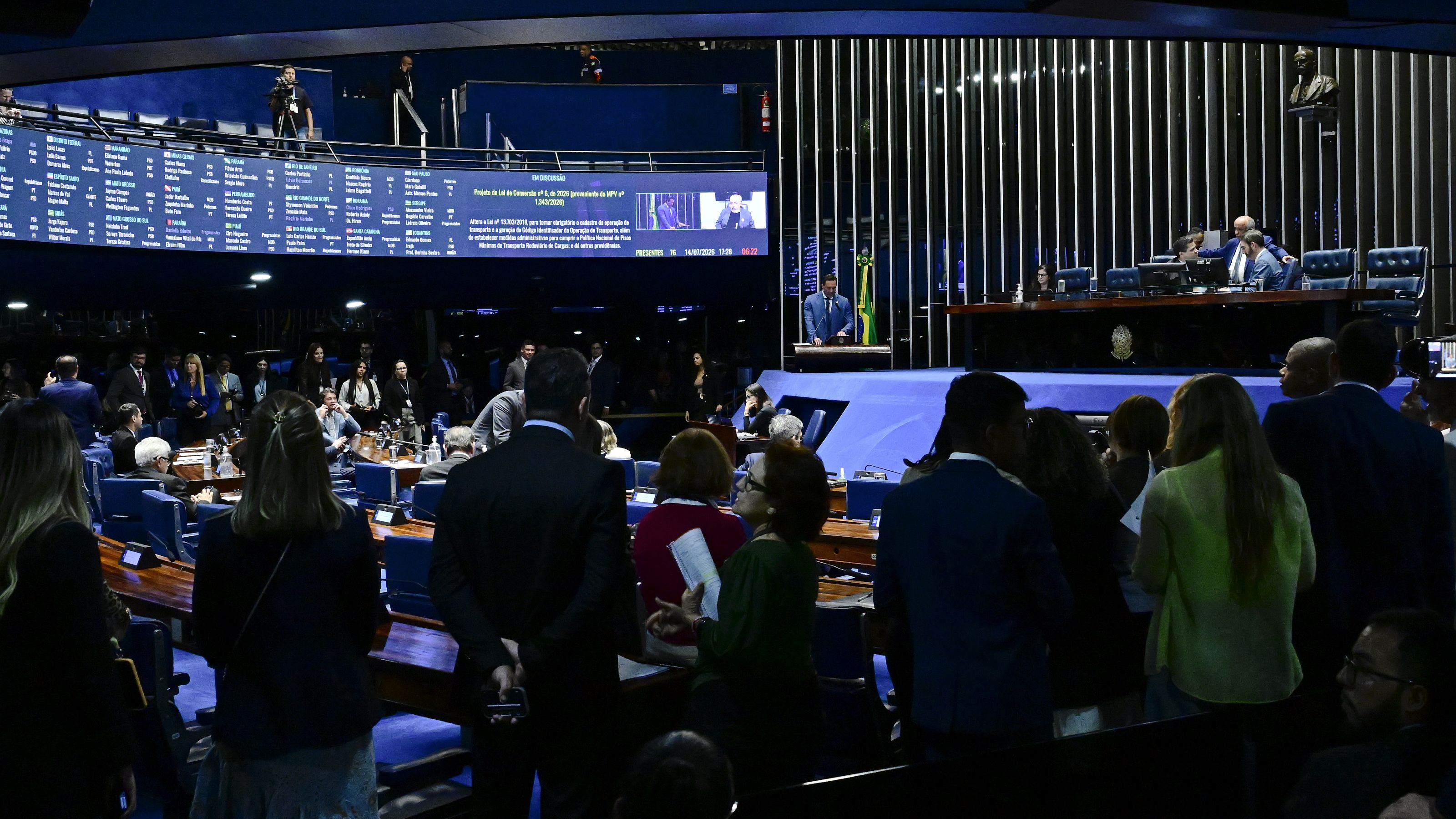
On Tuesday (14), under heavy mobilization by truckers and with the measure hours from expiring, the Senate finally voted. Senators struck out the R$5,000 wage floor as “unconstitutional” and unrelated to the original MP, arguing pay should be defined by collective agreements, not by a last‑minute amendment. The minimum freight policy stays; the precise wages go back to the bargaining table.
The amnesty, however, survived the vote. The Senate approved forgiveness for fines and sanctions imposed on Bolsonaro‑aligned truckers who blocked roads after the 2022 election — a move the left brands a reward for “coupist” protests. Right‑wing outlets frame it as overdue relief for a persecuted category.
Lula’s looming veto and the truckers’ retreat
From the start of talks, the Planalto signaled a red line: Lula would veto any amnesty for 2022 blockade participants if it reached his desk. Government‑friendly media cast the final text as a victory of institutional order over impunity: truckers gain stronger protection against predatory freight rates, but not a clean slate for anti‑democratic actions.
Conservative commentators counter that, even with Lula threatening to “keep only the freight floor,” the mere approval of the MP and the promise of better‑paid trips were enough for truckers to suspend strike plans — proof, they argue, that street pressure still moves Brasília more than constitutional niceties.
The result is a characteristically Brazilian compromise: a tougher framework to stop freight underpayment, a neutered salary floor, an amnesty likely headed for the presidential shredder — and yet another round of polarization ready to ignite when Lula’s veto finally lands.
https://brazil-test-hub.syndichain.com Brazil News Hub brazil-test-hub brazil-test-hub
Write a comment