Embraer’s 2,000th E-Jet Milestone Meets Supply-Chain Reality
Embraer’s 2,000th E-Jet Milestone Meets Supply-Chain Reality
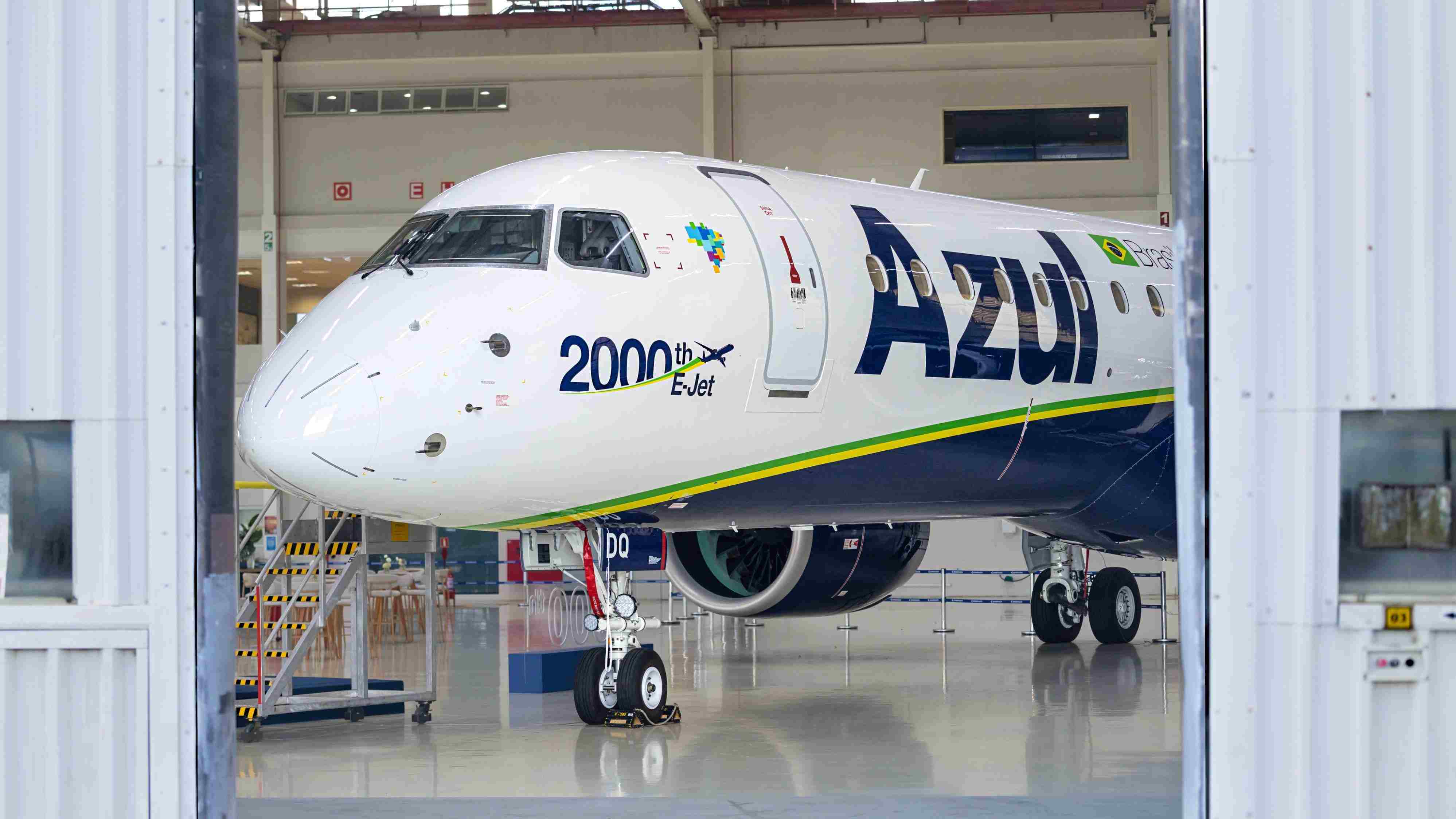
Embraer has delivered its 2,000th E-Jet, an E195-E2 handed to Azul, placing the family among the world’s three best-selling commercial jet lines behind Airbus’s A320 and Boeing’s 737. The milestone reinforces the company’s leadership in aircraft seating up to 150 passengers, a segment where its jets now fly with more than 90 airlines in roughly 60 countries.
The company’s position is being framed as an opportunity created partly by its much larger competitors’ difficulties. Airlines ordering large single-aisle aircraft from Airbus or Boeing can face waits of eight to 10 years, while Embraer says it can deliver E2-family jets in less than two years. Its order backlog reached a record $34.5 billion in July, while the E175 retains a particularly strong position in US regional aviation because it meets pilot-contract restrictions that rival aircraft currently do not.
That advantage does not mean Embraer is insulated from the industrial pressures reshaping the sector. A second account emphasizes that shortages of engines, electronics, high-temperature forged and cast parts, and skilled labor may hold commercial-jet deliveries to about 85 in 2026, despite installed capacity for more than 100. Older, low-margin contracts and volatile material and fuel costs add execution and financing risks.
The contrast is central to Embraer’s next decision. Strong demand has opened room for expansion in India, where a local E-Jet production line is under study, but the company has indicated it would need orders for at least 200 aircraft to support such an investment. It is also weighing a larger single-aisle jet project that could compete more directly with Airbus and Boeing, an undertaking analysts estimate could require about $10 billion and major strategic partners.
For now, Embraer’s achievement signals growing scale rather than a break with the market’s constraints: it is gaining ground because airlines need alternatives, while still relying on the same global supply network that has slowed the industry’s leaders.
https://brazil-test-hub.syndichain.com Brazil News Hub brazil-test-hub brazil-test-hub
Write a comment