Moon’s Vast New Crater Sharpens the Risk Picture for Future Missions
Moon’s Vast New Crater Sharpens the Risk Picture for Future Missions
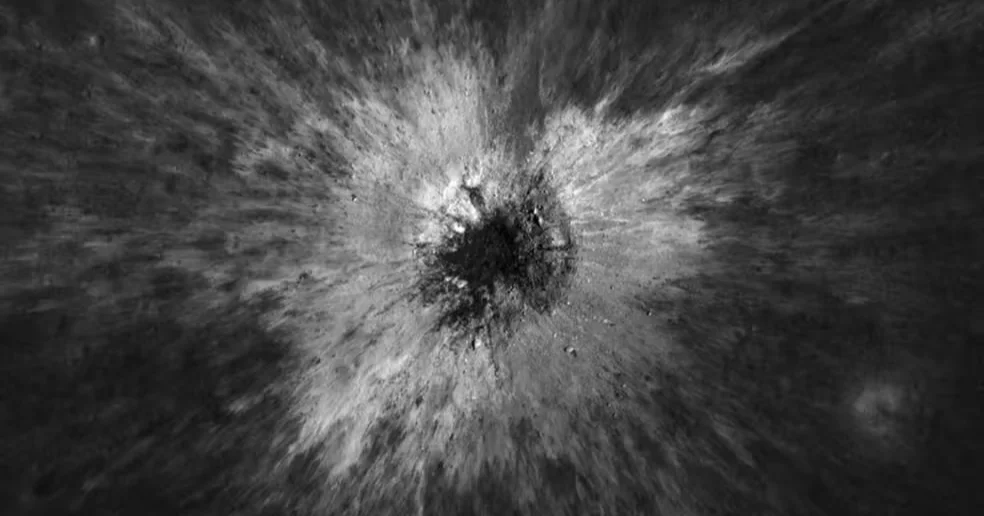
McGetchin, a 222-meter-wide crater near the eastern edge of Mare Crisium, was formed between April 11 and May 22, 2024, according to comparisons of Lunar Reconnaissance Orbiter images. Researchers estimate that the impactor — either an asteroid or a comet fragment — measured roughly 9 to 21 meters across and released energy comparable to about 15,500 tons of TNT.
The accounts converge on the crater’s unusual scale. At 43 meters deep, McGetchin is more than twice the length of a football field and is described as the largest newly formed impact crater identified through detailed modern monitoring of the Solar System. They also stress that it was not observed as it happened: analysts found it later by comparing imagery, after Robert Wagner noticed a bright feature surrounded by a dark halo in overlapping records.
What makes the finding more consequential, in this reading, is not simply the cavity. Material ejected by the collision left radial traces extending more than 96 kilometers, while a roughly 6.4-kilometer area around the crater becomes about 9°C colder at night because the disturbed regolith retains less heat. One account describes the impact as having “stirred up the dust and rock fragments” on the lunar surface, leaving material less compact and less able to hold warmth.
The sources differ mainly in emphasis. One puts the odds of an impact large enough to make such a crater at about once every 132 years; another summarizes that frequency more broadly as about once a century. But all draw the same operational lesson: unlike Earth, the Moon has virtually no atmosphere to slow small incoming bodies. Objects of this size can be difficult to spot before impact, making monitoring, safer site selection and resilient mission design central concerns for future lunar operations.
https://brazil-test-hub.syndichain.com Brazil News Hub brazil-test-hub brazil-test-hub
Write a comment