Brazil’s Supreme Court Draws a Line on Parliamentary Immunity
Brazil’s Supreme Court Draws a Line on Parliamentary Immunity
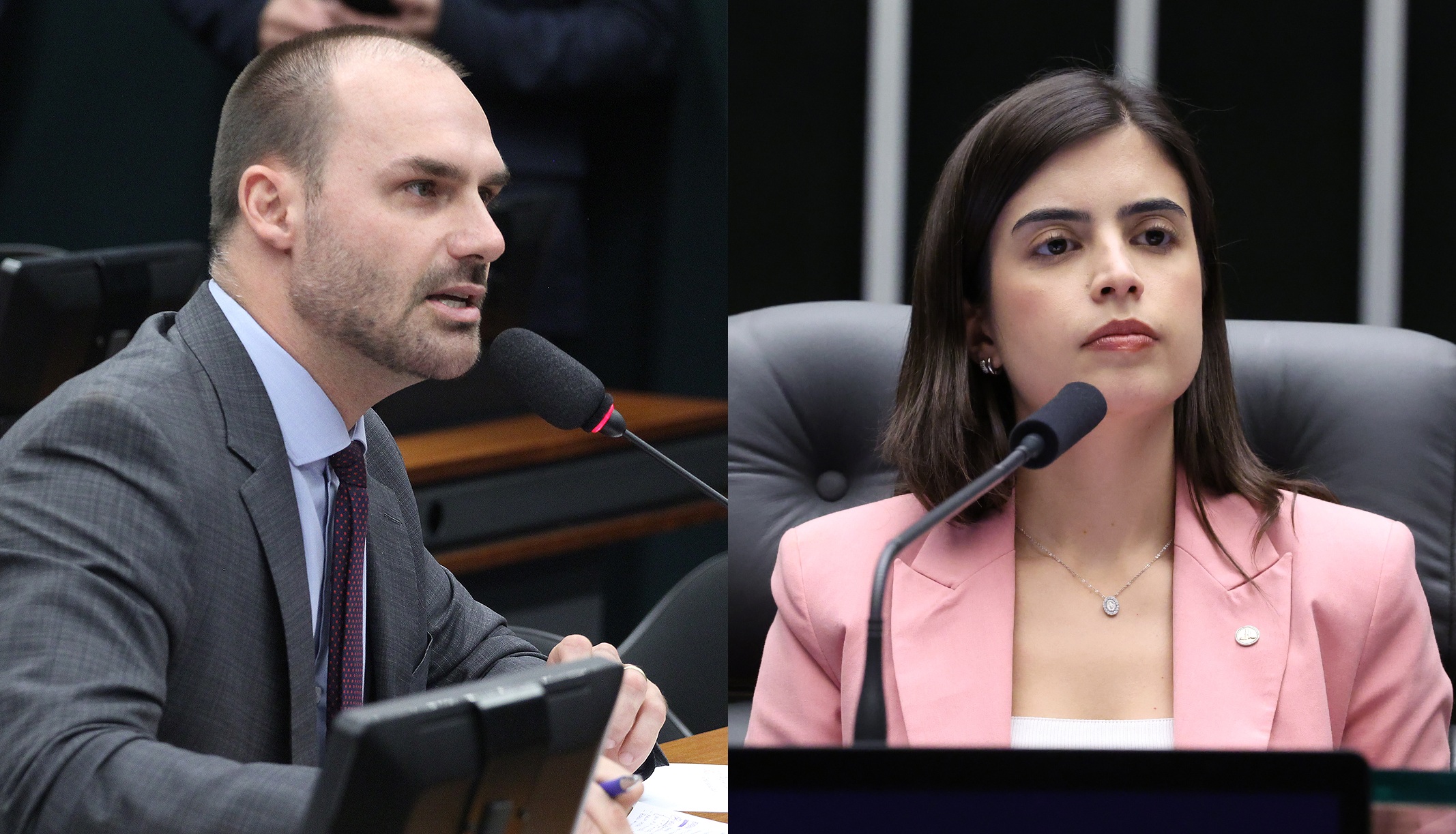
Brazil’s Supreme Federal Court (STF) has convicted former federal deputy Eduardo Bolsonaro of defaming Deputy Tabata Amaral, ruling by 7–3 that his 2021 social-media posts about her proposed free menstrual-products bill crossed the boundary between political criticism and unlawful harm to her reputation. He received a one-year open-regime detention sentence and a fine; the precise reported total varies with the calculation of day-fines, with one account putting it at 78 minimum wages, or R$126,438.
The majority, led by Justice Alexandre de Moraes, concluded that Bolsonaro’s posts suggested Amaral had drafted the bill to improperly benefit an interested third party linked to her campaign. Moraes said the allegation attributed an offensive fact to the deputy’s reputation and was unrelated to the protected exercise of legislative duties. In a separate account of his vote, Moraes said Amaral had “never acted to ‘serve the lobby’ of any person or company,” and accused Bolsonaro of using false information to target her.
For the majority, the medium also mattered. Moraes said the online publication showed a tactic intended to damage Amaral’s honour in public and private life, stressing the internet’s vast reach and capacity for circulation. Justices Cármen Lúcia, Flávio Dino, Cristiano Zanin, Dias Toffoli and Gilmar Mendes joined his reasoning; Chief Justice Edson Fachin agreed that defamation occurred, though he disagreed that a non-custodial alternative penalty should be ruled out.
The dissent took the opposite view on immunity. Bolsonaro’s defence argued that the post was part of political debate around a legislative proposal and that even sharp criticism belongs in the political arena. Justice André Mendonça, joined by Luiz Fux and Nunes Marques, said the statements were connected to the mandate and therefore constitutionally protected.
Mendonça said the evidence showed the remarks concerned debate over the bill, not a personal attack detached from parliamentary work: “There is no element” showing that the controversy was merely a pretext for such an attack. The split leaves a clear contrast: the majority focused on the alleged false imputation and its digital impact, while the dissent focused on the speech’s legislative context.
https://brazil-test-hub.syndichain.com Brazil News Hub brazil-test-hub brazil-test-hub
Write a comment