Halzen’s IceCube vision wins Physics Nobel as both accounts spotlight a new cosmic window
Halzen’s IceCube vision wins Physics Nobel as both accounts spotlight a new cosmic window
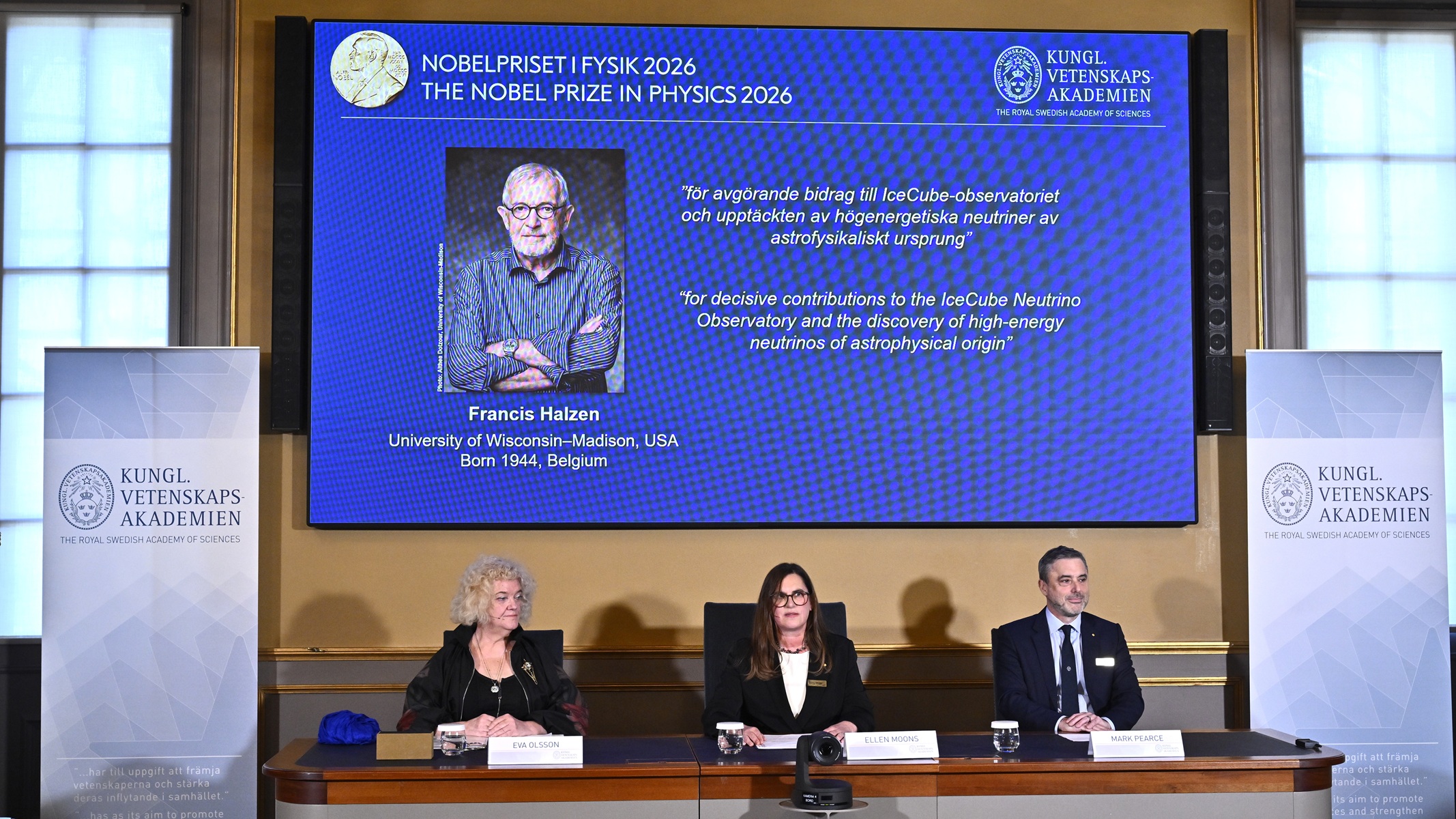
Francis Halzen, the Belgian-American physicist at the University of Wisconsin–Madison, has been awarded the 2026 Nobel Prize in Physics for contributions to the IceCube Neutrino Observatory and the detection of high-energy astrophysical neutrinos.
The two accounts agree on the central achievement: Halzen saw in the 1980s that the clear ice at the South Pole could become a vast particle detector. IceCube, completed in 2011, uses light sensors embedded across a cubic kilometre of ice to identify rare flashes produced when neutrinos collide with atomic nuclei.
The Brazil Right account places the emphasis on the observatory’s physical design and scientific reach. It describes the South Pole as a stable, low-interference setting and says IceCube enabled researchers to detect neutrinos from “extremely energetic processes in the distant universe.” It adds that subsequent observations established that some of the particles originate beyond the Solar System, opening a fuller search for their sources.
The Brazil Left account tells the same scientific story through Halzen and the wider research team. Speaking by telephone from Italy after the announcement, Halzen said: “It was a great surprise and, obviously, I did not expect it.” It also highlights the difficulty of the field: neutrinos have almost no mass, carry no electric charge and interact only weakly with ordinary matter.
That account quotes Nobel Physics Committee chair Mark Pearce crediting Halzen with leading “an international team of researchers and engineers” that created an “extraordinary instrument,” arguing that his persistence and scientific vision helped establish a new form of astronomy.
Together, the reports frame the prize as both an individual recognition and a milestone for a large-scale observatory. Their difference is one of emphasis: one focuses on the Antarctic machine and its discoveries, the other on the scientist’s response and the collaborative work that made those discoveries possible.
https://brazil-test-hub.syndichain.com Brazil News Hub brazil-test-hub brazil-test-hub
Write a comment