Kagan and Soai’s Nobel win spotlights chemistry’s mirror-image puzzle
Kagan and Soai’s Nobel win spotlights chemistry’s mirror-image puzzle
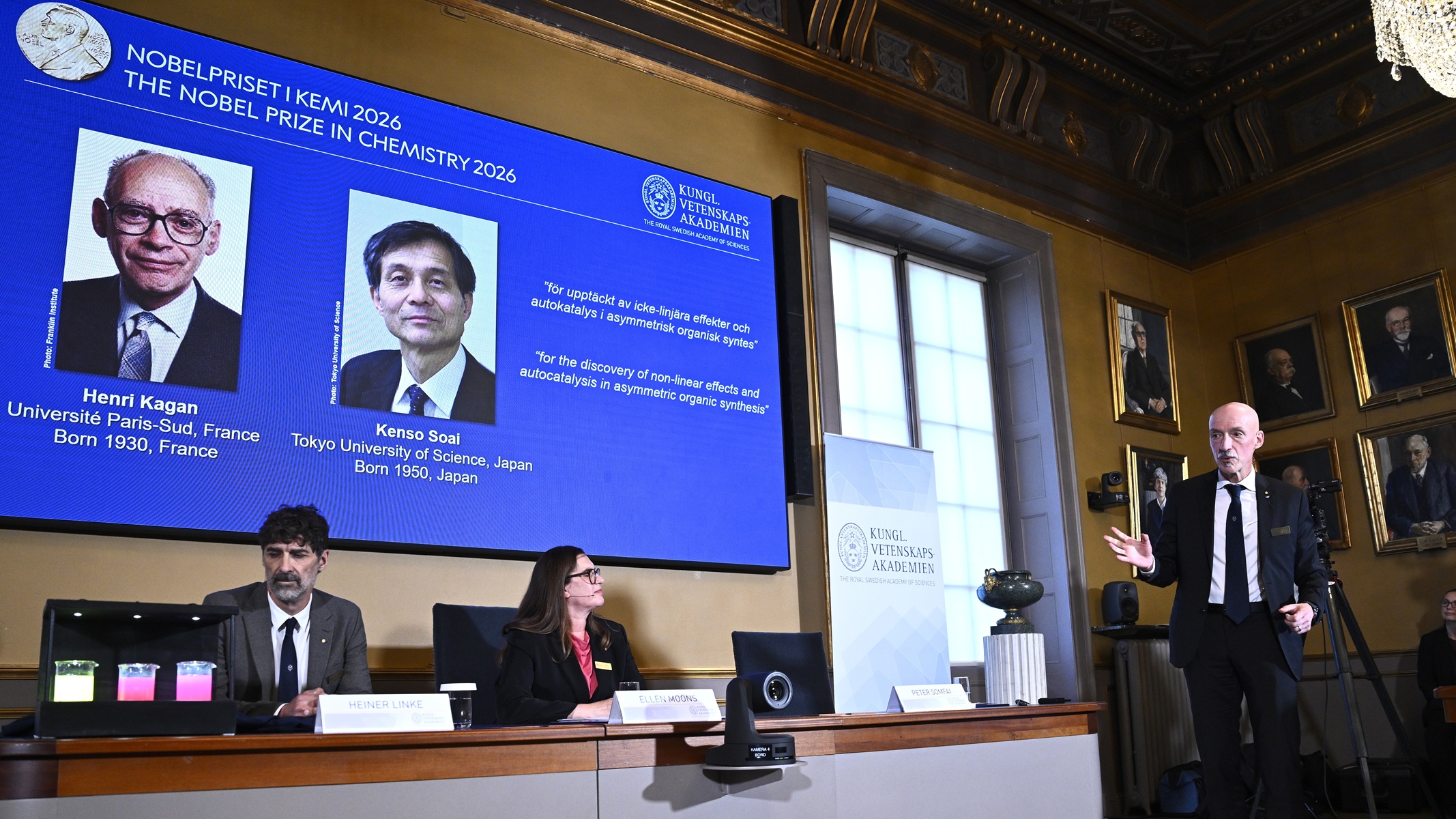
Henri B. Kagan of France and Kenso Soai of Japan received the 2026 Nobel Prize in Chemistry for discoveries involving nonlinear effects and autocatalysis in asymmetric organic synthesis. The two accounts agree on the central achievement: their work gave chemists ways to steer reactions toward one molecular mirror image rather than producing equal amounts of both.
The Brazil Left account frames the award chiefly through its practical stakes. It cites the Nobel Committee’s assessment that the discoveries were decisive for chemists developing reactions for pharmaceutical production, and notes that mirror-image versions of a drug molecule can behave differently: one may provide the intended therapeutic effect, while the other may bring unnecessary or potentially harmful side effects. “This year’s prize is about fundamental chemistry,” Nobel Chemistry Committee chair Heiner Linke said, calling the reactions developed by Kagan and Soai “spectacular.”
The Brazil Right account reaches the same conclusion but puts greater weight on the chronology of the breakthroughs. It describes Kagan’s 1986 method for producing a larger-than-expected excess of one mirror-image molecule, followed by Soai’s 1995 work designing a reaction capable of becoming homochiral. In 2003, the report says, Soai demonstrated a reaction producing only one of the two possible mirror images.
Both perspectives explain the scientific question through homochirality: amino acids can occur in two reflected forms, yet proteins in living cells overwhelmingly use just one. For decades, that apparent asymmetry puzzled chemists. Kagan and Soai’s experiments showed how chemical processes could favor a single form, helping address how such selectivity might arise.
Where the accounts differ is emphasis rather than substance. One foregrounds the implications for medicines; the other extends the likely applications to fragrances, agricultural chemicals and new materials, while also presenting the prize as the culmination of distinct advances across nearly two decades. Both portray the award as recognition for foundational work with wide practical reach.
https://brazil-test-hub.syndichain.com Brazil News Hub brazil-test-hub brazil-test-hub
Write a comment