Brazil’s Tallest Office Tower Bets on Demand Despite a Vacancy Challenge
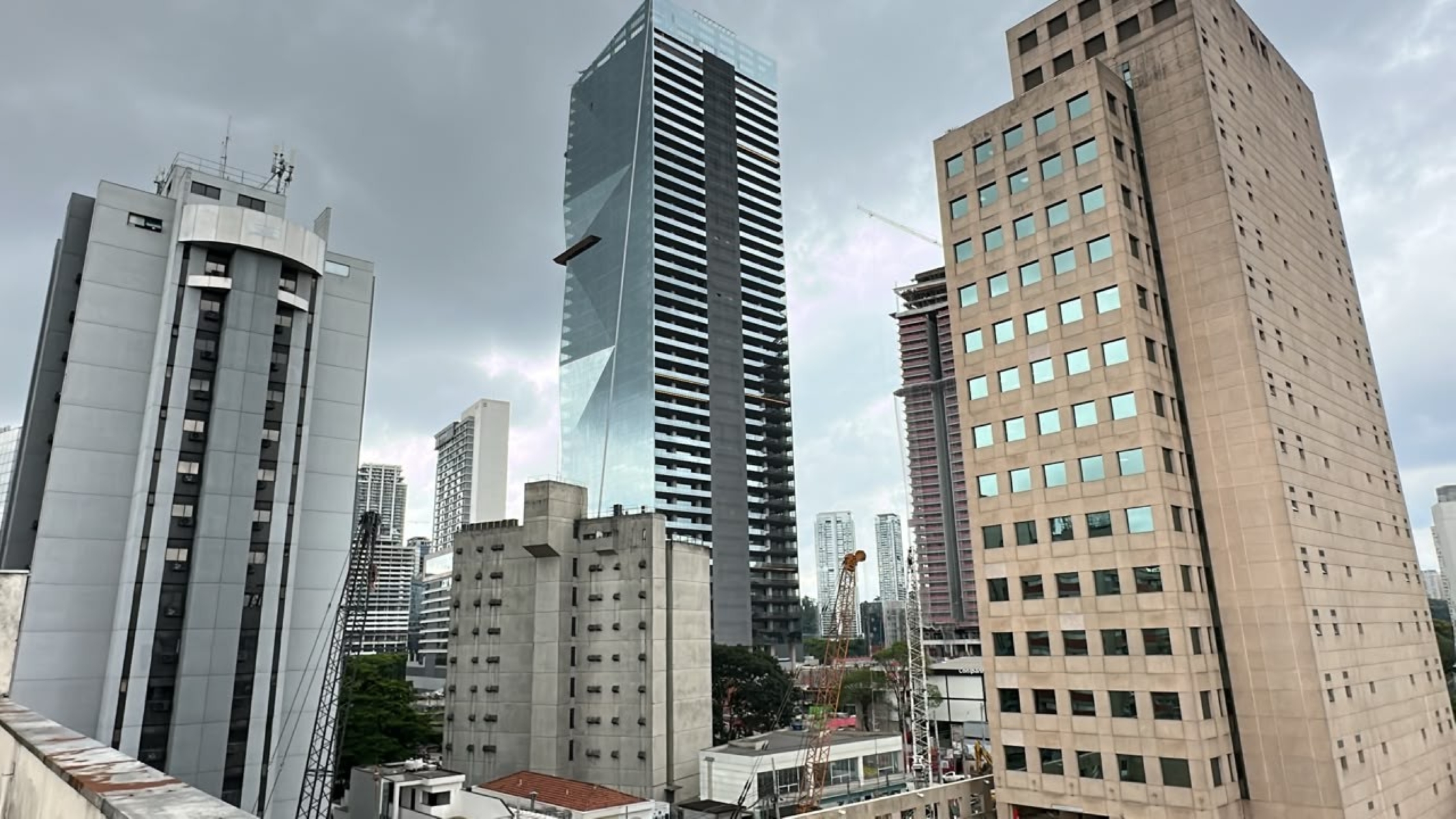
Brazil’s Tallest Office Tower Bets on Demand Despite a Vacancy Challenge
At 219 metres and 39 floors, Torre Alto das Nações has taken the title of Brazil’s tallest office building, surpassing Goiânia’s 191-metre Órion Complex. The WTorre project, on the banks of the Pinheiros River in São Paulo’s southern zone, is also the city’s first building to exceed 200 metres. It ranks sixth among all completed Brazilian towers, behind residential buildings in Balneário Camboriú.
Its backers frame the tower as more than a height record. The building anchors Paseo Alto das Nações, a former Carrefour site being developed with Carrefour Property around a “15-minute city” model: offices, retail, food, housing and transport clustered beside CPTM’s Granja Julieta station. The project used 61,300 additional-construction certificates, worth about R$197 million, with proceeds directed to public infrastructure, mobility, drainage, housing and public-space improvements.
The tower’s design reinforces its landmark ambitions. Inspired by London’s The Shard, it uses offset glass panels that alter appearance with changing light, along with terraces, planted façade bands, a helipad and more than 30 lifts. A projecting glass observation deck is intended to draw visitors, while roughly 98,900 square metres of AA-rated offices are designed to serve about 10,000 people daily.
The commercial case, however, is more complicated than the architecture. São Paulo’s premium-office market has expanded as companies intensify in-person work, and nearly half of the high-end space scheduled through 2029 was reportedly pre-let. JLL leasing director Yara Matsuyama said pre-leasing shows that “our market is really very active.”
Yet Chácara Santo Antônio, where the tower stands, had a 43.7% vacancy rate for high-end offices, among the city’s highest. Bayer has committed to 15,600 square metres, but the project will need more tenants to validate the developers’ view that the district is a natural extension of the Chucri Zaidan business corridor. Matsuyama argues that land scarcity in established districts is pushing development into new areas, calling the southern axis “the city’s growth vector.”
https://brazil-test-hub.syndichain.com Brazil News Hub brazil-test-hub brazil-test-hub
Write a comment