Us
A few years ago, I started a group called “Black Bitcoin Billionaire” on Clubhouse. At its peak, we had over 165,000 members. I never said it was exclusive, and we never acted as if it were. The rooms were open to everyone; we tried to be kind and educate all people who joined. We had an “us” mentality. We didn’t discriminate.
There were some people, however, who believed that putting “Black” in the name alienated them. They looked at the group as “them.” I thought it was funny whenever someone would ask:
“Is it okay if I join Black Bitcoin Billionaire? I’m not Black.”
I would respond:
“It’s funny you would ask that. It’s not the ‘Black’ part that would keep you from joining—it’s the fact that you aren’t a billionaire.”
They would pause for a second, and most of the time, they would laugh. Because they knew I got ‘em. They had made joining the group “us vs. them,” even though 40–50% of the members weren’t Black.
That interaction revealed something about how quickly we sort ourselves into tribes—and how much we lose when we do. It turns out, we aren’t just losing our connection to each other; we might be losing years off our lives.
The Longevity Paradox
Scientists and biotechnologists are spending billions researching ways to extend human life. They have made strides in senolytics, epigenetic reprogramming, and stem cell therapies—advancements designed to expand not just our lifespan, but our healthspan.
I find it incredibly ironic that we are spending billions on biohacking when studies have shown that being increasingly social already increases longevity. Potluck dinners. Walking to the store with your neighbors. Checking on each other. These may have more to do with a long life than taking any pill.
We are told that “survival of the fittest” is the only way, yet if you look at the longest-living mammals on earth, most of them are highly social creatures. We keep searching for the fountain of youth in a lab when it might be sitting on our neighbor’s porch.
The problem is, our infrastructure has driven us further and further from the communal. We may live in suburbs, but we barely know the people next door.
How We Got Here
I have come to believe that modern existence is fundamentally retaliatory. We are separated by the past transgressions of those who came before us. The fight for resources has been embedded so deeply into our DNA that we claw every day to get what we do not have.
We feel so lonely that we assume everyone is out to get us—that everyone wants what we have. We keep our heads on a swivel, living by the mantra, “I’ma get it how I live.”
We have adopted a “them” mentality. We pretend that other humans are vastly different from us. When it comes to religion, politics, or cultural belief systems, we use our differences to define who we associate with. It’s a mechanism to reduce conflict—because conflict causes stress, and stress, as we know, causes death.
So instead of being curious about or tolerating someone else’s lifestyle, we fight against it or ignore them entirely.
It is mind-blowing.
The Ego Trap
Why is it so hard to seek to understand how someone else feels? Why they believe the way they do?
It is the Ego.
Too often, we would rather be right than righteous. We fall into a trap of thinking that if a person doesn’t think like me, they are in direct opposition to me.
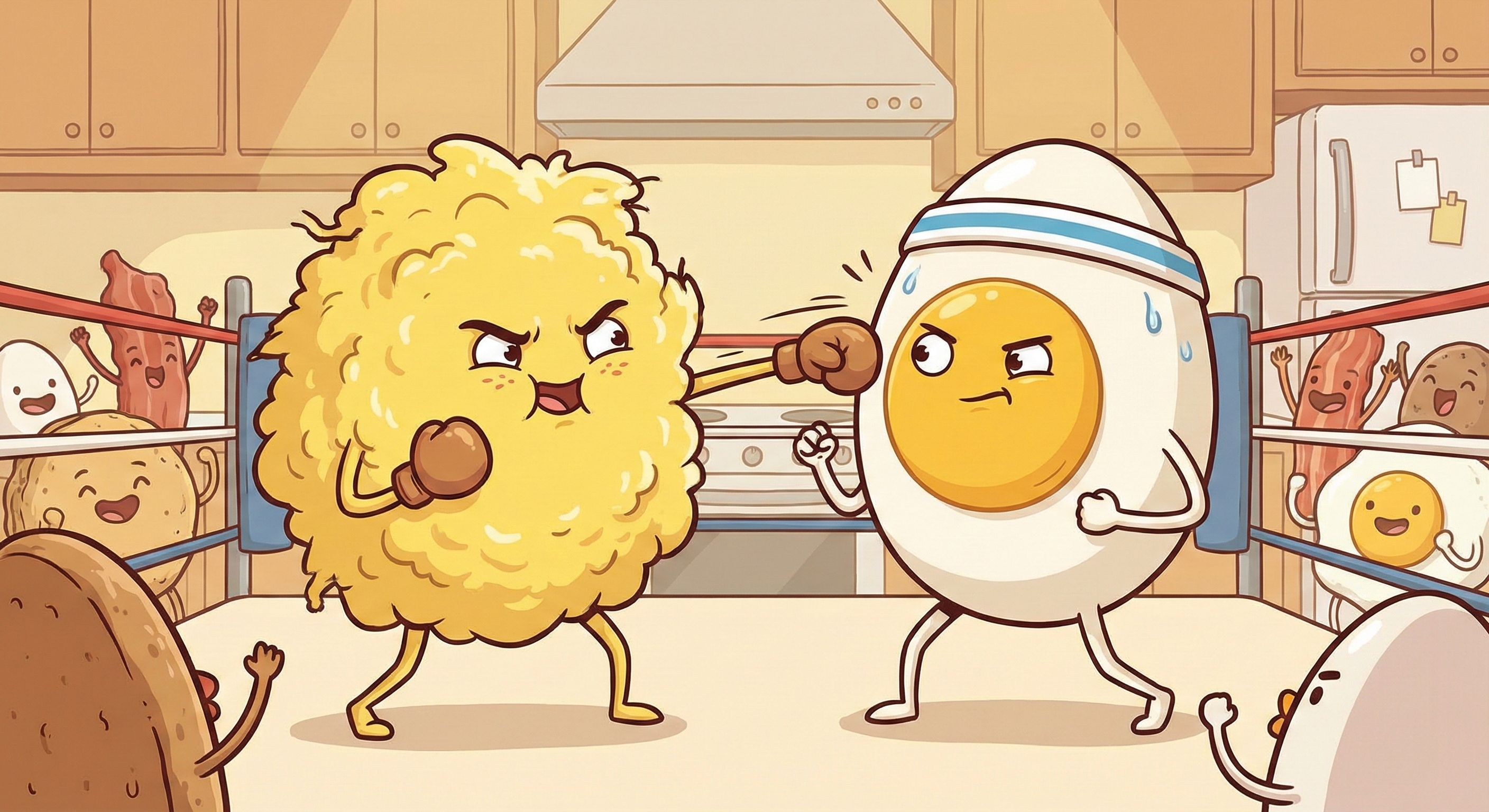
But that’s like being at Waffle House and getting mad at someone for liking their eggs scrambled while you like yours over easy. Could you imagine a “scrambled egg man” wanting to take out a “boiled egg man” just for liking his yolk distinctive?
It sounds crazy.
Trying to convince someone else that your way is the only way is prideful and insecure. You want social validation. You want to know that everyone around you likes what you like. You don’t want to be the black sheep in a field of lily-white lambs.
You want acceptance.
The Label Problem
That acceptance is multiplied when you find your “tribe”—especially when they are vehemently opposed to others with opposing views. Because you feel part of something, you allow people to give you one-word titles to describe who you are.
He’s a Bitcoiner. She’s a Republican. He’s a Hooper, a Nerd, an Emo Kid.
These labels are rarely accurate because people are far more nuanced than the tags placed on them. The issue is, once you get the label, most people wear it like a badge—because it signals that they belong to something bigger than themselves.
I get it. Belonging feels good.
But here’s what I learned: in a world of individualism, it is hard not to look at each other as competition. It is difficult to find common ground with those who hold opposing views. We tend to focus on what makes them “them,” instead of realizing that there is far more in this world that makes us, simply, “Us.”
The Way Forward
Is it possible for us to live together? Or are we too far gone to work together and take care of the folks around us?
I don’t think so.
At some point, we have to realize that we are better together. That our healthspan depends on it. That the neighbor we ignore might add years to our life—and we to theirs.
The fountain of youth isn’t in a lab. It’s in the potluck. It’s in the walk to the store. It’s in the simple act of checking on each other.
We just have to choose “us.”
Write a comment