A Bundle Of Social Contradictions: Both Steves
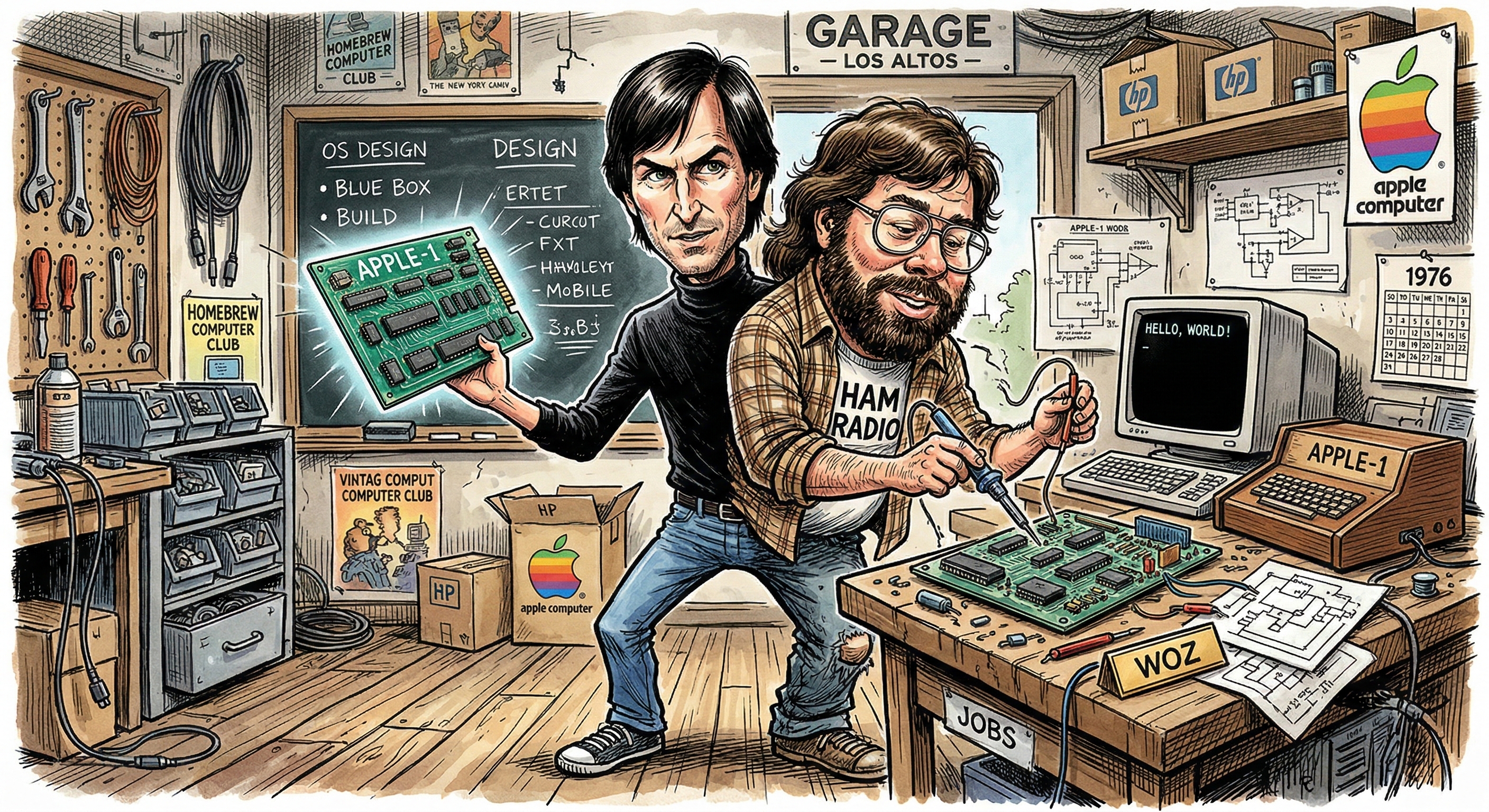
I don’t fit labels well. I know this about myself. It’s partly because of my attitude toward the status quo, but it’s also because of the way I was raised.
How can I be naturally charismatic but really rather be a hermit? How can I be good at pitching and selling and at the same time discuss and apply highly technical concepts? I love hooping, but I also love board games and role play. How can I feel so humble, yet be full of enough confidence to do what I want? How am I the happiest man alive, and then feel overwhelmed with the weight of others’ grief at funerals? A capitalist with socialist thoughts.
These contradictions have been a part of me forever, and they make me, me. But sometimes they get in the way. It takes longer for folks to understand me. I’ve found that it makes me interesting to some people, but I’ve also found that people tend to despise or fear what they don’t understand.
For most of my life, I haven’t cared. That’s not toughness talking — it’s just how I’m built. I’ve always moved on what I believed, not what others expected.
But as I get older, I think less about what people think of me and more about how the world thinks in general. The boxes. The categories. The way society needs you to be one thing so it knows where to put you.
If I had to name the contradiction that fascinates me the most, it’s this: I feel like both Steves. Jobs and Wozniak. The vision and the build. The stage and the garage.
The tech world runs on a binary. You’re either the builder or the talker. The one writing code at 3 a.m. or the one selling the dream to a room full of suits. Woz or Jobs. Pick one.
I never could. Not because I’m indecisive, but because I genuinely am both. I can hold a room like a Sunday sermon and architect the system I’m preaching about. I can make something deeply complex make sense to your grandmother, and then go home and write the code that makes it work.
You’d think that would be useful. And it is. But it confuses people something fierce.
There is a mythology about what a technical person is supposed to look like. We’ve been marinating in it for decades. The genius is awkward. The genius is quiet. The genius struggles to explain what they’ve built because their brain operates on a frequency the rest of us can’t tune into. That’s the story we tell ourselves. It’s in the movies, the biopics, the funding pitches. The hoodie. The stammer. The whiteboard full of equations no one else can read.
And the genius is a white male. Or Indian. Or Asian. That’s the template. That’s who gets the benefit of the doubt when they walk into a room and say “I built this.” Everyone else has to prove it. Some of us have to prove it twice.
That mythology does real work in the world. It decides who gets taken seriously before they open their mouth. It creates a template, and if you don’t match it, people fill in their own story about who you must actually be.
I’ve watched it happen in real time. Not from the outside — from inside my own skin. I walk into a room, and before I’ve said a word about architecture or code, I’ve already been sorted. The energy. The size. The way I talk. People see the communicator and assume that’s all there is. The community guy. The evangelist. The face.
Those aren’t bad roles. I’m great at them. But when that’s the only box they’ll let you stand in, you start to realize the box was never about your skill set. It was about their comfort.
When I coded my first wallet — late nights, teaching myself, breaking things and rebuilding them until the logic clicked — Lafe handled the UI and we made a great team. But the architecture, the logic, the guts of the thing? That was me.
The first person I showed it to said it was good. Real good. Then he asked who I stole it from.
I laughed. What else can you do? The thing was good, so it couldn’t be mine. That was his math.
The better I am at explaining what I built, the less people believe I built it. Like being the cook and having someone compliment the waiter on the meal.
The funding tells the story too.
I’ve received grants for social causes. Community building, education, outreach — people will fund that version of me all day long. And I’m grateful. That work matters to me deeply.
But when I apply for grants for the open-source programming work I’m doing? Crickets. Same mind. Same hands. Different box.
I published an idea openly once, because that’s what I do. I share. I’ve always shared. And then I watched someone else package that same idea, present it through a face the system recognizes as “technical,” and the check cleared.
That one sat with me for a while. Not because I was angry — I really wasn’t. But because it was so clean. So perfect in what it revealed. You can do the thinking, do the sharing, do the work of putting something into the world — and the world will still wait for a certain kind of person to pick it up before it calls the idea legitimate.
It’s a strange thing to witness about yourself. Like watching someone else get credit for your reflection in the mirror.
But where I’ve been and where I’m going was supposed to happen this way. I believe that. The path may have been harder, but all of it was necessary. God doesn’t waste a single step. I just observe the terrain as I walk it.
And the terrain reveals a tension I carry every day.
I want to help the people around me. That’s not a line. That’s the deepest thing in me. Sharing what I know, lifting folks into rooms they didn’t know existed, making the complex plain so somebody else can eat — that’s my ministry.
But I also want to be recognized for building dope things. And I wrestle with that. Because the helper in me says, “It’s not about you.” And the builder in me says, “But I made this. With these hands. And it matters that people know that.”
Honestly? I’d love to just build in a cave. To disappear into the work the way my mind already wants to — heads down, no distractions, just creation. As a kid, I looked up to inventors who had patrons. Da Vinci had the Medicis. Tesla had Westinghouse, at least for a time. Someone who believed in what they were building enough to say, “Here. Go make it. I’ll handle the rest.” They didn’t have to prove they were technical enough. They didn’t have to perform. They just built, and someone trusted the building.
I think about that sometimes. What I could create if I didn’t have to spend half my energy convincing people that I’m the one creating.
I think about Apple a lot. It only worked because Jobs and Woz trusted each other completely. Two halves, one whole.
But what happens when you’re both halves in one body? Who trusts that you can hold both?
That’s the space I’ve lived in my whole life. Not just in tech — everywhere. The hermit who can work a room. The humble one confident enough to bet everything on a vision nobody else can see yet. The man who wants to serve and also wants his work to be seen for what it is.
I used to think these contradictions were something to explain away. But the older I get, the more I realize they were never contradictions at all. They’re just me.
And tomorrow I’ll wake up and be both Steves again. I’ll write the code and explain the code and watch someone try to figure out which one is the “real” me. And I’ll keep going. Not because I’ve resolved anything — but because the work doesn’t wait for the world to catch up.
It never has.
Write a comment