Once the Richest City in Europe Has 60 Lakes
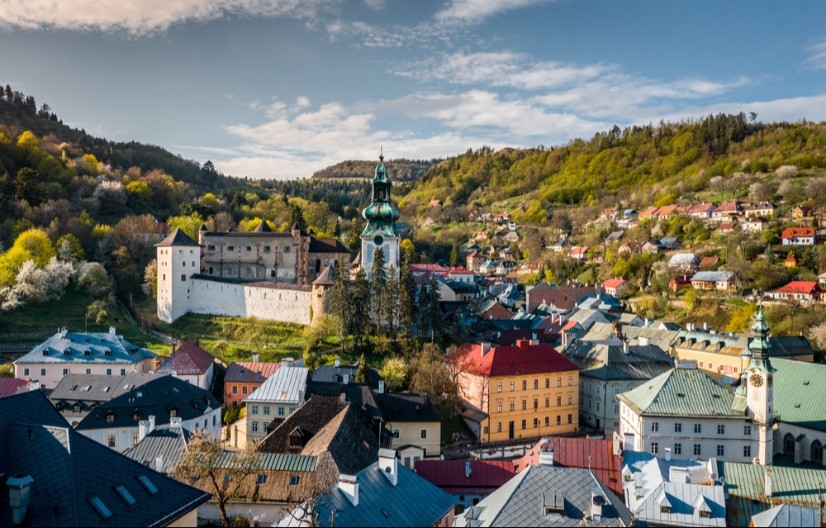
Once the Richest City in Europe Has 60 Lakes Banská Štiavnica, a Slovakian town situated within a volcanic crater, is a UNESCO World Heritage site recognized for its exceptionally preserved medieval architecture and historical significance as a former gold and silver mining center. Founded in the 13th century, it became a vital economic hub, pioneering early steam engines and hosting the world’s first technical university, showcasing its technological advancements by the 19th century. The town’s unique layout, including the Holy Trinity Square, two castles, and an impressive Calvary complex, combined with a sophisticated water management system for mining and drinking water, makes it a captivating destination.
- Banská Štiavnica is a UNESCO World Heritage site in Slovakia, known for its well-preserved medieval architecture and historical gold and silver mines.
- The town is located in the depression of an ancient volcano, earning it descriptions like ‘hidden gem inside a volcano’ and ‘silver town with 60 lakes’.
- It was a significant economic center, documented as ‘Terra banensium’ (land of miners) in 1156, and was among the first in Europe to use early steam engines for mine drainage.
- Banská Štiavnica established a mining school in 1735 and a mining academy in 1762, considered the world’s first technical university.
- Key landmarks include the Holy Trinity Square with a baroque tower, a 14th-century Gothic town hall, two castles (Old and New), and the baroque Calvary complex.
- An extensive system of artificial reservoirs, canals, and dams, built starting in the 16th century, supplied both the mining industry and the town with water.
- By the 19th century, it was a technologically advanced mining center, often compared to a Silicon Valley of its time, with museums dedicated to its mining history.
Write a comment