Review of the role of theater between the two world wars
Požarevac – In the Gallery of Colored Light of the Center for Culture Požarevac, the exhibition “Požarevac Theater in the Period Between the Two World Wars” by the local Historical Archive was presented to the public. Slobodanka Cvetković, the author of the exhibition, emphasized that the exhibition was fundamentally created in 2006, by collecting archival material not only from the Historical Archive Požarevac, but also from the Archive of Vojvodina and the Museum of Theater Arts in Belgrade.
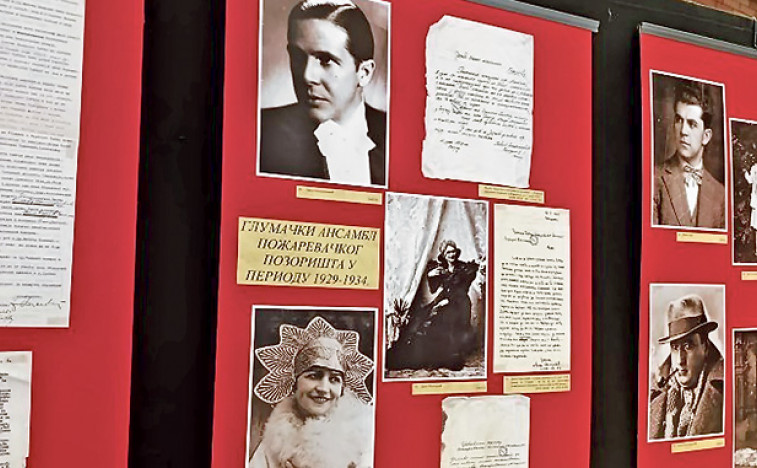
Review of the role of theater between the two world wars An exhibition in Požarevac showcases the city’s theater history between the two world wars, highlighting its establishment in 1929 and its evolution through different administrative periods. The theater faced financial difficulties, leading to its closure and later reincarnation, with performances initially held in cafes before moving to a dedicated hall. The exhibition emphasizes theater’s role in the cultural and social life of the time, serving as a space for reflection and the development of a new identity.
- The exhibition “Požarevac Theater in the Period Between the Two World Wars” was presented at the Center for Culture Požarevac.
- The theater’s initiative began in 1928, with its founding assembly held on April 24, 1929.
- Initially named Regional National Theater, it was funded by citizens and donations, later becoming the National Theater of the Danube Banovina with partial budget funding.
- The theater faced financial challenges and had to tour neighboring towns for survival, closing in 1934 due to lack of financial support.
- It was revived as the National Theater of the Danube Banovina of Prince Regent Paul but performed only twice before 1941.
- Cafes also hosted theatrical performances until the construction of the Trade Youth Home, which had a 500-seat theater hall.
- The interwar period was a time of significant social, political, and cultural change, with theater serving as a place for re-examination, resistance, and hope.
- Theater played a crucial role in shaping a new identity, preserving national dramatic tradition while embracing European artistic trends.
- The exhibition utilizes photographs, posters, manuscripts, archival material, and costumes to bring the era’s theater scene to life.
Write a comment