How to Compare Community Phases at Palm Springs Dubai
- Phase 1 Breakdown: Townhouses Versus Villas
- What Later Phases Will Add
- Timelines and What They Mean for Capital
- Hypothetical Calculation: Phase 1 Townhouse Versus Waiting
- Practical Points Before Committing
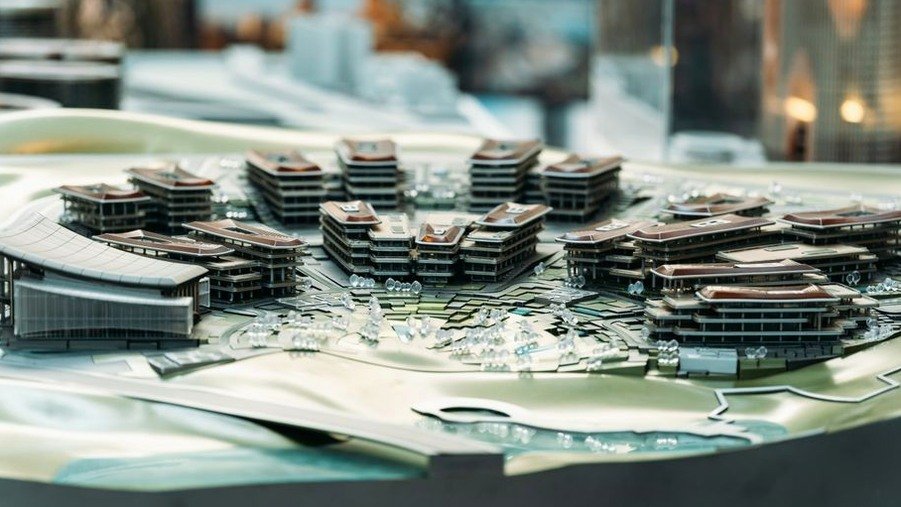
Palm Springs by Nakheel launched in November 2026 as a 382-hectare master community in southern Dubai, and its phased rollout means buyers face a real decision about timing, property type, and capital deployment. Phase 1 released roughly 500 homes across townhouse and villa neighbourhoods, with estimated completion in Q4 2030. Future phases will add apartments and a mixed-use core, but pricing, payment terms, and construction timelines for those later stages remain unannounced. The practical question is whether Phase 1 entry at known prices outweighs waiting for later inventory at unknown cost.
Phase 1 Breakdown: Townhouses Versus Villas
Phase 1 splits into two distinct property categories sold through separate neighbourhoods. Aliso One and Aliso Two offer townhouses; Rancho One and Rancho Two offer standalone villas. Three-bedroom townhouses start from AED 3.8M (roughly $1.03M) at 2,328.6 sq ft, while four-bedroom units range from AED 4.6M for G+1 layouts to AED 5.2M for G+2 corner configurations at up to 3,115.4 sq ft. Villas begin at AED 7.0M ($1.91M) for four bedrooms and climb to AED 8.9M ($2.42M) for five-bedroom layouts spanning 4,041.4-4,921.4 sq ft.
Both categories follow a 60/40 payment plan: 60% paid during construction, 40% at handover. That handover target is Q4 2030, giving buyers nearly four years of staged payments before the final balance comes due. Every home is sold off-plan, so no unit exists yet for physical inspection.
What Later Phases Will Add
Nakheel’s masterplan divides Palm Springs into 15 neighbourhoods — 11 for townhouses and four for villas — but only the first two of each type opened at launch. Apartments and a mixed-use commercial core are earmarked for subsequent releases. When you compare community phases, the gap in available information is the most striking difference: Phase 1 has published prices, floor areas, neighbourhood names, and a construction timeline, while later phases have none of those details confirmed.
Planned community infrastructure — two schools, a hospital, six mosques, shopping centres, Canyon Park, Thousand Palms Country Club, Silver Spur Racquet Club — will be built over time. Early buyers gain lower entry pricing but live through years of active construction around them. Later-phase buyers get a more finished environment but almost certainly pay higher per-square-foot rates, given Dubai’s typical price escalation pattern in master communities.
Timelines and What They Mean for Capital
Phase 1 locks capital for about four years from purchase to handover. That matters because money committed to a 60/40 off-plan schedule cannot be redeployed elsewhere. If Phase 2 launches in, say, 2028, its handover might fall in 2032 or later. Each successive phase extends the horizon for both occupancy and potential resale liquidity.
Road access runs via Sheikh Zayed Road and Al Maktoum Airport Street. A planned Metro Red Line extension and proximity to Etihad Rail’s Al Yalayis station could improve connectivity, but neither is operational yet. Buyers in any phase should factor in that daily commuting from southern Dubai to central business districts currently depends on private vehicles.
Hypothetical Calculation: Phase 1 Townhouse Versus Waiting
Suppose a buyer commits AED 3.8M to a three-bedroom Aliso townhouse today. Under the 60/40 plan, AED 2.28M is paid in instalments through Q4 2030, with AED 1.52M due at handover. The advertised indicative ROI is around 9.55% annually. If the property appreciates by even 15% over the four-year build period, the unit’s value at handover reaches approximately AED 4.37M — a gross gain of AED 570K on the full purchase price, though actual returns depend on market conditions, service charges, and whether the buyer rents or resells.
Now consider a hypothetical Phase 2 townhouse launching in 2028 at AED 4.4M for a comparable three-bedroom unit (a 16% premium over Phase 1, consistent with how Nakheel and other Dubai developers typically price successive releases). The same 15% appreciation over a four-year build yields a value near AED 5.06M at a 2032 handover — a gross gain of AED 660K in absolute terms, but on a larger capital base. The percentage return drops because the entry price was higher. Meanwhile, the Phase 1 buyer already holds a completed asset generating rental income or available for resale two years sooner.
The tradeoff is straightforward: Phase 1 offers lower entry cost and earlier completion, but the surrounding community will be only partially built. Later phases offer a more developed neighbourhood but demand more capital and a longer wait.
Practical Points Before Committing
Buyers weighing Phase 1 against future releases should verify three things. First, confirm the exact instalment schedule and any penalties for delayed payments under the 60/40 structure. Second, check whether Nakheel offers any contractual price protection or first-right-of-refusal for existing owners who want to buy in later phases. Third, assess personal liquidity: a four-year construction timeline means no rental income and no occupancy for that entire period, so the buyer’s financial cushion needs to cover both instalments and existing housing costs simultaneously.
Properties from AED 2M qualify for the UAE’s 10-year Golden Visa, which applies to every unit in Phase 1. Whether later-phase apartments will start below that threshold remains unknown, but it could affect the visa calculus for buyers considering smaller future inventory. For families, the masterplan’s 35 km of cycling and jogging routes, private gardens in townhouses, and private courtyards in villas make Phase 1 a tangible lifestyle proposition — provided you can wait until 2030 to move in.
- Reference: https://palm-springs-dubai.ae/
Write a comment