New Year in the Forest Christmas Fairy Tale Worth Reading
- Who the Story Actually Works For
- What to Check Before Committing to This Story
- The Real-World Reading Scenario
- Frequently Asked Questions
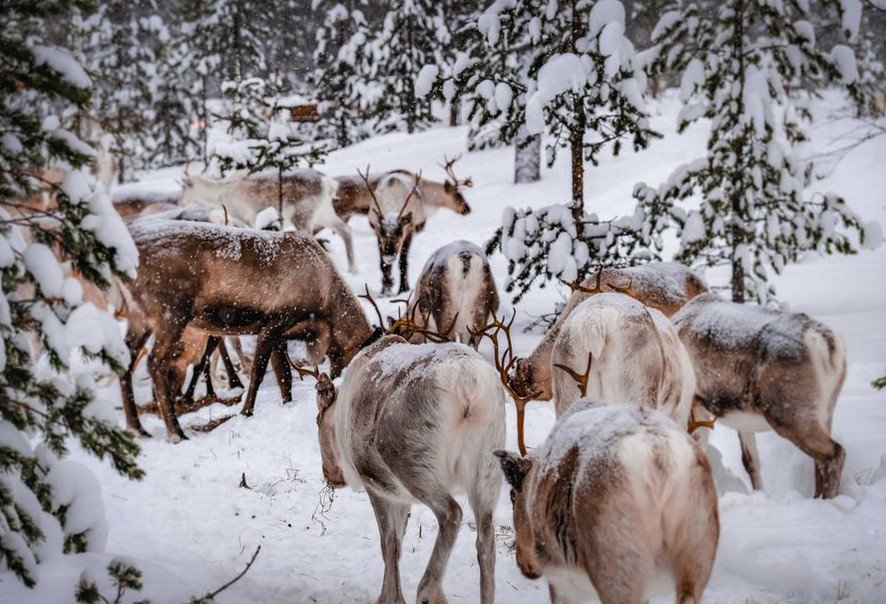
Parents and teachers looking for a holiday story that works for young children without overloading them with plot have a clear candidate here. The new year in the forest christmas fairy tale by Yulia Anastasina is a short verse narrative about forest animals waiting together for Grandfather Frost — Russia’s equivalent of Father Christmas — beneath a decorated fir tree. It runs lean, it rhymes, and it carries a simple social message without moralizing.
What sets it apart from generic holiday filler is structural honesty. The story does not pretend Grandfather Frost arrives instantly. The hedgehog explains the order plainly: Grandfather Frost visits the village first, then the cities, and only then reaches the forest. Children hear a truthful sequence rather than a magical shortcut, which makes the waiting feel earned rather than arbitrary.
Who the Story Actually Works For
The verse format puts this squarely in the preschool-to-early-elementary range, roughly ages 4 through 8. Shorter attention spans track rhyme naturally, so a child who struggles with prose paragraphs can follow the fox’s confusion and the hedgehog’s patient explanation without losing the thread. For classroom holiday programs or bedtime reading in December, the length is a genuine asset — it finishes before restlessness sets in.
Older children, say 9 and up, will find the conflict too thin. The fox simply forgot the holiday; the hedgehog reminds her; everyone joins the circle dance. There is no obstacle, no transformation, no tension that sustains a longer read. Choosing this story for a third-grade literature discussion would waste the session.
What to Check Before Committing to This Story
Several practical questions matter before placing this text in a school program or holiday booklet.
- Confirm the cultural register fits your audience. Grandfather Frost and Snow Maiden are East Slavic figures. For a Russian-heritage classroom or a family with that cultural background, the references land naturally. For children with no prior exposure, one sentence of context prevents confusion.
- Check the verse translation quality if you are using an English version. The original Russian rhyme scheme carries the rhythm; translations vary in how well they preserve it. Reading a passage aloud before deciding takes under two minutes and reveals immediately whether the lines scan or stumble.
- Verify the age floor honestly. The story has a mild tension point — the wolf and fox exchange sharp words before the hedgehog smooths things over — but nothing frightening. A sensitive 3-year-old will be fine; the wolf is not menacing here.
- Consider the setting match. The story works at a desk, on a couch, or as a read-aloud in a circle. It does not require props or visuals, though a simple fir tree illustration holds younger listeners’ attention during longer group sessions.
The Real-World Reading Scenario
Imagine a kindergarten teacher preparing a ten-minute New Year segment for the last day before winter break. She needs something thematic, short, and easy to dramatize. This story gives her four named characters — hare, wolf, fox, hedgehog — with distinct speaking roles. Four children can each take a part; the teacher narrates. The circle dance at the end becomes a literal activity. The whole sequence, including the brief movement break, fits inside twelve minutes.
For a parent reading at home on December 31, the scenario is simpler. The child gets the story once, asks why Grandfather Frost goes to cities before the forest, and the parent has an honest answer built into the text: he is old, he covers ground in order, and the forest animals wait because they understand that. That is a small but real lesson about patience delivered without a lecture.
The story also sits on Modern Fairy Tales, a site that publishes original Russian-language children’s fiction. The platform carries comparable short tales — animals, seasons, simple moral arcs - so if this piece fits a child’s reading level, the adjacent catalog is worth browsing for follow-up material in the same register.
Frequently Asked Questions
Is this story suitable for children who do not know Russian folklore?
Yes, with one brief introduction. Explain that Grandfather Frost is a winter gift-bringer who travels with his granddaughter Snow Maiden, and the story makes immediate sense. The forest-animal setting is universal enough to need no additional framing.
How long does the story take to read aloud?
At a comfortable pace for young listeners, roughly four to six minutes. The verse format naturally slows delivery, which is an advantage in group settings where comprehension matters more than speed.
Can this be used in a multilingual classroom?
The translated English version works in multilingual settings, but check that the rhyme scheme holds in whichever translation you use. A flat prose reading loses much of the story’s rhythm and reduces engagement noticeably in children under 6.
What age marks the upper limit for this story?
Around 8 to 9 years old. Beyond that, the absence of real conflict makes the narrative feel thin for independent readers. It remains effective as a group read-aloud at slightly older ages, but not as solo reading material.
Write a comment