Perplexity AI vs Google vs ChatGPT: The Search Revolution of 2026
- The Fundamental Difference: Links vs. Answers
- The Use Case Matrix: Which Tool for Which Job
- Advanced Features: What Pro Users Get
- The 2026 Reality: Search Is Fragmenting
- Privacy and Data: What Each Company Knows About You
- The Workflow Revolution: How Power Users Combine Tools
- What’s Coming in 2027: Predictions
- FAQ
- Conclusion: The Search Landscape Has Permanently Changed
Google Search is dying. Not from lack of users—but from drowning in its own ads, SEO spam, and AI hallucinations. Meanwhile, Perplexity AI hit 780 million monthly queries in 2025, growing 340% year-over-year. ChatGPT added search features. The battle isn’t for who has the best algorithm—it’s for who solves the problem Google created.
You’ve seen it: type a simple question into Google, scroll past four ads, dodge the “People Also Ask” boxes, skip the celebrity gossip sidebar, and finally—maybe—find an answer buried in link #5. Or you could ask Perplexity, get a synthesized answer with citations in 2 seconds, and move on with your life.
The search revolution isn’t coming. It’s here. And most people still don’t know they have a choice.
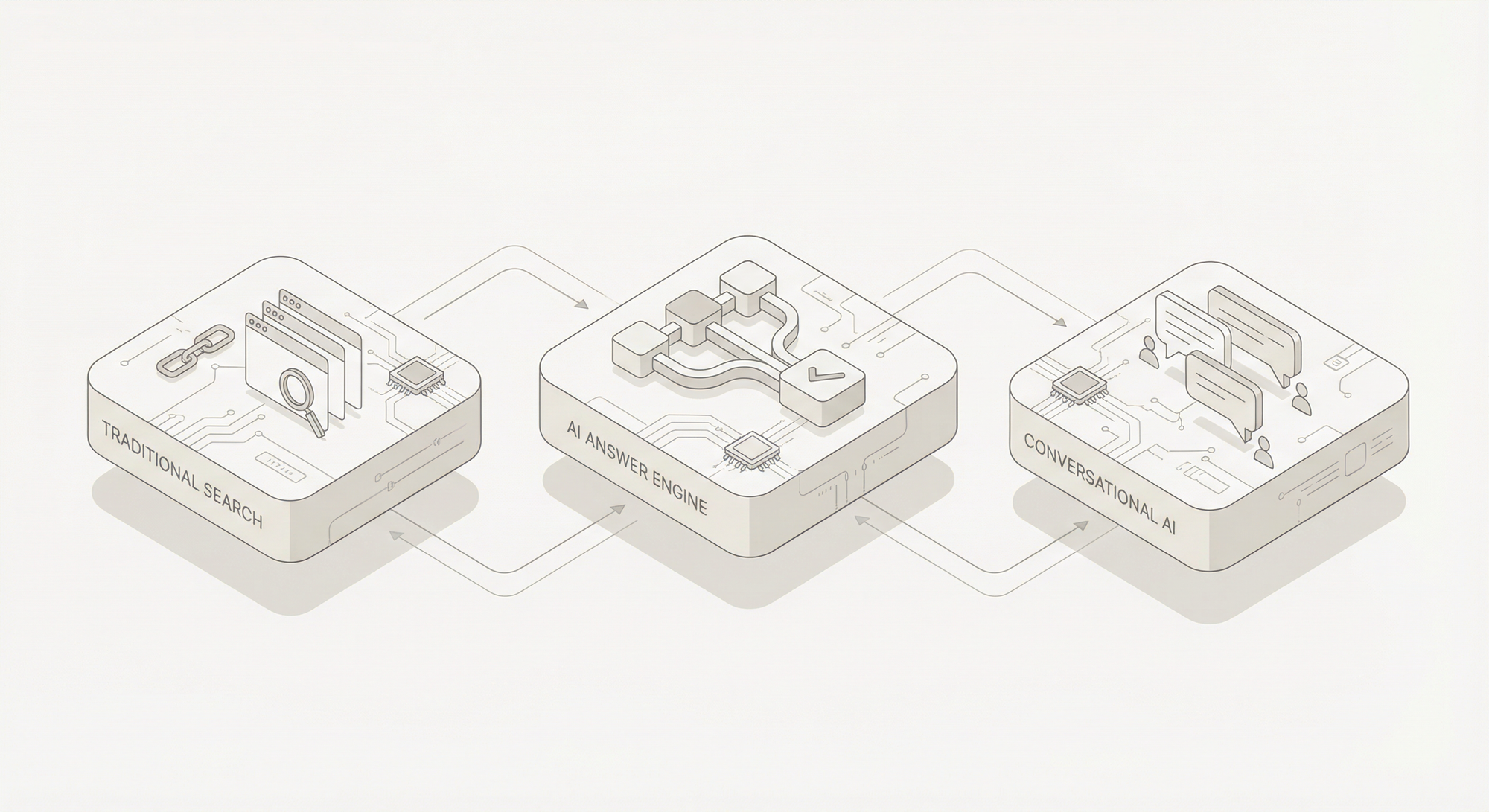
The Fundamental Difference: Links vs. Answers
Google: The Link Aggregator
What Google Does:
Indexes the web → Ranks results by relevance/authority → Shows you links → You click, read, synthesize
Problem in 2026:
-
30% of results now have “AI Overviews” (Google’s own AI summaries)
-
But AI Overviews hallucinate on 15-20% of queries (Google CEO admitted no foolproof solution)
-
Meanwhile, traditional results buried under ads and promoted content
-
Average user clicks 3-5 links before finding answer
-
Time wasted: 2-5 minutes per query
What Google Optimizes For:
Engagement (more clicks = more ads = more revenue)
Perplexity: The Answer Engine
What Perplexity Does:
Query → Search web → Synthesize answer → Cite sources → Done
Experience in 2026:
-
Single consolidated answer with inline citations
-
Follow-up questions in chat format
-
No ads, no SEO spam, no clickbait
-
Time to answer:
Feature Perplexity Free Perplexity Pro ($17/mo) ChatGPT Free ChatGPT Plus ($20/mo) Google Search (Free)
AI Models GPT-3.5, Sonar GPT-5, Claude Opus, Gemini 2.5 Pro GPT-4o mini GPT-5, GPT-4o, o1 Gemini (in AI Overviews)
Web Search Real-time, unlimited Real-time, 300+ Pro searches/day No Limited Core feature
Citations Yes (3-5 per answer) Yes (10+ per answer) Optional Optional Links (not inline)
Image Generation No Yes (FLUX.1, DALL-E 3) No Yes (DALL-E 3) No
File Upload No Yes No Yes No
Voice Chat Yes Yes Yes Yes Voice search only
Daily Limits Unlimited Quick 300+ Pro searches Limited ~80-150 messages/3 hrs Unlimited
Knowledge Cutoff Real-time Real-time Aug 2025 Aug 2025 Real-time
Key Takeaways
Perplexity Pro is cheaper ($17 vs $20) and better for research/search-heavy work.
ChatGPT Plus is better for generative tasks (writing, coding, complex reasoning).
Google is free and unmatched for local/shopping queries but increasingly ad-bloated.
The Use Case Matrix: Which Tool for Which Job
Choose Perplexity If:
✅ You research topics frequently (students, journalists, analysts)
✅ You need current, verified information with sources
✅ You value time (instant answers vs. link-hopping)
✅ You hate ads and SEO spam
✅ Your work involves multi-source synthesis
Best For: Academic research, market analysis, fact-checking, competitive intelligence, technical documentation
Choose Google If:
✅ You need local results (restaurants, services, maps)
✅ You’re shopping (price comparison, reviews, availability)
✅ You want maximum source diversity (explore 10+ perspectives)
✅ You rely on Google Workspace integration
✅ Budget = $0
Best For: Local search, shopping, broad exploration, visual search (Google Lens)
Choose ChatGPT If:
✅ You need creative output (writing, brainstorming, code)
✅ You want conversational assistance (back-and-forth refinement)
✅ You prioritize reasoning over recency
✅ You use it for diverse tasks beyond search
✅ You need advanced models (o1 for complex reasoning)
Best For: Writing, coding, tutoring, creative projects, problem-solving
Use All Three If:
You’re a power user who values specialized tools for specialized tasks.
Pattern:
- Perplexity for research → ChatGPT for synthesis/writing → Google for verification/local needs
Advanced Features: What Pro Users Get
Perplexity Pro ($17/month)
Pro Search Mode:
-
Multi-step reasoning for complex queries
-
Searches 10+ sources (vs. 3-5 in Quick mode)
-
Best for academic papers, technical topics, in-depth analysis
Model Selection:
-
GPT-5 (OpenAI’s latest)
-
Claude Opus 4.5 (Anthropic’s best)
-
Gemini 2.5 Pro (Google’s reasoning model)
-
Sonar (Perplexity’s proprietary search model)
Perplexity Max ($167/month):
-
Unlimited Pro searches (vs. 300/day limit)
-
Early access to frontier models
-
Priority support
Who Needs It: Researchers, analysts, consultants processing 50+ queries/day
ChatGPT Plus ($20/month)
Model Access:
-
GPT-5 (general intelligence)
-
o1 (advanced reasoning for complex problems)
-
GPT-4o (multimodal: text, images, voice)
-
DALL-E 3 (image generation)
ChatGPT Pro ($200/month):
-
Unlimited o1 access
-
Priority in high-demand periods
-
Advanced data analysis tools
Who Needs It: Developers, writers, creatives, anyone doing generative work
Google (Free, Always)
AI Overviews:
-
Automatic on 30% of queries
-
Can toggle off (though not prominently)
No Paid Tier for Search:
Google Search remains free (ad-supported)
The 2026 Reality: Search Is Fragmenting
The Old World (Pre-2023)
“Search” = Google. 90%+ market share. No real alternatives.
The New World (2026)
-
Google: 83% market share (declining)
-
Perplexity: Answer engine for research (niche but growing 340%/year)
-
ChatGPT: Conversational AI with search (hybrid model)
-
Bing: Microsoft’s AI-powered search (low adoption despite quality)
Pattern: Users now switch tools based on task, not default to one.
Privacy and Data: What Each Company Knows About You
Collects:
-
Search history (tied to account)
-
Location data (if enabled)
-
Click behavior (which links you choose)
-
Ad targeting profile
Monetization: Ads based on your data
Opt-Out: Possible but requires active management (turn off tracking, use Incognito)
Perplexity
Collects:
-
Query history (tied to account)
-
Usage patterns (for product improvement)
Monetization: Subscription (Pro/Max), not ads
Opt-Out: Can browse anonymously without account (limited features)
Note: Perplexity claims not to sell data but does analyze queries for model training.
ChatGPT
Collects:
-
Conversation history (tied to account)
-
Files/images uploaded
-
Usage metadata
Monetization: Subscription (Plus/Pro), not ads
Opt-Out: Can disable history (but loses features like custom instructions)
Note: OpenAI uses conversations for model training unless you opt out.
The Workflow Revolution: How Power Users Combine Tools
Research Workflow
Step 1: Perplexity (Explore)
-
Query broad topic
-
Get synthesized overview with citations
-
Identify key concepts and sources
Step 2: Google Scholar or Perplexity Pro (Deep Dive)
-
Find academic papers
-
Verify claims against primary sources
Step 3: ChatGPT (Synthesize)
-
Feed findings into ChatGPT
-
Ask for synthesis, outline, or draft
-
Iterate on output
Time Saved: 50-70% vs. traditional research methods
Content Creation Workflow
Step 1: Perplexity (Research)
- Gather facts, statistics, current trends
Step 2: ChatGPT (Draft)
- Generate outline, first draft, or sections
Step 3: Perplexity (Fact-Check)
-
Verify claims made by ChatGPT
-
Add citations
Step 4: Google (SEO Validation)
-
Check what’s already ranking
-
Identify content gaps
Result: Faster, more accurate content
What’s Coming in 2027: Predictions
Perplexity Will:
-
Launch business tier (team collaboration, API access)
-
Add more specialized models (medical, legal, coding)
-
Expand beyond search (document analysis, multi-agent research)
Risk: Scaling challenges if accuracy doesn’t improve faster than userbase
Google Will:
-
Double down on AI Overviews despite criticism
-
Integrate Gemini deeper into search
-
Potentially launch premium ad-free tier (speculation)
Risk: Continued ad-bloat drives power users to alternatives
ChatGPT Will:
-
Improve search integration (make it default, not optional)
-
Launch ChatGPT Enterprise Search (for internal knowledge bases)
-
Compete directly with Perplexity for research use cases
Risk: Trying to do everything = excelling at nothing
FAQ
Q: Can I trust Perplexity’s citations?
A: Mostly, but verify critical facts. Studies show 100% of expert reviewers found at least one misattributed source. Use citations as starting points, not gospel.
Q: Is Google Search actually dying?
A: No, but it’s declining in quality for information-seeking queries. Local/shopping searches still unmatched. Expect continued slow decline in market share.
Q: Should I pay for Perplexity Pro or ChatGPT Plus?
A: Depends on use case. Perplexity Pro if research-heavy. ChatGPT Plus if generative work. Both if budget allows and you do both types of work.
Q: Why doesn’t everyone just use Perplexity?
A: Habit (Google is default), local search dependency, and lack of awareness. Most people don’t know Perplexity exists.
Q: Can Perplexity replace Google Scholar?
A: For quick academic overviews, yes. For thorough literature reviews, no. Pro Search helps but Scholar’s depth unmatched.
Q: Do any of these tools respect privacy?
A: Relative to Google, yes (Perplexity and ChatGPT don’t monetize via ads). But all collect data for model training. Use anonymous/incognito modes for sensitive queries.
Conclusion: The Search Landscape Has Permanently Changed
The question isn’t “which tool is best?” It’s “which tool for which task?”
The New Search Stack:
-
Perplexity for research and current information
-
ChatGPT for reasoning and creative work
-
Google for local and shopping queries
Google’s monopoly is over. Not because Perplexity or ChatGPT “won”—but because search itself evolved beyond what Google optimizes for. You can click 10 blue links, or you can get an answer. Most people, once they try the latter, don’t go back.
The companies adapting fastest aren’t the ones with the best technology—they’re the ones solving the actual problem users have: too much information, not enough understanding.
Perplexity hit 780 million queries/month by doing one thing well. Google serves billions by doing everything adequately. ChatGPT bridges both. Choose accordingly.
Related Reading:
-
AI Workflows vs Autonomous Agents: Why Enterprise Chooses Workflows
-
Context Engineering: The New AI Skill Worth More Than Prompt Engineering
Originally published at humai.blog
#AI #HumAI #Technology
Write a comment