Independent Journalist Nick Shirley Leaves New York Times Reporter SPEECHLESS After She Tries to Defend California’s “Stop Nick Shirley Act” — Then She Allegedly Cuts the Interview Short
Independent journalist Nick Shirley turned the tables on a New York Times reporter who repeatedly pushed the Democrat defense of California’s so-called “Stop Nick Shirley Act.” Independent journalist Nick Shirley, the 24-year-old YouTuber whose viral reporting on empty Somali-run “learing centers” in Minnesota and hospice schemes in California helped blow open a national fraud scandal, was interviewed by NYT reporter Laurel Rosenhall outside the State Capitol after a rally against Assembly Bill 2624. The post Independent Journalist Nick Shirley Leaves New York Times Reporter SPEECHLESS After She Tries to Defend California’s “Stop Nick Shirley Act” — Then She Allegedly Cuts the Interview Short appeared first on The Gateway Pundit.
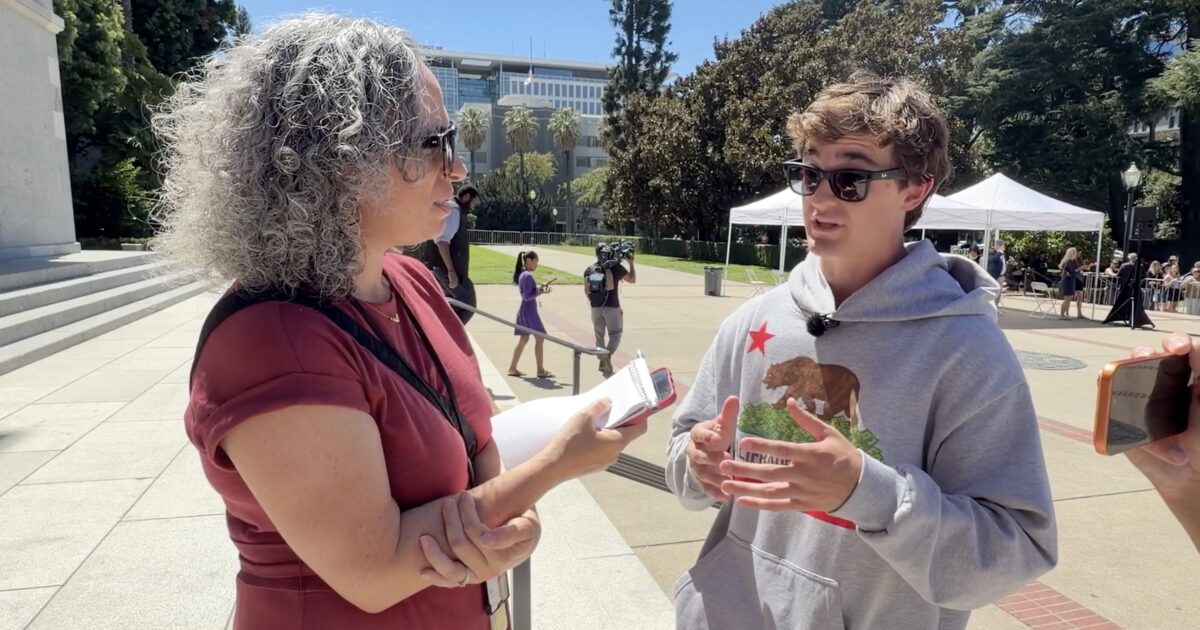
Independent journalist Nick Shirley confronted New York Times reporter Laurel Rosenhall regarding California’s Assembly Bill 2624, arguing the law, introduced after Shirley announced his investigation into state fraud, unfairly protects immigration service providers and could stifle journalism. Shirley detailed how the bill’s broad definitions of protected individuals and information, along with a lenient process for obtaining protections, could be exploited to conceal fraud. The confrontation concluded with Rosenhall allegedly cutting the interview short.
- Independent journalist Nick Shirley challenged NYT reporter Laurel Rosenhall on California’s AB 2624, dubbed the ‘Stop Nick Shirley Act’.
- Shirley claims the bill was created after he announced his investigation into California fraud, aiming to protect those he was investigating.
- The law broadly defines ‘immigration support services’ and protected ‘personal information,’ potentially creating a special class of protected individuals.
- Shirley argues the bill’s mechanisms for protection, including sworn statements of fear, could be exploited by fraudsters.
- He contended the law could make journalists responsible for the actions of third parties who react to their reporting, chilling free press.
- Rosenhall allegedly ended the interview abruptly after Shirley pressed her on these points.
Write a comment