How to Build a Team of AI Agents That Actually Finishes the Work
The practical 2026 guide to turning Claude Opus 5, Kimi K3 and GPT-5.6 Sol into one reliable execution graph.
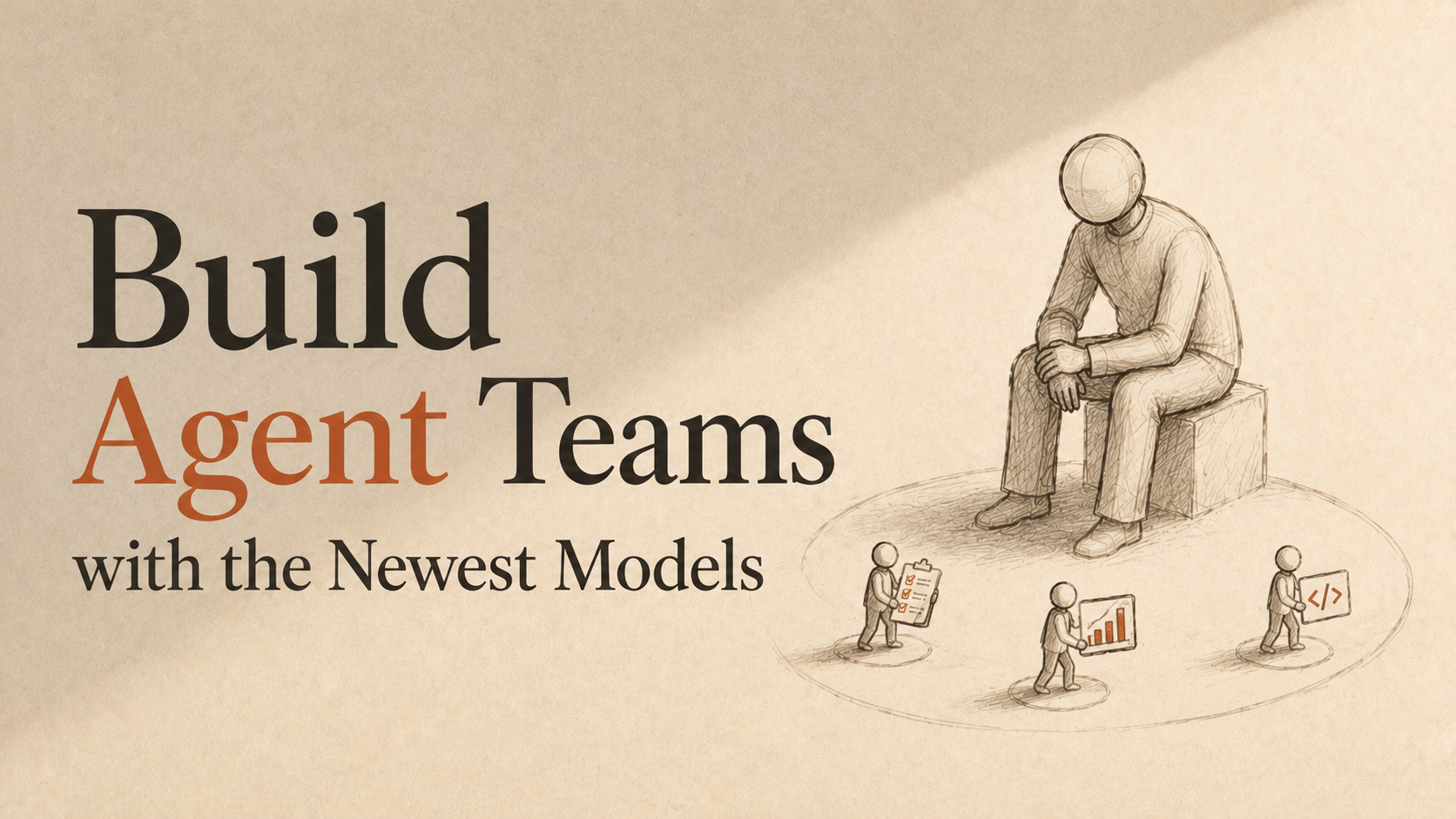
Recent AI model releases like GPT-5.6 Sol, Kimi K3, and Claude Opus 5 mark a shift towards models that can handle complex, long-running tasks by working as a team. This evolution changes the unit of AI work from generating a single answer to completing an entire process, enabling collaborative workflows across research, planning, execution, and review. The key challenge lies in “graph engineering,” which involves structuring the interactions, handoffs, and decision-making processes between these agents to ensure efficient and effective task completion.
- New AI models like GPT-5.6 Sol, Kimi K3, and Claude Opus 5 are capable of holding jobs, inspecting files, searching, calling tools, and using terminals.
- These models can now work for extended periods, with teams of agents splitting complex tasks across research, planning, execution, and review phases.
- The fundamental change is from generating single answers to completing entire processes, transforming the unit of AI work.
- The power and danger of multi-agent systems lie in the handoffs between agents, where structured collaboration is crucial.
- Effective multi-agent systems require “graph engineering” to define roles, inputs, outputs, decision points, and human intervention points.
https://bender.layer3.press/articles/2c8fa4cc-e34b-421c-a81b-e144ca3b807c
Write a comment