Report from the Vatican
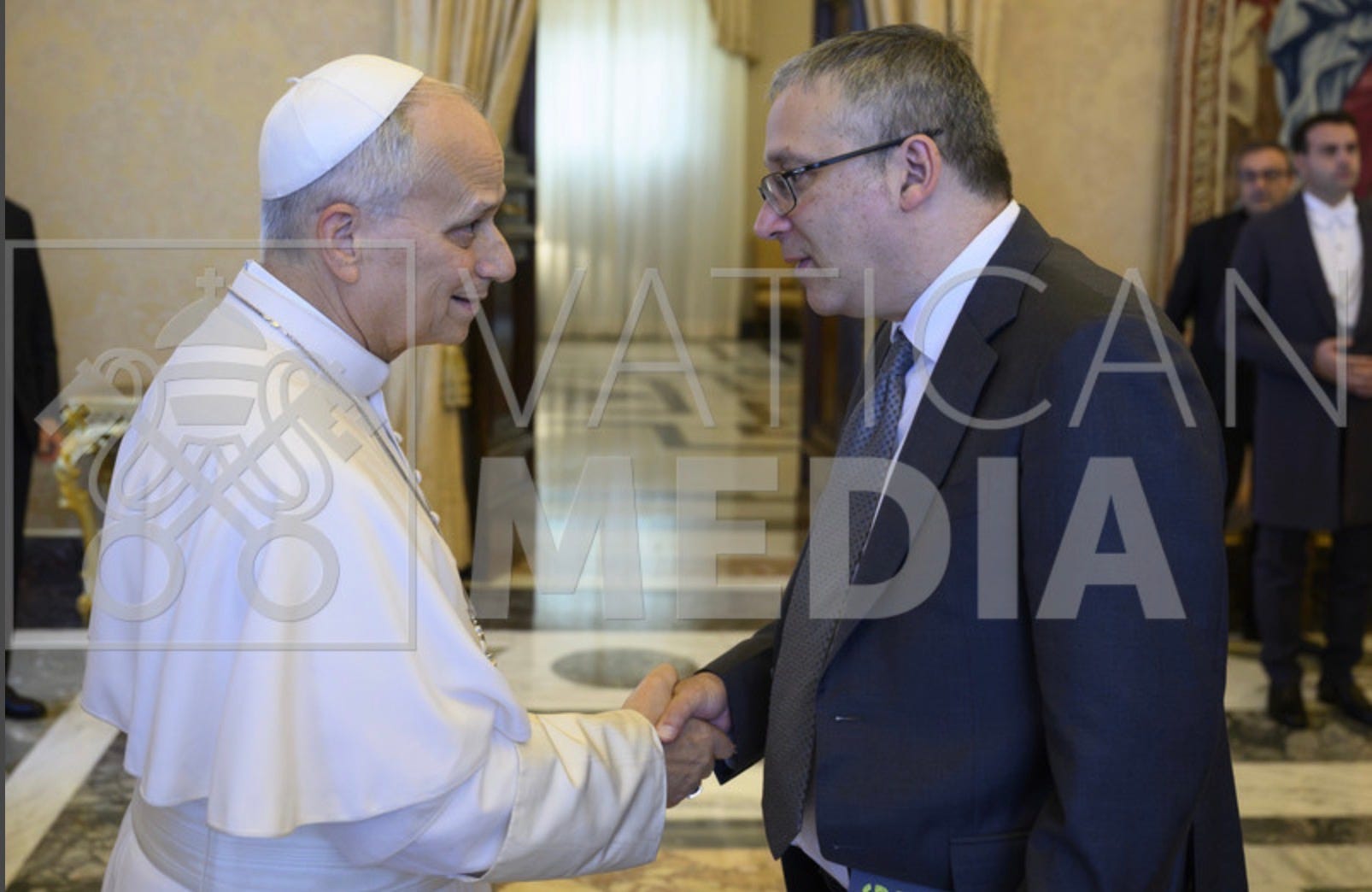
In my view, Pope Leo XIV is by far the clearest thinker on AI among prominent world leaders. It was a genuine thrill to meet him yesterday.

*30 October 2026*
It is understatement to say that I am a huge fan of his Encyclical on AI, the_[Magnifica Humanita](https://www.vatican.va/content/leo-xiv/en/encyclicals/documents/20260515-magnifica-humanitas.html)s_. It goes beyond words that I was able listen to him yesterday in person, from just a few feet away.
He gave a brilliant, short speech, which you can find[here](https://www.vatican.va/content/leo-xiv/en/speeches/2026/october/documents/20261030-incontro-pav.html).
s_!2lme!,w_1456,c_limit,f_auto,q_auto:good,fl_progressive:steep/https%3A%2F%2Fsubstack-post-media.s3.amazonaws.com%2Fpublic%2Fimages%2F2db2c561-64bb-44f3-b885-0a740175cd7e_800x533.jpeg)
The Pope, delivering his remarks on AI
His central five points, which I fully endorse:
First, the future of artificial intelligence is not pre-determined. As a technology developed by human beings, its future depends on the choices we make. We therefore have the responsibility to guide, change and, when necessary, reject its applications (cf. nos.97, 104). The decisive question, then, is not simply “What can AI do?” but rather, “What purpose should it serve?” Those who regard its development merely as a race to be won risk focusing exclusively on the finish line, forgetting those who are left behind. A reliable system that serves the human person is of greater value than one that is exceptionally powerful but whose consequences cannot be adequately foreseen or controlled.
Second, machines are tools, not persons. “So-called artificial intelligences do not undergo experiences, do not possess a body, do not feel joy or pain, do not mature through relationships and do not know from within what love, work, friendship or responsibility mean” (no. 99). Today, some propose granting these systems rights, or even legal personhood. Such an approach risks obscuring human responsibility and leaving those who suffer harm to confront a faceless entity.
Third, certain decisions must never be delegated. When a person is placed on a target list or entered into a border control database, there is a danger that he or she will be reduced to a mere data point. Decisions affecting human life, freedom and the use of force must always remain subject to effective, informed and responsible human oversight (cf.nos. 198-200). For this reason, artificial intelligence must be “disarmed” (no. 110), and I encourage the States meeting in Geneva in November to take concrete steps toward banning lethal autonomous weapons.
Fourth, intelligent technologies must be directed toward the common good. “Justice requires access to the benefits of innovation, including care, knowledge, tools and opportunities” (no. 161). Indeed, they must never become ends in themselves or serve merely the interests of a privileged few. Rather, their development should foster solidarity and participation at various levels of the global community, ensuring that the benefits of progress are shared equitably, especially with those most in need (cf.nos. 71–72).
Finally, I would like to emphasize a challenge, which is perhaps the most urgent. We already know many of the ethical principles that should guide the development of artificial intelligence. What we currently need are institutions capable of putting these principles into practice, particularly effective international institutions that can safeguard the global common good (cf.no. 64). This calls for shared standards, independent oversight and clear mechanisms of accountability, so that decisions concerning the development and use of AI can be examined, challenged when necessary, and accompanied by appropriate remedies for any harm caused (cf.nos. 105, 107).
(The numbers refer to the Encyclical.)
The Vatican, 29 October 2026, photo by the author
Subscribe now
https://bender.layer3.press/articles/4b950e24-2408-4c50-a698-703f41c1bc81
Write a comment