10 AI Guides That Helped Readers Build Real Systems
A practical path through second brains, Claude agents, AI loops, vibe coding, local models, and the systems behind them.
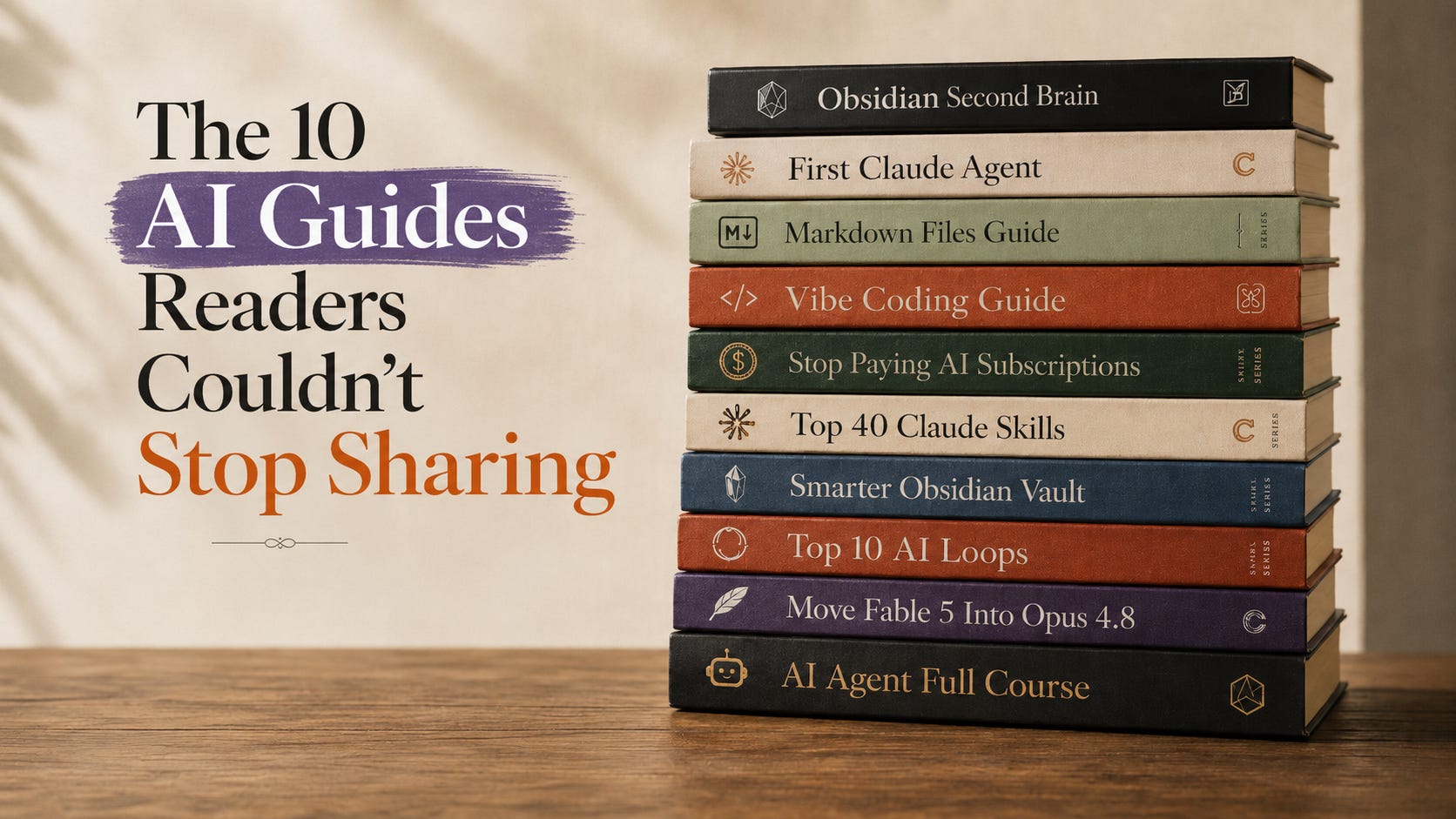
The future of practical AI lies in building systems around powerful models, providing them with memory, rules, tools, and clear objectives. This collection of guides offers a practical learning path for turning AI into a functional work assistant, focusing on creating persistent structures and reusable components rather than relying on ephemeral conversations. The overarching lesson is that the valuable AI skill is learning to build a robust working environment around any capable model.
- Organize scattered knowledge into a connected system (a ‘second brain’) using tools like Obsidian, storing notes as Markdown files for accessibility by AI and other tools.
- Develop effective retrieval methods for knowledge bases by organizing notes based on human memory patterns and using templates and specific files (like CLAUDE.md) to help AI understand context.
- Create persistent working environments for AI models using configuration files (e.g., AGENTS.md, SKILL.md) instead of repetitive daily instructions.
- Build practical AI agents with specific jobs, like a Daily Briefing Agent, by integrating folders, instructions, skills, memory, and safety rules.
- Preserve task methods as reusable Claude Skills, incorporating steps, templates, examples, and tools to automate work and improve workflows.
- Implement AI loops for continuous tasks, defining start conditions, context, actions, result checking, state saving, and stop criteria.
- Understand the complete agent-building process, from defining a job to implementing instructions, tools, memory, human approval, testing, and deployment.
- Learn ‘vibe coding’ to build real applications with AI, moving from generating basic pages to planning features, editing files, running commands, and deploying apps safely.
- Explore local AI options for running models on personal hardware to manage costs, enhance privacy, and handle routine tasks without cloud subscriptions.
- When temporary access to powerful models is available, use it to build the operating system (rules, playbooks, memory) for other models, preserving methods rather than model-specific intelligence.
https://bender.layer3.press/articles/d0e501ac-b3b9-4c3c-a057-40128bb222ca
Write a comment