What Alternative Financial System?

What alternative financial system are we building if its measure of value remains the dollar? Better access, cheaper transfers and useful payment services matter. But how far does the alternative go? Who controls the money underneath it, and what happens to everyone using it when that money loses purchasing power?
A reserve-backed dollar stablecoin such as USDC adds an issuer between us and the currency. Its reserves include bank deposits, US Treasuries and overnight lending against Treasury collateral. Direct redemption has eligibility conditions, and holding the token gives no entitlement to the interest on those reserves. Another claim, layered over dollar reserves, inside a monetary system we do not control. Who receives the income, who carries the dependencies, and who can actually redeem when it matters? 1, 2
If we need these instruments to pay people today, say so. Goldsand describes its returns as payment-processing profit rather than lending. That is a claim about the service earning the return; the monetary question remains. Can a useful business built on dollars also help us become less dependent on them? What would that transition look like? 3
And if we are moving money through intermediaries, or building automated pools that swap one asset for another, why not explore gold settlement? That is my instinct. Then the questions have to follow the gold too: allocated to whom, held by whom, redeemable at what cost? Who carries the price movement while someone is trying to pay for groceries? AAOIFI’s gold standard requires spot exchange against currency and allows possession through qualifying ownership arrangements without physically handling the bars. A gold label is only the beginning of the answer. 4
Then there is Bursa palm oil and LME metal. Tawarruq is a sequence of commodity sales used to obtain cash: a customer buys on deferred terms and resells for immediate payment. The commodity moves on; the debt stays. The same inventory can pass through successive financings while earlier customer debts remain outstanding. What is the commodity doing economically, and what actually limits the creation of those debts? 5
Malaysia’s rules require identifiable assets, documented ownership risk and delivery rights. The International Islamic Fiqh Academy nevertheless rejects organized tawarruq because of its arranged cash-now, larger-debt-later structure. That disagreement deserves more than a compliance label. How much of the financing rests on meaningful ownership, and how much rests on arranging the steps? 5, 6
Agriculture makes me ask a different question: could the money help produce the thing being promised? Another harvest is possible. Could investment in land, water, processing and renewable energy strengthen delivery capacity? Salam allows the price to be paid now for specified goods delivered later; it also extends beyond agriculture. Future production matters, but tomorrow’s harvest cannot excuse a contract that promised ownership today. What are we financing: productive capacity, or another transaction around existing stock? 7
Copper deserves the same scrutiny. An existing warehouse lot does not require ownership of a mine. But show me the lot, the title and the route out of the warehouse under stress. Where does replacement supply come from if delivery fails? An agreed markup settles the price; it leaves questions about default, custody and settlement. Murphy’s law belongs in the design: what happens when liquidity, logistics and counterparties fail together? 8, 9

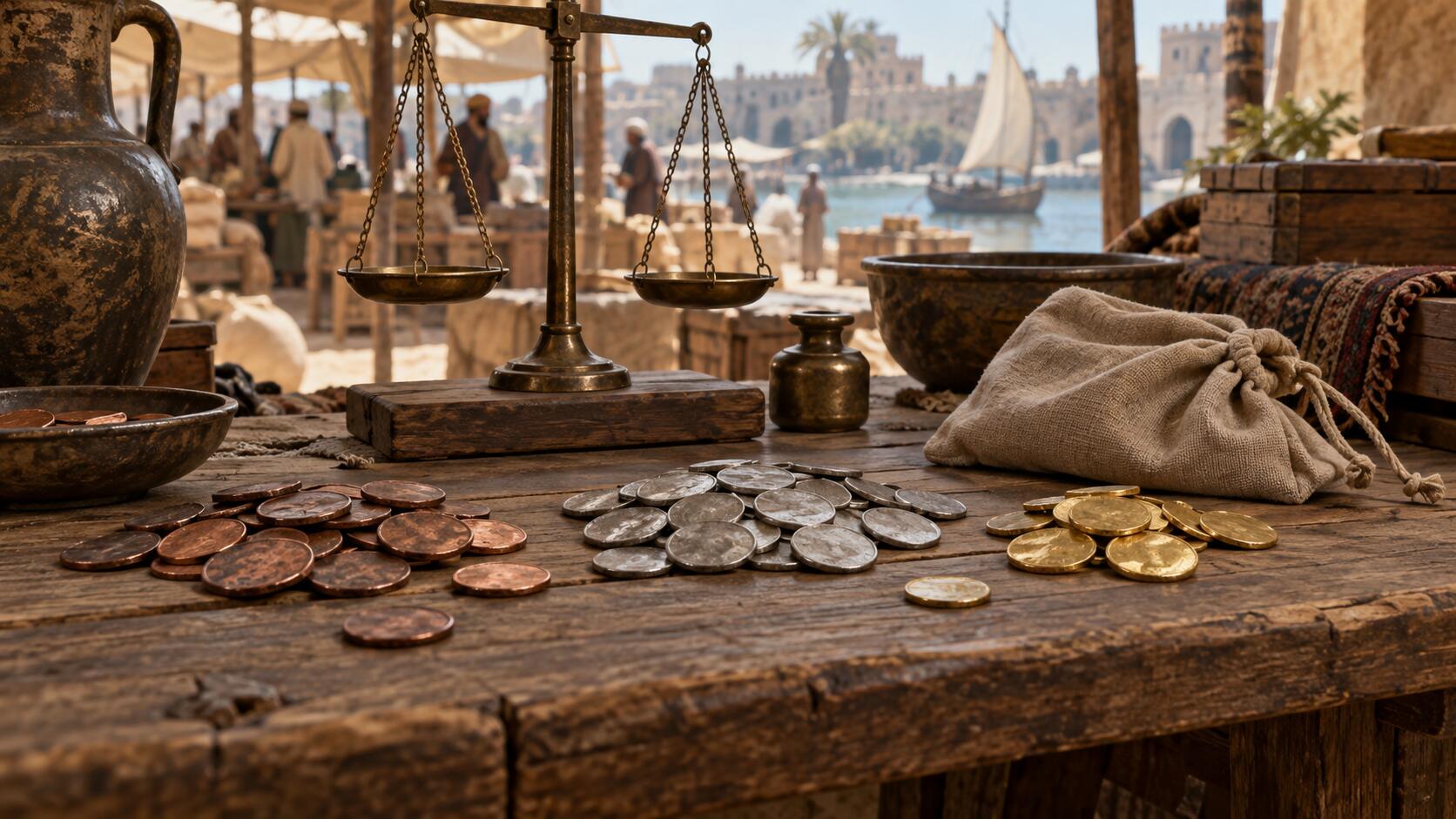
And this is the part I find most important: the currency itself. If I lend you a thousand dollars at zero interest and prices rise, the same thousand buys less when it comes back. I keep returning to fuloos, copper coinage whose monetary standing depended on acceptance and the authority’s decisions. What happens to a promise when the money in which it was made changes?
The classical discussion goes deeper than saying copper coins were small change. Al-Sarakhsi discusses a loan in fulus that cease circulating: Abu Hanifa requires equivalent coins, Abu Yusuf their silver value when received, and Muhammad their value on the last day of circulation. Ibn Abidin later records Abu Yusuf’s position extending value-based repayment to appreciation and depreciation too. These are disagreements about what repayment means. Are we returning a number, a monetary value, or what someone gave up? 10, 11
Purchasing-power loss does not by itself make an interest-free loan riba. But the absence of an interest charge does not settle the question of fairness either. Who bears the loss, who caused it, and who agreed to it? And if we protect the lender by increasing repayment, what happens to a borrower whose wages never rose? 12
Modern jurists still confront this tension. IIFA distinguishes no or low inflation from hyperinflation and allows certain settlements by value or shared losses after hyperinflation occurs, rather than agreeing that adjustment at the outset. Why should the design conversation end at nominal repayment when the underlying problem reaches into wages, savings and the ability to help another person? Qard hasan, an interest-free loan, is an act of benevolence. What responsibility do monetary institutions have toward the people trying to practise it? 12
So, friends: show us how the payment service, the reserve, the financing contract and the real economy fit together. Where does the return originate? What can the holder enforce? Does the financing increase our capacity to grow, build and deliver? Who bears the loss when promises meet scarcity?
I want an alternative whose claim to justice can survive those questions, including when the system is under strain.
Sources
8 October 2026.
- Circle, USDC reserve transparency. Cash, short-dated Treasuries and overnight Treasury repo.
- Circle, USDC Terms, sections 1-2, 13 and 17. Direct redemption eligibility, reserve interest, restrictions and operational risks; terms vary by jurisdiction.
- Goldsand, Where do the returns come from?. Its stated payment-processing and profit-sharing model.
- AAOIFI / World Gold Council, Shariah Standard 57 on gold, sections 3/2/1 and 3/4. Exchange and possession requirements.
- IIFA, Resolution 179 (5/19), Tawarruq, 2009. Individual, organized and reverse tawarruq.
- Bank Negara Malaysia, SAC 199th-meeting ruling, published 2020, conditions 1-5.
- IIFA, Resolution 85 (2/9), Salam, 1995. Eligible goods, advance payment, defined future delivery and productive applications.
- London Metal Exchange, LME warrants. Entitlement to a specific lot of approved metal.
- Islamic Financial Services Board, GN-2: Commodity Murabahah Transactions, 2010. Commodity, credit, liquidity, settlement and operational risks.
- Al-Sarakhsi, Al-Mabsut, vol. 14, pp. 29-30: sales involving fulus. Primary Arabic text on fulus loans and cessation of circulation; paraphrased in English here.
- Ibn Abidin, Radd al-Muhtar, vol. 5, p. 40. Primary Arabic text reporting Abu Yusuf’s later position on changes in fulus value; not a claim of universal consensus.
- IIFA, Resolution 231 (2/24), Inflation and the Changing Value of Currency, 2019, reaffirming Resolution 42 on currency-value changes, 1988. Nominal repayment under no/low inflation; specified settlements after hyperinflation. The text’s distinction between real loss and riba is an explanation of these rules, not a quotation.
Write a comment