Blaze Media

News, opinion, and entertainment for people who love the American way of life.

The midterms could make homelessness the new bipartisan issue

As election returns roll in, political analysts will undoubtedly focus on the deep partisan divisions over the cost of energy, the Iran War, support for Israel, and immigration. Most of it will predict two more years of gridlock between Congress and the White House.Whatever the balance of power in Congress, a new consensus could emerge on homelessness. The conditions are ripe: a Republican administration dedicated to better outcomes for both the homeless and the public and Democrats incentivized to show their constituents that they are no longer ignoring a crisis at its worst in blue strongholds like Seattle and San Francisco.The only results that matter are whether Washington finally stops counting dollars spent on homelessness and starts counting the people it helps escape it.Even so, change won’t come easily. Expecting a Democratic takeover in Congress, the homelessness activists who brought us billions in wasteful spending and worsening outcomes are already urging lawmakers to undo the U.S. Department of Housing and Urban Development’s performance-based funding reforms. Most people recognize that homelessness should not be a red or blue issue. The two primary causes of homelessness — severe mental illness and substance use disorder — impact most Americans in some way. Homelessness happens to black and white Americans, young and old, in big cities and small towns.The heart of the partisan divide on homelessness is how to solve the problem. Republicans want to spend less on ineffective and inefficient programs and refocus on drug addiction and mental illness treatment. Democratic activists insist that the current Housing First model (the provision of permanent supportive housing without treatment or sobriety requirements) is working and want to spend more on it.No matter who is in office, the situation on the ground has changed. Americans across the political spectrum, who have seen the effects of a decade of increasing homelessness in their neighborhoods, are no longer inclined to take the activists at their word.Our recent report brings hope that, if both parties work together for commonsense reform, they can achieve what the taxpayers and voters really want, which is to alleviate the suffering on America’s streets. Across the country, we can help more people get off the street and rebuild their lives, while ensuring federal and state governments eliminate waste and spend taxpayer money efficiently.The report shows that most of the homelessness funding from the federal government is spent on inputs: how many beds facilities have, how many people they have hired, how many homeless people check into their facilities. RELATED: The case for optimism on Election Day Sergey Shambulin/Getty ImagesBut the local entities that distribute federal funding do a poor job of tracking outcomes, especially considering the amount of money spent. How many people are getting jobs? How many people walk out with better health or are able to return to their families having beaten their addiction? No one can say. Meanwhile executives at ineffective homelessness nonprofits make more money than ever, while the homeless languish.This is where Republicans and Democrats can come together. President Trump has emphasized the need for outcomes in federal homelessness funding, with a particular focus on treatment for addiction and mental illness, economic self-sufficiency, and public safety. Meanwhile Democrats concerned about protecting the less fortunate should see targets in the nonprofit executives getting rich at taxpayer expense and victims in the homeless people they exploit. And before anyone says it, yes, this can be done. Daniel Lurie, the mayor of San Francisco, is hardly conservative, but he has offered some of the same outcome-based reforms as Trump, notably mandated treatment, street enforcement, and a rollback of low-barrier harm reduction. To achieve this, Lurie has had to reject the radical demands of homeless activists in his own city. If he and Trump can align on anything, lawmakers in Washington ought to be able to do the same.As Washington considers voting outcomes on Wednesday morning, more than 745,000 Americans will have spent the night on the streets. For them, the only results that matter are whether Washington finally stops counting dollars spent on homelessness and starts counting the people it helps escape it.

Cover image for The midterms could make homelessness the new bipartisan issue

STUNNING REVERSAL: 9th Circuit greenlights Trump administration's efforts to isolate suspected noncitizen ballots

The Trump administration has been cleared Tuesday to demand that election workers set aside and wait on counting ballots cast by suspected noncitizens.Last month, the Justice Department and Department of Homeland Security cautioned election officials about potential criminal liability regarding the counting of ballots cast by suspected noncitizens. In California, this would result in the sequestration of roughly 20,000 mail-in ballots.Accordingly, the Trump administration can resume telling state election officials to set aside suspect ballots.Various labor unions and liberal advocacy groups including the Service Employees International Union and the NAACP sued in hopes of blocking the Trump administration's efforts to ensure that foreigners weren't putting their thumbs on the scale of the midterms elections.U.S. District Judge Trina Thompson, a Biden appointee, obliged the liberal plaintiffs on Friday, blocking the Trump administration from demanding that election officials nationwide not process ballots cast by suspected noncitizens. Her temporary restraining order was to last until Nov. 13.On Monday, a three-judge Ninth Circuit panel put a halt on the Biden judge's temporary restraining order, finding that the government had "established a likelihood of success on the merits."However, a few hours later, that ruling was vacated and Mary Murguia, an Obama appointee serving as chief judge on the Ninth Circuit, ordered that the case be reheard by a full Ninth Circuit panel — a decision that law professor Jonathan Turley said "hampers the Administration's efforts on election integrity."In a 6-5 vote decided midway through Election Day, the Ninth Circuit reinstated its earlier ruling lifting the restraining order on the Trump administration. Murguia was among the dissenting judges.Accordingly, the Trump administration can resume telling state election officials to set aside suspect ballots and telling those officials that failure to do so could result in federal prosecution. Like Blaze News? Bypass the censors, sign up for our newsletters, and get stories like this direct to your inbox. Sign up here!

Cover image for STUNNING REVERSAL: 9th Circuit greenlights Trump administration's efforts to isolate suspected noncitizen ballots

Lindsay Clancy prosecutors say they want her to stand trial again for murders of her 3 children — but on what charges?

Lindsay Clancy's prosecutors said Monday they want her to stand trial again for the murders of her three young children — but it isn't yet clear what charges Clancy would face at a retrial, WBZ-TV reported.Defense attorney Kevin Reddington in Clancy's first trial acknowledged that she killed her children — 5-year-old Cora, 3-year-old Dawson, and 8-month-old Callan — in their Duxbury, Massachusetts, home in January 2023, WBZ said.'When you have jurors, you expect that jurors are going to be honest in their disclosure to the court about their background.'But Clancy pleaded not guilty to first-degree murder, and Reddington argued that his client wasn't criminally responsible because she was overmedicated and suffering from postpartum psychosis, the station added.Prosecutors disagreed, saying Clancy knew right from wrong and planned to strangle her children, WBZ said.The prosecution also maintained that Clancy schemed to get her husband out of the house that evening her children were killed by sending him to pick up medicine for one of their children and dinner for the family, the Associated Press said.The first trial ended with a hung jury on Sept. 4 with one juror holding out, believing Clancy was guilty, while the other 11 believed she was not guilty of murder.In a twist, Reddington argued in late September that there wasn’t enough evidence to prove Clancy killed her three children.However, in a civil lawsuit, Clancy's lawyers said she admitted to killing them, WBZ noted.More from the station:At a hearing in Plymouth Superior Court Monday, prosecutor Jennifer Sprague said for the first time that Clancy will likely stand trial again, though it is not yet known what she would be charged with."This would be a retrial," Sprague said, adding that the prosecution has not yet decided "how that will look."Sprague told Judge William Sullivan she did not want to set a trial date until he ruled on outstanding motions in the case.Reddington, however, said he wants to know what charges his client will face — and added that the "elephant in the room" is Sullivan's approaching retirement, WBZ reported. In addition, Reddington said he wants Sullivan to be the trial judge, the station noted."Why do we not know if the next trial is going to be murder in the first degree or a lesser charge or no charge?" Reddington said, according to WBZ. "They don't need to wait for that to determine if they're going to take a run on her again on first-degree. I have to know logistically if it's going to be triple homicide first-degree or something else."The station added that if prosecutors decide to retry Clancy on lesser second-degree murder charges, she could opt between a jury trial or a judge issuing a ruling."I am not going to have this woman sit incarcerated for the next year, or two, or three," Reddington said, according to WBZ. "I want a trial. And I want it with you, and I want it this spring."Sullivan said he is leaning toward March as a realistic date for a second trial, the station reported, adding that the date will be discussed at the next hearing on Nov. 16.Prosecutor Sprague also argued for the government's motion for a gag order, saying Reddington has made "calculated" statements that could impact the public's perception of the case — and thereby taint the jury pool for a potential retrial, WBZ said.Laura McConnell argued for the defense against the gag order, the station said, saying that because Clancy hasn't given interviews, Reddington acts as her voice — and a gag order would take that away.WBZ said Sullivan took the matter under advisement and didn't issue a ruling Monday.RELATED: Lindsay Clancy's lawyer makes stunning argument in first hearing since recent mistrial In addition, Reddington argued on a motion to preserve records related to the holdout juror, referred to in court as "Juror Doe," the station said."When you have jurors, you expect that jurors are going to be honest in their disclosure to the court about their background," Reddington said, according to WBZ.Then things got heated when Reddington referred to the holdout juror by name, the station said:"I'm going to stop you right there," Sullivan said."No. You're not going to stop me," Reddington responded."I am," Sullivan said. "Because there's no need to bring out that juror's name."Reddington then argued that the holdout juror's name is "all over the internet," as he has given interviews, WBZ said, adding that Redding also told Judge Sullivan the holdout juror has "got more face time than I do."Reddington also alleged that the holdout juror was scrolling on his phone during deliberations, the station reported, adding that Reddington added that "I have evidence that this man was not honest" on his jury form.Clancy's attorney alleged that the holdout juror didn't disclose that he had an abuse prevention order against him and failed to disclose a 2021 arrest, WBZ reported.Prosecutor Sprague asked for the motion to be denied "on its face," the station said, since allowing the motion would be "potentially opening the door" into examining all jurors' actions and statements.Judge Sullivan did not rule Monday on the motion related to the holdout juror, WBZ noted.Clancy remains in custody at Tewksbury State Hospital under psychiatric care, the station said, adding that she is paralyzed and in a wheelchair after jumping out of a window the night her children were killed.Like Blaze News? Bypass the censors, sign up for our newsletters, and get stories like this direct to your inbox. Sign up here!

Cover image for Lindsay Clancy prosecutors say they want her to stand trial again for murders of her 3 children — but on what charges?

Abdul El-Sayed is so radical that even Democrats are turning on him

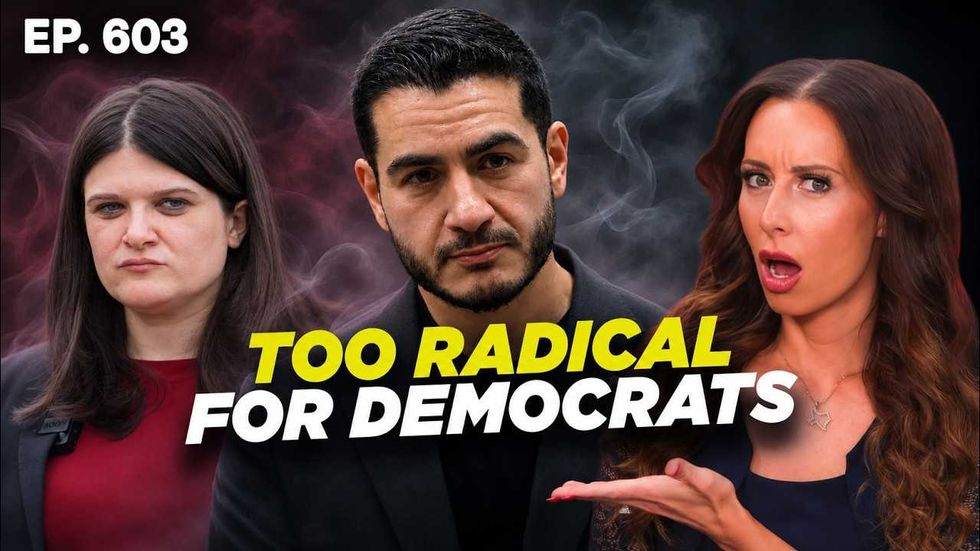
It takes a pretty radical candidate to make a Democrat cross party lines and endorse a Republican whom she recently accused of being a “racist.”But that’s exactly what’s happening in Michigan, where Rep. Haley Stevens has withdrawn her support for Democrat Senate nominee Abdul El-Sayed and thrown her backing behind Republican Mike Rogers.“Unlike in Texas, you have Democrats who ... of their own volition are realizing how dangerous this guy is and turning against him, like Democrat Congresswoman Haley Stevens, who ran against him and now says she is not supporting Abdul,” BlazeTV host Sara Gonzales explains, before playing a clip of Stevens endorsing Rogers.“Hey, Michigan. As you may have seen, our Democratic nominee for U.S. Senate, Abdul, said that I was no longer welcome in his campaign and that I should stay away. And he’s right. And that’s why I am endorsing Mike Rogers for the United States Senate today,” Stevens said. “I don’t belong in Abdul’s campaign. I do not stand with Hasan [Piker], who gets trafficked on our college campuses. A dear friend of mine earlier today was saying that education is on the ballot, and she’s absolutely right. And what our students see, what our children see, and who we are as Michiganders is not hate,” she added.“You would think it would take a pretty radical guy for a Democrat in the state of Michigan to decide to endorse a Republican,” Gonzales comments. “Like, that’s crazy.”“Even CNN and MSNBCs of the world were like, ‘This is probably not a great alliance.’ Like, why are you cozying up to a guy that outwardly hates America and says that America deserved 9/11? That’s kind of a bad look,” she continues.However, plenty of Democrats are not happy with Stevens' withdrawal of support — especially Hasan Piker, whom Stevens had cited as a reason for being unable to endorse El-Sayed.“There are plenty of others out there in the Democratic Party coalition who oppose our ideology, who oppose our worldviews, who oppose us, but at least they keep quiet, with the full knowledge that we are an important part of this coalition. Perhaps the most important part of this coalition,” Piker said in a recent stream.“What the f**k were you thinking? You absolute moron,” he said of Stevens. “You think people are going to hear this and go, ‘Well, that does make a lot of sense. I too hate Hasan Piker.’ What are you, f**king nuts? She became such a Republican that she lost IQ points. Did you get John Fetterstroked? What the f**k is going on?”Piker also called her a “petulant child.”But Piker isn’t the only one lashing out at Stevens. Democrat James Carville also went on a rant against the Democrat, calling her no better than a “used condom.”“Your political career is over. If you think that these Republicans are going to treat you as anything other than what they view you as, and that is, let me just break the news to you, a used condom,” Carville said.“The Democrats don’t even think you’re worth a used condom. But that’s about where you are. You made your bed. Sleep in it,” he added.“This is how they treat you,” Gonzales says.“They have absolutely no morals or values or principles on which they stand. They just intend to use your morals and values against you. They don’t believe in country over party. They believe in the ends justify the means,” she adds.Want more from Sara Gonzales?To enjoy more of Sara's no-holds-barred takes on news and culture, subscribe to BlazeTV — the largest multi-platform network of voices who love America, defend the Constitution, and live the American dream.

Cover image for Abdul El-Sayed is so radical that even Democrats are turning on him

Scanners down, ballots 'already submitted': RNC plays whack-a-mole on Election Day to protect the vote

The Republican National Committee’s Election Integrity team is fighting back against chaotic polling place disruptions.Ballot scanners went down in Westchester County, N.Y., when polls opened Tuesday morning, and a Northern Virginia voter reportedly showed up to vote and was told he already had. Across America, the RNC’s Election Integrity team is tackling chaos at the ballot box.‘This would not have been caught if we had not gone in person.’In Westchester, voters are filling out paper ballots and dropping them into orange emergency bags. The county’s scanners refused deposited ballots just after the polls opened at 6 a.m., according to CBS New York.County Executive Ken Jenkins blamed a printing problem that left ballots unreadable to the machines, according to the outlet. The state Board of Elections pointed instead to a programming change made to a contest in one municipality after the county’s equipment had been tested. Jenkins assured voters that a bipartisan team will investigate.Rep. Mike Lawler (R-N.Y.) said every scanner in the county had a problem, and whether “the ballot or the machine” was to blame was unknown.“Every ballot will be counted. Stay on line and vote. Do not leave the polling place without voting,” Lawler posted.The RNC said it had deployed extra observers in Westchester and that both Republicans and Democrats were seeking a joint court order to move ballot counting to the County Board of Elections rather than a local polling place. The stakes are high for Lawler. His re-election race against Democrat Cait Conley in New York’s 17th District is one of the most closely watched in the country, and the district covers most of northern Westchester. Blaze News' Poll Watch has Lawler leading his opponent by just a tenth of a point.“Long-established emergency ballot procedures have been implemented, where completed ballots are secured, under bipartisan control, and will be counted,” the New York State Board of Elections said in a statement, according to CBS New York.RELATED: Florida voters: Has your polling station moved? Andrew Leyden/NurPhoto/Getty Images The RNC said it had resolved a polling place problem in Luzerne County, Pennsylvania, a county Scott Presler reminded followers “ran out of paper in 2022.” This time around, one precinct was missing a scanner-attached ballot box, according to a voter’s account shared by Presler.“7:45 am Butler Township Luzerne County District 8,” the voter wrote. “The scanner box for my district was not available, so they put my ballot in a holding box in the other scanning machine. I was assured it would be scanned as soon as the scanning box arrived.”“A scanner was there, but it was not attached to a box that the ballots would fall into,” the voter wrote.The RNC posted, “ISSUE FIXED,” on X about two hours after Presler flagged the problem.“The RNC flagged the polling-place concern with the Luzerne County Bureau of Elections and made sure it was resolved,” RNC Election Integrity posted at noon.The Department of Justice said Tuesday it would send monitors to Luzerne County as part of its first-ever effort to monitor elections across all 50 states. Westchester and Georgia's Fulton County are also on the DOJ's watchlist, alongside Fairfax and Prince William Counties in Northern Virginia.The RNC is piling on with additional observers as fast as it can get them to polling stations.“We will have extra observers present to monitor the tabulation of ballots affected by the scanner issues,” the committee posted.The RNC's team also intervened in Ohio, where a bomb threat caused polling location Beverly Elementary School to be closed. Following RNC action, the school has been reopened for voting. Northern Virginia suffered from an even stranger issue. Kaylee McGhee White claimed she and her husband checked in at their polling place Tuesday morning, only to be told he had already voted.“Showed up, checked in, were immediately told a mail in ballot had already been submitted for my husband,” McGhee White wrote in an X post. “I cannot overstate how important it is to show up today. This would not have been caught if we had not gone in person.”Poll workers eventually told her husband they had to cancel the mail ballot before he could vote in person, she said.“We of course have no way to verify that this is what they did. But we did our part and showed up, and he was able to submit his ballot in person,” McGhee White posted.McGhee White also claimed on X that the RNC’s Election Integrity team called her husband within five minutes of the initial complaint.The integrity team is working feverishly to ensure voters are able to submit their ballots on Election Day.“The RNC will NEVER stop fighting to protect the vote. See an issue? REPORT IT,” the committee posted.The Department of Justice and the RNC Election Integrity team did not immediately respond to Blaze News’ requests for comment.Like Blaze News? Bypass the censors, sign up for our newsletters, and get stories like this direct to your inbox. Sign up here!

Cover image for Scanners down, ballots 'already submitted': RNC plays whack-a-mole on Election Day to protect the vote

Republicans FLIP governor's seat in Guam — but Democrats pick up island's House seat

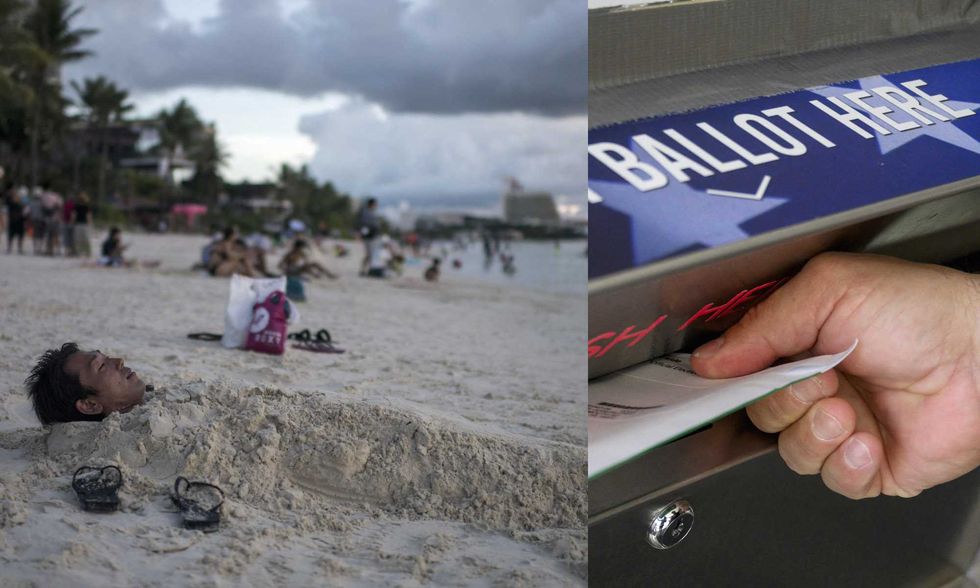
The first results of the midterm elections are a mixed bag for Republicans and Democrats.While Republicans were able to flip the governor's seat for Guam, Democrats flipped the island's delegate seat in the U.S. House of Representatives.'Hopefully that’s an indication for things to come!'Guam is a U.S. territory and as such has a delegate in the House but does not have a vote on legislation. The island also does not have any representation in the U.S. Senate.Democrat candidate Alicia Anne Garrido Limtiaco defeated incumbent Republican Del. James Moylan 51% to 48.8%, according to VoteHub.Del. Moylan won the 2024 election by six percentage points over the Democrat at the time, meaning support flipped from Republicans by a margin of eight percentage points. On the other hand, turnout for presidential election years is usually much higher than for midterm elections.Republican Vicente Anthony "Tony" Ada defeated Therese M. Terlaje for the governor's office by about three percentage points in the latest results on Tuesday. The Democrat conceded the election.President Donald Trump celebrated the Republican victory in the governor's race."Guam, which has always been considered strongly Democrat, just had an early call for a REPUBLICAN Victory in the top spot, Governor — Congratulations to Tony Ada!" he wrote on Truth Social."Also, the Republicans have the Majority in the State Senate. Wow, hopefully that’s an indication for things to come!" he added.Guam has a unicameral legislature, rather than a House and Senate, but Republicans will hold a narrow one-vote majority next term.Democrat Gov. Lou Leon Guerrero has been in office for the last eight years and was term-limited in 2026.RELATED: NBC polling analyst finds MASSIVE problem for Democrats ahead of Election Day Guamanians also voted for numerous offices in their local legislature. Voters told Guam News they were concerned most about the lack of tourism and the rising cost of living.On social media, news of the flipping election led to a flurry of jokes referring to comments made by Democrat Rep. Hank Johnson of Georgia in 2010 that the island might tip over and capsize if the population grew too large.There were 59,146 voters registered in Guam for the 2026 general election, according to Marianas Press.Poll Watch: 2026 midterm polls, averaged Poll Watch: 2026 midterm polls, averagedpollwatch.theblaze.comLike Blaze News? Bypass the censors, sign up for our newsletters, and get stories like this direct to your inbox. Sign up here!

Cover image for Republicans FLIP governor's seat in Guam — but Democrats pick up island's House seat

Supreme Court refuses to intervene in fight over 20,000 'likely noncitizen' voters in California

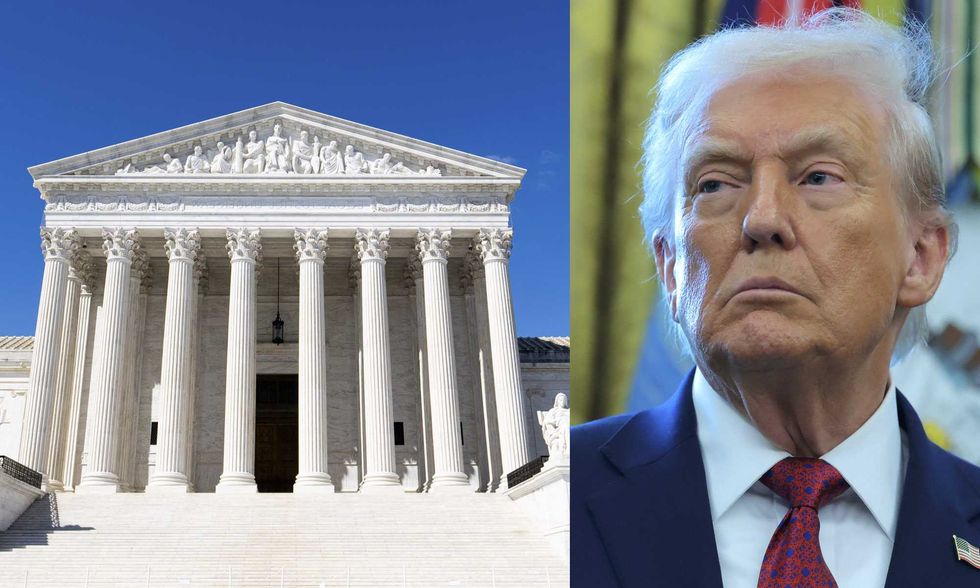
The U.S. Supreme Court rejected the request from the Department of Justice to force California officials to segregate ballots from people on a list of "likely noncitizens."Democratic California Gov. Gavin Newsom excoriated the administration and accused it of trying to influence the midterm elections by pushing for ballot segregation so close to Election Day.'The Court rejected Trump’s emergency request without even asking the other side to respond — a first.' The court issued a one-line, unsigned response with no dissents noted on the eve of Election Day. California officials have argued that inaccuracies in the list would lead to some legal voters being disenfranchised."This latest decision should put an end to the administration's attempt to disrupt California’s elections through emergency court orders," said California Attorney General Rob Bonta, a Democrat. "But our work is not over. We will remain vigilant and keep fighting back against federal efforts to undermine our democracy." Newsom also praised the ruling in a statement on social media. "California just secured a HISTORIC Supreme Court defeat against Donald Trump," he wrote. "The Court rejected Trump’s emergency request without even asking the other side to respond — a first. Democracy won.' RELATED: 9th Circuit rejects Trump DOJ's emergency motion over 20,000 questionable voters in California Some interpreted the court's swift response as a show of disdain for the request. While California is reliably left-leaning, numerous contests in the state could help determine who controls Congress after the midterm elections. Voters will also determine whether the next governor of the state will be Democrat Xavier Becerra or Republican Steve Hilton. Like Blaze News? Bypass the censors, sign up for our newsletters, and get stories like this direct to your inbox. Sign up here!

Cover image for Supreme Court refuses to intervene in fight over 20,000 'likely noncitizen' voters in California

'Fire will rise': Muslim pundit promises 'reckoning' if Abdul El-Sayed loses — and also if he wins

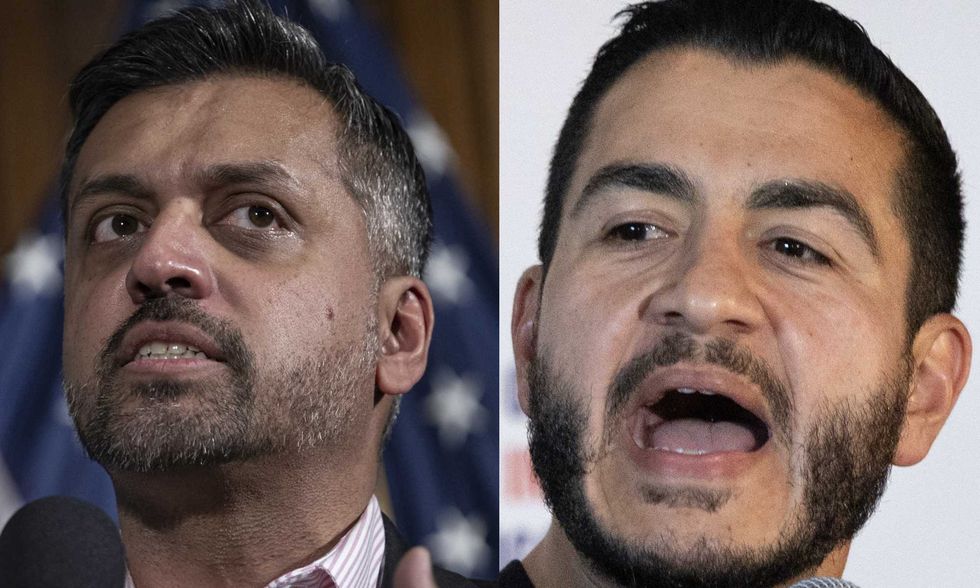
A former New York Times op-ed contributor is getting mocked and ridiculed after he threatened a "reckoning" if Muslim candidate Abdul El-Sayed doesn't win. El-Sayed will become the first Muslim in the U.S. Senate if he is able to defeat Mike Rogers (R) on Tuesday for one of Michigan's seats. 'This will be a watershed moment in Democratic politics.' El-Sayed represents yet another victory of the far-left extremist fringe of the Democratic Party against the centrist establishment leadership. The day before the election, Wajahat Ali promised "fire" and a "reckoning" regardless of whether El-Sayed wins or loses. "If, God forbid, Abdul loses, this will be a watershed moment in Democratic politics," he wrote on social media. "The fire will rise. It's over. People will be radicalized against corporate, pro-Israel Dems," he added. "There will be a reckoning. If, when, he wins, it will be a watershed moment. And that reckoning will still come." Ali's threat was disdained by many online. "You gonna strap on the suicide vest yourself, tough guy?" Dave Rubin responded. "Democrats now appear to be threatening us with violence if they don't win," the Libs of TikTok account replied. "Believe them when they tell you who they are." "To be clear ... are you threatening a caliphate? Because if you are, I AM READY for that war ... careful what you promise from your keyboard," responded Carl Higbie, Newsmax host and former U.S. Navy SEAL. "He just threatened jihad on American soil over a Senate race. Americans do not play that game. Come get some. I dare you," another critic said. RELATED: Trump blames violent rioting in France on Islam, ‘out of control mass migration’ — and a French official has responded "My main question is how will the fire rise with all the watershedding, and so forth," online raconteur David Burge joked. Ali was among those who condemned then-President Joe Biden in 2021 for daring to opine that Israel had a right to exist. El-Sayed is narrowly beating Rogers, according to the Blaze News Poll Watch average of polling. Michigan Senate polls 2026: El-Sayed vs. Rogers pollwatch.theblaze.com Like Blaze News? Bypass the censors, sign up for our newsletters, and get stories like this direct to your inbox. Sign up here!

Cover image for 'Fire will rise': Muslim pundit promises 'reckoning' if Abdul El-Sayed loses — and also if he wins

'Princess Bride' star makes a ‘hostage video’ for Abdul El-Sayed: ‘It’s like they have his wife’

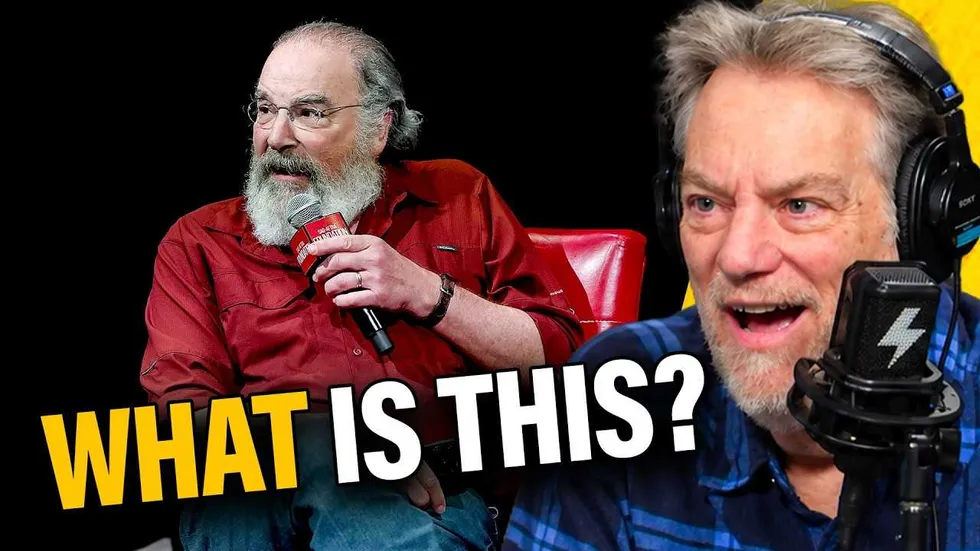
Actor Mandy Patinkin may have once commanded the screen as Inigo Montoya in “The Princess Bride,” but these days, his delivery seems considerably less commanding — and a whole lot more like a hostage reading a script.Patinkin posted a video on social media that reads like a “hostage” situation, according to BlazeTV host Pat Gray. In the video, Patinkin urges Jewish voters to support Michigan Democratic U.S. Senate candidate Abdul El-Sayed.“We really love Abdul El-Sayed. And we love what he’s doing. We love what he’s saying,” Pantikin said.“Jewish safety depends on a real multiracial democracy, and Abdul is the one fighting to protect it,” he continued. “We know how much it matters to live in a country where our rights are protected, where the law applies equally to everyone, and where the majority can’t just decide that some people don’t deserve the same freedoms.” “At least get a teleprompter,” BlazeTV host Pat Gray says, pointing out that Patinkin seems to be reading off a very long script sitting in front of him.“It’s like they have his wife,” co-host Jeff Fisher agrees. “They’ve got his wife. You know, this is the blackmail.”“Read this like you mean it,” he adds, mocking Patinkin’s imagined handlers.“It’s like a hostage video,” Gray agrees, before playing more of Patinkin’s video.“They exist because of democracy. And protecting democracy means protecting Jewish safety as well,” the actor continued.“We’re not a democracy,” Gray interjects, annoyed. “So, this Muslim Brotherhood-supporting moron is going to protect Jews. Is that what you’re saying?”Want more from Pat Gray?To enjoy more of Pat's biting analysis and signature wit as he restores common sense to a senseless world, subscribe to BlazeTV — the largest multi-platform network of voices who love America, defend the Constitution, and live the American dream.

Cover image for 'Princess Bride' star makes a ‘hostage video’ for Abdul El-Sayed: ‘It’s like they have his wife’

Judge Boasberg sides against Trump administration over 20,000 'likely noncitizen' voters in California

California officials got a boost from a Washington, D.C., judge in their fight against the Trump administration over 20,000 "likely noncitizen" voters.The administration has tried to use the power of the courts to compel California to segregate ballots of people on a list it compiled of possible noncitizen voters.'If I'm hearing that the list is flawed and it's overinclusive and includes individuals who are eligible to vote, that's a problem.'Chief Judge of the U.S. District Court for Washington, D.C., James Boasberg said Monday that California should determine how to run its own elections."The Executive Branch has likely violated the Constitution's Elections Clause, which commits authority over election rules to the states and Congress alone," Boasberg wrote in the ruling Monday. "California may decide for itself what procedures to use for verifying the citizenship of registered voters and for deciding whether to count their mail-in ballots."Boasberg challenged the administration on the accuracy of the list and opined that it would risk disenfranchising legal voters."Defendants' flawed lists risk chilling or preventing lawful votes from being cast and counted," he wrote.An attorney for the government admitted in a court hearing in San Francisco that there was a "high error rate" in the list while being questioned by U.S. District Judge Trina Thompson."If I'm hearing that the list is flawed and it's overinclusive and includes individuals who are eligible to vote, that's a problem," Thompson said.The administration has also requested an emergency intervention from the U.S. Supreme Court to force California to segregate the ballots.Boasberg has been accused of being politically biased against the Trump administration. In one case from March, the judge blocked subpoenas against Federal Reserve Chair Jerome Powell from the Justice Department.RELATED: Newsom is OUTRAGED over Justice Department lawsuit to block votes from 20,000 'likely noncitizens' California officials have accused the administration of using the "noncitizens" list to influence the election unfairly. Democratic Gov. Gavin Newsom was especially acidic in his response. "This is a sad, desperate attempt by Trump to use his politicized Justice Department to try to suppress California voters just three weeks before Election Day," he responded to a DOJ lawsuit. "Courts have made clear the federal government has no role in running state elections," he added. "We will defend free and fair elections in the Golden State and call out every authoritarian attempt to undermine our democracy."Boasberg was nominated by former President Barack Obama.Like Blaze News? Bypass the censors, sign up for our newsletters, and get stories like this direct to your inbox. Sign up here!

Cover image for Judge Boasberg sides against Trump administration over 20,000 'likely noncitizen' voters in California

Anti-Trump protesters are raking in cash after disrupting rallies

Protesters at President Donald Trump’s midterm rallies have found innovative ways to get paid and grab clout.After multiple outbursts at his midterm campaign stops, Trump accused protesters of being paid to stir up trouble, and he may be right.'Trump says I got $250 as a paid protester. Prove him wrong!'At least two protesters have used crowdfunding to profit off their five minutes of fame, and two others are Democrat candidates for state House seats supported by wealthy left-wing organizations.Indivisible, which organizes the No Kings protests, has ties to some of these protesters. The group itself has accepted over $7.6 million from George Soros' Open Society Foundations since 2017, according to public grant records.The biggest haul belongs to “absurdist activist” Rob Potylo. Potylo, also known as “Robby Roadsteamer,” burst into a Jeffrey Epstein-themed protest song at Trump’s rally in Chillicothe, Ohio, on Wednesday.Potylo posted the uncut video to YouTube the next day. Its description links to a GoFundMe titled "Robby Roadsteamer has been detained by ICE in Portland!" Though the fund predates that rally, Potylo implored his supporters to donate after the rally disruption.At least 4,600 supporters donated $127,831 total as of Monday."Folks this ain't easy! Please donate!" Potylo posted on X on Wednesday after being ejected from the event. "Trump says I got $250 as a paid protester. Prove him wrong!"Potylo told HuffPost that he raked in donations after his viral protest video. The professional activist also accepts payment via PayPal, Patreon, Venmo, and Cash App, according to his personal website.RELATED: George Soros foundations fund No Kings protests against Trump Brevard County Two other hecklers are using their rally protests to campaign for state legislature.Alan Buckalew was among about a dozen people removed from Trump's Oct. 21 rally at Clemson University's T. Ed Garrison Arena in Pendleton, South Carolina. "Why are you selling us out to the Soviets?" Buckalew shouted, according to the Greenville News.Buckalew is the Democrat nominee for South Carolina House District 28. Indivisible Upstate SC endorsed him in October.Ben Braver, a Democrat Florida state House candidate, took things a step farther.Lakeland, Florida, police arrested Braver at Vice President JD Vance's Oct. 1 rally and charged him with trespassing and resisting arrest without violence, according to Fox 13. He was later released on a $2,000 bond.Braver "planted his foot in opposition to the direction he was being escorted," an officer wrote. The officer took him to the ground with a leg sweep. Braver told Fox 13 he did not intend to resist. His video of the arrest has drawn 381,000 likes on Instagram, captioned "Was this police response appropriate?"Vance called him a "Democratic plant.""I was practicing our inalienable First Amendment rights to free speech against pedophile protectors like JD Vance and had absolutely no intention of resisting the officer," Braver told Blaze News.Braver is challenging state Rep. Karen Gonzalez Pittman (R) in House District 65 in Tampa, Florida. He lost a 2024 state Senate race to state Sen. Danny Burgess (R) by about 21 points, according to Florida Politics.Emgage Action lists Braver among its endorsements. Open Society has given Emgage Action, a Muslim-American political organization, and its corresponding partner, Emgage Foundation, at least $5.5 million since 2018, grant records show.Rep. Jamie Raskin (D-Md.) and Florida NOW PAC also support Braver’s campaign. The candidate urged his X followers to "share" an Indivisible event about Rep. Laurel Lee (R-Fla.) in August 2025.Braver also promoted No Kings rallies as campaign stops on Instagram and vowed in July to "end our agreements with the dangerous and murderous ICE."Braver's activism predates his campaigns. As a University of South Florida junior in 2023, he led Stand for Freedom FL, a statewide campus walkout demanding that the DeSantis administration "restore DEI initiatives" and stop its "attack on LGBTQ+ students," Them reported.Timothy Matthew McDaniel is yet another activist who, in some way, has profited off of his anti-Trump protests.RELATED: Ilhan Omar resurfaces for first time since federal raid in tearful cash grab South Carolina Public IndexMcDaniel, who goes by Matthew on social media, yelled, "You're the criminal!" when Trump mentioned "criminal aliens" at his Oct. 21 Pendleton, South Carolina, rally. Attendees subdued him, and he later filed a police report alleging assault with the Anderson County Sheriff's Office, according to the Greenville News.McDaniel, a 46-year-old Navy veteran, wore a "Foxtrot Delta Tango" shirt — seemingly code for "F**k Donald Trump" — to the rally and calls himself an "independent who happens to support Democrats," according to the New Republic.He launched a GoFundMe three days after his rally outburst. The fund seeks $15,000 for "medical bills, legal expenses, reward offers, and security needs" and calls Trump a "mad 'wanna-be' king." It had raised $3,815 at the time of this report's publication."Hopefully, the reward money will loosen some lips," McDaniel wrote in a Facebook comment under the fundraiser.His Facebook page leaves little doubt about his antagonism toward the president.He made Comey's "8647" seashell image his profile picture in April, shared a meme last December casting Trump as the Antichrist and attacking evangelical Christians, and slammed a local bar as a place to "hang out with neo-na$is or the usual MAGA maniacs."McDaniel also promoted an Indivisible "Vote Early Block Party" in Pendleton, South Carolina, in September.A Timothy Matthew McDaniel of South Carolina with the same birth year as the protester has a lengthy rap sheet.McDaniel pled guilty to public drunkenness in Clemson, South Carolina, in 2005 and was found guilty of reckless driving in 2004 and hit-and-run property damage in 2005 in neighboring Oconee County, according to South Carolina Public Index records. He was also found guilty of driving under suspension in 2010.Potylo, Buckalew, McDaniel, Indivisible, Emgage Action, and the Open Society Foundations did not respond to Blaze News' requests for comment.Like Blaze News? Bypass the censors, sign up for our newsletters, and get stories like this direct to your inbox. Sign up here!

Cover image for Anti-Trump protesters are raking in cash after disrupting rallies

Nick Freitas: Why doesn't Africa have a word for 'maintenance'?

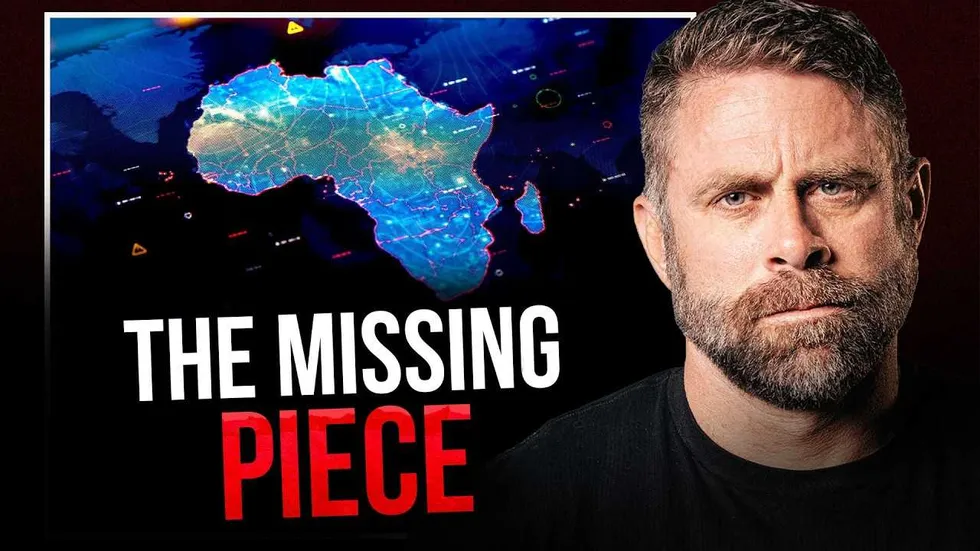
What if one of the biggest obstacles to economic development isn't politics, natural resources, or government institutions, but something much more fundamental? Franck Zanu of Zanu Project Rethink joins Nick Freitas to examine an unusual observation about African languages: the apparent absence of a word for "maintenance.”Zanu argues that the continent's relatively predictable tropical environment may have influenced how generations approach problem-solving, innovation, and long-term planning. “One of those things that you never typically think about, this idea of maintenance,” BlazeTV host Nick Freitas tells Zanu. “They could come up with a word for repair, but not maintenance,” he continues, asking, “So why does this not exist within, well, any of the languages that you inquired about with respect to African tribal languages?” “Yes, why doesn’t the word maintenance, the concept, exist?” Zanu says, before explaining that a human being's “physical environment” during evolution is what allows a group of people to begin to problem solve.“It just forces the human mind to say, ‘I need a solution to this problem because it’s repeating itself,’ and so when that happens in any environment where a certain condition just keeps repeating itself or when it happens it’s severe, the mind is forced to begin to look for solutions,” he tells Freitas. However, in Africa, there is one environment and therefore reason to innovate. “Africa,” Zanu says, “which is the only tropical continent in the world, you know, I mean, we have slightly, here and there, it gets a little chilly and then the rainfall.” “Well, every place has rainfall, but we are tropical, which means you don’t have to think about the wardrobe and change it from wool to silk to cotton. No, it’s all cotton,” he continues, calling the continent of Africa “predictable.”“Such an environment would never cultivate what we call proactive long-term planning maintenance,” he adds. “Making the Argument with Nick Freitas” is available on BlazeTV+, YouTube, and major podcast platforms.Start watching Nick Freitas NOW at blazetv.com and use the promo code NICK for $20 off your BlazeTV+ subscription.

Cover image for Nick Freitas: Why doesn't Africa have a word for 'maintenance'?

NBC polling analyst finds MASSIVE problem for Democrats ahead of Election Day

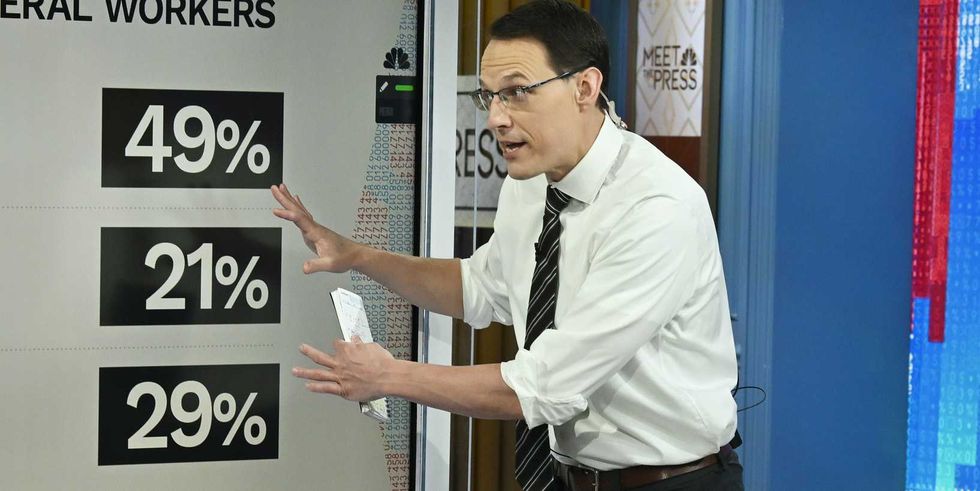
NBC chief data analyst Steve Kornacki outlined the latest polling ahead of the pivotal midterm elections.On Sunday, Kornacki documented some of the negative polling for Republicans and President Donald Trump before identifying one massive problem for Democrats.'Are they willing to take the next step and vote for Democrats given how unpopular Democrats are as a party?'Kornacki highlighted the results from an NBC News poll taken last week. One question asked respondents how they feel about the Democratic and Republican Parties in general."Republicans are not popular, but this is about where they were back in 2018 in Trump's first midterm," said Kornacki."Look at the Democrats: 29% favorable, 52% unfavorable. This is different from 2018. In 2018, the Democrats as a party had much better numbers than this," he added."And that does raise a question: Voters out there who disapprove of Trump, aren't happy about where the economy is, inflation, are they willing to take the next step and vote for Democrats given how unpopular Democrats are as a party?" Kornacki asked rhetorically."Or does that keep the Democrats from fully capitalizing on what otherwise for them is a very promising political climate?" he concluded.Polling expert Frank Luntz fleshed out some of the other problems with polling accuracy that may further deflate Democrats' hopes."I got 2016 wrong. I believed in the exit polls. Trump voters walked away, refused to participate, because they thought that it was against them," he told CNN in October."They thought that the polls were all biased," Luntz added. "And that's what Republicans are being told right now: 'Don't believe the polls. They're not accurate.' Well they may be, we're about to find out."RELATED: Pollster Frank Luntz CRUSHES Democrats' hopes over favorable polling Kornacki did lay out some of the bad news for the president, who has a 40% approval rating and 60% disapproval in the latest polling. When asked who should control Congress, 52% of respondents said Democrats should while only 45% said Republicans should control Congress. Also challenging for Republicans is that slightly more people say they are dissatisfied with their current financial situation, 51%, than the 49% who said they are satisfied financially. Like Blaze News? Bypass the censors, sign up for our newsletters, and get stories like this direct to your inbox. Sign up here!

Cover image for NBC polling analyst finds MASSIVE problem for Democrats ahead of Election Day

Matthew Perry, child of divorce

Editor's note: This article was first published in November 2023.Chandler Bing, like many of his Gen X cohort, was the product of divorce. His wealthy parents casually announced their split to him, their only child, at Thanksgiving dinner when he was 9 years old. Chandler’s resultant lifelong hatred of the holiday becomes a running joke in “Friends,” as do his defensive, acerbic humor and inability to commit.The Bing divorce is portrayed as extravagantly messy, the better to wring laughs from Chandler’s discomfort. A flashback in the show’s first season takes us to the scene of the primal trauma, with mother Nora (Morgan Fairchild) half-heartedly spouting boilerplate therapeutic reassurance while blithely revealing that Chandler’s dad, Charles, has been having sex with the houseboy. (“More turkey, Mr. Chandler?” leers said houseboy in the scene’s tacky “button.”)Chandler’s relationship with his parents as an adult is also a reliable source of comedy. Nora is a best-selling “erotic novelist” who embarrasses her son during a “Tonight Show” appearance and later attempts to seduce his friend Ross.Charles (Kathleen Turner) is just as monstrously self-absorbed. Now a transgender cabaret performer in Las Vegas (Chandler ruefully recalls him showing up at high school swim meets dressed as different starlets), he attends Chandler’s wedding after years of estrangement. There, the spectacle of his horrible, freakish parents once again at each other’s throats dredges up enough unpleasant memories that Chandler nearly calls the whole thing off.None of this is as funny as the show seems to think it is, but then the same could be said about much of the show’s cutesy, cloying humor. It’s not as if this “insensitive” portrayal of adult-children-of-divorce Americans merits some kind of apology. At any rate, “Friends” co-creator Marta Kauffman has predictably focused her public self-flagellation on the show’s egregious “misgendering” of Charles, as well as its more general crimes against diversity. But the emphasis placed on Chandler Bing’s unhappy childhood takes on a certain poignancy as we collectively mourn the actor who played him. Matthew Perry, it turns out, also bore the scars of his parents’ divorce.The source of miseryReleased just a year ago, Perry’s memoir begins in media res, as our protagonist’s loyal assistant wisely busts Perry, then 49, out of yet another sober living house (Perry counts a career total of 15 treatment facilities) and speeds him to the hospital, where he almost dies of a burst colon brought on by years of opioid abuse.Perry dedicated “Friends, Lovers, and the Big Terrible Thing” to “all of the sufferers out there,” and his stated purpose in writing it was to share all the gory details of his decades-long struggle with drugs and alcohol. In promotional interviews last year, Perry emphasized that he now valued his fame mainly as a tool for reaching other addicts and helping them achieve sobriety; since his death on October 28, many have testified to his generosity in this regard.The divorce may not have caused Perry’s drinking and drugging, but perhaps it did lead him to seek refuge in his public identity as an addict.And yet in telling the story of his life, Perry repeatedly returns to a source of misery predating his first drink at 14. Once he dispenses with his obligatory opening hook, Perry then reaches deep into the past to depict a far quieter but no less devastating memory: He is 5 years old and terrified, flying alone from Montreal, where he lives with his mother, to visit his father in Los Angeles. Almost 50 years later, Perry’s anger is still raw: “The other kids had parents with them. I had a sign and a magazine. ... Why was that little kid on a plane on his own? Maybe fly to Canada and f***ing pick him up? That’s a question I often wonder about but would never dare to ask.”Perry’s parents met in 1967 at an Ontario beauty pageant. His mother, Suzanne, was there in her official capacity as the reigning Miss Canadian University Snow Queen, while his father, John, was there performing with his band. Their only child, Matthew, was born in 1969. Nine months later, John abandoned them both to pursue an acting career in Hollywood.A tension familiar to anyone who’s survived such garden-variety “trauma” as the late 20th-century American no-fault divorce runs through the book. While the pain Perry’s parents caused him is obvious, every time he dares to express it, he checks himself. Surely it wasn’t that bad. Nobody died or got hit, and there was enough money to go around.Yes, his overwhelmed single mother took a doctor’s dubious advice to soothe her baby’s colic with barbiturates, and by the time Perry was in kindergarten, he had so thoroughly assumed a “caretaker” role that his first instinct after losing the tip of my middle finger to a slammed car door was to comfort a distraught Suzanne.And yes, his mother’s eventual career as Pierre Trudeau’s press secretary meant that she was often almost as absent from her son’s life as John, who called every Sunday and only had Perry flown out for visits “when enough time had passed that it was unseemly.”And yes, Suzanne’s many suitors meant that Perry relived his father’s abandonment over and over, and when she finally did remarry (enlisting Perry to — cringe — “give her away” at the wedding), he struggled to feel included in her growing new family.And yes, Perry was exhibiting the whole array of “troubled” behaviors — smoking, fighting, neglecting school — by the time he was 10.The damage carries into adulthoodBut John and Suzanne aren’t to blame. They’re much better parents to Perry now that he’s a grown man, and maturity (not to mention sobriety) demands that he cut them some slack. “I needed to remember that my dad left because he was afraid, and my mom was a kid who was just doing her best,” he wrote. Perry, of course, was a literal kid, but maybe that was a blessing. We all know how resilient children are.Or are they?“Contrary to what we have long thought, the major impact of divorce does not occur during childhood or adolescence,” wrote Judith Wallerstein in her groundbreaking study “The Unexpected Legacy of Divorce”:Rather it rises in adulthood, as serious romantic relationships move center stage. When it comes time to choose a life mate and build a new family, the effects of divorce crescendo. A central finding to my research is that children identify not only with their mother and father as separate individuals but with the relationship between them. They carry the template of this relationship into adulthood and use it to seek the image of their new family. The absence of a good image negatively influences their search for love, intimacy, and commitment. Anxiety leads many into making bad choices in relationships, giving up hastily when problems arise, or avoiding relationships altogether.This passage might help explain why Perry never seemed to enjoy the substances that gave him so much trouble. From the start, his drinking seemed to be medicinal, a way to treat his persistent sense of discomfort, much like his Vicodin use, which he began to relieve the pain from an on-set jet ski accident. At his peak he was taking 55 pills a day to feel normal.Perry’s pursuit of success was similarly driven by the need for relief. His earliest “performances” were bids for attention from his distracted parents. “Acting came naturally to me,” he writes of his first big role, the lead in his high school production of “Our Town.” “Why wouldn’t I want to pretend to be another person?”Although Perry reports that he “fell deeply in love with acting” while playing opposite River Phoenix in his first movie, 1988’s “A Night in the Life of Jimmy Reardon,” he mostly talks about his chosen profession in more mercenary terms. “Acting was like a drug for me,” he wrote, and he soon realized the exact high he was chasing: “By 1986 I was pretty sure fame would change everything. ... It was the only thing that would fix me.”Maybe this is just the more or less sensible single-minded focus of an ambitious, career-driven young man. But it’s worth noting that even after he had reached the top, Perry never managed to figure out love, intimacy, and commitment. Not for lack of trying, either. Although he seemed to live the life of a Hollywood playboy, dating one A-List beauty after another, he was tormented by his inability to settle down.Consider Perry’s own testimony, from an October 2022 interview: “I break up with them because I’m deathly afraid that they will find out that I’m not enough, that I don’t matter, and that I’m too needy, and they’ll break up with me and that will annihilate me and I’ll have to take drugs and that will kill me.”Hurt people hurt people, as the saying goes. And beneath the optimism of his recovery-speak, Perry hurt. For all his recent soul-baring, Perry’s most revealing moment happened unintentionally, while promoting his book on Canadian radio: “The thing that always makes me cry is that it’s not fair. It’s not. It's not fair that I had to go through this disease while the other five didn’t. They got everything that I got. But I had to fight this thing, and still have to fight this thing.”What can you say about Perry’s strangely tone-deaf ingratitude and lack of perspective here, other than to wonder how much suffering this self-obsession must still have caused him?The legacy divorce leavesOne also wonders about Perry’s conception of himself as having a “disease.” The disease model of addiction is, of course, standard in recovery circles. As a metaphor, it’s quite efficient at communicating the implacable, life-or-death nature of the challenge, while training focus on the most pressing task: to stop using.But evidence suggesting that compulsive, self-destructive indulgence is literally a chronic medical condition is scant. Journalist Peter Hitchens calmly raised this point during a televised debate with Perry on a 2013 episode of “BBC Newsnight,” denouncing the disease model as a “fashion for dismissing the ability of people to take control over their own lives and to make excuses for them [instead].” Perry quickly became defensive and angry.Why? Maybe he thought Hitchens was trivializing the hell he’d been through — implying that Perry simply should have manned up and quit long ago. But to see addiction as a psychological rather than a physiological affliction is not to minimize its seriousness. The disease model Perry clung to reinforced his reluctance to look too closely at how his parents’ divorce affected him; to search for a “reason” for one’s substance abuse comes perilously close to justifying it.The divorce may not have caused Perry’s drinking and drugging, but perhaps it did lead him to seek refuge in his public identity as an addict. What would true intimacy with another person look like for Perry? What kind of family could he envision for himself? Rather than confront the void left by his own upbringing, Perry could pre-emptively set himself apart and choose instead the carefully constrained vulnerability of an addict helping fellow addicts.By all accounts, Perry had been sober for a year when he died. His death does not present the usual cautionary tale of a doomed celebrity finally undone by one party too many. And yet he died alone. Unlike the character he so memorably inhabited, Perry never quite managed to embrace adulthood. Maybe Perry, contra Hitchens, was right, and it had to be this way; such was the progress of his disease.At any rate, it’s not for us to judge how well Perry played the cards he’d been dealt. But as long as we’re seeking a lesson from his sad, untimely demise, surely we can consider the entirely voluntary decisions of those who brought him into this world. Perry leaves behind him a foundation in his name to help those struggling with addiction; it’s what he would have wanted, as the cliché goes. But the injury of divorce compromises the very sense of self that enables us even to know what we want.The opioid crisis is much discussed these days, with good reason. To honor Perry’s legacy, however, we should also remember him as a survivor of another all-too-common epidemic.
Cover image for Matthew Perry, child of divorce

The forgotten colleges that could restore hope to American education

When I was in high school, I began attending Paradise Valley Community College in Phoenix. This was before dual enrollment became commonplace. Yes, I’m that old.Why did I go to community college while still in high school? I wanted to study philosophy. I also enrolled in literature, political science, and English composition, eager to learn from professors who had devoted their lives to teaching.A good education should answer two questions: How will I make a living? And what makes life worth living?I’ll never forget the first day of my first philosophy class. The professor asked a simple question: What is the good for human beings?Not merely one good among many, or what makes you happy this afternoon. What is the highest good for human beings?We offered answers. A Socratic dialogue followed. The professor challenged our assumptions, pressed us to defend our reasoning, and showed us weaknesses in our arguments. I left with more questions than answers, but I had discovered something extraordinary: I wanted to know the truth about the good life.That was my introduction to community college: dedicated teachers, serious questions, and an education that awakened the mind.About 25 years into my career as a university professor, I now have two sons taking community college classes. I want them to have the same opportunity. But community colleges face serious challenges. Enrollment fell 22% between 2010 and 2023 — about 1.7 million students — according to the Federal Reserve Bank of Kansas City. Recent gains have not erased that decline.That brings me to an election many voters overlook: the community college governing board.In Maricopa County, three candidates are running together as Change4Maricopa: business executive John David Crow for an at-large seat, entrepreneur Ryan Caracciolo in District 4, and Susan Winder, an educator and administrator with 35 years of experience, in District 3. Their campaign emphasizes affordability, workforce and health care training, and restoring community college football. Not all three races appear on every voter’s ballot.Their candidacies draw attention to four problems that governing boards nationwide should confront.RELATED: Is ASU going to fire a Christian professor for being too Christian? Kevin Abele/Icon Sportswire/Getty ImagesFinancial accountabilityCommunity colleges exist to offer affordable education. That requires something universities are not always known for: careful spending.An August 2026 California state audit found inadequate reserve policies at several community college districts. Four of the six districts reviewed held reserves above their own limits or the statewide median, yet none of those with high reserves had formal plans to use the money to improve student outcomes.Governing boards should be able to explain how expenditures improve instruction, student success, or career preparation. Ideological programs deserve the same scrutiny as every other expenditure. DEI initiatives should not get a free pass because administrators regard their objectives as virtuous.Fiscal responsibility means remembering whose money is being spent and why.Build a pipeline from classroom to careerFor too many students, the familiar college story is four years of study, a mountain of debt, and a diploma that leaves them wondering where the jobs went. Community colleges can offer another path.A student interested in becoming an electrician, nurse, welder, medical technician, or semiconductor specialist should be able to identify the qualifications, complete an affordable program, and enter the workforce. Employers know what skills they need and can help colleges design the training.But I do not want community colleges to become mere job-training centers. A good education should answer two questions: How will I make a living? And what makes life worth living?We should not sacrifice either question to answer the other.Confront the myth of educational neutralityAnother question governing boards cannot escape: What values guide education?For decades, Americans have been assured that public education can set Christianity aside and remain neutral. I call that the myth of neutrality. Christianity was pushed out, but competing ideologies did not stay at the door. Marxist assumptions and political activism filled the supposed vacuum.Christians should not have to abandon their convictions to participate in public education. We should reject the claim that education can be separated from questions of truth, goodness, and, ultimately, God.RELATED: The champagne communists who sold Millennials a bill of goods BRO Vector/Getty ImagesRestore educational hope for young menConsider the persistent gap between young men and women in higher education. According to research published in July 2026 by the American Institute for Boys and Men, 43% of women ages 18-24 were enrolled in college in 2024, compared with 34% of men.The causes are complex. But I doubt that lectures depicting young men as the problem make them eager to enroll. Some may simply vote with their feet.A young man interested in advanced manufacturing should see a route from education to employment. So should one who wants to work in health care. Colleges should invite young men to develop their abilities, not treat them as presumptive offenders.The election near the bottom of your ballotWhat are community colleges ultimately supposed to accomplish?I return to the professor who asked us about the highest good. He helped me imagine an intellectual future I had never considered, and that experience helped lead me to a career teaching philosophy.Other students find their calling in nursing, engineering, construction, business, or technology. The paths differ, but education should give them hope by helping them discover and develop their abilities.The people elected to governing boards now will shape those opportunities for years. Their races seldom command headlines or millions in campaign advertising. They still deserve your attention.Community colleges can be great again. Do not stop at the top of the ballot. Keep going — and vote for conservatives who understand what these colleges can be.

Cover image for The forgotten colleges that could restore hope to American education

Why Gen Z Men Relate to Anakin Skywalker: John Doyle Says 'It's Called Being a Young White Guy'

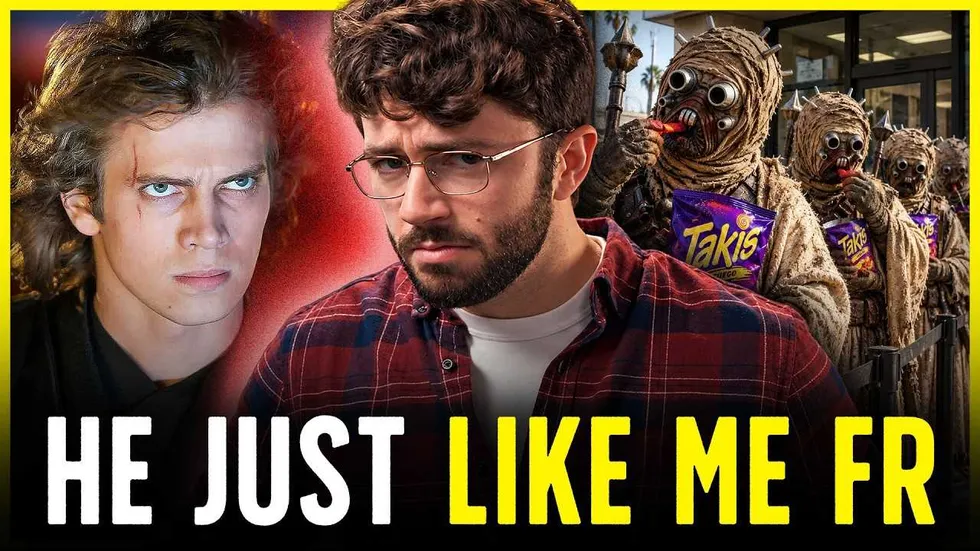
Anakin Skywalker was supposed to be the chosen one. Instead, he became Darth Vader. And yet his journey to becoming one of film’s most infamous villains is one that BlazeTV host John Doyle says many young white men relate to — and with good reason. Doyle explains that Skywalker, who was “born into slavery, rescued by this ancient religious order,” and “told that he’s the most gifted person to ever walk among them,” would then spend his life “being lectured and distrusted and held back by the very people who were supposed to help him fulfill this destiny of his.” “He wanted to bring order to this corrupt and dysfunctional society. He wanted to have it all, right? A beautiful wife, a family, the power to actually protect the people he loved who were being harmed,” he says. “But instead, he’s surrounded by incompetent politicians, hypocritical religious authorities, and this disgusting, decaying republic that can’t actually accomplish anything,” he continues. “And so eventually, yeah, he decided that he’s had enough.” This path would lead him to becoming the “bad guy” who helps a “dictator rule the galaxy with an iron fist.” And Doyle says that despite the label of “bad guy,” there’s a great reason why so many young men relate to him. “If you’re telling a story about a naturally gifted young man who is prevented from reaching his potential by old people who are lecturing him but ultimately refusing to answer his questions or address the problems he’s facing, yeah, it’s called being a young white guy,” he says. Doyle notes that “the actual story” is about “an evil empire ran by white men with British accents representing authority, class, tradition, hierarchy” who are "being fought back against" by “diverse rebels fighting for democracy and equality.” “Young white guys really just aren’t so interested in a story about a bunch of leftists teaming up with aliens to destroy this homogenous, hierarchical society,” he says. “This is a story of a young guy who grows up to be, you know, disillusioned by the things around him. He’s withheld from positions which he has actually earned by merit. He’s told that he can’t have things that he looks for, such as, you know, a girlfriend, for these vague and silly reasons,” he explains. “He’s tortured and harmed by weird alien freaks that society doesn’t actually bother with meaningfully dealing with,” he continues. “And finally, he decides to turn to what he was told was evil and forbidden,” he adds. Want more from John Doyle? To enjoy more of the truth about America and join the fight to restore a country that has been betrayed by its own leaders, subscribe to BlazeTV — the largest multi-platform network of voices who love America, defend the Constitution, and live the American dream.

Cover image for Why Gen Z Men Relate to Anakin Skywalker: John Doyle Says 'It's Called Being a Young White Guy'

The strange, dark story of how John 3:16 infiltrated American sports

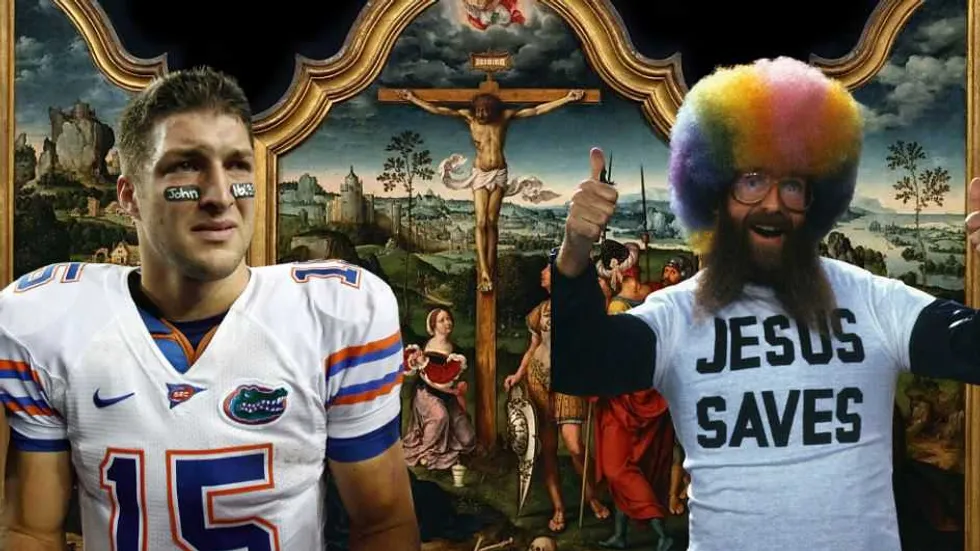
You don't have to be a Christian to know John 3:16.You may not know exactly what the verse says. But if you've watched enough American sports, you've probably seen the citation: on a sign behind the goal posts, beneath Tim Tebow's eyes, or this summer, written on the Pride caps of three San Francisco Giants pitchers.Convinced that the rapture was imminent, he wanted to warn the world before it was too late.For decades, six characters and a colon have served as American sports' unofficial Bible verse.Why this one? The answer begins long before television and eventually involves Martin Luther, D.L. Moody, a rainbow-wigged publicity seeker, Google, a hostage crisis, and a controversy this summer over Bible verses written on baseball caps.The gospel in miniatureJohn 3:16 appears during Jesus' nighttime conversation with Nicodemus in the Gospel of John:"For God so loved the world, that he gave his only begotten Son, that whosoever believeth in him should not perish, but have everlasting life."Christians noticed early that the verse managed to pack an extraordinary amount of Christianity into a single sentence. Around the turn of the fifth century, John Chrysostom marveled that although John wrote concisely, "each word had much significance." From the verse, he drew God's love for sinful humanity, the giving of the Son, faith, salvation from destruction, and the promise of eternal life.Martin Luther later became famous for calling John 3:16 "the gospel in miniature." By the 19th century, the verse had become especially important to evangelical preaching. The English evangelist Henry Moorhouse preached on God's love from John 3:16 repeatedly during a visit to D.L. Moody's church in Chicago. Moody later described the experience as transforming his understanding of God's love.It was hard to compress the Christian message much further than John 3:16.Then came the perfect way to distribute this message: live television.Enter the Rainbow ManRollen Stewart initially had nothing to say about Jesus. He wanted to be famous.According to Sam Green’s 1997 documentary, "The Rainbow Man/John 3:16," Stewart discovered the power of television during the 1977 NBA Finals in Portland. Wearing a rainbow-colored Afro wig, he danced for a cameraman filming the crowd and managed to get himself onto the broadcast.During the 1977 NBA Finals, Stewart discovered that television offered a shortcut to celebrity. There was no need to get cast in anything if he simply went where the cameras were already going and made himself difficult to ignore.So he put on a rainbow-colored Afro wig and started showing up at major sporting events. He danced for the cameras and learned to anticipate where they would point next."Once I saw the red light, I was hooked," he later recalled.Soon the Rainbow Man was everywhere, and Stewart became surprisingly sophisticated about getting himself into the picture. At football games, he positioned himself between the goal posts, where the field-goal camera would find him. At baseball games, he appeared behind home plate. At the Masters, he maneuvered himself over Jack Nicklaus' shoulder as Nicklaus prepared to tee off.Best of all, he carried a small battery-powered television. Stewart could stand inside a stadium, watch the broadcast he was attempting to infiltrate, and adjust his position according to what the director was putting on the screen.He wasn't even much of a sports fan. "I despised sports," he admitted years later. The games were useful because television covered them live.After the 1980 Super Bowl, Stewart returned to his hotel room depressed. He had spent years trying to become famous and discovered that being famous wasn't doing much for him. He turned on the television, encountered Bible prophecy teacher Charles Taylor, and subsequently became a born-again Christian.The rainbow wig stayed. But Stewart now had something besides himself to advertise.John 3:16.6 characters and a colonThe choice was unusually well suited to what Stewart was doing. Christians had spent centuries treating John 3:16 as the gospel in miniature: In the King James Bible, the verse takes 25 words to move from God's love for the world to the promise of everlasting life. Stewart figured out how to shrink it even further. Forget the verse itself. All he needed were six characters and a colon, large enough to read on television. The viewer could look up the rest.In 1984, Christianity Today reported that Stewart had displayed his banner at eight football stadiums in five days. He appeared at professional golf tournaments, championship basketball games, the World Series, football bowls, and even the wedding of Prince Charles and Lady Diana.The fact that many viewers had no idea what John 3:16 meant didn't bother him. It was part of the idea."If they don't know what John 3:16 means, most people will eventually try to find out," Stewart told the magazine. "And some will pick up their Bibles and begin reading it."Television networks charged advertisers enormous sums to reach the audiences watching America's biggest sporting events. Stewart had figured out how to place his message inside the same broadcasts without buying airtime at all.Live sports made the scheme possible. A network could edit an entertainment program before broadcasting it. It couldn't edit a field goal before showing it. If Stewart got himself behind the goal posts before the kick, by the time the director realized what was happening, John 3:16 was already in America's living rooms.Eventually, the networks and sports organizations became less cooperative. Camera operators tried to frame Stewart out, while stadiums restricted his banners. By 1986, Christianity Today reported that all but one of the NFL's 28 teams had prohibited them.At Washington's RFK Stadium, the fight became a federal lawsuit after security prevented Stewart and an associate from displaying John 3:16 banners. Elsewhere, Stewart devised Scripture banners that could be worn like ponchos and exposed by spreading his arms."They'd have to undress us to take away our gospel signs," he said.By then, however, the mysterious citation was becoming part of the scenery of American sports.Did anybody actually look it up?There was an obvious question about Stewart's entire enterprise: Did anybody sitting at home actually do what he hoped?Mike Kerrigan did.The Charlotte attorney was about 11 when he kept noticing the Rainbow Man during football games. Eventually, he asked his father what John 3:16 meant.His father didn't know either."Let's look," he said. They opened a Bible.Kerrigan still remembered the moment decades later, when he wrote about it in the Wall Street Journal in 2024. Stewart had predicted that an obscure biblical citation on television might make someone curious enough to find a Bible. In at least one living room, that is exactly what happened.Unfortunately, Stewart's own story didn't end nearly as happily.Rainbow's end His life began to unravel toward the end of the 1980s. His marriage collapsed. His money disappeared. His religious beliefs became increasingly preoccupied with elaborate predictions of an imminent apocalypse.Television remained his constant companion. Living in cheap Los Angeles hotels, Stewart later described watching as much as 18 hours a day: Christian broadcasters, daytime talk shows, news magazines, reality television, and more preachers at night. He called it being "fed by the media."Eventually, appearing on television was no longer enough. Stewart began trying to create events that would force television to cover him.In 1991, authorities accused him of setting off foul-smelling devices at several Southern California locations, including the Crystal Cathedral, Trinity Broadcasting Network studios, and a Christian bookstore.Then, on Sept. 22, 1992, he took over a room at a Hyatt hotel near Los Angeles International Airport with a gun. Two day laborers escaped. A hotel maid locked herself in the bathroom. Stewart covered the windows with religious messages and demanded a lengthy live press conference. Convinced that the rapture was imminent, he wanted to warn the world before it was too late.Green's documentary includes an audio recording of Stewart speaking with a police negotiator during the standoff."I've watched the cops, you know, cop shows and tried to get a handle on what's going on," Stewart explains."Maybe you look at a little bit too much TV," the negotiator replies."I watch a lot of it."After roughly nine hours, police stormed the room and arrested him. Stewart was sentenced in 1993 to three life terms with the possibility of parole.From the family Bible to GoogleOnce the Rainbow Man was gone from sports television, the signs persisted.On Jan. 8, 2009, Florida played Oklahoma for the national championship. Gators quarterback Tim Tebow had spent the season wearing Philippians 4:13 — "I can do all things through Christ who strengthens me" — on the eye black beneath his eyes.For the championship game, however, he decided to switch to John 3:16. Coach Urban Meyer was horrified. A superstitious man, Meyer wasn't about to tamper with a winning formula. "That verse got us here!" he protested, according to Tebow's later recollection.Tebow explained that John 3:16 expressed the essence of his Christian faith. Meyer relented.Florida won the national championship, and Tebow had an advantage Rollen Stewart could only have dreamed of: The cameras were trying to find him.During the game, viewers began searching the citation online. By the following morning, "John 3:16" had become Google's hottest search term.Twenty-five years earlier, Stewart had imagined people seeing the citation and going to find a Bible. Well, now they had Google.The story subsequently acquired an almost suspiciously neat postscript. On Jan. 8, 2012 — exactly three years after the national championship — Tebow led the Denver Broncos against the Pittsburgh Steelers in an NFL playoff game. Denver won on an 80-yard touchdown pass on the first play of overtime.Tebow had thrown for exactly 316 yards. Because he completed 10 passes, he averaged 31.6 yards per completion.RELATED: What Fulton Sheen understood about fame that today’s Christian influencers don’t Michael Ochs Archives/Getty ImagesThe verse that wouldn't leave sportsBy 2011, the connection between John 3:16 and televised sports was so familiar that a proposed Super Bowl commercial was built around it.The ad showed football fans watching a game on television. The broadcast zoomed in on a quarterback with John 3:16 written beneath his eyes."I'll look it up," one of the fans says, reaching for his smartphone.Fox declined to air the commercial under its policy against advertisements from religious organizations intended to advance particular beliefs or practices.The citation continued turning up elsewhere. In 2012, a Texas school district became embroiled in a legal fight over cheerleaders putting Bible verses on the banners through which their high school football team ran onto the field.And this summer, San Francisco Giants pitcher Landen Roupp employed a version of Stewart's old tactic — with a different Bible verse.During the team's June 12 Pride Night, Roupp wore a special rainbow-logo cap but wrote "Gen. 9:12-16" across it, partially covering the logo.Two other Giants pitchers, JT Brubaker and Ryan Walker, also added biblical citations to their caps.Roupp had chosen the passage in which God establishes the rainbow as the sign of His covenant with Noah, promising never again to destroy the earth with a flood.The Giants' rainbow logo had acquired an unexpected biblical footnote.MLB warned the three pitchers not to repeat the inscriptions, explaining that its uniform regulations prohibit unauthorized messages of any kind. The league emphasized that its warning "had absolutely nothing to do with the content of the message."Roupp was unapologetic. "That's just kind of something I believe in, and I stand firm in that," he told reporters.There was no indication that Roupp had taken inspiration from Stewart. But the resemblance was striking. Nearly half a century after the Rainbow Man first appeared on television, a baseball player had put another biblical citation in front of the cameras, leaving viewers to discover the verse for themselves.

Cover image for The strange, dark story of how John 3:16 infiltrated American sports

Allie Beth Stuckey: The school debate isn’t public vs. homeschool — it’s Christ-centered vs. secular

Public school or homeschool?BlazeTV host Allie Beth Stuckey warns that parents are asking the wrong question. “These are not the only two options. It’s not public school or homeschool. It’s public school versus Christ-centered education. That can be homeschool. That can be a co-op. That can be a hybrid,” she explains, noting that a “hybrid” is a “Christian school.” And while there are traditional Christian schools, college prep-type Christian schools, and classical Christian schools, Stuckey says that “they’re not all created equal.” “You really have to go into these schools if you’re looking for Christian private education, hybrid academy, classical, whatever. You have to go into these schools. You have to tour. You have to look at if they rely on technology or not, which is a no-go for me,” she says. “You have to look at their statement of belief, their statement of faith. You have to really understand if they are infusing Christ into all of their curriculum. No matter what you do, education is not an opportunity for you to outsource discipleship to the teacher,” she explains. “The education should be seen as coming alongside you as the parent and helping form your child as a disciple of Christ,” she continues. Stuckey believes that this is the “point of education,” and public school cannot accomplish this. “Even the most wonderful Christian teacher cannot shape your child as a disciple of Christ because she’s not allowed to teach the Bible,” she says. “She’s not allowed to share the gospel. She is not allowed to talk about history and English and math and science, which God all created, in light of the fact that God is the author of all of those things. She’s not allowed to do that,” she explains. “She is barred by the law from doing that,” she continues. “And so, the question is Christ-centered versus public, secular education. Maybe not even just public secular, but all kinds of secular, private or public. Do you want your child to be discipled by a secular, sometimes anti-God worldview for 40-plus hours a week? Or do you want them discipled by a Christ-centered, biblical worldview for 40-plus hours a week?” If parents choose public school, Stuckey argues, they’re choosing “thousands of hours over your child’s life from kindergarten to 12th grade” where “they will be taught from an anti-God perspective.” “To me, it’s a no-brainer,” she says. “I’m not going to send my 6-year-old into the mission field as a missionary to a public kindergarten.” “And if you say, ‘Well, I live in South Lake, Texas’ or, ‘I live on the outskirts of Birmingham, Alabama, and I know all of our public school teachers. They go to our church. I know that they’re all great. They’re not teaching the woke stuff. They’re not teaching gender,’” she continues. “But are they teaching John 3:16?” Want more from Allie Beth Stuckey? To enjoy more of Allie’s upbeat and in-depth coverage of culture, news, and theology from a Christian, conservative perspective, subscribe to BlazeTV — the largest multi-platform network of voices who love America, defend the Constitution, and live the American dream.

Cover image for Allie Beth Stuckey: The school debate isn’t public vs. homeschool — it’s Christ-centered vs. secular

Sorry, Bill Gates. We’re sitting out this apocalypse.

I was a little shocked by my own reaction to hearing Bill Gates, the famous face of the unelected world elite, push yet another omnicrisis on a prominent podcast. Especially for someone in the informal guild of prognosticators, the temptation is always strong to get caught up in what techies call “hyperstition” — and the rest of us call self-fulfilling prophecies. The urge to get swept up in the current wave of “futurist” forecasting can become almost irresistible when the tenor of the times tilts toward the apocalyptic.But as most Americans know, we have been living under a state of elite-induced crisis for decades on end. Nuclear annihilation. Deadly pandemics. Ruinous climate change. The plot of “The Terminator” come to life. A catastrophic flip of the planet’s magnetic poles. It’s always something. And whatever it is, if you’re not running down the street clawing your face off, you’re not paying attention.And what is a crisis, anyway? It is whatever authorizes the people with the most power to exert that power over you, personally, and ultimately anyone else, as they see fit. It’s genius!Furthermore, if you’re not paying attention, you’re contributing to the real crisis, the one that somehow maps on top of whatever freak-of-the-week existential horror show is on the menu. Try to drop out of the apocalypse, and you’ll be deemed a moral criminal. People are suffering. It will get worse. What makes you think you’re special? How can you shirk your responsibility to the greater good? And after all, don’t forget, if you don’t cast the right votes, display the right signs, post the right expressions of solidarity, don’t be surprised when the angry mob — online and off — shows up at your door.Because, well, we’re gonna send them. Because this is a crisis, and the only way we can ensure that it affects everyone is for everyone to believe they’re affected.This, I think, is the principle hidden at the heart of the COVID-19 era’s inescapable hectoring that you must “believe the science.” We’re never told we have to believe anything when normal, healthy life is possible. We’re only told we must believe when the belief in question is absolutely essential to the propagation of a mass sense of total, all-consuming crisis.And what is a crisis, anyway? Well, it is whatever authorizes the people with the most power to exert that power over you, personally, and ultimately anyone else, as they see fit. It’s genius!Did I feel these feelings as my eyes glazed over at Gates’ all-too-convenient claims, the cure for which must surely somehow involve Gates flexing his unaccountable muscle over the Earth? No — I’m actually pretty sure I speedran that emotional experience five or six years ago.This time, my reaction oddly made me laugh. Yes, I thought for a moment about those believe-the-science signs. But I quickly flashed on a form letter the management of my apartment building once posted in the elevators in the weird little era just before lockdowns.It was, for its time, highly tech-saturated, but in a way that still had a lot of fluffy-bunny feelings attached to it. Founders were twee, logos were playful — the general attitude was: What could go wrong? But at ground level, where the streets had begun brimming over with abandoned scooters and bikes, the collective mood was already beginning to sour, and corporations adversely affected by all the “permissionless innovation” unfolding in tech-forward cities had begun to get wise.RELATED: A tech-fueled Antichrist would be bad. Obsessing over the Antichrist is worse. Gremlin/Getty ImagesAnd so THE MANAGEMENT of my apartment building — a megacorp in its own right — posted a toneless memo in our elevators about its current policies regarding short-term rental apps. With all the low-effort audacity of what is now called the Gen Z stare, the memo explained that, per corporate policy, the apartment building, like all THE MANAGEMENT’s properties, did “not participate in Airbnb.”I remember standing there with the feeling of having in fact to hand it to them. It was true — there were a lot of units in that brand-new building that were being flagrantly Airbnb’d, a scheme that especially seemed to benefit the many Chinese tenants. No hate, of course; that whole five-block radius of freshly risen high-rises was fueled by Chinese money and Chinese developers, and American locals such as myself reaped the benefits in the form of shut-up-and-take-my-money rental deals and round-the-corner access to some of the city’s most coveted reservations.But I didn’t particularly want a revolving door of randos as my neighbors, and THE MANAGEMENT surely did not want tenants of any nationality cashing in on those move-in deals only to arbitrage their residence for big sublease cash. The corporation therefore decided simply that its buildings were just not participating in that reality any more.RELATED: Marco Rubio’s spicy Greece speech left out the most crucial ingredient Mark Schiefelbein/POOL/AFP/Getty ImagesAnd like Gates’ onetime buddy and rival Steve Jobs, the corporation acquired what Jobs fans called a reality-distortion field.Wow, I thought. I want a reality-distortion field …Returning to 2026 reality, I noticed Gates also actually countersignaled himself on that podcast. “Let’s be like the Amish, and let’s only use AI for certain things,” he imagined certain future Americans agreeing. Later, he spoke of what people get from “helping each other or coming up with unique ideas.” What a concept — faithful families working together to strengthen one another in freeing ways?! It sounded like some sort of big old reality-distortion field.Except instead of keeping out our given human reality, it was keeping it alive.A little more clicking around the internet quickly revealed that many people, none Amish, are already choosing not to participate in crisis culture. “Constant warnings of collapse desensitize us,” Bruce Gilley writes in the Wall Street Journal. We “overestimate the likelihood of very salient threats,” according to the Financial Times. “Perhaps collapse is not, actually, a thing,” one can read in the New York Times magazine.For once, it seems, the elites are becoming aware that overhyping crisis has led above all to a great populist longing, as the kids say, to “just not.”

Cover image for Sorry, Bill Gates. We’re sitting out this apocalypse.

Would you trust this politician with your wallet?

“My vote won’t make a difference. Why bother?” Because we still can.I keep thinking about my ancestors. Our family history reaches back to the 1500s in what is now Germany. Eventually, members of that family left everything familiar and traveled to America.The people on the ballot are applying for a job. If you owned a business, would you hire this person?I cannot quote their conversations, but I imagine someone finally saying, “Wir müssen nicht so leben.” We don’t have to live this way. Taxes, control, and oppression had made staying unbearable. They had little say in the system governing their lives, so they crossed an ocean and accepted the dangers of a frontier for the chance to work, build, and keep the fruits of their labor. They expected hardship. They wanted a chance.I cannot imagine looking those people in the eye and saying, “I have a voice in choosing who holds authority over my liberty, safety, and money. I just decided not to use it.” Yet election fatigue tempts us to do exactly that. We get disgusted, tune out, or decide one vote won’t count. I cannot control an election’s outcome, but I am responsible for using the voice I have.That is stewardship. And part of stewardship means examining the ballot. Government must protect life and property, including infrastructure, national security, and fair commerce. Officials need clear responsibilities, limits on their power, and consequences when they abuse it.Start with the term “public servant.” How many abuse both words? They serve, all right — themselves. And when the public asks questions, plain English suddenly becomes a foreign language.Consider two recent examples. At a July Senate hearing, Anthony Fauci invoked the Fifth Amendment more than 100 times. He had the constitutional right to do so, of course. That does not make the spectacle reassuring.Rep. Ilhan Omar (D-Minn.), meanwhile, rejected the allegation as “insane” that her former husband was her brother. But when asked whether she was related to her former husband, she answered, “Not to my knowledge.” A federal court filing also identified her as “Ilhan Nur Said Elmi” — a designation the filing did not explain and that Omar disputes. What does it mean? The public deserves a straightforward explanation, supported by evidence.Before defending either official, ask whether you would accept the same conduct from someone you opposed. Public scrutiny comes with public service. Demand answers, including from those on your own side.Trump may be the first president in our lifetime so public that he scarcely needs a press secretary. Sometimes I wish he would use one more. But that is another column.Four questions help me evaluate the people asking for my vote.Have they built anything?A business, a farm, a household — what have they been responsible for? Have they ever met a payroll? When Friday comes, employees need their checks. A speech about good intentions won’t cover them. Experience alone does not qualify a candidate, but I want evidence that the person understands work, responsibility, and consequences.RELATED: The GOP’s favorite business model: Lose, beg, repeat Id-work/Getty ImagesWould they return my wallet?Intact and without expecting anything in return. Would you trust this person with your property or to help your family in an emergency? Does the candidate’s conduct support the promises? If neither candidate inspires confidence, compare their records. Which one would need less watching?Do they help people get on their feet?Are public officials helping people become independent or dependent? A Center for Immigration Studies analysis of 2014-2023 census survey data estimated that 81% of Minnesota households headed by Somali immigrants received cash assistance, food assistance, or Medicaid. That figure alone cannot tell us which recipients work, how long they need help, or whether programs are succeeding.Those are questions for the officials spending public money. Are families gaining the ability to support themselves? Is independence even the goal? People who cannot provide for themselves because of age, disability, or sickness need help.But unable and unwilling are different things. Compassion requires us to examine what happens to the people we claim to help. Stewardship requires us to examine those claiming to help them with our money.RELATED: Pray for the country. Then do your part. Imagedepotpro/Getty ImagesWill they protect life and property?For me, that begins with unborn life and includes opposing medical gender interventions for children. It also means enforcing consequences against those who harm people or take what belongs to others. Examine candidates’ records on border security, bail, and sanctuary policies. Who was protected? Who paid the price? What did the official do when something went wrong? Apply the standard regardless of race, religion, wealth, connections, or party.Compare what candidates promised with what they have actually done. Invite a neighbor to do the same. The people on the ballot are applying for a job. If you owned a business, would you hire this person? Would you bring this person in as a consultant?Then vote.My ancestors came here because they had so little voice in the decisions governing their lives. They accepted enormous risks for an opportunity their descendants now enjoy. I cannot promise them I will always choose wisely. But I will vote.Because I still can.

Cover image for Would you trust this politician with your wallet?