Blaze Media

News, opinion, and entertainment for people who love the American way of life.

Texas mom, 42, accused of fatally shooting her 2 sons; cops found victims in separate bedrooms — both were shot in the head

A 42-year-old Texas mother is accused of fatally shooting her two sons last week.Deputies with the Ellis County Sheriff's Office responded just after 4 a.m. Thursday to the 900 block of Big Sky Drive in Waxahachie after a 911 call reporting an unknown emergency, KXAS-TV reported, citing a sheriff's office news release.'l shot both my kids.'When deputies arrived and entered the home, they found two individuals suffering from gunshot wounds, the station said.One victim — identified as Christopher Scott Pitre, 21, of Waxahachie — was pronounced dead at the scene, KXAS reported.The second victim — a 15-year-old boy — was taken to a hospital in critical condition, the station said, adding that investigators said he later died from his injuries. The family identified the 15-year-old as Brian Pitre, the younger brother of Chris Pitre, KXAS reported.Deputies also found the victims' mother, Colleen Nichole Lemmon, with non-life-threatening injuries, the station said.Dispatchers received a 911 call hang-up but got the caller back on the line, KXAS said, citing a probable cause narrative, which added that "a female said all units were needed. Dispatch could not get the caller to clarify what was going on and the caller disconnected again."Responding deputies said they could hear a woman yelling to get more units, the station said, adding that deputies could see blood on her hands when she looked out a window. Deputies entered the home, asked where the blood came from, and "she said something to the effect of 'l shot both my kids,'" KXAS reported, citing the narrative.The brothers were found in separate bedrooms with gunshot wounds to the head, the station said.RELATED: Mother waterboarded her baby, put him in freezer to test if father 'gave a f*** at all' about child, court docs say. Mom just got her sentence: 30 days in jail. Lemmon was taken into custody and taken to a hospital for treatment, KXAS said, adding that after her release from the hospital, Lemmon was booked into the Wayne McCollum Detention Center in Waxahachie.Lemmon has been charged with two counts of capital murder, the station said. Jail records indicate her bond was set at $2.5 million.Scott Pitre, the victims' father, told KXAS he had just celebrated Brian's 15th birthday with him at a lake last Sunday and wants to be the voice for justice for his sons.Their funerals are planned for next week, the station said."My deepest sympathies go out to the victims' father, family members, and loved ones involved in this tragic incident," Ellis County Sheriff Brad Norman said in a statement, according to KXAS. "They will remain in our prayers during this difficult time."Like Blaze News? Bypass the censors, sign up for our newsletters, and get stories like this direct to your inbox. Sign up here!

Cover image for Texas mom, 42, accused of fatally shooting her 2 sons; cops found victims in separate bedrooms — both were shot in the head

Nick Freitas says America needs real men again

Who better to write a book called “The Man Book” than BlazeTV host Nick Freitas, a former Green Beret and Virginia legislator, husband, father, and — let’s be honest — an undeniably rugged, manly looking guy?Freitas has built a huge social-media audience with dry humor and blunt observations about politics, culture, marriage, and family. His Instagram following recently crossed 2 million. More important, he offers young men an alternative to influencers peddling a hollow parody of masculinity built on conquest, self-promotion, and obsessive image management.National renewal begins when men accept that calling at home and live in a way their wives, sons, and daughters can trust.I have argued for years that real masculinity is not toxic. The one-dimensional brute whom the left beats like a cheap piñata is a cartoon caricature. Toughness, discipline, and endurance can make a man a better father, husband, and protector.Freitas’ book makes much the same case. Published this spring, “The Man Book” — subtitled “A Point-by-Point Guide to Sucking It Up and Getting the Job Done” — reached the New York Times bestseller list and peaked at No. 6.Appearing recently on A.J. Rice’s “Dangerous Laughter” podcast, Freitas said national renewal begins with men who accept responsibility, build strong families, and transmit faith, character, and durable values to the next generation.“I am 100% absolutely convinced that the way you're going to save the country and the way you're going to save our politics is through godly families that are strong, that are cohesive, and that are transferring their values to future generations,” Freitas said.His political career grew out of frustration. Freitas served two combat tours in Iraq and later said he became fed up with political leaders imposing rules of engagement that, in his view, constrained warfighters in the field. After leaving the Army, he entered politics and served in the Virginia House of Delegates from 2016 to 2026.“The real problem,” Freitas told Rice, “was our side had kind of given up making the argument on what we believed and why. And to the extent that we did make the argument, it was always kind of this stuffy, overly academic, esoteric argument, instead of actually just talking to people and maybe — God forbid — adding a little bit of sense of humor and sarcasm to it.”That direct style eventually migrated from politics to questions about marriage, fatherhood, Christianity, and manhood. The questions Freitas received changed too. Young men wanted to know how to become good husbands and fathers. Young women wanted to know how to recognize one.RELATED: Before you ask us to trust again AscentXmedia/iStock/Getty ImagesThe central distinction in “The Man Book” is between masculinity and its counterfeits. A good man is neither passive nor recklessly aggressive. He is strong but disciplined, capable but humble, protective without being domineering, and willing to use force when necessary without making violence an identity.Freitas argues that progressive politics has alienated many men by treating qualities they naturally want to cultivate — strength, courage, competitiveness, competence — as suspect. Attempts to manufacture a politically acceptable masculinity therefore ring false. Aggression can imitate strength, but violence without self-command, responsibility, and moral purpose is not manhood.“There’s no pinnacle that you achieve with respect to manhood,” Freitas said. “There’s just things that you go through and experiences that you develop and character that you develop that helps shape you and turn you into the sort of a godly man that other men want to follow and look up to and that your son can follow and look up to.”That formation requires doing hard things. Freitas encourages fathers to create rites of passage and even to give their sons what he calls a “violent hobby” — learning to shoot or fight, for example — not as an invitation to recklessness but as a way to develop competence, courage, and self-command.“The problem is that when you get to a critical mass where there’s enough men that don’t know how to do the difficult things,” he said, “you end up in a society where you remember very quickly why you needed men that could do difficult things.”Theodore Roosevelt made much the same argument more than a century ago: “We need ... the iron qualities that must go with true manhood,” including resolution, courage, indomitable will, and the ability to do “the rough work that must always be done.” Roosevelt immediately added that strength without moral purpose becomes little more than force and cunning.“You’ll be your son’s hero until you prove to him that you shouldn’t be,” Frietas told Rice. A boy’s natural admiration gives his father an extraordinary advantage — and an obligation to become worthy of imitation.“Part of being a man is doing hard things that hurt — that may make you tired, that may make you frustrated — and developing the emotional and intellectual maturity and the intestinal fortitude to push through in order to keep your word and take care of the people that you love.”RELATED: The Christian counterculture is already here RyanJLane/iStock/Getty ImagesThat means bringing sons into real work instead of relegating them to passive entertainment. The invitation tells a boy he belongs and that his contribution has value.“You will never understand how important it is to your little boy to be included on projects dad is doing,” Freitas said.A father’s example matters just as much to daughters. His strength, honesty, presence, and affection establish their earliest standard for honorable manhood. “Understand that you are the first vision to your daughters of what a good man looks like,” Freitas said.That is where the interview moves beyond a book about masculine habits. Its larger claim is that politics reflects culture, and culture is formed most powerfully in families. Strong nations require men who can govern themselves, do difficult things, protect others, and transmit faith and virtue to their children.National renewal begins when men accept that calling at home and live in a way their wives, sons, and daughters can trust.


Cover image for Nick Freitas says America needs real men again

Google is finally letting you take your password data where you want

While passkeys offer better account protection than conventional login credentials, they’re not necessarily more convenient. Passkeys are generally locked to the platform where they are created, but a new feature aims to change that. Google Password Manager users can now export their passkeys to another password solution with a few easy taps.When you create a new passkey on an Apple device, Android phone, or Windows computer, the key gets stored within that ecosystem for safekeeping. This isn’t a problem, if you stay within that ecosystem for all your web browsing needs, but if you’re the type that uses a Windows PC at work, an Android phone on the go, and an iPad for leisure, your passkeys can end up strewn across multiple operating systems, all inaccessible to each other.This feature comes just months after Google Password Manager came under fire for a nasty malware called Pass-ta-key.In short, passkey cross-compatibility still has a long way to go, but Google is making it a little easier to move them from its first-party password manager to a third-party platform — or rather specific third-party platforms. Direct passkey transfers are only available for Bitwarden Password Manager and Dashlane, with 1Password on the way. Google claims that even more password partners are coming soon, but there isn’t a timeline yet.To export Google Password Manager passkeys to one of these apps, you’ll need an Android phone running Android 8 and up. Next, download the applicable password management app from the Google Play Store that you wish to use and open it. Each app has a different design, but you ultimately need to find the import option buried in the settings:Bitwarden Password Manager: Tap the “Settings” icon in the right bottom corner, and choose “Vault” from the list. Next, select “Import items,” followed by “Import from another app.” Choose Google Password Manager and follow the prompts to move your data.Dashlane: Open your Vault, tap “Add New” in the bottom right corner, followed by “Logins.” Select “Import multiple items” at the top, then “From another password manager,” which is in beta. Follow the prompts to start the import process from Google Password Manager, and you’re set.1Password: Google says that 1Password already supports passkey transfers, but it wasn’t active when we tested it ourselves. This feature should be available very soon. Google Password Manager Passkey Transfer Tool/GoogleThe thing that makes this tool so compelling is that passkey transfers take place on device without any manual file juggling or hassle. You move your passwords with a few taps, and you’re done. Google also notes that this new system enables easy password and passkey transfers between platforms going forward, so you’re never locked into any one platform at a time.Alternatively, Google lets you export passkeys into a CSV file format, which you can import into another password manager. However, this method is far less secure, as it leaves your credentials exposed in a plain text file with no password protection or encryption. On top of that, not all third-party password platforms accept passkeys through this method, so it’s best to rely on Google’s new transfer tool, if you plan to jump from one password platform to another.RELATED: This company helps stop password nightmares — you'll never guess why the left hates it dasilvafa/Getty ImagesThis feature comes just months after Google Password Manager came under fire for a nasty malware called Pass-ta-key on Windows PCs. Aimed directly at passkeys stored in Google’s platform, Pass-ta-key used three different attack methods to trick Google’s system into accessing users’ passkey data, and in some cases, it could even steal the entire passkey vault.If for any reason you feel that your data is at risk, you could benefit from transferring your passkeys out of Google Password Manager to another platform, at least until the issue is fully resolved. Unfortunately, since Pass-ta-key takes advantage of several vulnerabilities within Chrome and Windows, there isn’t a quick fix to shore up security.Like Blaze News? Bypass the censors, sign up for our newsletters, and get stories like this direct to your inbox. Sign up here!

Cover image for Google is finally letting you take your password data where you want

'Can't wait to be arrested': John Cleese formally reported to UK's 'counter-terrorism' regime for criticizing Islam

Anti-woke comedian John Cleese has infuriated leftists and Islamists alike with his public criticism of Islam and mass migration.Now it appears that some of those offended by the "Monty Python" co-founder's commentary want him shut up for good.'Tell the police to contact my agent.'Muslim activists campaigned last month to pressure Birmingham Town Call to cancel Cleese's Sept. 20 comedy show.After the censorious radicals failed, Cleese was referred to Prevent — the government-run "counter-terrorism" program coordinated by the U.K. Home Office that is supposedly "designed to support people away from radicalisation before they commit an offence" — over his opinions about Muslims, Islam, and associated threats.According to the Sept. 22 complaint that was first reported by 5Pillars — an English-language Muslim publication run by a Islamic propagandist who previously worked for Saudi, Qatari, and Iranian-funded media — Cleese's commentary on social media allegedly meets "several indicators used in PREVENT risk assessments for anti-Muslim hate and counter-extremism concerns" and claims that such commentary risks setting the stage for "radicalisation, communal tension, and hate incidents."The complaint highlights multiple examples of online activity where Cleese allegedly "demonises, dehumanises, and collectively attributes violence and criminality to Muslims and Islam," including an April 27 post where he stated that halal food is "a barbaric custom and English law should not allow it" and his March 31 post stating that "to criticize a culture whose holy book advocates the killing of all the people they disagree with ... is not racist."RELATED: 'Beyond evil': Nightmarish report reveals full scale of mass Islamic rapes of '250,000' white British girls Amanda Stronza/Getty Images for SXSWThe complainant, whose identity has not been publicly disclosed, alleged that "these statements go beyond criticism of ideas and attach intrinsic criminality, violence, and moral depravity to a religious group."Cleese — who has emphasized that "criticism of Islam is not racist, it's culturalist" — does not appear too cut up about the complaint or the possibility the state will take action against him.The 86-year-old comedian tweeted on Monday, "I can't wait to be arrested.""This is a real life sitcom!" he continued. "Please tell the police to contact my agent."He noted in a separate post about the complaint, "The Islamic male ego becomes so bloated by its lack of restraint that it believes any criticism is blasphemy."Suella Braverman — the former home secretary who caused a stir in 2023 by acknowledging that multiculturalism "has failed because it allowed people to come to our society and live parallel lives in it" — condemned using the counterterrorism regime to silence criticism of Islam."Prevent is supposed to identify potential terror threats and interrupt them through deradicalisation," wrote Braverman Tuesday. "Not to silence legitimate comment or debate about Islam. If progressed, this referral will really expose how broken our counter-terrorism system is and that a blasphemy law has been re-introduced into the U.K. by the backdoor."Robert Spencer, the director of Jihad Watch, noted, "The government is likely to take this quite seriously, for to do otherwise might risk enraging the nation’s Muslim population, and that is what they want to avoid doing above all. What, however, did Cleese say that was not true? And that is the problem with all 'Islamophobia' initiatives: they make it a crime to tell unwelcome truths."The Free Speech Union stressed that the government's assurances that the official definition of "Islamophobia" would not adversely impact Britons' free speech turned out to have been meaningless and that "Mr Cleese is not alone in being targeted by those who wish to silence legitimate criticism of Islam, its history, or its practices."The union noted, for instance, that Restore Britain leader Rupert Lowe was reported last month to the Parliamentary Commissioner for Standards — responsible for investigating alleged breaches of House of Commons Code of Conduct and Registers — over his criticism of Pakistani Muslim rape gangs and "the islamification of Britain."In July, Afzal Khan, a Pakistan-born Labour member of parliament, also submitted a complaint about Lowe to the commission, concern-mongering about the conservative lawmaker's criticism of the state's apparent tolerance of Sharia courts.Cleese has advocated for Lowe's Restore Britain ascendant political party, which seeks to deport millions of migrants from the isles."The ability to criticise, debate, challenge, and mock a religion is a fundamental right in Britain. It is not extremism. Parliament voted to abolish our blasphemy laws in 2008, eighteen years ago, but we now have one for Islam alone, said the Free Speech Union.Blaze News did not immediately receive a response from Prevent.Like Blaze News? Bypass the censors, sign up for our newsletters, and get stories like this direct to your inbox. Sign up here!

Cover image for 'Can't wait to be arrested': John Cleese formally reported to UK's 'counter-terrorism' regime for criticizing Islam

Glenn Beck: This crisis is tearing families apart — and we need to be honest about it

Families across the country are being ripped apart by estrangement, leaving parents, children, and grandparents grieving loved ones who are still technically alive.And Blaze Media co-founder Glenn Beck has seen this happen all too often.“So a couple of days ago, we told you about what was happening in Chicago. These 200 parents get into a room. They have grown children that aren’t speaking to them anymore. And by the time we were off the air, I got to tell you, our inbox looked like that room,” Glenn begins.One grandmother wrote to Glenn to tell him that she hadn’t seen her 14-year-old granddaughter since April.“Her and her son were close, but now she’s just a label that she says he picked up someplace else,” Glenn says.“A listener whose brother actually stood in his front lawn and screamed that he was voting for a pedophile and a rapist. He hasn’t spoken to his brother ever since,” he continues.“A mom who cut off her oldest son since they had a disagreement. Two years later, he was dead of fentanyl. Now his sister has cut her off,” he adds.These estrangements, often based on political disagreements, are what Glenn calls “a death with no funeral.”“Nobody’s bringing a casserole,” he says.And as we’ve entered an era rife with self-diagnoses of perpetual victimhood, Glenn believes this is getting worse.“There’s a word that just keeps showing up on both sides of the door and that word is 'narcissist.' Kids now say it about the parents, the parents say it about the kids, then the ex-wives, the bosses, the pastors, the guy who cut you off in traffic,” he explains.“'Gaslighting' was Webster’s word of the year in 2022. Now add 'toxic,' 'trauma,' 'triggered,' and 'boundaries,'” he says.“We have built an entire vocabulary for describing what everyone else is doing to us,” he continues, adding, “We are breeding personality disorders.”Want more from Glenn Beck?To enjoy more of Glenn’s masterful storytelling, thought-provoking analysis, and uncanny ability to make sense of the chaos, subscribe to BlazeTV — the largest multi-platform network of voices who love America, defend the Constitution, and live the American dream.

Cover image for Glenn Beck: This crisis is tearing families apart — and we need to be honest about it

'A nightmare for individual liberties' — Josh Hawley unveils sweeping new anti-Flock legislation

If one lawmaker has his way, new rules are coming that will change the way Flock Safety and other automated license plate reader companies will run their companies.With data and accountability at the forefront, tech companies could face much stricter parameters on what they can do with their recordings.'A nightmare for individual liberties.'Missouri Republican Sen. Josh Hawley says he is set to introduce the Stop Flock Abuse Act, and while the proposed legislation mentions Flock Safety by name, it would apply to other AI-powered surveillance agencies as well.Hawley put forth seven key pillars that such companies will be directed to follow should his act become law.This included restrictions on data, like a requirement to delete driver information after 10 days, except for active criminal investigations. The data must be encrypted, never leave the United States, and cannot be sold or shared with nongovernment third parties.ALPR networks would not be allowed to use facial recognition with their technology either.Furthermore, agencies would be required to log who has conducted a search, the reason for it, who approved it, and what exactly was viewed. The logs must be routinely audited.The goal is to prevent search abuse and require a paper trail for every search that is conducted.AI-powered cameras produced by Flock and its competitors are tracking and creating digital footprints of everyday Americans — a nightmare for individual liberties unless Congress enacts meaningful rules and accountability, Hawley said at the press release. That's why I'm introducing the Stop Flock Abuse Act to establish basic safeguards for AI-powered cameras and protect Americans' fundamental constitutional rights. Law-abiding Americans should not be treated like criminals.Weeks earlier though, Flock chief legal officer Dan Haley ensured the senator that the company respects and protects civil liberties.RELATED: Flock offers to pay employees to leave — and the backlash gets hotter Flock is a safety technology platform that helps communities take a proactive approach to public safety and crime prevention, while respecting and protecting core civil liberties, Haley wrote in a letter. We are proud that our hardware and software suite supports cities, law enforcement, businesses, schools, and neighborhoods with tools for public safety and investigations.Haley added that the company sees a positive impact on public safety every single day, including in Hawley's state of Missouri. However, Flock expressed that it welcomed clear, sensible legislation that would apply to all vendors and not depend on the good judgment of just one.Flock also said it was committed to strengthening its ability to detect misuse of its technology, but admitted in the letter that it does not keep track of instances of misuse.When asked to provide the confirmed instances of misuse of Flock systems, the company wrote that the underlying search records are owned and controlled by each customer agency.Flock does not maintain a single consolidated count of confirmed customer misuse, the answer added.RELATED: Welcome to the new traffic stop, where it's your word against AI's In terms of data retention, Flock said it had recently lowered its recommended retention period from 30 to seven days for new law-enforcement customers. However, this is just a suggestion as customers own and control the data the cameras capture; a customer can retain data in Flock's system for a maximum of one year.For its search function, Flock revealed that until December 2025, there were no standardized reasons a user had to enter for a search, leaving it as a free-text field, which, in some cases, resulted in non-specific documentation.Vandals recently got a hold of a Flock camera and described it as having the processing of a midrange smartphone with around 20 built-in apps for motion detection, taking pictures, uploading data, and receiving updates.The cameras had limited space and struggled with storage, but no facial recognition software was found.According to ALPR tracking website DeFlock, Flock Safety operates 81% of the active 142,000+ surveillance cameras in the United States.Like Blaze News? Bypass the censors, sign up for our newsletters, and get stories like this direct to your inbox. Sign up here!

Cover image for 'A nightmare for individual liberties' — Josh Hawley unveils sweeping new anti-Flock legislation

Seattle votes to ban grocery 'surveillance pricing'. Your data shouldn't set your food bill.

Seattle's City Council voted 7-2 on September 22 to prohibit certain grocery pricing practices that use personal information to decide what customers pay. Consumer Reports supported the measure and helped the mayor's office develop it.The concept of "surveillance pricing" is straightforward. A company finds out about you, uses that information in a price-setting system, and adjusts the prices you see. In January 2025, the Federal Trade Commission revealed the existence of methods capable of accessing information from browsing history, exact location, and even the way the user’s mouse moves or items in the user's online cart.Shopping surveillance isn't new.Imagine doing some last-minute dinner shopping while a system tries to estimate how much extra you'll tolerate paying because it's close to dinner time. Or the system estimating your income and deciding that you can afford to pay more for groceries. The concern is that grocery stores would follow the "surge pricing" trend established by ride-sharing apps like Uber, where your cost to get around town is completely unpredictable, based on the time of day, driver availability, traffic, and other factors.Same groceries, different pricesAccording to an investigation conducted by Consumer Reports, Groundwork Collaborative, and More Perfect Union in December 2025, it was determined that consumers ordering through the app Instacart encounter different prices for the same item from the same store. Nearly three out of every four products observed had different prices, with the biggest price discrepancy being around 23%.In one Seattle Safeway test, the same basket ranged from $114.34 to $123.93. That's a $9.59 difference for the same food. The volunteers recorded prices without buying the groceries.The researchers estimated that the average price variations could translate into an annual swing of about $1,200 for a household of four, using Instacart's grocery spending estimate. Note that estimate is extrapolated from the observed price variations; the researchers didn't follow families for a year and document $1,200 in additional spending.Instacart said it randomly assigned customers to pricing tests and didn't use personal or demographic data for those experiments. The researchers' published methodology found no statistically meaningful relationship between the shopper characteristics they examined and the prices offered.RELATED: Our military turns off this invasive smartphone feature. So should you. O Thx4Stock/Getty images On December 22, 2025, Instacart announced that it was ending all item price tests on its platform. It maintained that the tests hadn't used personal data or individual shopping behavior. The company said it would continue offering promotions and discounts.Your loyalty card has a file on youShopping surveillance isn't new. Grocery chains have long offered loyalty cards to customers, which exchange discounts for detailed shopper profiles. In a May 2025 investigation of Kroger's shopper data, Consumer Reports obtained a 62-page profile for Oregon customer Hazem Salem after he requested his information under state privacy law. The file incorrectly identified his gender and underestimated his income. It also got his household size and education wrong.Despite all the surveillance, Kroger couldn't get the basics right.Kroger told Consumer Reports that it didn't personalize underlying product prices. It did personalize discounts, primarily using customers' prior purchases and interactions with the company. Kroger also acknowledged that demographic or online behavioral data could help filter the audiences for those offers.Seattle's rules deserve scrutiny, tooThe bill approved by the council, C.B. 121267, covers large grocery businesses, qualifying stores that sell groceries alongside other merchandise, and qualifying delivery services. It also includes random price variations in its definition of prohibited pricing discrimination. Its main pricing provisions are scheduled to take effect September 1, 2027.The bill preserves discounts available to all members of a retailer's Seattle loyalty program. It also allows certain discounts for groups based on prior purchases, provided they don't rely on individualized prices, inferences about consumers, or additional personal data. Qualifying senior and military discounts remain permissible.That doesn't settle the question of what retailers will actually offer.Councilmember Maritza Rivera, who voted against the measure, warned that its scope could jeopardize loyalty programs and make groceries more expensive. A policy sold as consumer protection ought to face scrutiny if it leaves shoppers with fewer useful discounts.The bill requests annual reporting on grocery prices, comparisons with neighboring cities, and the availability of loyalty programs.I want businesses competing for my grocery money. Offer a better price. Explain the terms of a discount so I can decide whether it's worth signing up, but if the deal requires a secret assessment of my income or browsing habits, you've lost me. Feeding a family shouldn't require agreeing to be profiled.What do you think? Is Seattle taking a sensible pro-consumer measure, or is it another example of government overreach?

Cover image for Seattle votes to ban grocery 'surveillance pricing'. Your data shouldn't set your food bill.

This cute new personal assistant can help run your life — if you let it access your personal data

Over the years, Meta became an open-weight AI giant on the back of Llama, its large language model that powers Meta AI in Instagram, WhatsApp, and Facebook. Now, the company is throwing it all away in favor of a new closed-source solutions. This time, it is tapping into nostalgia to win the hearts and minds of users with an upcoming agentic device that looks a lot like the Tamagotchi of yore.When talking about frontier AI models, ChatGPT, Claude, Gemini, and Grok take up most of the air in the room. However, on the open-weight side, Meta’s Llama is quite popular, with 2.4 billion downloads as of early 2026. Despite its notable lead in a category increasingly flooded by Chinese competitors, Meta is opting to throw out its progress in favor of a new AI platform called Muse Spark.You’re essentially using someone else’s computer to carry out tasks and store your data.Introduced earlier this year, Muse Spark is a multimodal system aimed at achieving “personal superintelligence.” Meta calls it a “ground-up overhaul of our AI efforts,” claiming that it is on par with the latest Llama 4 Maverick model while using far less compute. In other words, it’s equally powerful, yet more efficient.Muse Spark isn’t the story, though. It’s merely the backbone to Meta’s new service, unveiled in early September. The company’s first consumer-facing AI agent, simply called Muse, is designed to carry out tasks on behalf of the next billion users. It runs inside Muse Secure VM, a virtual machine that contains Muse itself and a user’s personal data.This way, Muse never takes full control of the user’s main device. Instead, it operates within a dedicated silo to complete assigned tasks, like browsing the web, filling out forms, and even shopping online. The virtual machine also lets Muse work, even if you close the app or shut off your device.For the security-conscious, Muse Secure VM runs entirely on Meta’s cloud servers. That means you are essentially using someone else’s computer to carry out tasks and store your data. Furthermore, interactions are unencrypted, so Meta can technically peek at your conversations, both for safety evaluations and AI training purposes. This will change later this year, when Meta introduces Muse Confidential VM as another virtual machine option with full encryption, but for now, your conversations are accessible.On the bright side, Meta claims that it won’t share your data strictly with its ad team, and all passwords, payment info, and other personal data are saved inside a secure storage system that Muse can’t see itself.RELATED: Meta's Ray-Bans allegedly record your private moments — as contractors watch it all Joel Carillet/Getty ImagesRight now, Muse lives within an app on iPhone and Android. You can also find it on the web at muse.ai. Meta CEO Mark Zuckerberg is betting that you’ll want a dedicated device instead. On stage at Meta Connect, he unveiled Muse Charm, a handheld gadget with Muse contained inside. At first glance, it looks like a Tamagotchi pet from the late 1990s. Look closer, and you’ll find Muse’s customizable mascot, Jollybot, on the display. You can give it a name, swap out its outfits, and change its voice.The device is designed to clip on a keychain and go wherever you go so that it’s always accessible. Place your finger on the fingerprint sensor on the side to summon Muse, and put it to work. Zuckerberg noted that Muse Charm is one of the easiest ways to access the agent, as if pulling out a phone and opening the Muse app is an arduous task in comparison.Muse Charm devices are expected to launch in December this year. That said, Meta has a steep road ahead. So far, dedicated AI devices like the Humane AI Pin and Rabbit R1 have flopped spectacularly. Consumers don’t want separate AI-powered hardware when their existing smartphones already do the same things without extra money or hassle.Muse Charm actually competes in that sense with the Muse app, already widely available and growing fast, with 5 million downloads so far. Users don't need this device, but Meta is betting millions will want to buy it anyway.Then there are the privacy concerns, recently aroused by data-grabbing and mass-surveillance implications of the company's Ray-Ban glasses. Meta hasn't locked in consumer trust when it comes to devices, and Muse represents a substantial expansion of its powers.Blaze News contacted Meta to address several privacy concerns, particularly around Muse’s lack of encryption and whether or not Muse Confidential VM will be a freely accessible solution in the future. A spokesperson responded by pointing us toward a quote on Meta’s developer blog:Today’s Muse architecture isolates each user’s data from each other and keeps it secure. It restricts access to your data by Meta personnel through operational policies. It does not prevent Meta from accessing data when necessary to support, secure, or operate the service.That last line confirms our suspicions — Meta can access Muse data if it deems necessary, with necessity open to interpretation. As for Confidential VM, they have no further details to share at this time, but if you are interested in using Meta Muse, your data will be most secure if you wait for the fully encrypted version later this year.Like Blaze News? Bypass the censors, sign up for our newsletters, and get stories like this direct to your inbox. Sign up here!

Cover image for This cute new personal assistant can help run your life — if you let it access your personal data

Mexican woman arrested for trying to smuggle $628K worth of cocaine into the US, CBP says

U.S. Customs and Border Protection told Blaze News exclusively that a 35-year-old woman from Mexico was caught smuggling cocaine into the U.S. Tuesday.The discovery was made after a CBP officer referred the woman driving a 2017 Nissan Rogue for secondary inspection on the Juarez-Lincoln Bridge in Laredo, Texas.The driver and the passenger were both arrested, and the narcotics and vehicle were seized by CBP.The woman was accompanied by a 30-year-old male U.S. citizen passenger in the vehicle.Officers utilized a canine as well as a non-intrusive inspection system to discover a total of 18 packages secreted inside the Rogue.The packages allegedly contained more than 47 pounds of cocaine. CBP officials estimated the street value of the narcotics to be about $628,458.The driver and the passenger were both arrested, and the narcotics and vehicle were seized by CBP."This seizure demonstrates the dedication and vigilance of our officers at the Laredo Port of Entry,” said Albert Flores, the port director of the Laredo Port of Entry, to Blaze News."U.S. Customs and Border Protection remains committed to safeguarding our communities by preventing dangerous narcotics from entering the country," he added.Special agents of Homeland Security Investigations are investigating the seizure.RELATED: 6 people found dead in boxcar in Texas border town, police say "Under the leadership of President Donald J. Trump and Department of Homeland Security Secretary Markwayne Mullin," CBP said, "the dedicated men and women of U.S. Customs and Border Protection, alongside our law enforcement partners, have arrested and removed thousands of criminal aliens from the country — including gang members, rapists, kidnappers, and drug traffickers — to make our communities safer."More than $350 billion worth of international trade flows through the Laredo port of entry, according to 2025 records. Nearly 40% of the trade between the U.S. and Mexico goes through that port.Like Blaze News? Bypass the censors, sign up for our newsletters, and get stories like this direct to your inbox. Sign up here!

Cover image for Mexican woman arrested for trying to smuggle $628K worth of cocaine into the US, CBP says

1960s feminism, abortion, and the occult broke her. Then Jesus saved her.

Candy Thompson came of age during the cultural revolution of the 1960s, when young women were told that liberation meant rejecting traditional womanhood and breaking free from the home.She believed it.But the freedom she was promised led her down a painful path marked by abuse, multiple abortions, spiritual confusion, and profound regret.The first abortion was after we had our son, she says, telling Stuckey that her husband was not only not a Christian, but he was abusive.And we already had a son, and we were happy with him, and I thought well, this will be good, we’ll have our second child, maybe a girl, and I really wanted a girl, she explains, though when she told her husband that she was pregnant, an argument erupted.The argument led to, you know, some words, and then he lost his temper and kicked me. He kicked me in the stomach, she says.While the abuse didn’t lead to the loss of her child, she was then coerced into that abortion by feeling that [she] was trapped, that [she] had no other choice.She recalls the dead feeling that follows an abortion and the horrible regret.They’re having a regret, right afterwards, even though it looked like this was the best solution, you know, and instead they have the greatest regret of their lives a lot of times and just, you know, suffer for years and years, she says.Candy then got pregnant again and was made to get another abortion.This is when she began searching in other things to find answers.Instead of the Bible and going to God like I wish I had, of course, I went to the feminine mystique at that time, and it just really, what it did is it just validated what I had been thinking, that I was a slave in the home there, she tells Stuckey.I even went into the occult and read some occultic books at that time, she continues, explaining that she was trying to find the spiritual reason behind everything that had happened to her and used the idea of reincarnation to convince [herself] that [her] child wasn’t gone and [her] children weren’t gone.We know in our spirit, we know in our hearts that they really were, they really are real. They’re our children, she adds.When she got pregnant a third time, this time she refused to have an abortion.I was determined that I was not going to be that slave anymore, that person anymore, she tells Stuckey.We had the baby girl. She was beautiful. And I had always wanted to have a girl too, she says.However, after the birth of her second living child, she was placed in the psychiatric ward and had another abortion before finally divorcing her husband.That’s when she began to go to church and met her second husband.I knew God had put us together, she says, explaining that while her second husband was unhappy with her previous abortions, she was able to surrender her past to him and really start her relationship with Christ.My heart wanted to be back with God, and that marked the beginning of a long journey, of a lot of things, that God had to continue bringing me into more light, she adds.Want more from Allie Beth Stuckey?To enjoy more of Allie’s upbeat and in-depth coverage of culture, news, and theology from a Christian, conservative perspective, subscribe to BlazeTV — the largest multi-platform network of voices who love America, defend the Constitution, and live the American dream.

Cover image for 1960s feminism, abortion, and the occult broke her. Then Jesus saved her.

GRAVE 'DIGGER': Will Tom Cruise's $100 million eco-flop bury Warner Bros.?

John Cleese must feel very lonely.Not only is the Monty Python alum virtually alone in calling out the inconvenient ills of British society, but he rarely gets support from his fellow stars.It’s climate change alarmism run wild, a shocking project from an actor who aggressively avoids political hot takes.Cowards, the lot of 'em.Now, things could be getting serious. A British Muslim group has reported Cleese to the authorities for his “anti-Islamic” comments. It’s not funny. Just ask Graham Linehan. The British comic/writer got arrested last year for his thoughts on transgenderism.Will Cleese be next? Just know that if he’s sent to the hoosegow, free speech “warriors” like Jimmy Kimmel and Howard Stern will remain whisper-silent …Woody's buzzWoody Allen is heading back to work at the age of 90.The quasi-canceled auteur is prepping his next film, a story he describes as “a comedy with romance, intrigue, and infidelity.”The more things change, right?Except some things have changed for Allen. A-listers now flee his projects, fearful of the MeToo blowback. Did Allen inappropriately touch his adopted daughter Dylan Farrow many years ago? For a while, Hollywood shrugged off the accusations. Then, after the #MeToo revolution, “name” stars stopped working with him.There’s an easy fix for him. All he needs to do is shout, “Free Palestine,” and he could be back in the industry’s good graces again …Green partyHulk still mad!Mark Ruffalo has been obsessed with the Paramount/Warner Bros. merger for some time. "Merger bad!" he cried from every possible venue.Now, with the deal close to fruition, he’s still sounding off.“This merger will stifle creativity, weaken free speech, and cost people their jobs — it is a bad deal for this country and should never have been approved.”Huh. We don't remember Ruffalo tearing his trousers over Disney’s acquisition of Fox, or the rampant attacks on free speech during the woke era ...Hulk hypocrite!RELATED: 'View' host questions Patrick Clancy's divorce: 'You know, in sickness and in health' Lou Rocco/Boston Globe/Getty ImagesS is for 'socialism'Jon Stewart is getting a tad touchy.The far-Left “Daily Show” host has been kissing up to socialists for quite a while now. Watching him lob softballs at Zohran Mamdani gave us one undeniable thought. “Get a room.”Now, he’s recoiling at being labeled a socialist.And, you know, now the buzzword on, on the right is, oh, so you're, you know, you want socialism. Well, no, I want to stop privatizing things that don't work well in a market system like health care, like Medicare, like all those things that are getting ruined by privatization and insurance, and all those different markets and rebalance so that labor gets a fairer shake.”Fair shake? He blasts income inequality and is a millionaire many times over. And if George Soros graced his Comedy Central studio, he would ask even more gentle questions than the ones that greeted Mamdani.If you don’t want the “S” label on your jersey, Jon, maybe ask a tough question or two of the next DSA member who enters your studio …Goofy 'Globes'There’s plenty to laugh at regarding the annual Golden Globes gala. The awards remain in the shadow of the Academy Awards, for starters. Nominees are known to hit the bar, and hard, between announcements. Plus, unusual nominees and bizarre categories are still the norm.Now this.“Obsession,” the year’s most unlikely blockbuster, will compete for Globe honors in the Comedy/Musical category. The horror film isn’t remotely funny, beyond some gallows humor that runs through many a horror tale. And if there was a musical number between star Inde Navarrette’s murderous rages, we missed it.As long as the Globes cling to such insane categories, they will remain a punching bag for all things Hollywood …'Digger' in deepSteven Spielberg famously praised Tom Cruise for “saving” Hollywood with “Top Gun: Maverick.” The blockbuster coaxed moviegoers back to theaters after the COVID-19 pandemic.Now, Cruise may be an anchor around the neck of a major movie studio.Warner Bros., about to be gobbled up by Paramount, spent a reported $180 million on Cruise’s new film, “Digger.” The black comedy casts Cruise as a Southern oil tycoon whose drilling station sparks an ecological panic.It’s climate change alarmism run wild, a shocking project from an actor who aggressively avoids political hot takes.The film is getting some awful reviews, deservedly so, and could lose Warner Bros. millions.How many? The conservative estimate is at least $100 million. Crunch the numbers on a cocktail napkin, and you might want to double that figure. “Digger” is looking at a $12 million opening, at best.Once word of mouth kicks in, it’s good night, Gracie.Did Hollywood's onetime savior just dig an iconic studio's grave?

Cover image for GRAVE 'DIGGER': Will Tom Cruise's $100 million eco-flop bury Warner Bros.?

Inside the Langley showdown over JFK and MK-Ultra secrets

On May 13, 2026, CIA senior operations officer James Erdman III appeared under subpoena before the Senate Homeland Security and Governmental Affairs Committee. He was testifying despite his agency's objections.Erdman had recently led an investigation for Director of National Intelligence Tulsi Gabbard’s “Director’s Initiatives Group” into COVID-19 origins, anomalous health incidents, and UFOs. What he told the senators was explosive.‘We just want to clear the air. We did not take back documents.’"Dr. Fauci's role in the cover-up was intentional," Erdman testified. He said Fauci had steered the intelligence community's COVID-origins analysis by supplying “a conflicted list of curated subject matter experts,” several of whom co-wrote the paper dismissing the lab-leak theory.Inside the CIA, Erdman said, six of the seven technical experts involved in a COVID relook favored a lab-leak conclusion. Management changed the assessment anyway in what he called a "middle-of-the-night anonymous rewrite."Then came the allegation that set House members on fire."The CIA illegally monitored the computer and phone usage of DIG personnel, their investigations, and contact with whistleblowers," Erdman said. "When the DIG ceased operations, the CIA took back 40 boxes of JFK and MK-Ultra files being processed for declassification by DNI Gabbard."Senator Ron Johnson (R-Wis.) read aloud a statement the CIA had just released calling the hearing "dishonest political theater." Then he turned to Erdman. "I have years and years and years of built-up frustration of agencies like the CIA, Department of Justice, the FBI, HHS, snubbing our oversight, giving us the big middle finger," Johnson said.Rep. Anna Paulina Luna (R-Fla.), chairwoman of the House declassification task force, called the episode “an internal coup.” She and Rep. Eric Burlison (R-Mo.) took to social media demanding that the files be returned. Within a day, the CIA invited them to headquarters.On May 14, Burlison and Luna stood before the Memorial Wall at CIA headquarters in Langley, Virginia, its 141 stars carved into white marble for officers who died in the line of duty.They had surrendered their phones. No aides were allowed, no notepads, no recording devices. If anyone later disputed what was said, there would be no way to prove it.They were led up an elevator to the top floor and through narrow, winding hallways. Burlison was struck by how ordinary it felt: a sterile cubicle farm straight out of a “Dilbert” cartoon.The meeting was supposed to be with CIA Director John Ratcliffe. Instead, they were met by the agency's archivist, a woman in her late 50s who oversaw two football fields' worth of paper files.RELATED: Fauci's agency backed an experiment aerosolizing lethal Ebola — then he panicked about what it exposed about vaccination Anna Moneymaker/Getty ImagesRatcliffe, they were told, was “out of pocket.” They later learned he was in Cuba.“We just want to clear the air,” the archivist began. “We did not take back documents.”In the CIA's telling, when President Trump ordered the JFK records released, Gabbard's team showed up unannounced and demanded them. The CIA objected to the files leaving in the team's personal cars and insisted on moving them in its own secure vans.About 300 boxes were handed over, the CIA said, while 42 were at another location being processed. When those were ready, according to the agency, it notified the DNI's office.Burlison saw the irony. The CIA was telling the office that oversees it that it could not be trusted with the files.“You do recognize that there's a point of friction between the CIA and the ODNI,” he told them, “and there's a reason ODNI came in without informing you that they were coming? There’s clearly a level of mistrust between the two organizations.”RELATED: Deep-staters at FBI framed Trump firing Comey as a Russian op — then apparently worked to cover their tracks Kevin Dietsch/Getty ImagesThey acknowledged it. They also agreed that the CIA spokesperson’s public attacks were unacceptable.“The way they conducted themselves in the meeting was almost like they were a kid caught doing something wrong,” Burlison told me afterward, "and were profusely apologetic, and desperately trying to figure out, 'How do we de-escalate the situation?'"Burlison left without a clear answer about what was in those 42 boxes or whether the CIA had pulled them before Gabbard's team could review them. The CIA also said there were 11 more boxes the DNI would never be allowed to see because they contained tradecraft secrets.He wasn't interested in de-escalating.Two and a half months later, Luna told me the CIA had located the files and placed them in line for declassification.But it took a whistleblower defying his own agency, a Senate subpoena, and two members of Congress walking into Langley to get there.If the task force doesn't survive November, who will make that walk next time?Editor’s note: This article is excerpted from “Book of Secrets: Congress Tries to Find the Truth About the Deep State,” by Kent Heckenlively (Permuted Press).

Cover image for Inside the Langley showdown over JFK and MK-Ultra secrets

Make Democrats toxic again — or lose: ‘The biggest strength we have is who we’re running against’

As voting day approaches quickly, BlazeTV host Steve Deace believes Republicans are making a critical mistake: focusing too much on what they're for and not enough on who they're running against.Laying out what he calls a political survival strategy, Deace urges GOP candidates at every level to embrace far more aggressive campaign messaging. “The biggest strength we have is who we’re running against,” Deace explains, noting that this “is what the strategic plan should be.” “I’m looking at what’s been used against me in the past and done so successfully and can I emulate it in a way that doesn’t violate my own worldview?” he says, “And in this case, the answer is yes. We’re not going to bear false witness.” “We don’t have to, like they do calling us Nazis, but we’re just going to say they’re anti-American communists. We’re going to try to drive turnout down,” he adds. While he admits that may sound “cynical,” he doesn’t care. “I like my way of winning better than your way of losing,” he says. “Drive down turnout. This is what they did in 2022. Drive down normie turnout because ... basically every normie voter is going to just assume they’re voting against us. Our margins with normies are like minus 30 or something,” he continues. Deace says that the Republican Party needs to assume that these “normies” will be “voting against us.” “Drive down as much of that normie vote as you can,” he explains. “Make the environment as negative and toxic as you can.” This strategy is one of survival, and Deace concludes it with three parts: “Drive down normie turnout, heighten the negative messaging on who our opponents really are, and try to heal the fractures within our coalition as best we can by what people are actually united against, rather than trying to message to them things they’re never going to be united for.” Want more from Steve Deace? To enjoy more of Steve's take on national politics, Christian worldview, and principled conservatism with a snarky twist, subscribe to BlazeTV — the largest multi-platform network of voices who love America, defend the Constitution, and live the American dream.

Cover image for Make Democrats toxic again — or lose: ‘The biggest strength we have is who we’re running against’

His GPA? 4.5. His choice of job? Mechanic. Increasingly, he's not alone.

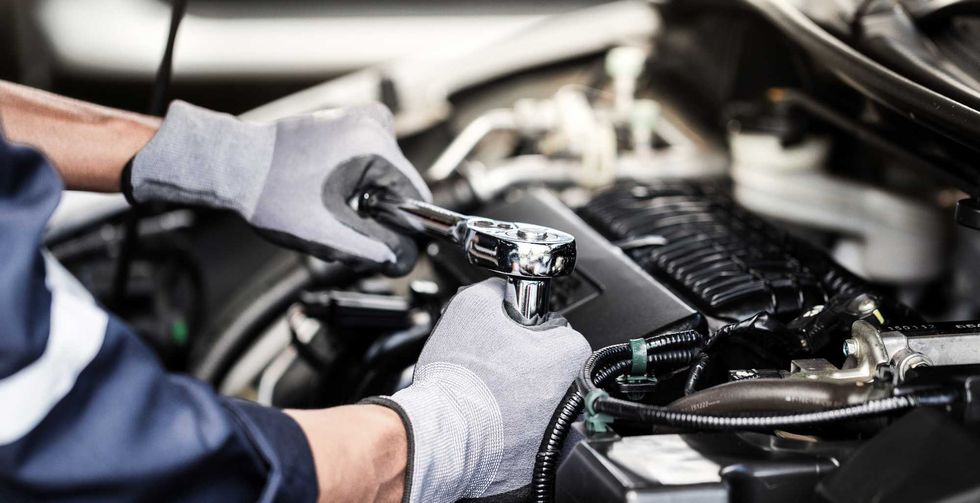
AI is coming for our jobs. It may even come for our lives. At least, that’s the assumption increasingly baked into modern life. We’re told machines will soon diagnose our illnesses, program our software, drive our cars, and leave millions of humans wondering what, exactly, they’re still good for.What if that assumption is badly wrong?Alejandro Rodriguez, a 20-year-old with a 4.5 GPA who spent his formative years in gifted and talented programs, certainly believes it is. By the conventional American definition of success, he was exactly the sort of kid who should have been pushed toward a four-year college. Instead, he chose technical school and trained to become a Porsche technician. His decision points to something the AI panic often overlooks. There is still an enormous number of things humans need to know how to do in the real world, and they can’t be done with a prompt. They require skill, judgment, patience, and the ability to do something useful with your hands.The deeper problem is not AI itself. Instead, it is the growing belief that everything humans learn will eventually become worthless. That mindset is pure poison. If young people assume AI will eventually do every meaningful task, why bother learning carpentry, mechanics, welding, electrical work, cooking, nursing, or other practical skills? Why even bother getting out of bed in the morning? The irony is impossible to ignore. The more people believe humans are obsolete, the less capable humans become.A cultural correctionAmerica spent decades telling smart kids that success meant sitting at a desk in a fancy office, filling out spreadsheets until their mid-60s. Now tech executives are shipping code designed to render those exact spreadsheet-fillers redundant. A cultural correction is under way. Being able to rebuild a blown engine, wire a high-voltage circuit, repair a factory line, or build a house has real value because some things still have to be done by human beings.AI will eliminate or transform some jobs. That is true. Yet a huge canyon separates a software model generating text from a physical entity that replaces millions of workers navigating unpredictable, real-world environments. A chatbot can generate a textbook explanation of a Porsche’s dual-clutch transmission. The chatbot cannot crawl onto a cold concrete floor on a Tuesday morning to replace the clutch pack.Certain tech prophets display a peculiar brand of fatalism. They demand that humans accept the swift death of their own relevance as an act of faith. This doctrine breeds its own fulfillment. Tell an entire generation that their talents are dead on arrival, and they stop pursuing difficult trades. When the nation runs out of people who can fix a broken water main, the technocrats blame automated progress rather than the cultural disdain that killed off the workforce.RELATED: Our military turns off this invasive smartphone feature. So should you. Thx4Stock/Getty images America suffers from a competence famine. The economy needs citizens who can execute physical tasks correctly. Someone has to run the copper pipe, construct the frame, mend the bone, operate the lathe, and keep the power grid online. Software models function exceptionally well in environments made purely of data. The physical world remains stubbornly physical.Rodriguez isn't alone in obliterating America's long-standing myth. A growing wave of high schoolers like him are drawing headlines of their own. "Elijah Rios won’t graduate from high school until next year, but he already has a job offer," the Wall Street Journal recently reported, "one that pays $68,000 a year." His Catholic high school in Philadelphia partners with companies looking for recruits before they even graduate. The Journal has been tracking such companies' struggles to find hires from the typical job pools for years. Last year, Missouri senior Jenna Smith, with a 3.98 GPA and National Honor Society participation at Francis Howell High, chose to become a welder like her grandfather.Guidance counselors and, often, parents can be slow to go along with the shifting tides. They have long treated technical trades as a consolation prize for academic failures. High marks meant a liberal arts degree, followed by 40 years of answering emails. But high intelligence has zero natural connection to desktop work. A student can master advanced calculus and still prefer the immediate reality of a machine shop.Competence or bustThe classic path — straight A’s leading to a university degree leading to an entry-level cubicle — is breaking at the midpoint. Automated systems are devouring the very administrative roles that university graduates relied on to pay off their student debt. Higher education still serves a clear purpose for specialized fields. But the blanket belief that a four-year degree represents the sole respectable entrance into adulthood no longer holds.In a world made of bits, AI rules supreme. Silicon Valley coders write scripts that spit out screenplays and analyze legal contracts in seconds. Outside the server farm, rain leaks through roof shingles. Electrical transformers blow out during winter storms. Hydraulic lines rupture on garbage trucks. Millions of daily crises require spatial reasoning and fingers and thumbs.Predicting the labor market in 2045 remains a fool's game. AI could reshape whole industries before Christmas, or it could hit insurmountable barriers regarding energy consumption, hardware limits, and regulatory lawsuits. Betting a career on doom-mongering from software salesmen is a terrible strategy. Personal responsibility demands building actual competence that holds value on any given afternoon.America spent half a century celebrating corporate credentials and bureaucratic titles, while ignoring the dignity of skilled craftsmanship. Rodriguez picked a difficult trade. He mastered the mechanics and built a career. His smartest observation was entirely practical: These skills guarantee employment for the foreseeable future and perhaps the entirety of his working life.Fear can be healthy, but building your working life around it isn’t. Competence remains the only reliable shelter. Silicon Valley can create a machine that writes a short story about a broken car, but when the head gasket blows on the highway, AI won't get you off the shoulder. The future belongs to the person holding both the wrench and the ability to use it properly.

Cover image for His GPA? 4.5. His choice of job? Mechanic. Increasingly, he's not alone.

Glenn Beck: An 81-year-old man is still working to save his wife. Now his story has gone viral.

An 81-year-old delivery driver struggling up a steep flight of stairs with a family’s lost suitcase caught the attention of a woman named Erin Howell — who asked him what he was doing.The man, Don Johnson, explained that at his age, delivering an airline's lost luggage to families in the area is the only job he was able to get.And he needs the money.“He’s been married to his wife for 57 years,” Blaze Media co-founder Glenn Beck explains. “Her name is Josephine. Josephine has cancer. Treatments cost what treatments cost. Prescriptions cost more. So for three years, Don has been driving around North Texas delivering other people’s lost luggage to help pay for his wife’s care.”“And then he drives home to the one thing he cannot afford to lose. For 57 years. A lifetime of knowing which side of the bed she sleeps on, how she takes her coffee, what she’s thinking about before she says it,” he continues.“This is a man who made a promise in his 20s. He’s still keeping it in his 80s,” he adds.Erin then posted the doorbell footage she had of Johnson and began a GoFundMe for him and his wife, which went viral.“And America does what America does when we’re not busy being angry at each other and hating each other. Thousands of strangers gave hundreds of thousands of dollars. ... Messages poured in from people who will never ever meet them, over and over, the same words: ‘We’re praying for you,’” Glenn says.“A local TV crew came out. Don told them he thought he might actually be able to stop working, stay at home, take care of her full-time, and then it fell apart,” he explains, noting that GoFundMe shut down the campaign for unclear reasons.However, before the campaign was shut down, Josephine sat down with a TV crew.“She didn’t talk about money. She talked about the strangers who said they were praying for her.And she said, “I can face it.”“She said that was the big difference. She called it a joyful feeling. That’s not a woman who got a check,” Glenn says. “That’s a woman who found out she wasn’t alone.”Want more from Glenn Beck?To enjoy more of Glenn’s masterful storytelling, thought-provoking analysis, and uncanny ability to make sense of the chaos, subscribe to BlazeTV — the largest multi-platform network of voices who love America, defend the Constitution, and live the American dream.

Cover image for Glenn Beck: An 81-year-old man is still working to save his wife. Now his story has gone viral.

The diesel panic cure could make the disease worse

Diesel prices are at all-time highs, and panic has set in. Several Republican senators from Midwest farm states in competitive midterm races are calling on the administration to ban diesel exports. Even President Trump expressed support for the proposal. Lawmakers desperately want to curb the pain felt at the pump and throughout the agricultural industry. It’s understandable. But the knee-jerk reaction to “do something” by banning diesel exports is ill advised and would quickly backfire.Logic might dictate that preventing all diesel from leaving our borders will allow it to fulfill our needs first. It just doesn’t work that way. Petroleum is a global market.The only way to curtail a diesel surplus would be to cut back on crude altogether, a move that would be economically devastating.The U.S. fuel network is not set up to distribute gas throughout our country. Nearly 55% of the nation’s refining occurs along the Gulf Coast, producing more than enough diesel for the region. But much of the surplus must be exported, as there are very few avenues to ship it to other domestic markets, like the East and West Coasts, where it is needed. Both those areas rely on imports to satisfy their diesel and other gasoline demands.The U.S. has too few pipelines and cargo capabilities to transport energy to these locations. And storage is not an option; there is only so much space.Refineries cannot flip a switch to produce only the diesel needed at a given time. Processing a barrel of crude oil produces certain proportions of gasoline and other distillates (like diesel and jet fuel); refiners are limited in their ability to adjust those proportions.The only way to curtail a diesel surplus would be to cut back on crude altogether, a move that would be economically devastating.At a time when we are already experiencing significant gasoline shortages and steep prices, constricting our supply further would only continue to inflate prices. Voters still rate the economy and affordability as their top concern; higher conventional gas prices would increase financial strain on household budgets.U.S. diesel exports represent roughly 20% of global supply, which means they put downward pressure on global prices. Removing that portion would push those prices up, and the regions that depend on diesel imports — like the East and West Coasts — will face higher prices.A ban on diesel and other refined products has been proposed before and soundly rejected. The Biden administration broached the topic in late 2021 but ultimately decided against it. Several analyses concluded that the action would adversely impact the country.RELATED: The one loophole in Trump’s tariff policy Jeff Swensen/Getty ImagesA 2022 American Council for Capital Formation study predicted that such a ban would shut down roughly 1.3 million barrels a day of refining capacity. More than two-thirds of U.S. consumers would see price increases of roughly $0.15/gallon for gas and $0.45/gallon for diesel, and GDP would drop by $44 billion the following year.McKinsey & Company similarly calculated bad news for U.S. consumers. A ban may initially provide relief for Gulf Coast and Midwest customers, but it wouldn’t last. Import-reliant regions, such as our coasts, would experience diesel price spikes due to global prices inflating by at least $0.60 per gallon.Unfortunately, until there is a durable resolution to the geopolitical conflicts and disruptions abroad that would restore a steadier flow of resources, there is not a quick remedy that can bring energy costs down. Since energy markets and refinery operations are globally interconnected, a rash course of action has ripple effects felt across supply chain networks, some of which touch parts of our own country.Lawmakers should focus on long-lasting solutions at home that will provide better insulation and protection from outside forces beyond our control.Make federal land leasing more predictable and feasible for petroleum exploration and development. Streamline permitting to facilitate and hasten building energy infrastructure like refineries for processing fuel and pipelines to transport it across the country. Create a regulatory environment that fosters investment in the essential energy sources that run our economy.A durable fix requires resisting the temptation of quick, politically satisfying moves and instead doubling down on policies that expand supply, modernize infrastructure, and strengthen the resilience of our energy system.Banning diesel exports would raise prices for most Americans, destabilize global markets, and weaken the very regions already under strain. Rather than constricting flows in a tightly interconnected network, lawmakers should pursue reforms that unlock investment, improve distribution, and ensure that the U.S. can reliably meet its own needs.The path to lower prices runs through growth and modernization — not restriction.Editor’s note: This article was originally published by RealClearEnergy and made available via RealClearWire.

Cover image for The diesel panic cure could make the disease worse

Car makers just saved BILLIONS in costs — but will buyers see the savings?

Attention car buyers: For once, Washington has some good news for you.The federal government has finalized a major change to fuel-economy rules that could make vehicles less expensive for automakers to build. The new standards are projected to produce a fleet-wide average of about 34.9 mpg by model year 2031, down from the 50.4 mpg trajectory under the previous rules.If manufacturers now face tens of billions of dollars less in projected technology costs, I want to know what happens to those savings.The Transportation Department estimates the change will reduce manufacturers' average cost by about $1,300 per vehicle and save Americans roughly $138 billion over five years.Room to maneuverBut the number that jumped out at me is $60.6 billion.That's how much the National Highway Traffic Safety Administration projects automakers' technology costs will decline through 2031 compared with the previous standards. General Motors alone accounts for an estimated $20.4 billion, followed by Stellantis at $6.6 billion, Ford at $5.8 billion, Toyota at $4.5 billion, and Honda at $4.1 billion.Those aren't small numbers. Change the economics of building a car that much, and eventually I want to see the difference on the showroom floor.For years, increasingly aggressive fuel-economy requirements pushed automakers toward additional fuel-saving technology and complicated compliance strategies. Electric vehicles were one way of improving fleet averages, and product planning increasingly had to account for what Washington demanded as well as what customers wanted.Meanwhile, buying a new vehicle has become painfully expensive. The average new-vehicle transaction price hit $50,089 in August, according to Kelley Blue Book.Now automakers have more room to maneuver. NHTSA says its new rules give manufacturers more flexibility to build vehicles based on customer demand. The agency is also changing vehicle-classification rules beginning with the 2030 model year. Under the current system, NHTSA says manufacturers have incentives to modify vehicles so they qualify as light trucks, while hatchbacks, wagons, and other smaller vehicles are discouraged.That's the sort of regulatory change car buyers may actually notice.Automakers don't build vehicles simply because somebody in Washington thinks they should exist. They build them when the economics work.California splitCalifornia has been pushing in the opposite direction. Its Advanced Clean Cars II program required manufacturers to meet increasingly stringent zero-emission-vehicle targets on the way to 100% by 2035. And California's influence doesn't stop at the state line. The Clean Air Act allows other states to adopt California's vehicle-emission standards, and several have done so.Congress moved against those rules last year. On June 12, 2025, President Trump signed H.J. Res. 88 into law, disapproving the EPA waiver that allowed California to enforce Advanced Clean Cars II.California immediately sued, arguing that Congress had improperly used the Congressional Review Act to overturn a Clean Air Act waiver. That legal fight has continued, so the underlying dispute over California's authority isn't finished.For car buyers, though, the direction of federal policy has plainly changed. Manufacturers have substantially more freedom under the new federal fuel-economy rules to decide which powertrains they want to sell.My position on that hasn't changed. If you want an EV, buy one. If a hybrid works better for you, buy that. If you need a gasoline-powered SUV or pickup, you should be able to buy that too.Let the cars compete.RELATED: Welcome to the new traffic stop, where it's your word against AI's NurPhoto/Getty ImagesNo free passBut I'm not giving automakers a free pass. If manufacturers now face tens of billions of dollars less in projected technology costs, I want to know what happens to those savings. I'm not expecting $1,300 to disappear overnight from every window sticker. Automakers still have factories, employees, suppliers, research and development, and shareholders.But don't tell us deregulation makes cars cheaper to build and then expect consumers not to look for the evidence.Give us better prices. Give us more equipment. Bring back vehicles that didn't make financial sense under the old rules. Build the smaller cars, hatchbacks, wagons, pickups, and SUVs people will actually buy.And let competition sort out the rest.There is a cost on the other side of the ledger. NHTSA projects that the less stringent standards will increase fuel costs by more than $1,600 over the life of a vehicle compared with the rules they replace. The agency also projects 4.6% more gasoline consumption through 2050.That's worth considering, especially if you drive a lot of miles or own a large truck or SUV.Gas prices are high right now too. But today's pump price isn't necessarily tomorrow's. Oil production changes. Markets change. Wars end and new ones begin. We're going to dig into where gasoline prices are headed in a future article because that deserves its own investigation.Right now, I'm interested in something easier to measure. Will cheaper compliance actually mean cheaper cars?Automakers now face tens of billions less in projected technology costs. If that really gives them more freedom to build what customers want, eventually the person walking into the dealership ought to see it.The rules changed. Now show us the cars — and the savings.

Cover image for Car makers just saved BILLIONS in costs — but will buyers see the savings?

Exclusive: Control of the Senate hangs in the balance — Republicans are fighting to win

With just over one month left before Election Day, the National Republican Senatorial Committee is telling its voters to turn out — no matter what.Blaze News received an exclusive sneak peek at a new video the committee is releasing Saturday calling on Republicans to "hold the line" in what it describes as a record number of toss-up Senate races. With thin projected margins and a slew of candidates who previously overperformed the polls, the NRSC is betting on voters pollsters are missing carrying Republicans to victory.'We will win.'"American freedom, safety, and prosperity are on the line," NRSC Communications Director Joanna Rodriguez said in a press release obtained by Blaze News. She warned of "socialist Democrats taking control of Congress."Rodriguez named names. She called Michigan's Abdul El-Sayed a "terrorist sympathizer." She called Maine's Troy Jackson, Ohio's Sherrod Brown, and Alaska's Mary Peltola "corrupt losers.""The battle for Senate control in the midterms is leading to nationwide attention that could decide the balance of power next year," the ad states."The fight is on," it continues and calls Democrat triumphalism into doubt.The ad shows Democrats sounding hopeful but not confident. Former North Carolina Democrat Governor Roy Cooper notes that the state hasn't sent a Democrat to the Senate in nearly two decades. New Hampshire's Democrat Senate candidate, Rep. Chris Pappas, calls New Hampshire "a purple state."RELATED: 'Fool me once': CNN analyst has bad news for Democrats who believe recent polls "No matter what state you're in, the margins are too thin," NRSC Chairman Sen. Tim Scott (R-S.C.) can be heard saying. "Work your tail off."The video also invites Senate Majority Leader John Thune (R-S.D.) to chime in. Thune can be heard saying Democrats have "embraced the socialist wing of their party."The NRSC is asking voters to remember just how chaotic things can become under Democrat rule. The campaign doesn't want voters to forget about America's recent past.There are others taking notice of that recent past.For instance, CNN's chief data analyst has found Republican turnout enthusiasm running at near parity with Democrats. With a map showing that registered Republicans outnumber registered Democrats, that enthusiasm gap can make all the difference in the world.National polls underestimated the GOP by three points in 2014, three in 2016, five in 2020, and three in 2024, according to the NRSC. If these 2026 midterms skew by a similar margin, CNN's Enten projects a 53-47 Republican Senate majority.Patrick Ruffini, a Republican pollster, contributes even sharper analysis to the argument. His analysis on Thursday found that Senate polls taken 33 days before Election Day overstated Democrats by an average of 6.2 points in Iowa, Ohio, and Michigan from 2018 through 2024. The NRSC says those same polls wrote off Sen. Joni Ernst (R-Iowa) and Sen. Bernie Moreno (R-Ohio), who both cruised to victory in a presidential election year.Two of those three states, Ohio and Michigan, are on the battleground list again this year. Ruffini's analysis may be especially serendipitous for a cycle that could defy generations of set-in-stone expectations.The video refuses to concede the midterms as a done deal. Rather, it calls Republicans into action for an off-cycle election year. The NRSC wants Republicans to know that the future of American governance rests on committed voters turning out. Without them, Republicans may fall victim to a midterm curse that has held for almost 100 years."We will win," the narrator says.The NRSC has just over a month to make that proclamation come true.Like Blaze News? Bypass the censors, sign up for our newsletters, and get stories like this direct to your inbox. Sign up here!

Cover image for Exclusive: Control of the Senate hangs in the balance — Republicans are fighting to win

What’s really behind the opposition to data centers

Increasing numbers of Americans are deeply opposed to building more data centers. Over the summer, Pennsylvania Gov. Josh Shapiro (D) imposed the strictest data center rules in the country, New York Gov. Kathy Hochul (D) ordered a statewide moratorium on hyperscale construction, and Gov. Greg Abbott (R) paused new approvals in Texas pending a grid audit.At the local level, dozens of county and municipal fights have followed no reliable partisan pattern. Polling from Heatmap and Embold, collected by anonymous Substack writer Cremieux, shows data center popularity plummeting over the last year.Any actions seen as forcing data centers on voters who do not want them will only make matters worse.Though Cremieux argues the opposition is fundamentally driven by NIMBYism (not in my back yard), I am unconvinced. The polling seems to follow the pattern you would expect if NIMBYism were the primary driver, but posing the problem as a generic national issue produces substantially less opposition.The arguments most central to the anti-data-center cause, namely complaints about the effect on utility costs, seem to generate an outsized amount of discourse relative to their actual effect. For example, in Virginia — the world’s data center capital and the state where I live — the State Corporation Commission estimated that shifting capacity and distribution costs from households to the large-load rate class would lower a typical residential bill by about 3.4%, or roughly $5.52 a month.In other words, the effect is something on the order of a Subway sandwich in 2008.I want to be scrupulous, because the complaints about data centers are often not literally false. Households are indeed suffering from a pecuniary externality created by increased demand. But it is hard to reconcile the mostly muted effects with the surging level of emotional response.Americans’ growing dislike of data centers stems not from animus toward any single company or product but from a cumulative reaction to the momentous technological changes of the past couple of decades.Because AI is the latest harbinger of those changes — and offers revolutionary potential — it has inherited our culture’s immune response. This means these problems cannot be adjudicated simply by changing utility regulations or even bribing local communities.RELATED: The dirty secret behind Big Tech’s data center boom Michael Siluk/UCG/Universal Images Group/Getty ImagesThree further factors have combined with the populist anti-tech feeling to make AI and, by extension, data centers unusually unpopular.First, AI faces a particularly unfavorable coalition of constituencies. Its association with California and the tech industry has deeply soured much of conservative America toward it, and its association with billionaires and big business has soured many progressives. Even many techies feel personally threatened by the technology.Second, those most aggressively advocating for data centers are not building them in their own back yards. Palo Alto, where I lived while attending grad school, has spent years fighting small-cell installations. One of the most prestigious retirement homes in the U.S., Channing House, recently fought to have wireless equipment removed from its roof.In January, the city of Palo Alto wrote to the FCC opposing a rule that would speed up wireless approvals, while at the same time supporting the infrastructure needed to run AI-enabled services, so long as it retains the power to veto unwanted projects.When the group that appears to benefit most from a technology is also most averse to its consequences, it is natural for the public to wonder what the tech world might be hiding. The anonymous author Polimath, writing in Marginally Compelling, gets closer to the underlying problem by viewing it as another front in the culture war, an outworking of long-simmering discontent with tech culture.Third, much of the tech world itself seems increasingly concerned about the existential risk AI might pose to humanity. For example, earlier this month, Jacob Coxon, a researcher who spent three years doing pretraining work at OpenAI and then Anthropic, publicly resigned, writing that both companies were racing toward self-improving superintelligence and “gambling with our lives.”RELATED: America doesn’t need Dario Amodei’s permission to build Jason Henry/Bloomberg/Getty ImagesEvan Hubinger, an alignment lead at Anthropic, replied that he agreed and put the odds of AI killing everyone within the decade above 10%. From talking to my friends at these labs, the modal person really does seem to think they are summoning the machine god. That prospect naturally feeds public opposition to AI.Taken together, these factors help explain the public’s anger. The lines of the current debate have already hardened, and the grievances far predate the specific events of the day. Any actions seen as forcing data centers on voters who do not want them will only make matters worse.But the centers will be built regardless. Demand is so enormous, and suitable locations are sufficiently plentiful, that only a small number of permissive communities, such as Loudoun County, are needed. If localities want to opt out, I see little reason to stop them.However, the industry could take an important step if it wants to win broad American support.Specifically, Big Tech should make a visible effort to build data centers near the communities where its executives and employees live. This would give them a way to begin convincing Americans that data centers are an asset worth having, not a liability worth dodging.Concerns about water and electricity are simply not what most people are worried about, and addressing them will do nothing to solve the larger problem. Since these reasons are selected ex post to justify pre-existing opposition, defeating any single point will merely invite a hundred more.If you are opposed to data centers, my guess is that saving $5 on your monthly utility bill wouldn’t be enough to change your opinion.Editor’s note: This article was originally published at the American Mind.

Cover image for What’s really behind the opposition to data centers

LGBTQ+ therapist arrested for allegedly sexually assaulting patients

A man who founded an LGBTQ+ therapy practice was arrested after he was accused of sexually assaulting two of his patients.Joseph LoGiudice founded the "Liberation Psychotherapy" practice and acted as a clinical director when the assaults occurred, according to a press release from Manhattan District Attorney Alvin Bragg.'While expressly described as an LGBTQ-centered practice, we allege that LoGiudice abused the trust placed in him as a therapist to sexually assault members of the LGBTQ community he serves.'One of those who accused LoGiudice did so after hearing about a separate indictment against Remington Yhap, another worker at Liberation Psychotherapy who specialized in LGBTQ+ mental health.Yhap was arrested for allegedly raping a teenage patient he had been providing therapy to for many months."Liberation Psychotherapy’s clinical director, Joseph LoGiudice, allegedly sexually assaulted two patients in his care at the very practice he founded," said Bragg in a statement with the press release.LoGiudice had run the clinic's Gay Men’s Therapy Group and is a licensed clinical social worker.One victim was assaulted by LoGiudice in Nov. 2022 after engaging in "sexual misconduct" with the patient twice.A second victim was assaulted by LoGiudice in Jan. 2024 after a group therapy session and again in Jan. 2026 during a private therapy session, according to Bragg."While expressly described as an LGBTQ-centered practice, we allege that LoGiudice abused the trust placed in him as a therapist to sexually assault members of the LGBTQ community he serves. This investigation is ongoing.LoGiudice is facing a total of 24 counts related to the alleged abuse, which includes 10 counts of third-degree criminal sex acts, 13 counts of third-degree sexual abuse, and one count of third-degree rape.RELATED: Officials of 'Latinx' LGBTQ+ center outraged that months-long fecal attacks are not arrestable Bragg asked for any other possible victims to contact his office.A profile at Huffington Post said LoGiudice had published a book titled "Our Naked Lives: Essays from Gay Italian-American Men" in 2013. He wrote an article claiming that capitalism had destroyed people emotionally and psychologically.He was also married to Michael Carosone, who was also a therapist at Liberation Psychotherapy, according to posts online objecting to anti-Semitic statements he allegedly made."His interests and passion are in understanding and advocating for individuals who are marginalized, vulnerable, and stigmatized, particularly LGBTQ individuals with disabilities, while utilizing perspectives from disability studies and intersectionality," read a line from the profile.His profile at his website has been scrubbed from the internet but can still be viewed at the Wayback Machine internet archive. His website has also been scrubbed.Like Blaze News? Bypass the censors, sign up for our newsletters, and get stories like this direct to your inbox. Sign up here!

Cover image for LGBTQ+ therapist arrested for allegedly sexually assaulting patients