USAID gave government employees an anti-Trump reading list that compared him to Hitler
USAID maintained a left-wing reading list that described President Donald Trump as a threat to democracy. The agency's Democratic Resilience and Innovation Team actively maintained a 68-page "Authoritarianism Reading List," which purported to track the rise of a global authoritarian movement. Trump is slammed in at least five recommended readings.'Levitsky and Ziblatt, looking at the cases of Chavez, Mussolini, Hitler, and Trump, argue that today democracies die at the hands of elected rulers.'The list is one of nearly 250 internal files the Trump administration posted to USAID.gov. The posted documents were announced on Tuesday, and more files are slated for release, according to Office of Management and Budget Director Russ Vought. One entry recommended Steven Levitsky and Daniel Ziblatt's "How Democracies Die," which the list calls a "major influence on current academic thinking." "Levitsky and Ziblatt, looking at the cases of [Hugo] Chavez, Mussolini, Hitler, and Trump, argue that today democracies die at the hands of elected rulers," the recommendation reads.Another entry promoted Madeleine Albright's "Fascism: A Warning." Tayyip Erdoğan of Turkey, ex-President Nicolas Maduro of Venezuela, and former Prime Minister Viktor Orbán of Hungary "replicate that of Mussolini and Hitler," according to the entry. Albright "also raised concerns about President Trump's attacks on democratic norms."There are no publications sympathetic to Trump's movement on the list.A third pointed officials to "Cultural Backlash: Trump, Brexit and Authoritarian Populism." The book by Pippa Norris and Ronald Inglehart describes a divide "between older conservative authoritarian cohorts and younger liberal ones," per the list.RELATED: Chinese tech giant federally convicted of defrauding US, conspiracy to steal trade secrets Mandel NGAN / AFP via Getty ImagesA fourth summarized a Foreign Affairs essay that "explains in detail the Ukraine scandal that led to President Trump's first impeachment trial and argues it is a form of strategic corruption that can be traced back to Russia."The list also dismissed scholars who doubt a global "democratic recession," citing "a persistent pattern of backsliding in the last 15 or more years not just in new or weak electoral regimes but also well-established democracies like the United States and India."USAID also recommended Larry Diamond's 2021 essay on "the United States' Democratic Backsliding" and Anne Applebaum's book on "the erosion of democracy in Poland, Hungary, and the United States."Another recommendation summarizes a 2022 academic paper that sorts the people who fight would-be autocrats into three kinds of "resisters," starting with "insider/institutional actors such as public officials and judges in liberal democracies undergoing autocratization (e.g., the U.S. under Trump)." One entry summarizes a paper arguing that "the US' open society and free speech protections make it especially vulnerable to foreign interference, such as Russian electoral interference." The paper lays out how the U.S. "can reform its laws, policies, and the legal interpretation of the First Amendment to successfully fight disinformation campaigns" and provides recommendations "for legal changes, such as criminalizing disinformation campaigns that target elections."Other files show that USAID proposed an "Information Resilience Council" in 2022 to fight "mis/dis/mal-information." The agency planned to coordinate with Congress and "the technology sector" on the censorious endeavor. RELATED: Another Democrat congressman from California resigns after sexual misconduct allegations Chip Somodevilla/Getty ImagesThen-chairman of the House Judiciary Committee and incoming Minority Leader Rep. Jim Jordan (R-Ohio) requested the agency's records on content moderation and disinformation in 2023, one document shows.Talking points prepared for a USAID attorney warned that the agency "cannot be perceived to be policing public opinion or categorizing all negative views of USAID's work as misinformation." They advised using "no DOD-style threat language that suggests ordinary citizens are a threat."At the same time, USAID was actively pressing social media conglomerates to de-boost and outright censor "disinformation" related to COVID-19, the Russia-Ukraine war, and other hot-button issues. USAID talking points also instructed staff to "write emails and gchats as if you expect them to get FOIA'd or requested by the Hill."Despite posturing as a neutral arbiter of democratic values, USAID's reading list and associated "information resilience" programs reveal systemic animus against the president and his supporters. The State Department did not immediately respond to a request for comment. Like Blaze News? Bypass the censors, sign up for our newsletters, and get stories like this direct to your inbox. Sign up here!
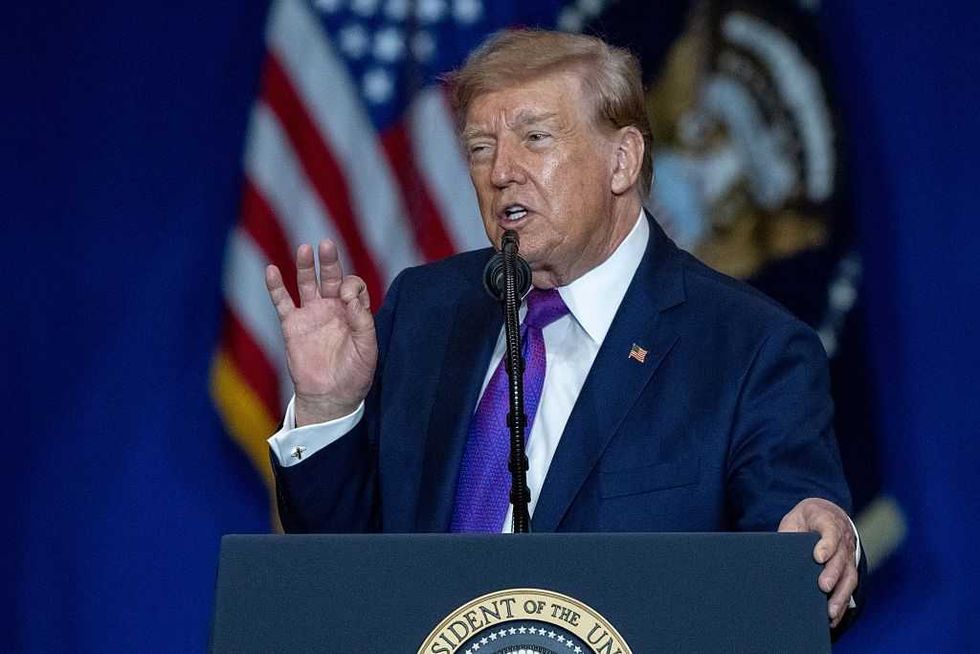
USAID maintained a reading list focused on authoritarianism that included critical assessments of Donald Trump, comparing him to historical dictators. The list recommended books and essays that discussed democratic backsliding and potential threats to democracy, with Trump often cited as an example. The agency also proposed initiatives to combat misinformation, drawing scrutiny over potential censorship.
- USAID’s Democratic Resilience and Innovation Team compiled a 68-page “Authoritarianism Reading List.”
- The reading list included at least five entries critical of Donald Trump, comparing him to figures like Hitler and Mussolini.
- Recommended readings included “How Democracies Die” by Levitsky and Ziblatt, and “Fascism: A Warning” by Madeleine Albright.
- The list also pointed to analyses of “Cultural Backlash: Trump, Brexit and Authoritarian Populism” and essays on democratic backsliding in the US.
- USAID proposed an “Information Resilience Council” to combat misinformation, which critics suggest could lead to censorship.
- The agency’s internal documents showed awareness of the need to avoid appearing to police public opinion.
- Despite this, USAID was reportedly pressing social media companies to de-boost or censor certain information.
Write a comment