You don’t need a Bible to know murder is wrong. Here’s why.
People don’t have to read the Bible to know that murder and theft are wrong, but where does that intrinsic knowledge come from? According to Zach Dasher, co-host of “Unashamed with the Robertson Family,” the answer has shaped everything from Roman philosophy to the Declaration of Independence.On this episode, Dasher breaks down the concept of natural law and explains how it is embedded into Western civilization, from ancient Rome to the birth of America. “When you talk about natural law, there are certain things that we just inherently know are wrong and sinful or good,” says Dasher.The Bible, he argues, supports this idea.He reads Romans 2:14-16: “For when Gentiles, who do not have the law, by nature do what the law requires, they are a law to themselves, even though they do not have the law. They show that the work of the law is written on their hearts, while their conscience also bears witness, and their conflicting thoughts accuse or even excuse them on that day when, according to my gospel, God judges the secrets of men by Christ Jesus.”“So they didn't have to know about the Bible to know that stealing is wrong. You don't have to know anything about the Bible to know that adultery is wrong. And so this is the natural law,” says Dasher.Natural law, he argues, took hold “in the center of the Roman Empire” thanks to Cicero, who argued that there’s a universal moral law rooted in nature — a law higher than any law men make.“That natural law argument definitely plays out throughout the rest of history,” says Dasher.Roughly 1,700 years after Cicero, John Locke argued the same ideas in his book “Two Treatises of Government.”“What he is appealing to is natural law,” says Dasher.Eighty-seven years after its publication, Thomas Jefferson and 55 other delegates signed the Declaration of Independence, which cites “the Laws of Nature and of Nature’s God” as the basis for the colonies’ right to independence.“‘We hold these truths to be self-evident: that all men are created equal and endowed by the Creator with certain unalienable rights,’” Dasher reads from the Declaration’s second paragraph. “So the call of the Declaration of Independence was we're appealing to the natural law.”“It plays out even in the abolishment of slavery in the U.S., whenever you had the Lincoln-Douglas debates,” he continues. “If you remember, that was Lincoln's argument, was he was appealing to natural law: Are they not men?”Martin Luther King Jr., Dasher points out, used the same argument in his “Letter from Birmingham Jail,” appealing to Thomas Aquinas’ teaching on natural law.Another notable example of natural law shaping history, he says, is the Nuremberg trials, where Nazi defendants argued that they were “just following the law in Germany” but were held accountable for their war crimes on the premise that “there is a law above the law to which all men are beholden.”Going back to Locke, Dasher notes that the English philosopher’s ideas, according to theologian Francis Schaeffer, trace back to Samuel Rutherford’s deeply controversial book “Lex, Rex,” which means “the law is king” — a principle he says ancient Rome embraced centuries earlier.“And so if you flip it back to pre-509 B.C. in Rome, they were [run] by a king. And so what Rome is doing by getting rid of the king and bringing in a republic is … they're saying no, no, no — the king is not the law; the law is the king, and it should be determined by the people,” says Dasher. “It's a massive move in the right direction, even though it's not perfect, and it's still not perfect.”This struggle is still playing out today, he argues.“For us in 2026, we're like … ‘It's still not perfect, but we're still trying to move the ball forward into the deconsolidation of power and what does real ultimate freedom look like? What does the role between church and state look like?’ These are all things we're still debating,” he says.To hear more of Dasher’s breakdown of natural law, check out the full episode above.Want more from the Robertsons?To enjoy more on God, guns, ducks, and inspiring stories of faith and family, subscribe to BlazeTV — the largest multi-platform network of voices who love America, defend the Constitution, and live the American dream.
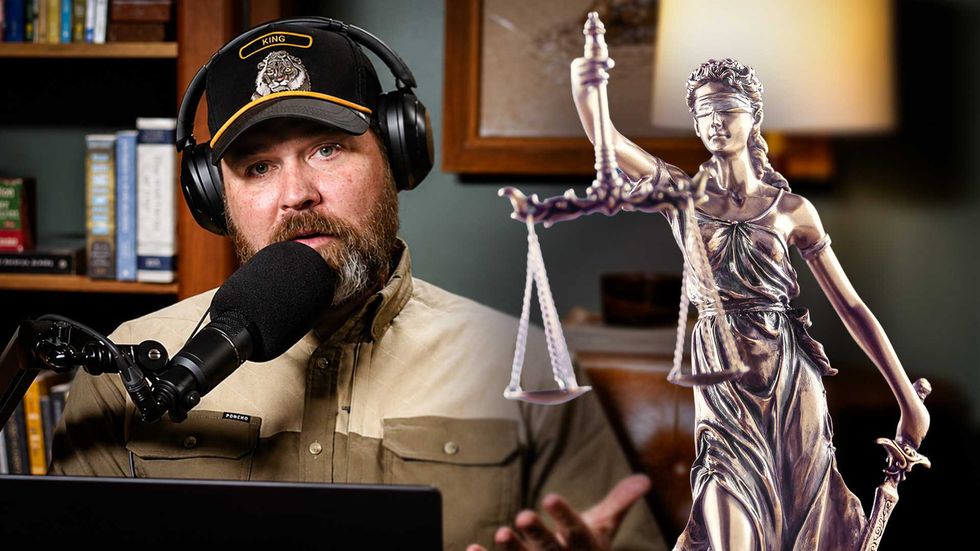
Zach Dasher explains the concept of natural law, an inherent understanding of morality not dependent on religious texts, which he argues is embedded in Western civilization. He traces its influence from Roman philosophers like Cicero and English thinkers like John Locke to foundational American documents such as the Declaration of Independence. Dasher illustrates how natural law has been invoked in significant historical movements like the abolition of slavery, the Civil Rights Movement, and the Nuremberg trials, demonstrating its ongoing relevance in contemporary debates about power and freedom.
- Natural law refers to inherent moral principles that people intuitively understand, regardless of religious or legal teachings.
- Ancient Roman philosopher Cicero argued for a universal moral law rooted in nature, influencing Western thought.
- John Locke’s philosophies on natural law informed the Declaration of Independence’s assertion of unalienable rights.
- Natural law principles have been cited in historical movements like the abolition of slavery, the Civil Rights Movement, and the Nuremberg trials.
- The concept of natural law continues to be relevant in modern discussions about freedom, power, and the relationship between church and state.
Write a comment