Metallica’s best act of rebellion? No political lectures
I was scrolling in bed when a clip of James Hetfield at the Sphere in Las Vegas came across my feed. I watched it three times.He thanked the crowd for traveling to see Metallica, then said the band wasn’t there, like some other entertainers, to influence anybody. “Metallica’s agenda is love, energy, and heavy music, baby!”The second you make half your audience feel unwelcome, you have a problem. Nobody buys a ticket to see a spokesperson.The place went nuts. I might have cheered a little myself.Hetfield has never been one for political sermons. Lars Ulrich, who leans left, has said the two hardly ever talk politics. They’ve spent more than 40 years in a band together and somehow managed. Their fans have too.I spent my early 20s singing in a band on the road, including five summers on Warped Tour, so I’m not going to pretend music and politics never mix. Warped had plenty of both. Bands railed against the government between songs every day. But it was anti-establishment stuff: kids sticking it to whoever was in charge. I don’t remember anyone telling half the parking lot they were bad people because of how their parents voted. We were all in it together, sweaty, sunburned, and broke.That’s what has changed. Too often, what comes from the stage isn’t rebellion. It’s a lecture aimed at the people who paid to be there.Look at what happened to Macklemore. He was dropped from Ed Sheeran’s tour in September after saying “Free Palestine” onstage. Stadium operators objected; other performers quit in protest. Suddenly the tour itself was a political fight, and the music was an afterthought.Here’s the part that gets me. On Warped Tour, the bands were the ones pushing back against people in power. Sure, the whole thing was sponsored by Vans. But the feeling was rebellion, not a lecture dressed up as a concert.Now some of the biggest artists are among the richest, most-followed voices in the culture. They wield plenty of power themselves, and they use the stage to tell regular people what to think. It feels corporate and ridiculous.RELATED: GUITAR HERO: Metallica front man puts music before political ‘bulls**t’ Mike Lewis Photography/RedfernsThat’s not punk. That’s a sermon with a light show.Which means a 63-year-old guy at the most high-tech venue on the planet, refusing to join in, might be the most rebellious thing I’ve seen from a stage in years.I’ve worked in PR a long time, and I’d tell any client the same thing: The second you make half your audience feel unwelcome, you have a problem. Nobody buys a ticket to see a spokesperson.Write the political song if you’ve got one in you. Metallica has. But when the lights go down, that room belongs to the people who paid to be in it. Hetfield is one of the few who still acts like it.Love, energy, and heavy music. That’s the whole agenda, and it’s the right one.
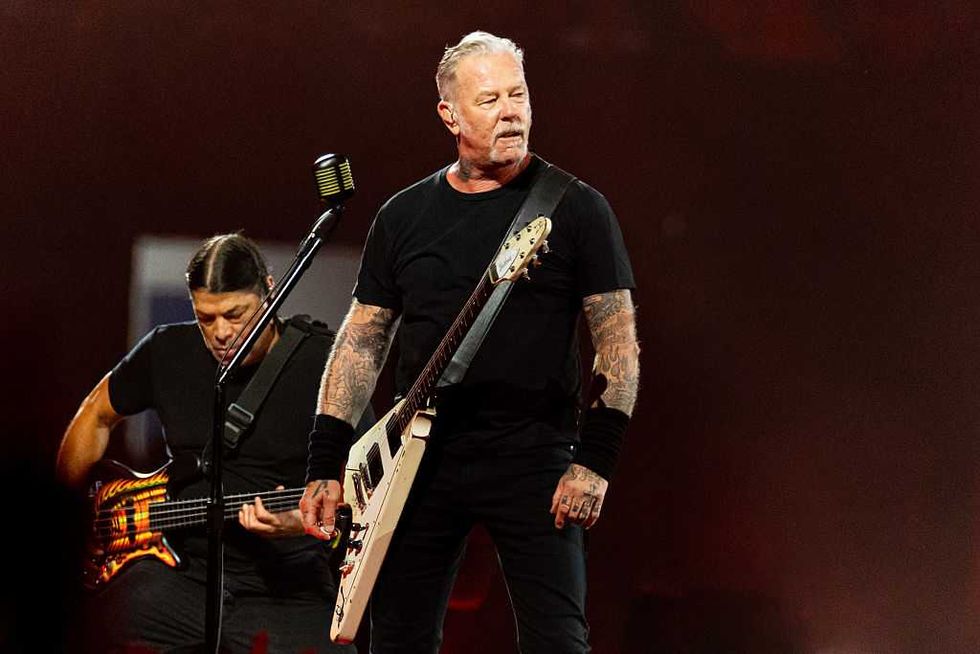
James Hetfield’s declaration that Metallica’s agenda is solely “love, energy, and heavy music” is presented as a refreshing act of rebellion in an era where artists often use their platform to influence fans politically. The author contrasts this with artists like Macklemore and the perceived shift from anti-establishment messages to lectures aimed at concertgoers. Hetfield’s stance is highlighted as a return to prioritizing the audience’s experience and the music itself.
- James Hetfield stated Metallica’s agenda is “love, energy, and heavy music,” not political influence.
- The author argues that artists making half their audience feel unwelcome is problematic, as fans buy tickets for entertainment, not to be lectured.
- Unlike some contemporary artists, Hetfield is seen as prioritizing the audience and the music over political sermons.
- The article contrasts this with the anti-establishment spirit of past tours like Warped Tour, where bands railed against authority but united fans.
- The author suggests that current wealthy and influential artists lecturing fans from the stage feels corporate and contrary to punk ethos.
- Hetfield’s refusal to engage in political lecturing is framed as a rebellious act in the current entertainment landscape.
Write a comment