Big Balls drops files revealing how USAID tried to censor free speech
The Trump administration just gave the country something more to be thankful for.Edward Coristine, a former Department of Government Efficiency employee who helped dismantle the U.S. Agency for International Development, announced on Tuesday the publication of USAID's internal memos and communications.'USAID was weaponized to advance a radical agenda.'According to Coristine, who is better known as "Big Balls," USAID files show how the now-defunct agency "actually operated behind the scenes."Among the more than 1.1 gigabytes of newly released files are documents showing how the agency sought to justify its censorial efforts within the bounds of the law.One document that was apparently developed by USAID's Office of the General Counsel in concert with individuals within the agency's Bureau for Democracy, Human Rights, and Governance in 2023 and possibly 2024 outlines talking points regarding the agency's efforts to combat so-called "disinformation."Cognizant of mounting unease over the Biden administration's various attempts to pressure social media companies to police Americans' free speech regarding COVID and the government response to it, the agency evidently wanted to push the notion that USAID was engaged in "the same bread and butter development work that Congress has been authorizing for years."The document emphasized the need to avoid language "that suggests ordinary citizens are a threat" and the perception that it is "policing public opinion or categorizing all negative views of USAID's work as misinformation."RELATED: You can still speak online. But can anyone find you? Mehmet Eser/Anadolu via Getty ImagesIn a section concerning the agency's dealings with content moderation, the document recommends "adding a reference to or framing in terms of foreign malign influence or foreign state or non-state actors abroad given limitations in the FY 2024 appropriations act."It appears the document was referencing the requirement in the Further Consolidated Appropriations Act of 2024 that "funds appropriated or otherwise made available by this Act for programs to counter foreign propaganda and disinformation, and for related purposes, may only be made available for the purpose of countering such efforts by foreign state and non-state actors abroad."While prohibited from blowing taxpayer dollars on policing speech online, USAID's characterization of targeted speech as foreign propaganda may have given the agency a smokescreen to do as it pleased. A video in the file dump likewise reiterates that the point of content moderation was, in part, to align available information "with the objectives of government partners." USAID.govAnother internal document provides insights into an interagency discussion held sometime after March 2022 regarding Big Tech efforts to boost anti-Kremlin voices and counter so-called "Kremlin disinformation."The document notes that when USAID floated a plan "to create an inclusion list of trusted actors," the State Department signaled opposition "because of concerns about representing specific actions or actors to receive special treatment as the U.S. government, raising freedom of expression issues."In light of the State Department's reservations about providing Big Tech companies with a state-curated list of approved speakers in the public square, USAID proposed delegating this speech regulation function to a third party — "to connect tech companies with actors that we trust who would be willing to curate an inclusion list on behalf of any companies that are willing to follow one."The Trump administration noted on the USAID website, "Under previous administrations, USAID was weaponized to advance a radical agenda fundamentally at odds with American values."On the eve of USAID's official closure in July 2025, Secretary of State Marco Rubio noted in a blog post that some of the agency's programs "promoted anti-American ideals and groups, from global 'DEI,' censorship and regime change operations, to NGOs and international organizations in league with Communist China and other geopolitical adversaries."Like Blaze News? Bypass the censors, sign up for our newsletters, and get stories like this direct to your inbox. Sign up here!
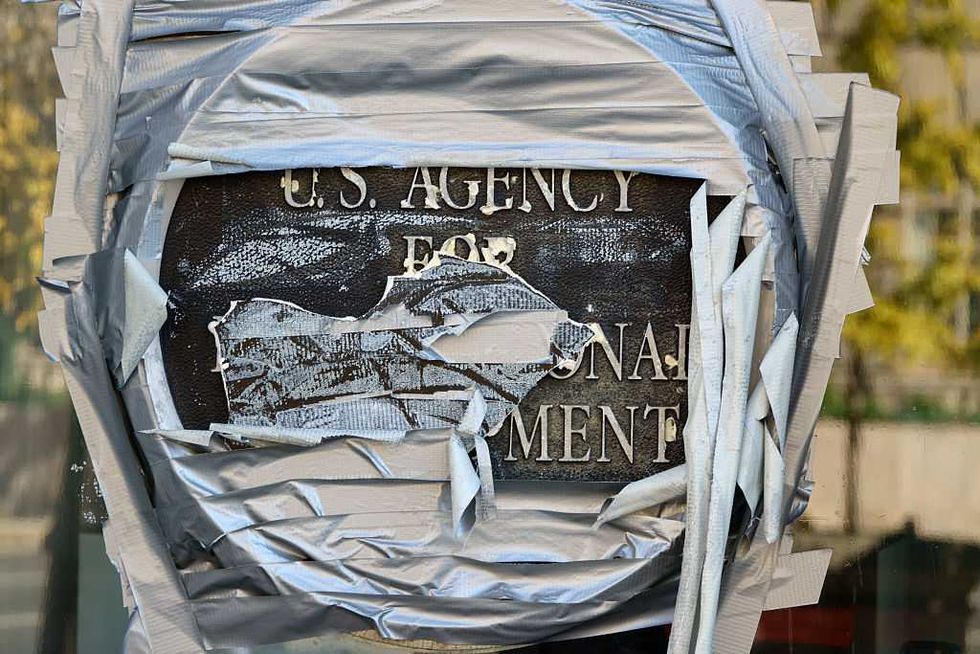
Edward Coristine released internal USAID memos detailing the agency’s efforts to manage online content, particularly concerning disinformation and government responses. Documents outline strategies to justify censorship, including framing criticism as foreign influence to comply with funding restrictions. The agency also considered delegating content moderation to third parties when direct intervention raised free speech concerns.
- Edward Coristine, formerly of the Department of Government Efficiency, released over 1.1 gigabytes of internal USAID memos and communications.
- Documents suggest USAID sought to justify censorship efforts by framing them as combating “disinformation” and “foreign malign influence.”
- A 2023-2024 document discussed talking points for countering disinformation, emphasizing avoiding language that suggests citizens are a threat or that USAID is “policing public opinion.”
- USAID considered referencing “foreign malign influence” to comply with appropriations act limitations on using funds for domestic speech.
- An interagency discussion revealed USAID’s plan to create an “inclusion list of trusted actors” for Big Tech, which the State Department opposed due to free speech concerns.
- USAID proposed delegating the curation of such lists to third parties.
- The Trump administration stated that under previous administrations, USAID was “weaponized to advance a radical agenda.”
- Secretary of State Marco Rubio noted that some USAID programs promoted “anti-American ideals and groups.”
Write a comment