Stop #285 - The Ghost of Epstein
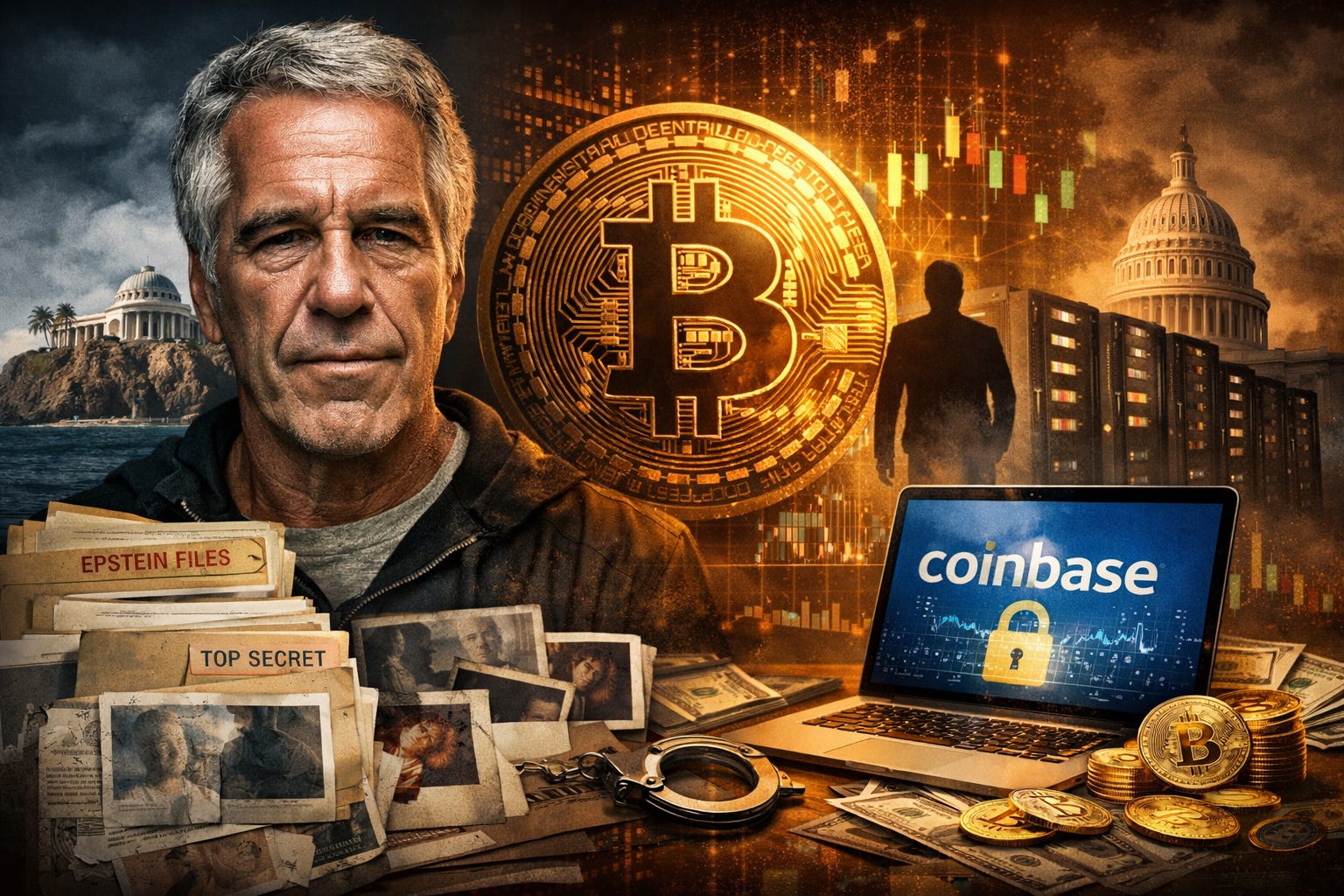
Epstein wanted to influence Bitcoin’s development.
On Friday, January 30th, the United States Department of Justice released the latest tranche of documents related to Jeffrey Epstein, the financier who, according to the official version, died by suicide in prison in 2019 after being indicted for sex trafficking of minors. Over 3 million pages(https://www.justice.gov/epstein/doj-disclosures) that shed light on the pedophile’s connections with the global political, financial, and technological elite.
And among these connections, there’s also Bitcoin.
According to a count of mentions in the documents, Tether co-founder Brock Pierce appears 1,801 times, “Bitcoin” 1,522 times, Coinbase 266 times, Adam Back 19 times. Numbers that have triggered a storm on social media, with conspiracy theories ranging from the grotesque to the defamatory. But what do these documents actually say? And most importantly: how much did Epstein influence Bitcoin’s development?
In 2014, during Blockstream’s seed round, the company founded by Adam Back and Austin Hill, Epstein invested approximately $(https://www.justice.gov/epstein/files/DataSet%2010/EFTA01917402.pdf)500,000(https://www.justice.gov/epstein/files/DataSet%2010/EFTA01917402.pdf) through a fund managed by Joi Ito, then director of the MIT Media Lab. Emails show that Ito arranged a meeting between Epstein and Blockstream’s founders.
An email from July 2014 shows Hill writing to Ito and Epstein: “We’ve reached the critical moment to close this round. We’re 10x oversubscribed on an 18 million seed round and Reid Hoffman at the last minute told us to increase your allocation from 50,000 to 500,000 dollars.”
In the correspondence, references emerge to travel bookings to St. Thomas, the island near the infamous Little Saint James, Epstein’s private property that became a symbol of his abuse network. Hill writes: “I told Jeffrey that I’m happy to arrange our flights since we’re continuing to San Francisco after St. Thomas.”
In a separate email dated April 19, 2014, Epstein writes to Bitcoin developer Amir Taaki: “Are you still in the Bitcoin world? Where are you? I have Andy Back on my island this weekend.” It would certainly be a curious coincidence if “Andy Back” actually referred to another person and wasn’t a typo for Adam Back, but precisely for this reason we cannot be certain that Blockstream’s co-founder was on the island.
When Italian venture capitalist Vincenzo Iozzo asked Epstein what he thought of Back, the response was laconic: “Like him.”
After the files were published, Back responded publicly on X(https://x.com/adam3us/status/2018069917967233443): “In 2014, during Blockstream’s seed round roadshow, the company was introduced to the then-director of the MIT Media Lab, Joi Ito. Subsequently, Blockstream met Jeffrey Epstein, who at the time was described as a limited partner in Ito’s fund. That fund invested a minority stake. Some months later, Ito’s fund divested its Blockstream shares due to a potential conflict of interest and other concerns. Blockstream has no direct or indirect financial connection with Jeffrey Epstein, or with his estate.”
Back did not mention the emails regarding travel plans to St. Thomas.
Blockstream isn’t the only connection. Between 2002 and 2017, Epstein donated(https://www.therage.co/epstein-bitcoin-core/) 850,000 dollars(https://www.therage.co/epstein-bitcoin-core/) to MIT(https://www.therage.co/epstein-bitcoin-core/), of which 525,000 was specifically designated for the Media Lab’s Digital Currency Initiative.
In 2015, after the Bitcoin Foundation’s collapse, three Bitcoin Core developers - Gavin Andresen, Wladimir van der Laan, and Cory Fields - joined the MIT Digital Currency Initiative. In an email to Epstein in April 2015, Ito announced their arrival: “Many organizations rushed to fill the void created by the foundation and to ‘take control’ of the developers. We moved quickly by speaking with all stakeholders and the three developers decided to join the Media Lab. This is a big win for us.”
Write a comment